For the past few months, the U.S. Treasury Department has been piling new sanctions on Iran—an effort dubbed Operation Economic Fury, part of the Trump administration’s maximum pressure campaign on the country.
But at the same time YouTube, the world’s biggest online video platform, is hosting and profiting from channels for U.S.-sanctioned Iranians, a new Tech Transparency Project investigation has found.
TTP identified 56 YouTube channels for Iranian entities that are directly sanctioned by the Treasury Department’s Office of Foreign Assets Control (OFAC). YouTube ran ads in all of the channels, indicating the platform is generating revenue off them.
The entities include:
- A businessman helping Iran’s Islamic Revolutionary Guard Corps evade sanctions
- An Iranian special forces unit accused of using lethal force on unarmed protestors
- An advisor to Iran’s new supreme leader who threatened U.S. forces in the region
- An Iranian accused of targeting regime opponents abroad for kidnapping and assassination
- Iran’s state broadcaster responsible for spreading disinformation and propaganda
An Indonesian company under U.S. sanctions for providing Iran with drone components also has a YouTube channel, TTP found. Iran has repeatedly launched drone attacks on U.S. military bases and civilian infrastructure across the Gulf region during the current conflict.
YouTube may be violating sanctions by simply providing these entities with channels. It may also be engaging in prohibited financial transactions if it is sharing ad revenue with them. TTP could not determine if YouTube is giving these channels a cut of ad revenue because the platform began hiding when creators get payouts in 2023.
In addition, the investigation found 28 YouTube channels associated with the government of Iran, which has been under U.S. sanctions for decades. These channels all contained advertising as well.
Many of the ads were for household brands like Subaru, Verizon, TurboTax, Liberty Mutual insurance, and the weight loss drug Ozempic. In one case, an ad encouraging people to apply for jobs with U.S. Customs and Border Protection ran in a channel for Iran’s Ministry of Cultural Heritage.
TTP’s findings reveal how YouTube is making money off Iranian entities deemed a threat to U.S. national security and undermining the Trump administration's efforts to apply pressure on Iran through sanctions.
YouTube's parent company Google did not respond to a request for comment or questions about its sanctions screening process and whether it shared ad revenue with any of the channels identified by TTP. But in a statement to Wired, which covered this report, Google said it is "committed" to sanctions compliance and took enforcement action against the channels that violated its policies. When TTP checked several hours after publication of this report, three-quarters of the channels (63) had been removed.
TTP reached out to the advertisers identified in this report and included any comments they provided.
Background
In the run-up to the U.S.-Israeli strikes on Iran, TTP identified multiple U.S.-sanctioned Iranian government officials and organizations using X Premium accounts.
TTP set out to examine whether sanctioned Iranians are also using YouTube to amplify their messaging. (X and YouTube are officially banned in Iran.)
We searched YouTube for Iranian individuals and groups that have been directly sanctioned by the U.S. as a threat to national security. These are known as Specially Designated Nationals, or SDNs. We also searched YouTube for officials and organizations that are part of the government of Iran, which has been under U.S. sanctions for decades.
This process yielded 84 YouTube channels, 56 for SDNs and 28 for Iran government entities. All showed ads in the videos on their channels, indicating YouTube is profiting off them.
In the case of SDNs, YouTube may be violating U.S. sanctions by simply providing them with a channel. According to OFAC, U.S. nationals and companies are prohibited from contributing services to or for the benefit of any blocked person. YouTube may also be violating sanctions if it is sharing advertising revenue with any of the SDN channels. However, TTP could not determine if this is occurring, because in 2023 YouTube started hiding when channels participate in its “Partner Program,” which allows them to get a cut of ad revenue.
Iran itself is subject to country sanctions that have been in place for decades. Over the years, OFAC has issued a number of “general licenses” carving out exemptions in these sanctions, including one from 2022 that pertains to social media and internet services. This general license allows U.S. tech companies to offer services to the Iranian people to help them evade digital surveillance and censorship. It also gives the government of Iran access to such services provided they are “publicly available” and “at no cost.” But it does not allow for financial transactions with the government of Iran.
YouTube and its parent company Google appear to prohibit the Iranian government from using its services at all. In May 2024, YouTube removed the official channel of Iran’s Foreign Ministry, saying, “Due to established U.S. sanctions, Iran's state-owned channels are not permitted on YouTube.” Google’s publisher policies, which apply to YouTube, also state that the company’s ad tools “may not be used for or on behalf” of parties in Iran.
TTP documented multiple forms of advertising in the YouTube channels: in-feed ads, which appear on a channel’s home page; in-stream ads, which play before, during or after a video; and YouTube Shorts ads in the short-form video feed. Below is a sampling of what TTP found.
Islamic Revolutionary Guard Corps
A total of 24 YouTube channels identified by TTP are for Specially Designated Nationals connected to Iran’s Islamic Revolutionary Guard Corps (IRGC). The IRGC amassed new power in Iran following the killing of Supreme Leader Ayatollah Ali Khamenei and is leading efforts to extend Iranian control over the Strait of Hormuz. (The IRGC is itself an SDN and U.S.-designated Foreign Terrorist Organization.)
Babak Zanjani, an Iranian businessman who is helping the IRGC to evade sanctions, is associated with several YouTube channels. Two are for his holding company DotOne. Under OFAC’s 50 percent rule, any company owned or controlled 50 percent or more by a sanctioned individual is also subject to sanctions.
One of the channels, “DotOne داتوان,” is linked on the holding company’s website. The channel was created in November 2024 and features promotional videos of DotOne’s transportation and investment services. One video from December 2025 shows Zanjani giving a speech in Karaj, a city of west of Tehran, where DotOne launched a taxi service. The channel featured in-stream, in-feed, and YouTube Shorts ads. One ad promoted Ritz-Carton luxury cruises.
The Second DotOne channel, dotone_media, was created in February 2025 and is linked on the company’s Telegram account. Its videos, which show Zanjani talking about the state of Iran’s economy and his company’s activities, have more than 315,000 views. The channel also featured in-feed and YouTube Shorts ads. Both DotOne channels came up in YouTube search results for Zanjani’s name in Farsi.
Zanjani has long been in the U.S. government’s sights. OFAC originally designated him as an SDN in April 2013 for helping Iran to evade U.S. oil sanctions. After an Iranian court sentenced Zanjani to death in an embezzlement case in March 2016, the U.S. removed him from its sanctions list. But eight years later, Iran commuted Zanjani’s sentence, and in January 2026, the Trump administration sanctioned him again, saying he was freed in order to launder money for the Iranian regime and provide financial backing for IRGC projects.
According to a May 2026 Wall Street Journal report, Zanjani is again “at the forefront of Iranian efforts to skirt sanctions, accused by U.S. authorities of using cryptocurrency and international connections to move money for the regime and help fund its regional militias.”
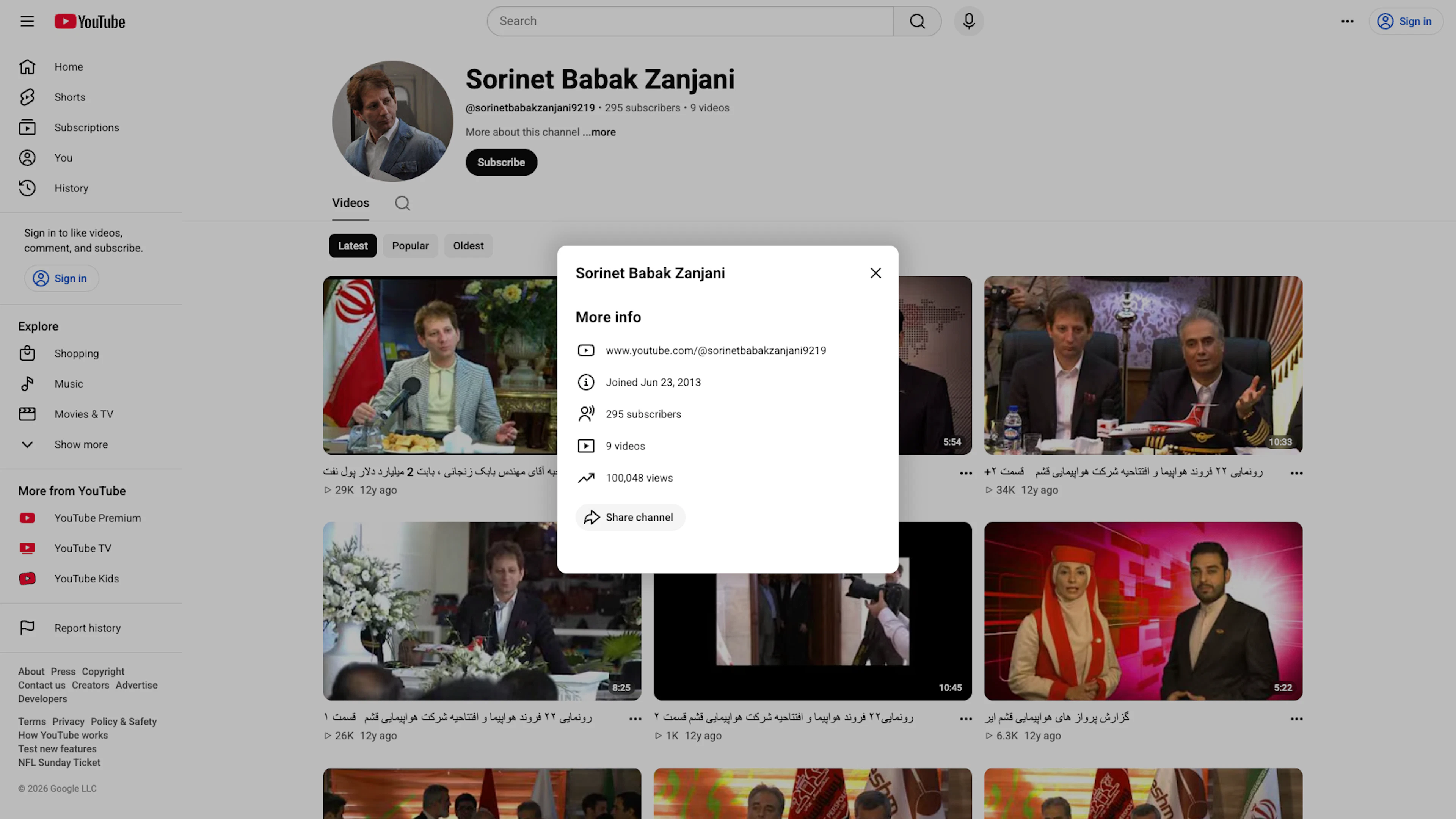
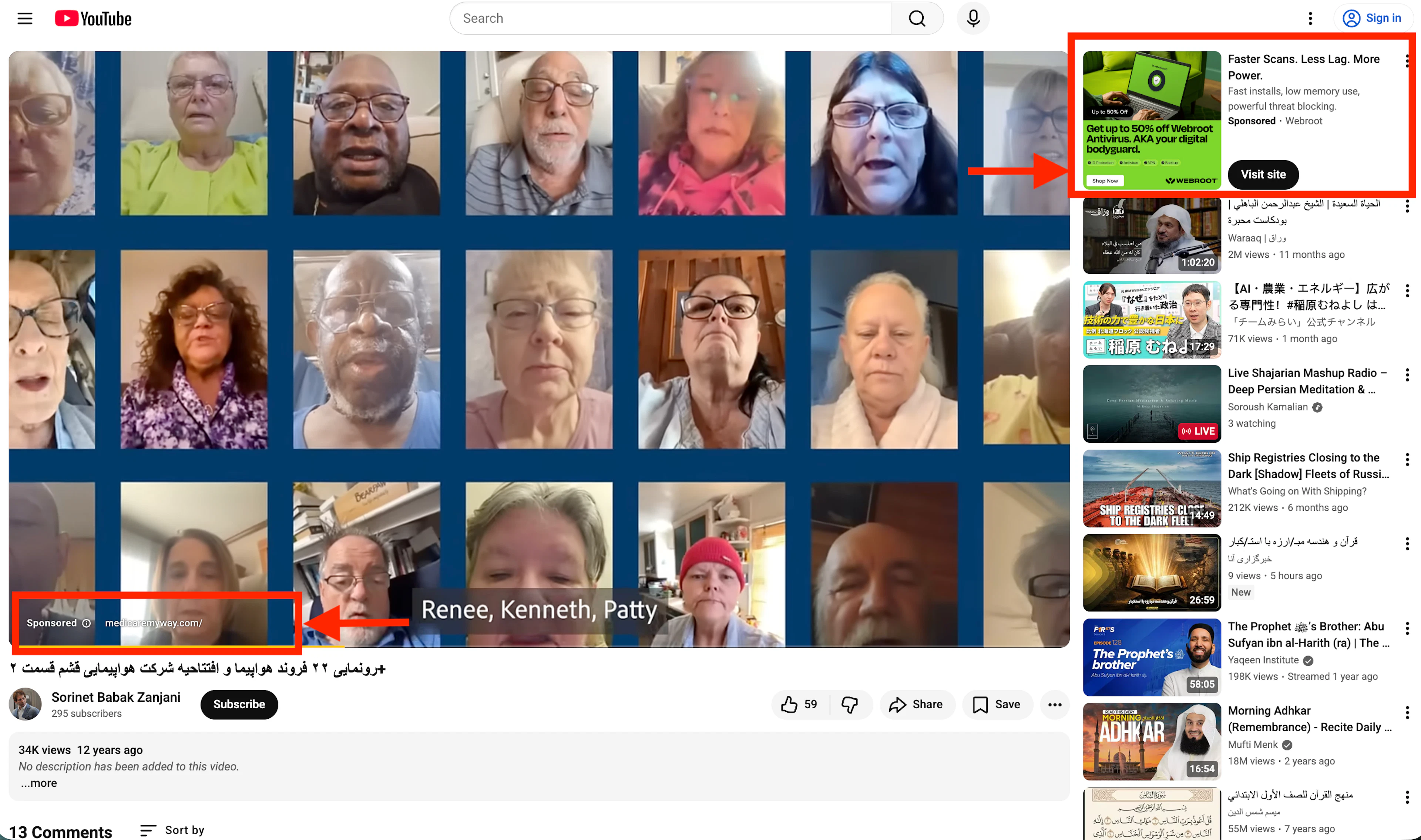
TTP also identified a YouTube channel called “Sorinet Babak Zanjani,” which was created in June 2013 and is linked on Zanjani’s Facebook page. Sorinet is the name of another Zanjani company. The Journal reported that ownership of Sorinet was transferred to the National Iranian Oil Company during Zanjani’s imprisonment. The channel’s videos are all 12 years old, from before Zanjani was imprisoned, and show him defending himself against the embezzlement charges.
Despite the fact that the channel is no longer active, YouTube is running both in-stream and in-feed ads on its videos. One ad was for the Better Medicare Alliance, a group that advocates for private Medicare Advantage health plans.
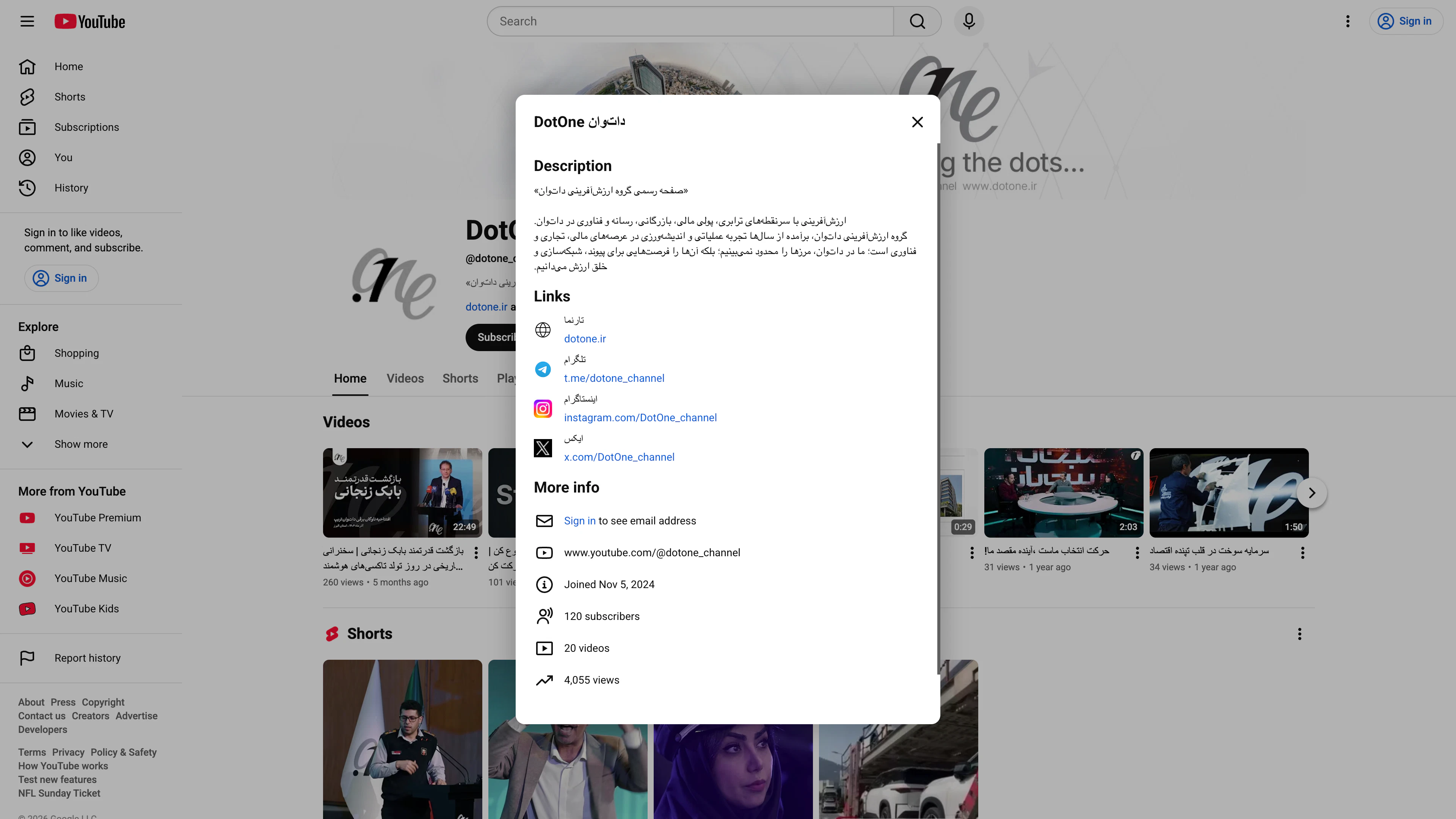
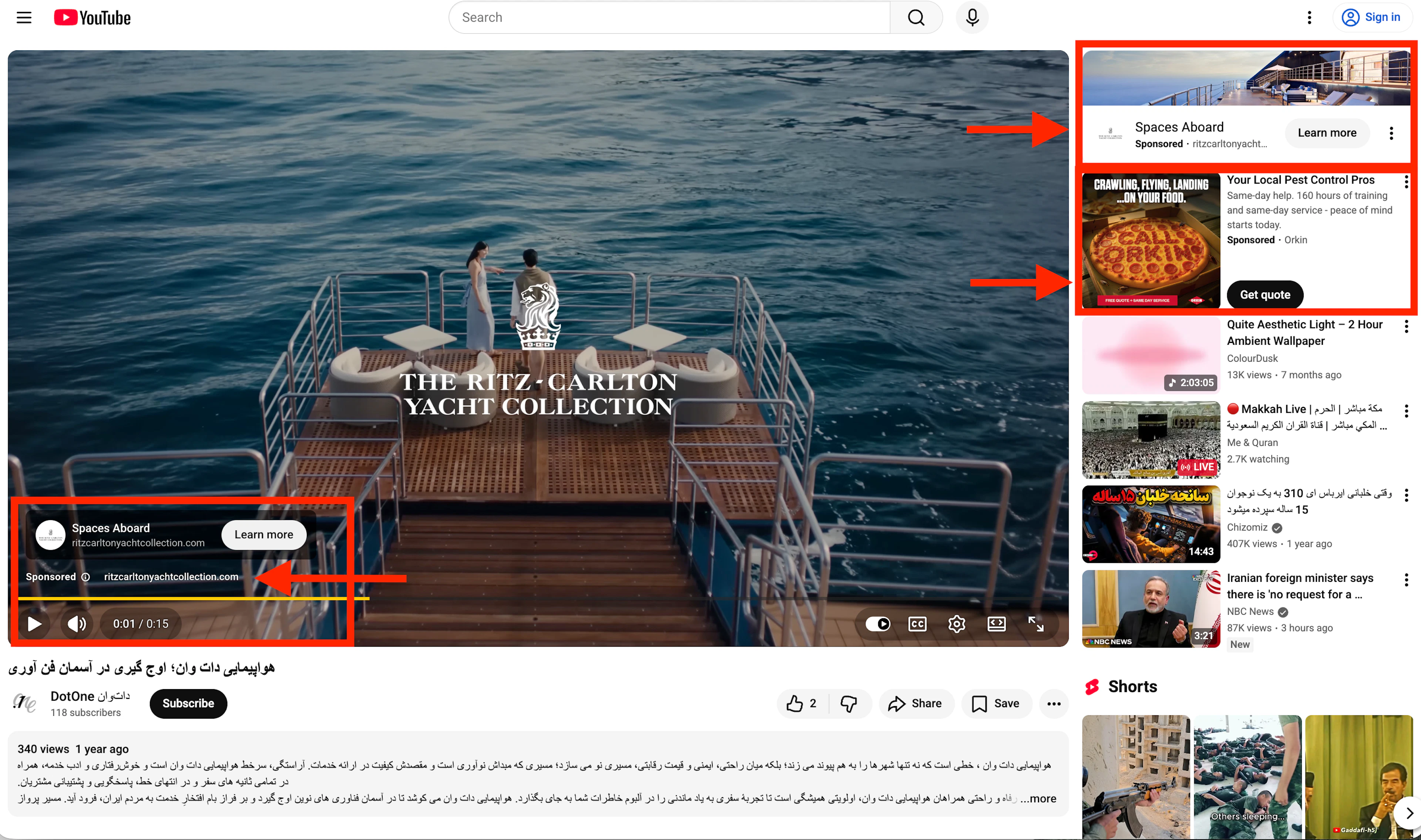
DotOne, the holding company of sanctioned Iranian businessman Babak Zanjani, has a YouTube channel.
DotOne, the holding company of sanctioned Iranian businessman Babak Zanjani, has a YouTube channel.
Nobitex, Iran’s largest digital asset exchange, has a YouTube channel in its own name. The channel is linked on the Nobitex website and is filled with crypto investment videos. It has over 15,200 subscribers and 681,000 views.
OFAC announced sanctions against Nobitex this month for “facilitating payments tied to Iran’s terrorist activities, sanctions evasion efforts, and Islamic Revolutionary Guard Corps (IRGC)-linked transactions.”
The YouTube channel gives it location as Canada, which would allow it to circumvent the YouTube blocks on Iran. It featured an in-feed ad for U.S. cybersecurity firm CrowdStrike and a YouTube Shorts ad for Babson College.
"When we became aware of this we immediately requested the channel be blocked from our ads," a CrowdStrike spokesperson told TTP. The spokesperson emphasized that ad placements "are determined by the platform's automated systems, not selected individually by ad buyers."
Several other digital exchanges that were sanctioned alongside Nobitex have YouTube channels. All were accused by OFAC of supporting IRGC transactions. These include:
- Wallex, which has a YouTube channel called Wallexchange that is linked on its official Telegram account. The channel featured an in-feed ad for the National Panhellenic Conference, an umbrella group of college sororities.
- Bitpin, which has a YouTube channel in its own name that is linked on its official Telegram. The channel has nearly 17,000 subscribers and more than 550,000 views. (Bitpin appears to have a second YouTube channel, which uses an email address with the same domain as Bitpin's website.)
- Ramzinex, which has a YouTube channel under its name in Farsi that is linked on its website.
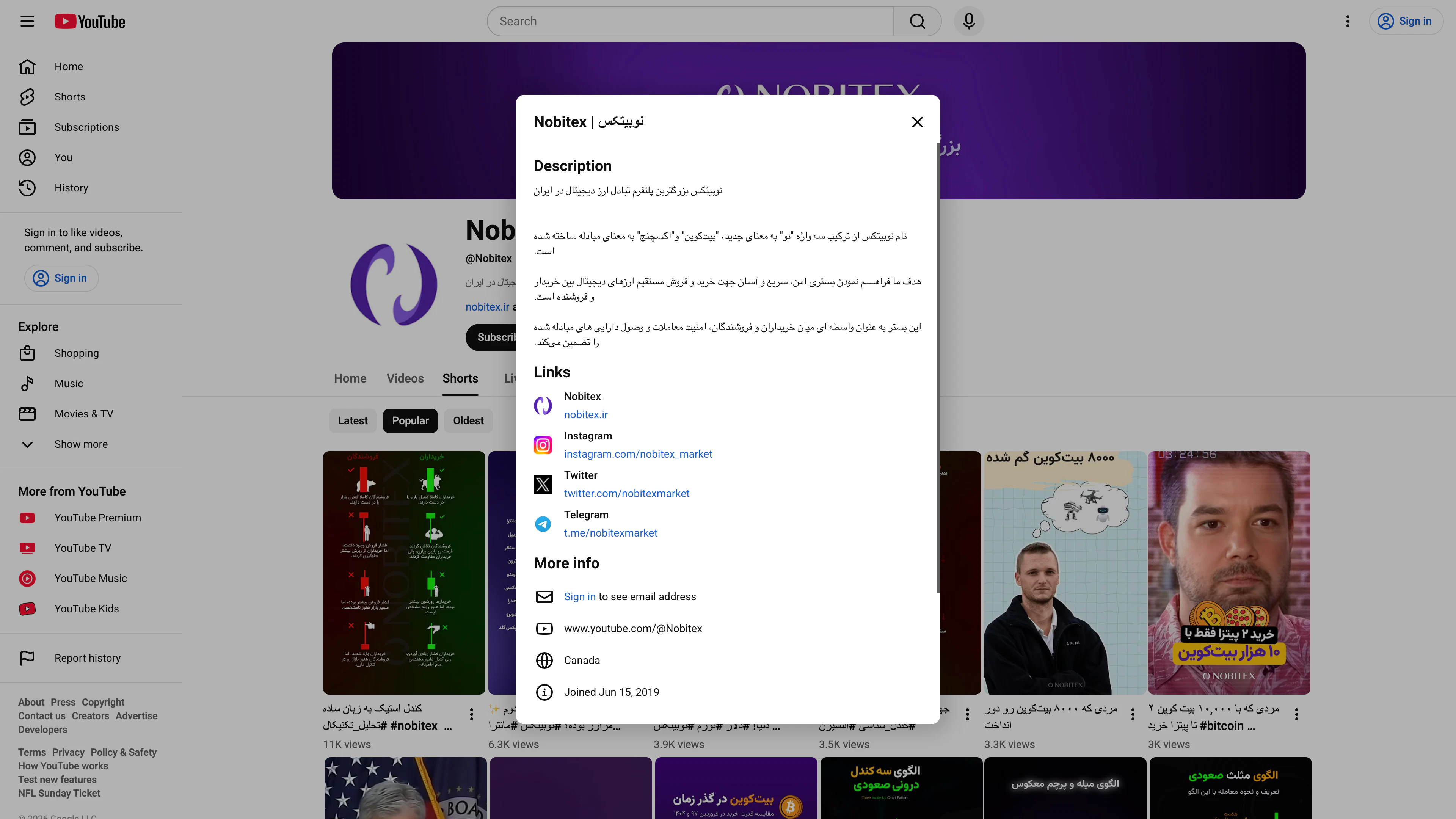
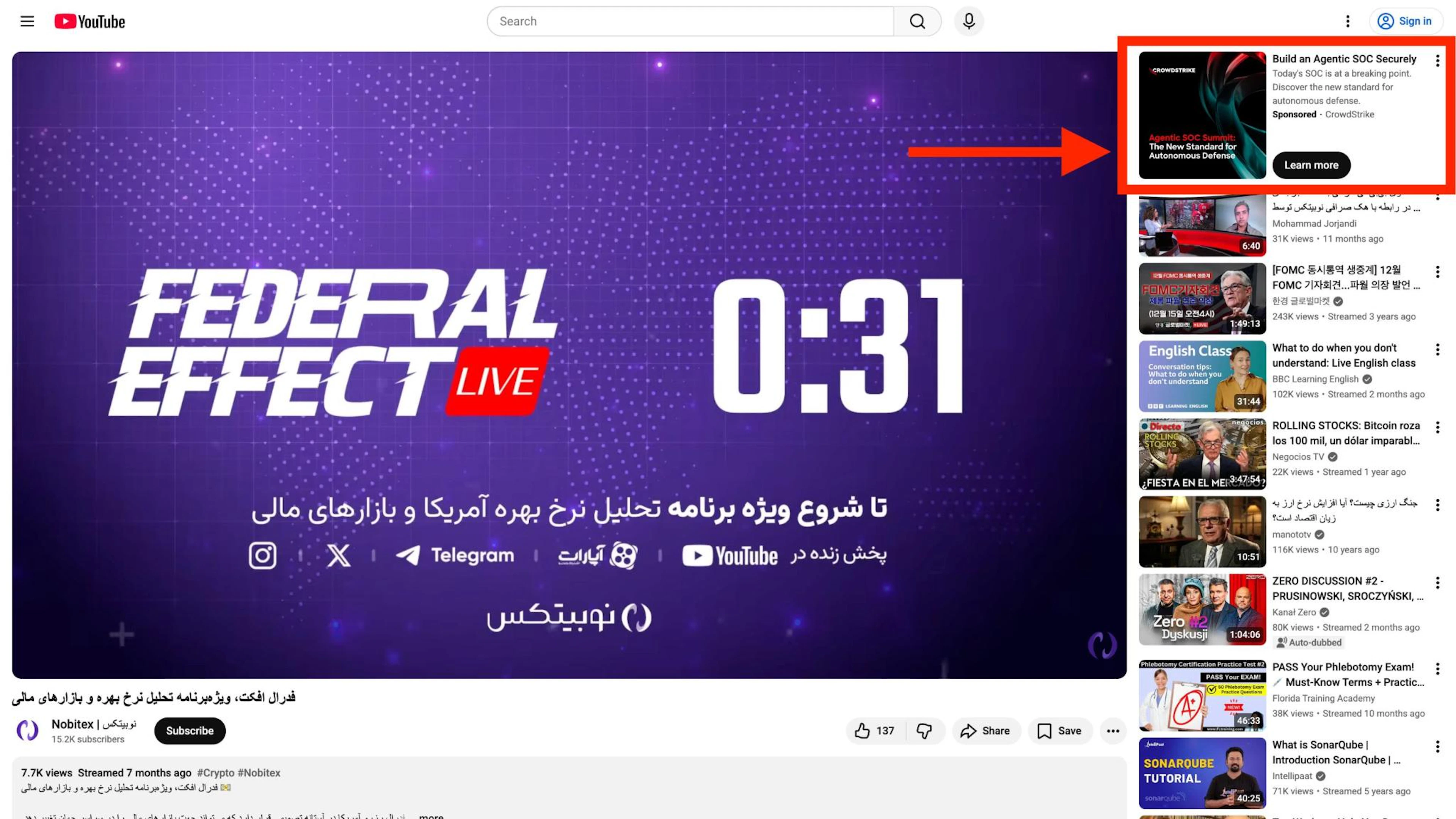
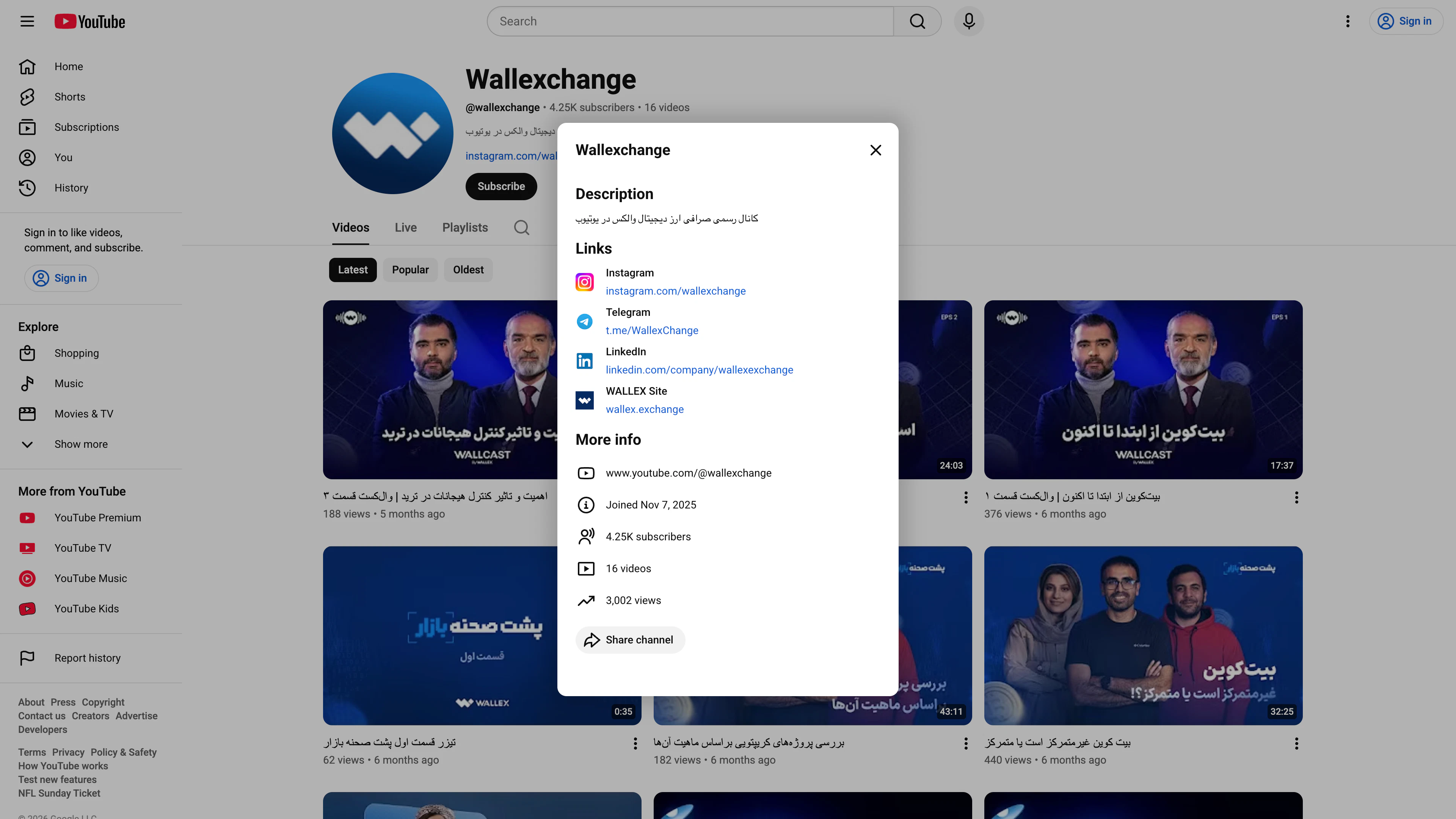
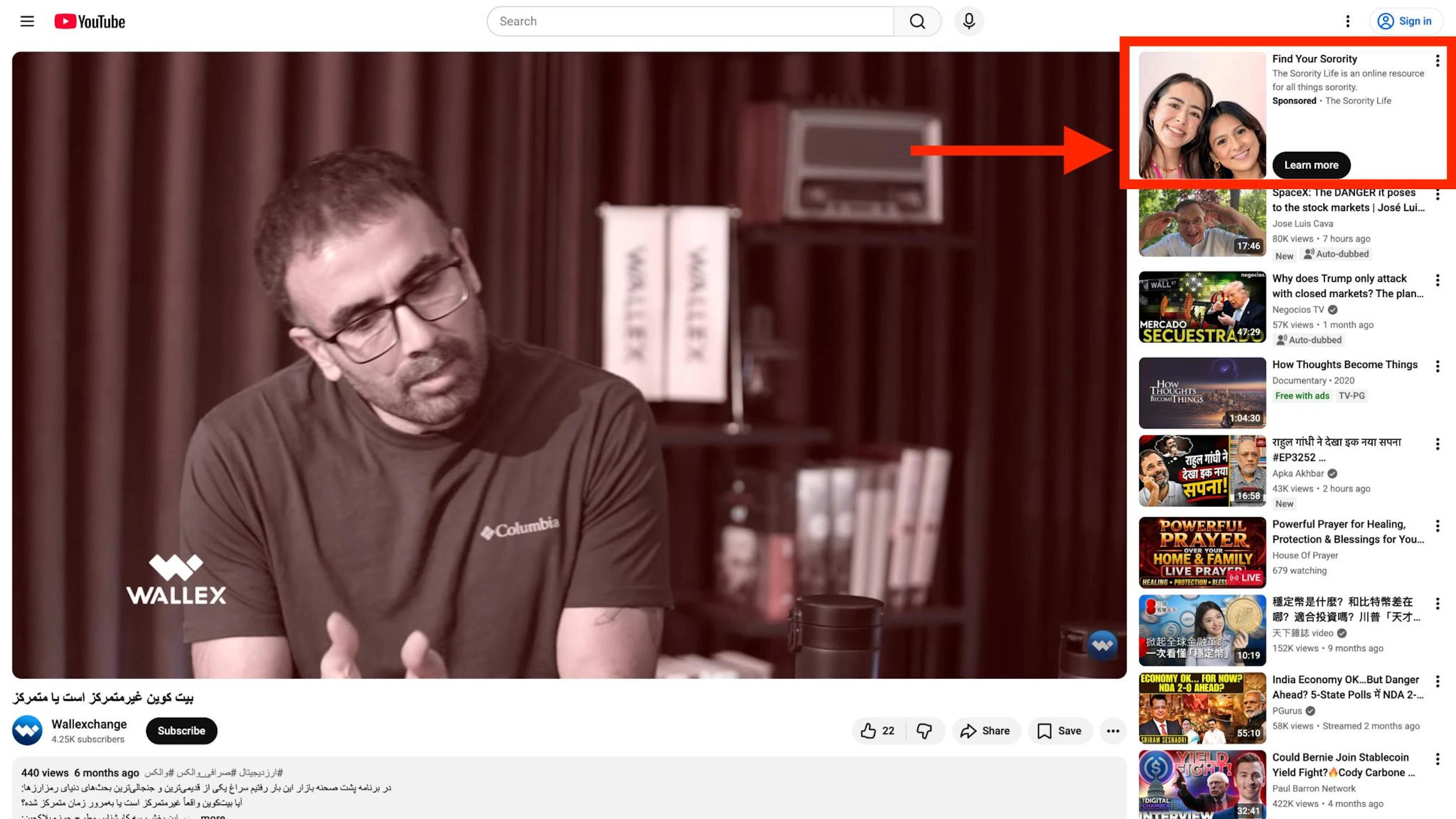
Nobitex, Iran’s largest digital asset exchange, has a YouTube channel with cryptocurrency videos.
Nobitex, Iran’s largest digital asset exchange, has a YouTube channel with cryptocurrency videos.
Bahman Group, an Iranian auto manufacturer accused of supporting an IRGC paramilitary, appears to have a YouTube channel under its own name. The channel was created in January 2020 and has over 202,000 views. Its profile image is the Bahman Group’s logo, and Google’s own AI summary describes it as “the official channel of the Bahman Group in Iran.”
The channel’s videos promote various models of cars, trucks, and buses. They featured multiple forms of advertising, including an in-stream ad for the trade group America’s Plastic Makers and a YouTube Shorts ad for women’s healthcare site Hers.
OFAC announced sanctions against Bahman Group in October 2018, saying it was part of a network of businesses supporting the Basij Resistance Force, which is subordinate to the IRGC and recruits and trains child soldiers to fight in conflicts across the Middle East.
America's Plastic Makers is part of the American Chemistry Council. Jennifer Killinger, a spokeswoman for the council's plastics division, said it has "explicit controls in place so our ads are excluded from appearing with violent, conflict-related, sensitive or sensational content as enabled by the platform."
She said the group could not verify that its ad appeared in the channel identified by TTP but added, "We expect platforms to prevent ads from appearing on sanctioned or inappropriate channels."
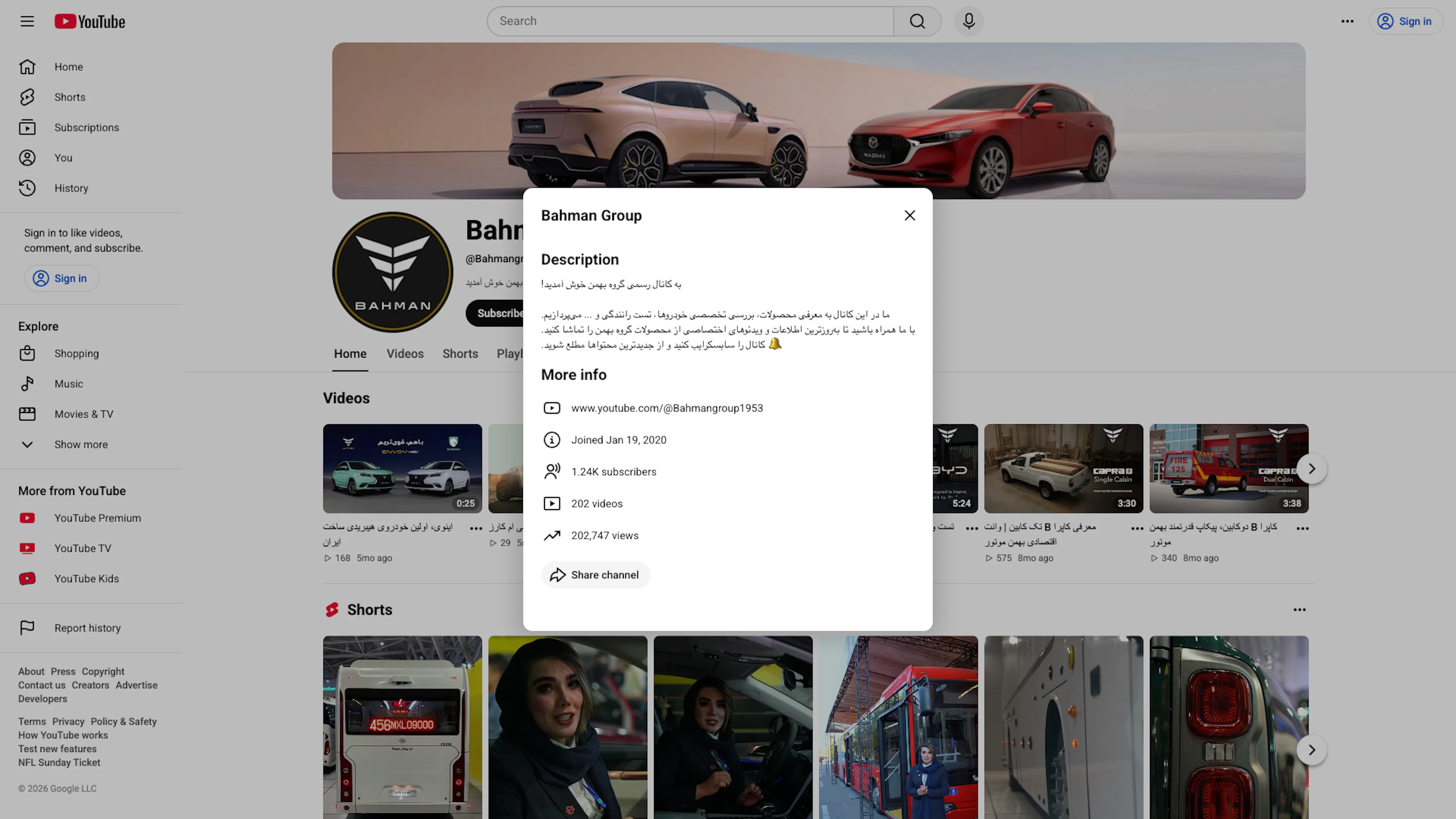
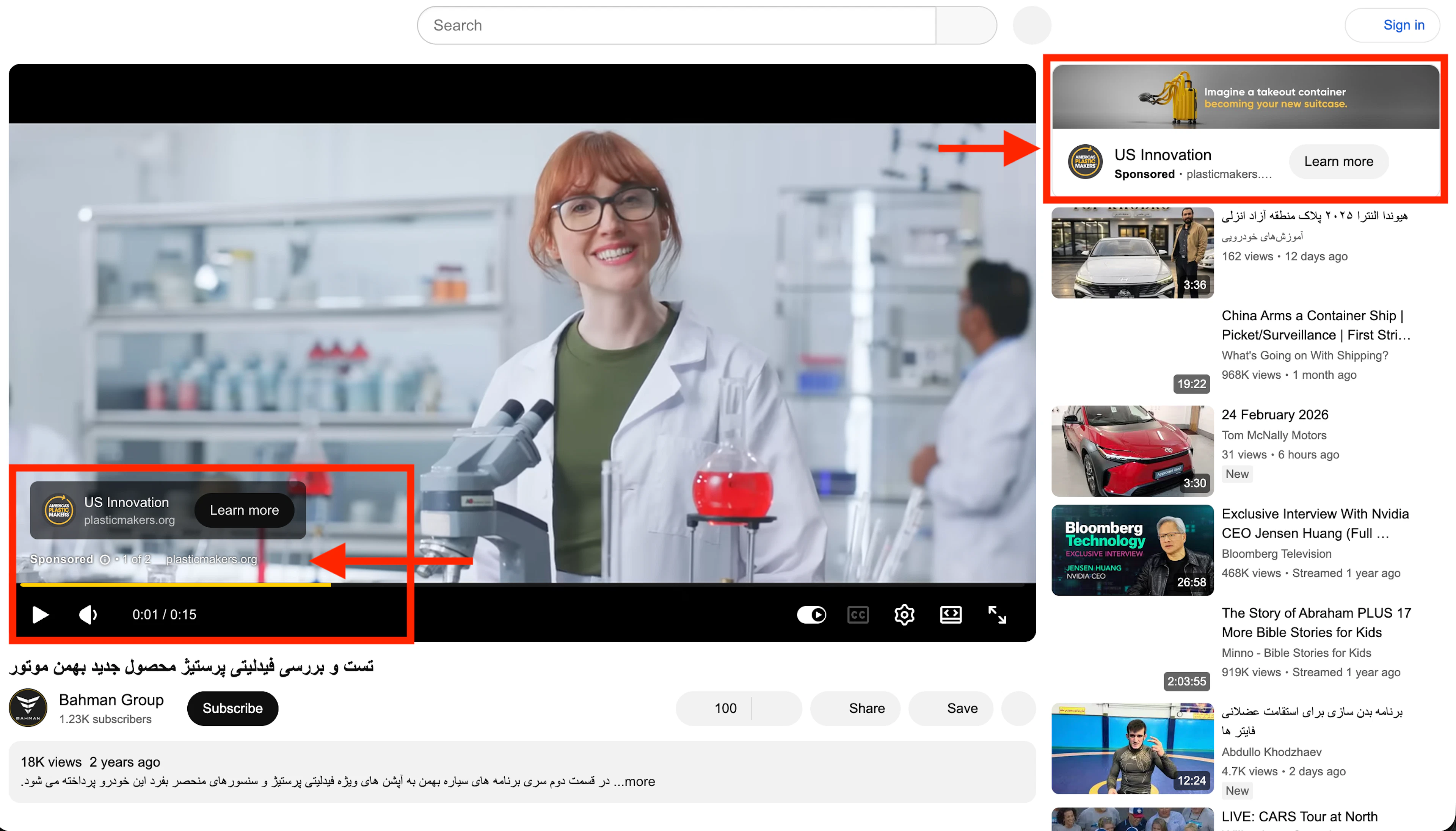
TTP also found a YouTube channel for Bahman Group, a sanctioned Iranian automaker.
TTP also found a YouTube channel for Bahman Group, a sanctioned Iranian automaker.
Mahan Air, an Iranian airline sanctioned for ferrying weapons and fighters for the IRGC, had a YouTube channel under its own name for nearly six years while under U.S. sanctions.
The channel, which was created in June 2020, racked up more than 511,000 views before it was removed sometime between April 22 and May 12, 2026. Mahan Air’s website linked to the channel, and its X account regularly shared the channel’s videos.
Before it was taken down, the Mahan Air channel featured in-stream, in-feed ads, and YouTube Shorts ads. These included ads for travel giant Booking.com and Google’s own Chrome browser.
OFAC announced sanctions against Mahan Air in October 2011 for “providing financial, material and technological support” to the IRGC. The support involved “secretly ferrying operatives, weapons and funds on its flights,” according to the agency.
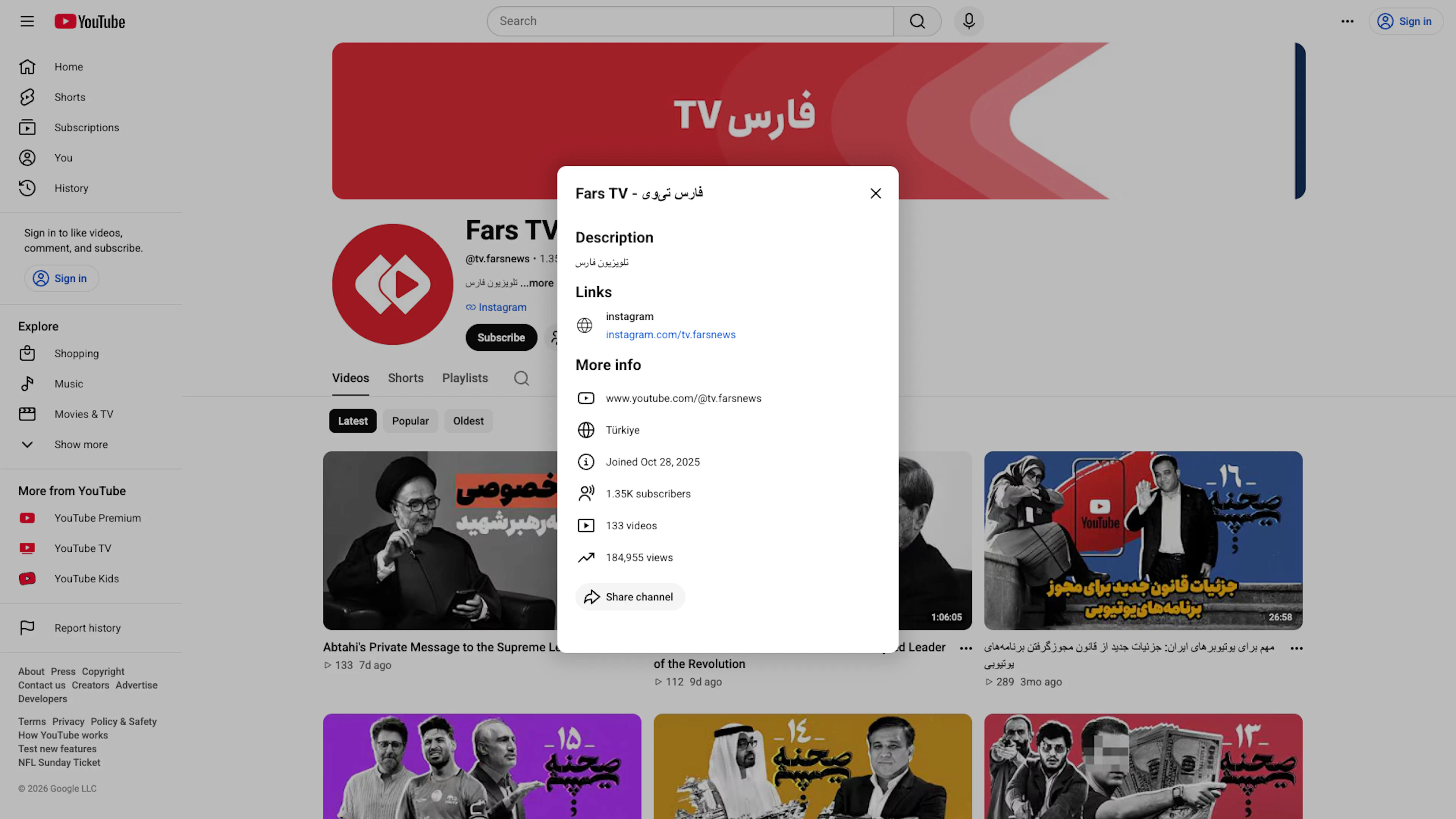
Fars News Agency, an Iranian media outlet affiliated with the IRGC, has a YouTube channel under its own name. The channel was created in October 2025. It is linked on the news agency’s X account and Instagram page.
The channel shows a variety of pro-government videos, some of them in English. It has over 184,000 views and featured in-stream ads and YouTube Shorts ads. One Shorts ad promoted Invest529 college savings plans.
TTP could not determine if the channel is part of YouTube’s Partner Program, which allows it to share in ad revenue, but it meets the eligibility metrics for the program: It has more than 1,000 followers and logged than 4,000 public views of its videos in less than 12 months.
The Fars channel gives its location as Turkey.
OFAC announced sanctions against Fars in September 2023, saying it is closely affiliated with the IRGC. According to OFAC, the news agency provided intelligence to the head of a special police force involved in human rights abuses and coordinated with the Basij Resistance Force.
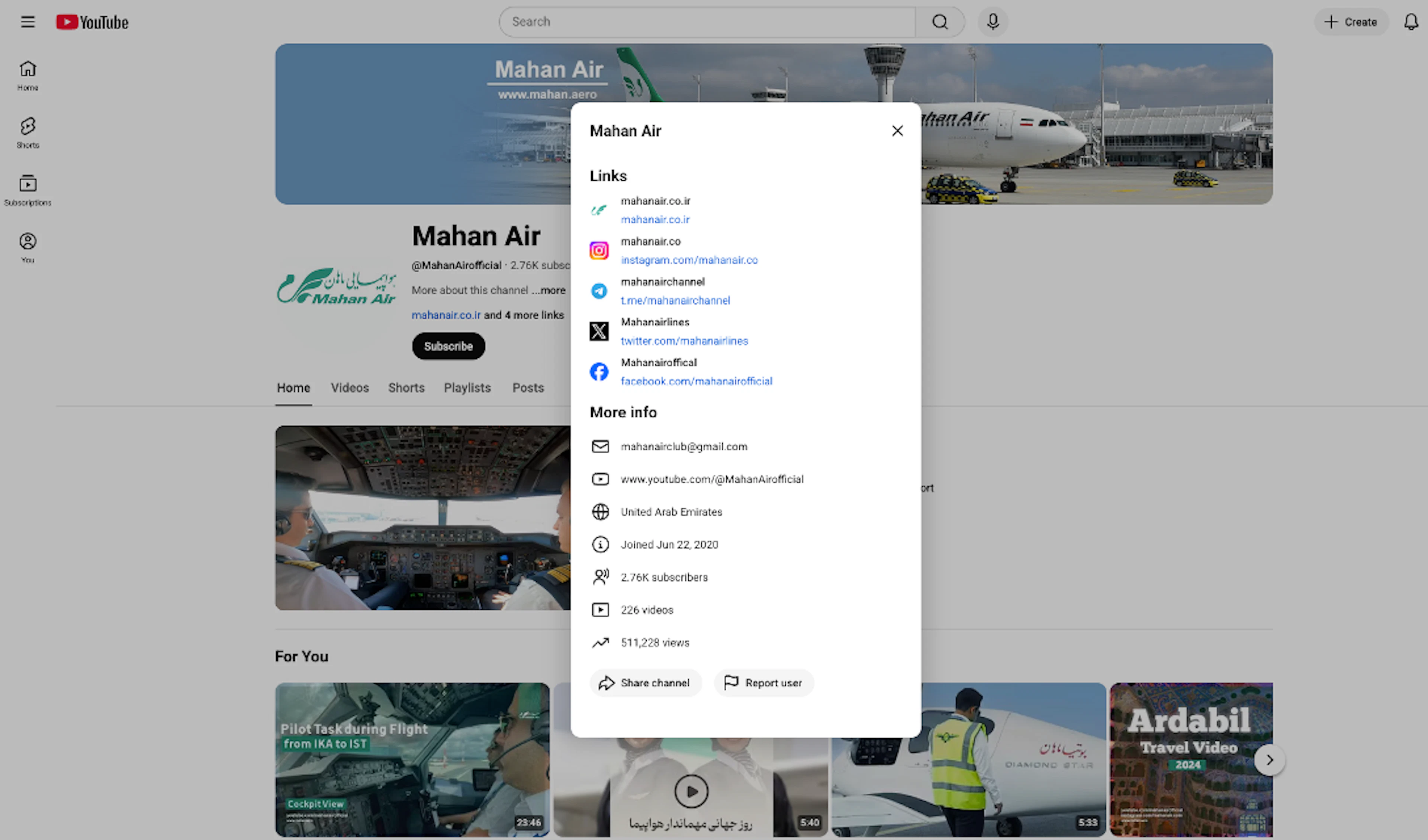
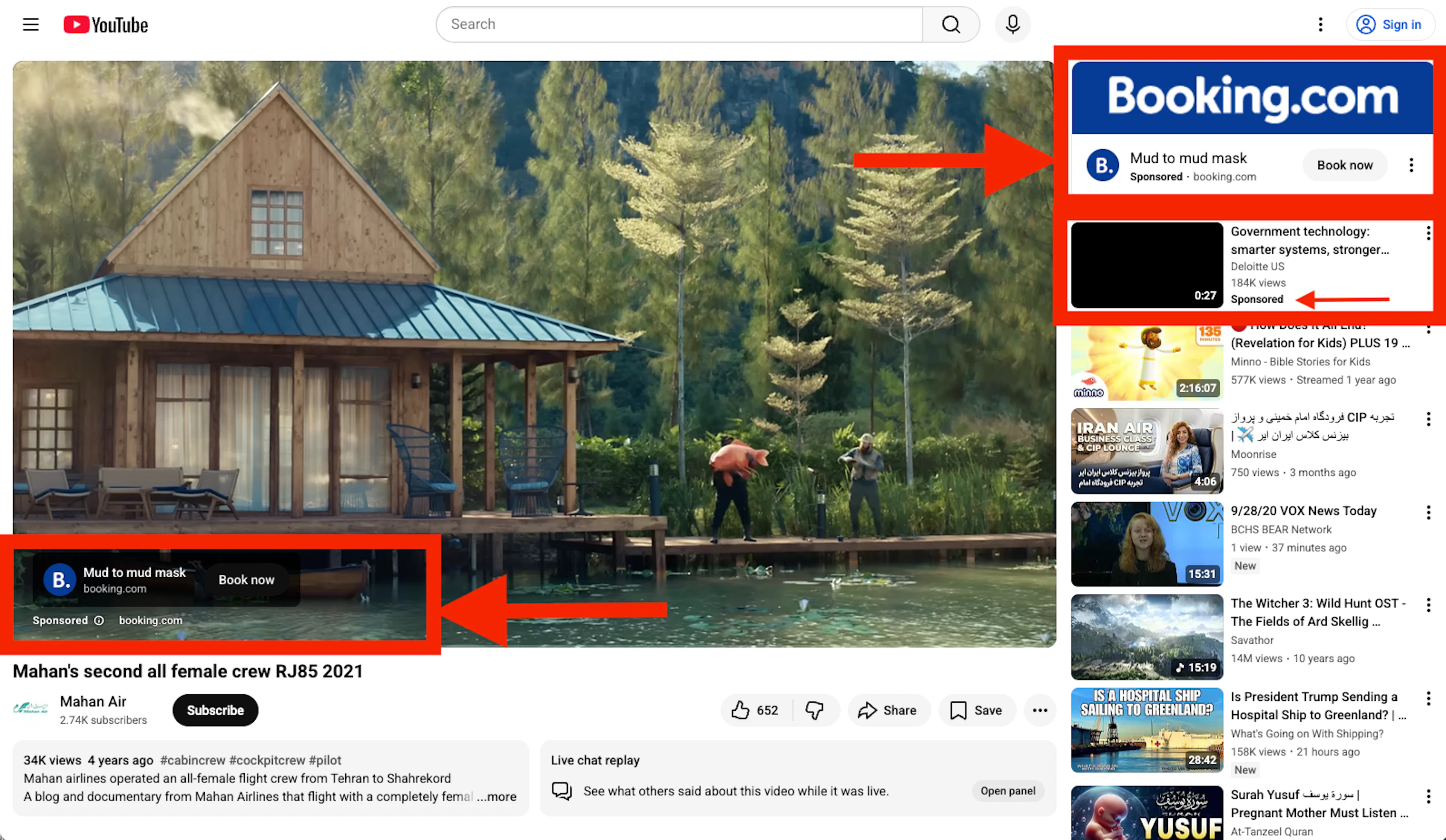
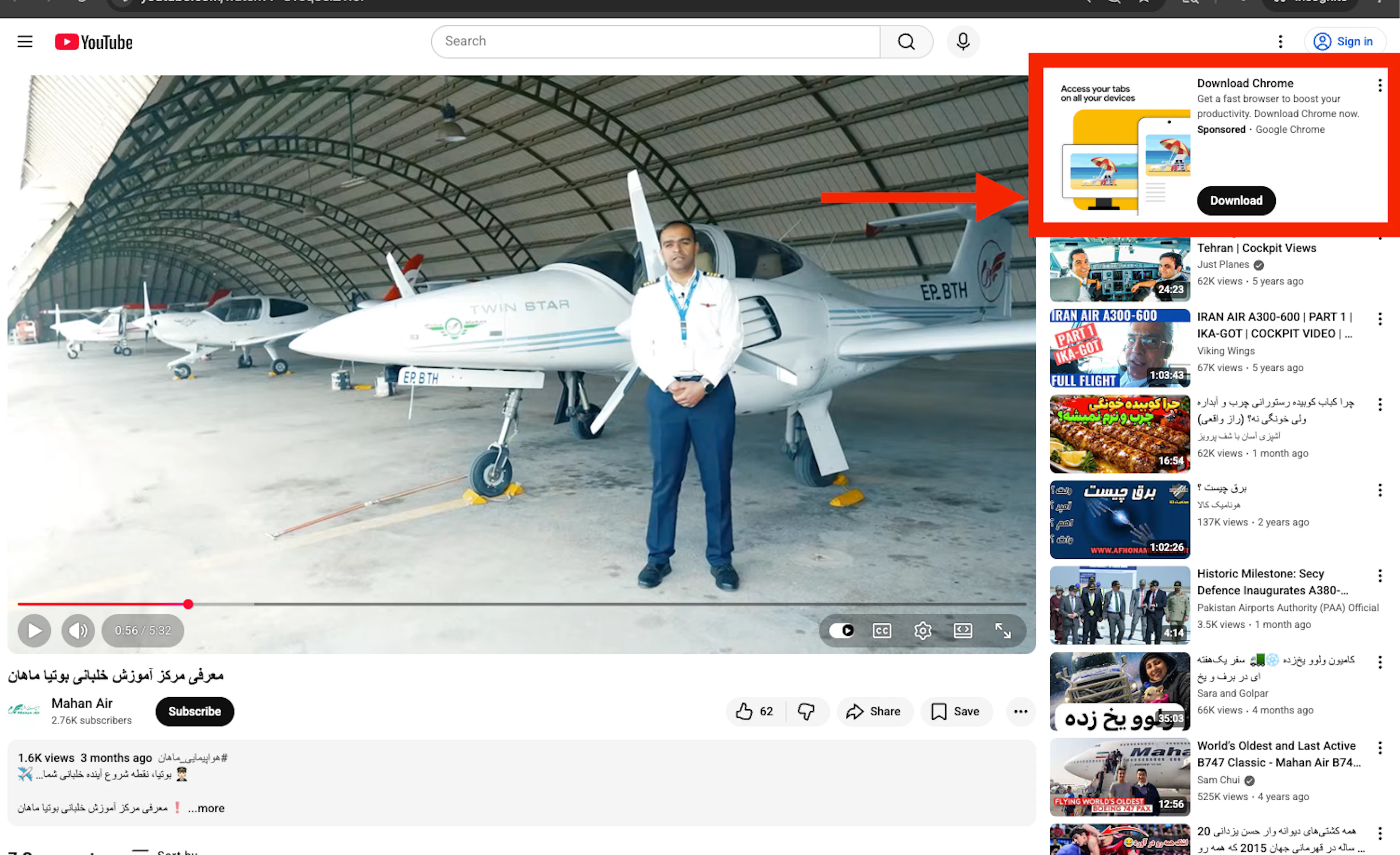
The sanctioned Iranian airline Mahan Air had a YouTube channel.
The sanctioned Iranian airline Mahan Air had a YouTube channel.
Reconstruction Organization of the Holy Shrines in Iraq (ROHSI), an Iranian religious charity controlled by the IRGC’s Quds Force, has a YouTube channel with the handle @atabat_org6016. The channel was created in August 2019 and is linked on ROHSI’s official website.
The channel, which features videos of Islamic shrines and prayers, was monetized with in-stream, in-feed, and YouTube Shorts ads, including an ad for LiveAgent, an AI help desk service.
OFAC announced sanctions against ROHSI in March 2020, saying its leadership was appointed by Qassem Soleimani, the late Iranian military commander who was killed in a U.S. drone strike. According to OFAC, ROHSI, while “ostensibly a religious institution,” has served as a conduit for funds supporting Iranian intelligence and terrorist groups in Iraq.
When TTP searched for ROHSI on Google, the search engine produced a knowledge panel with links to the organization’s YouTube channel and other online assets.
The LiveAgent ad on this channel showed a Valentine's Day deal. LiveAgent told TTP it promoted the deal via Google Ads but the campaign was over by March. But TTP saw the ad in May. It was not clear why the ad ran months later.
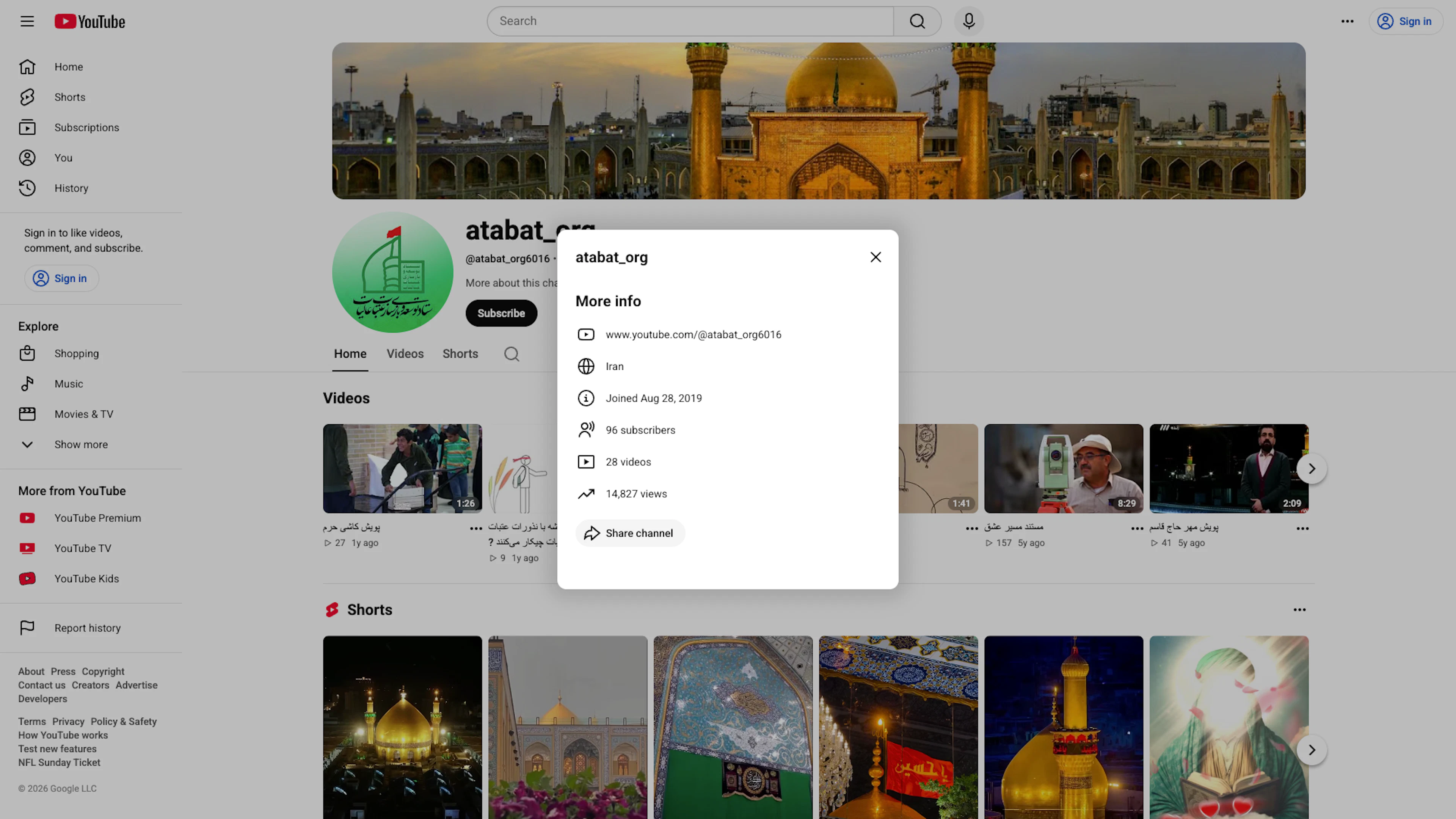
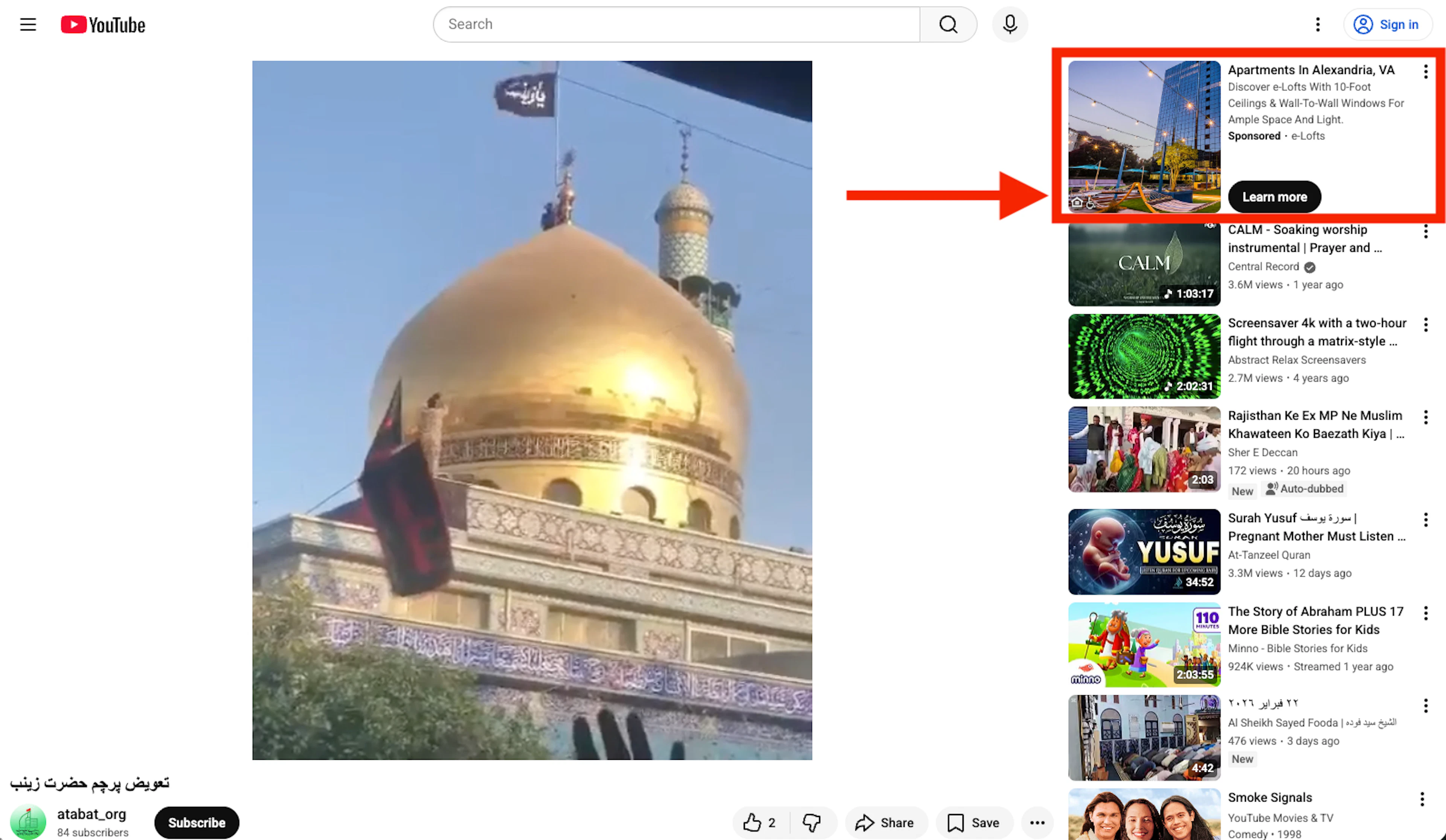
The Reconstruction Organization of the Holy Shrines in Iraq, an Iranian religious charity that the U.S. says is a front for funding terrorist groups, has a YouTube channel.
The Reconstruction Organization of the Holy Shrines in Iraq, an Iranian religious charity that the U.S. says is a front for funding terrorist groups, has a YouTube channel.
Al-Mustafa International University, an Iranian Islamic seminary school that serves as a recruiting arm for the IRGC, has a YouTube channel called “Fa.Al-Mustafa Open University.” The channel was created in November 2017 and is linked on the university’s website.
The channel, which includes video courses and lectures, was monetized with in-stream and in-feed ads, including an ad for BJ’s Wholesale Club.
OFAC announced sanctions on Al-Mustafa in December 2020, saying the IRGC uses it for indoctrinating and recruiting foreign intelligence sources. According to OFAC, the university’s recruits have gone on to fight for IRGC-backed militia in Syria and Afghanistan.
TTP identified three additional YouTube channels for Al-Mustafa. One English-language channel called “En.AL-Mustafa Open University” was created in May 2014 and is linked on Al-Mustafa’s official English-language website. It featured in-stream ads, including one for FedEx.
Another Arabic-language YouTube channel, created in February 2018, appears to be for the university’s Bahrain branch, and a French-language channel, created in April 2021, appears to be for the university’s Senegal branch. Both of these channels featured advertising. The Arabic channel showed an in-feed ad for the Warner Brothers horror film “They Will Kill You,” and the French channel showed an in-stream ad for KFC.
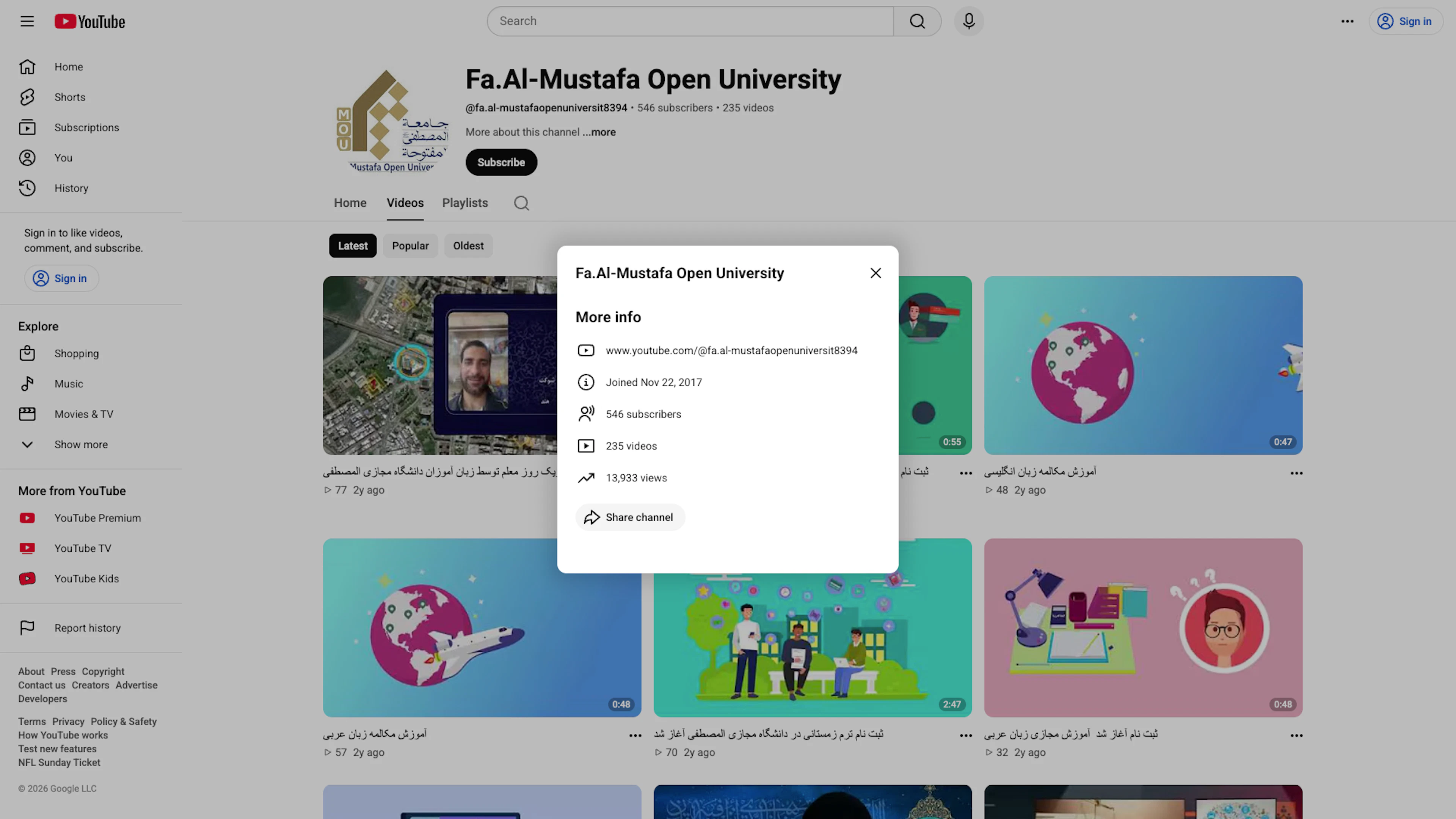
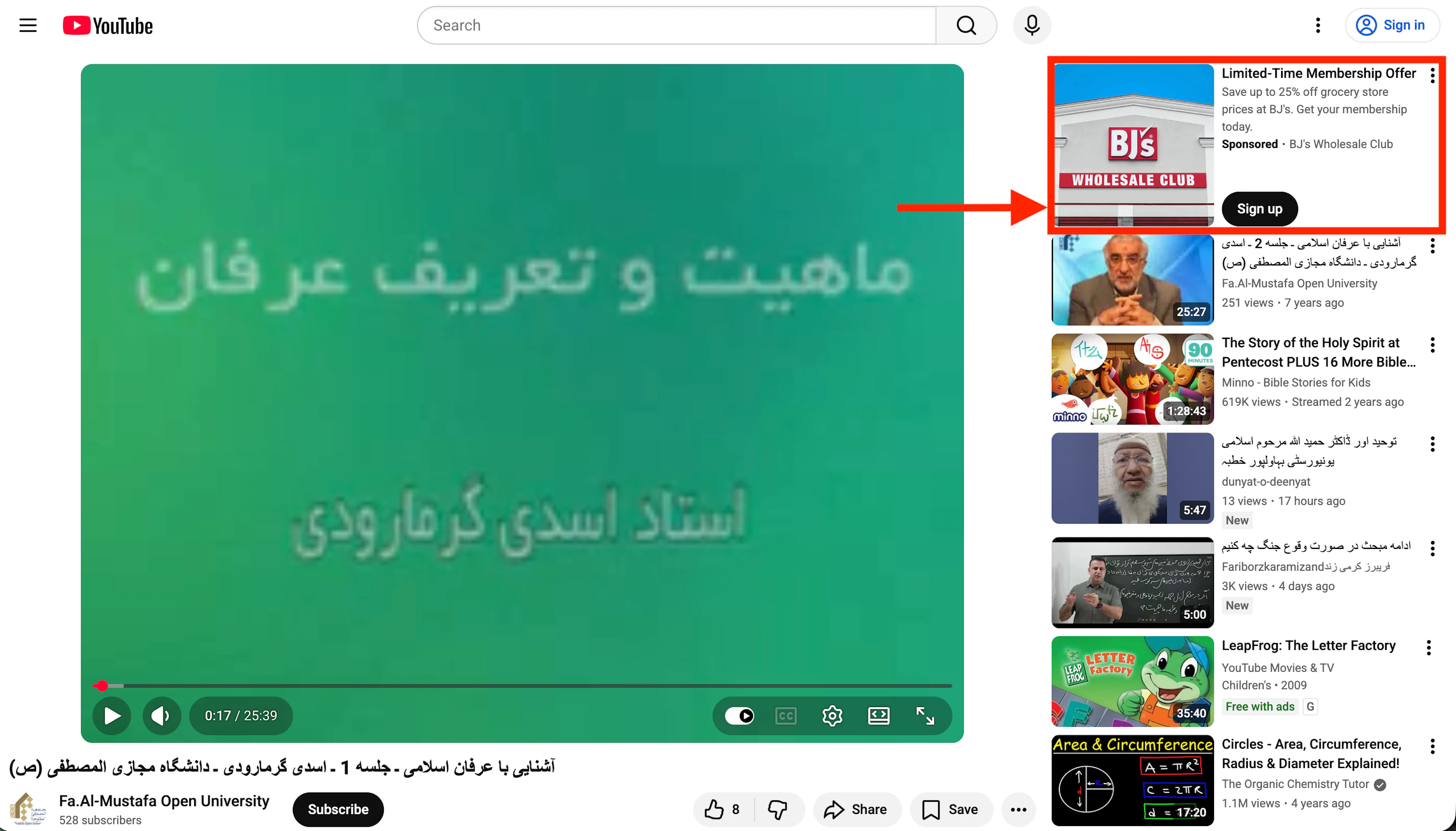
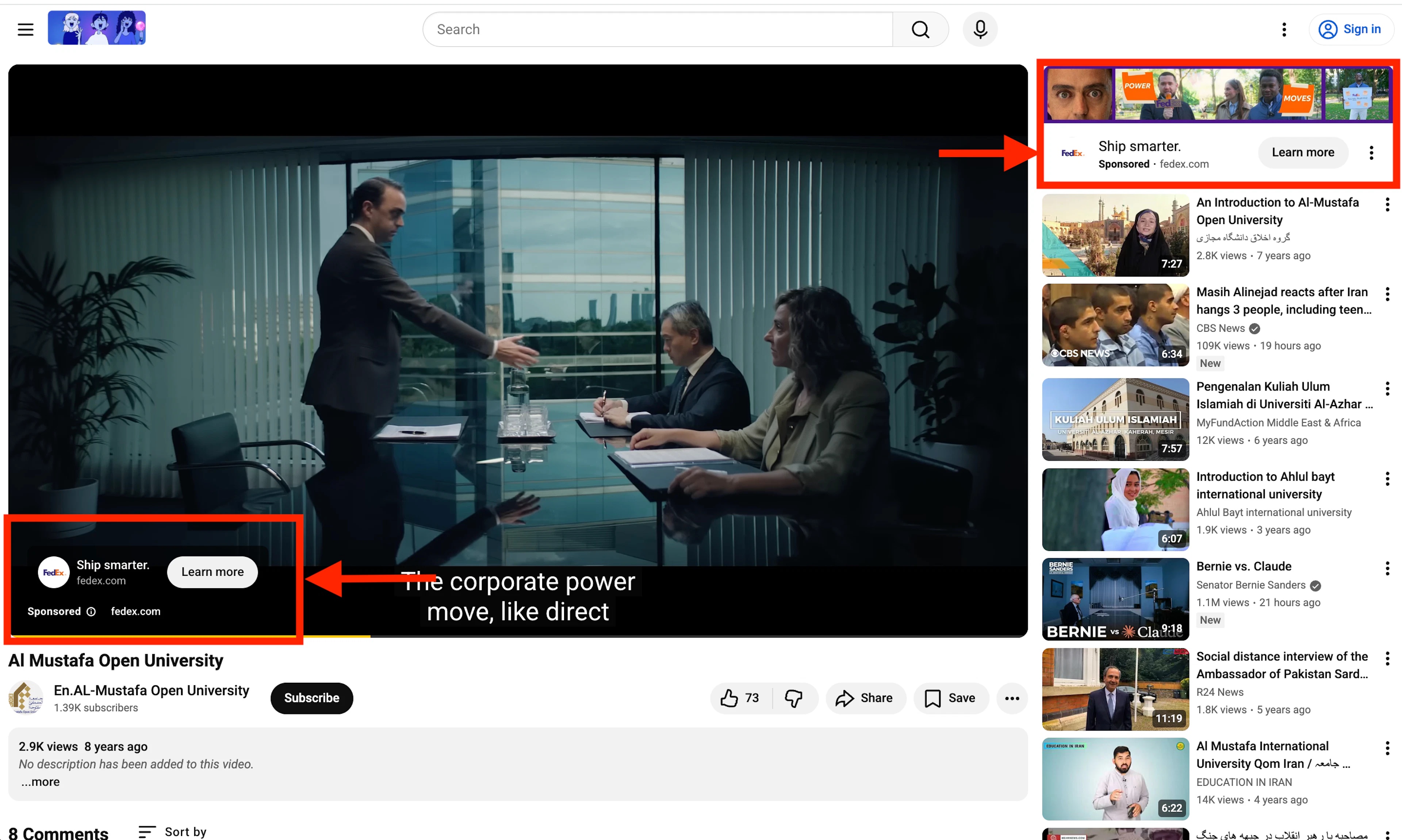
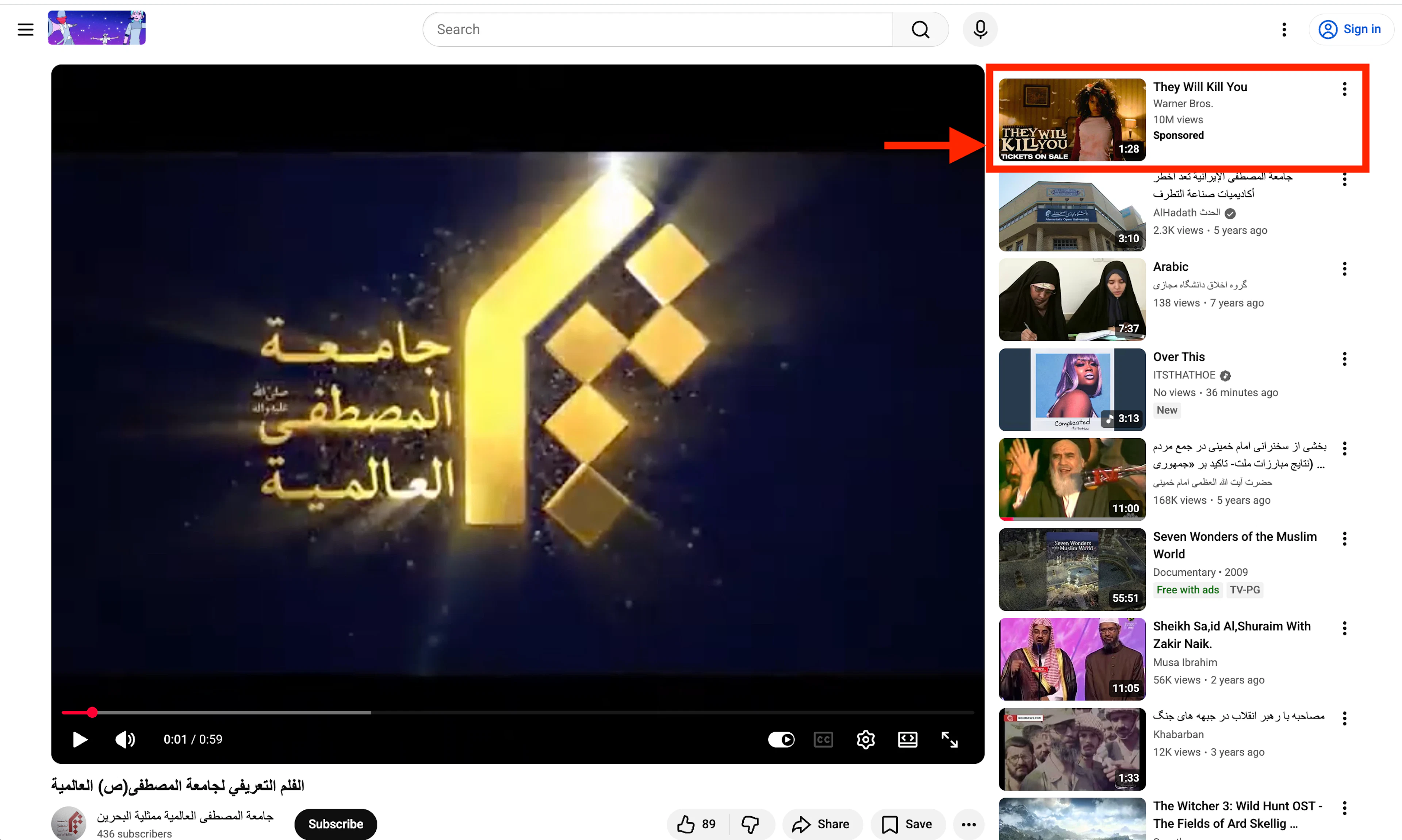
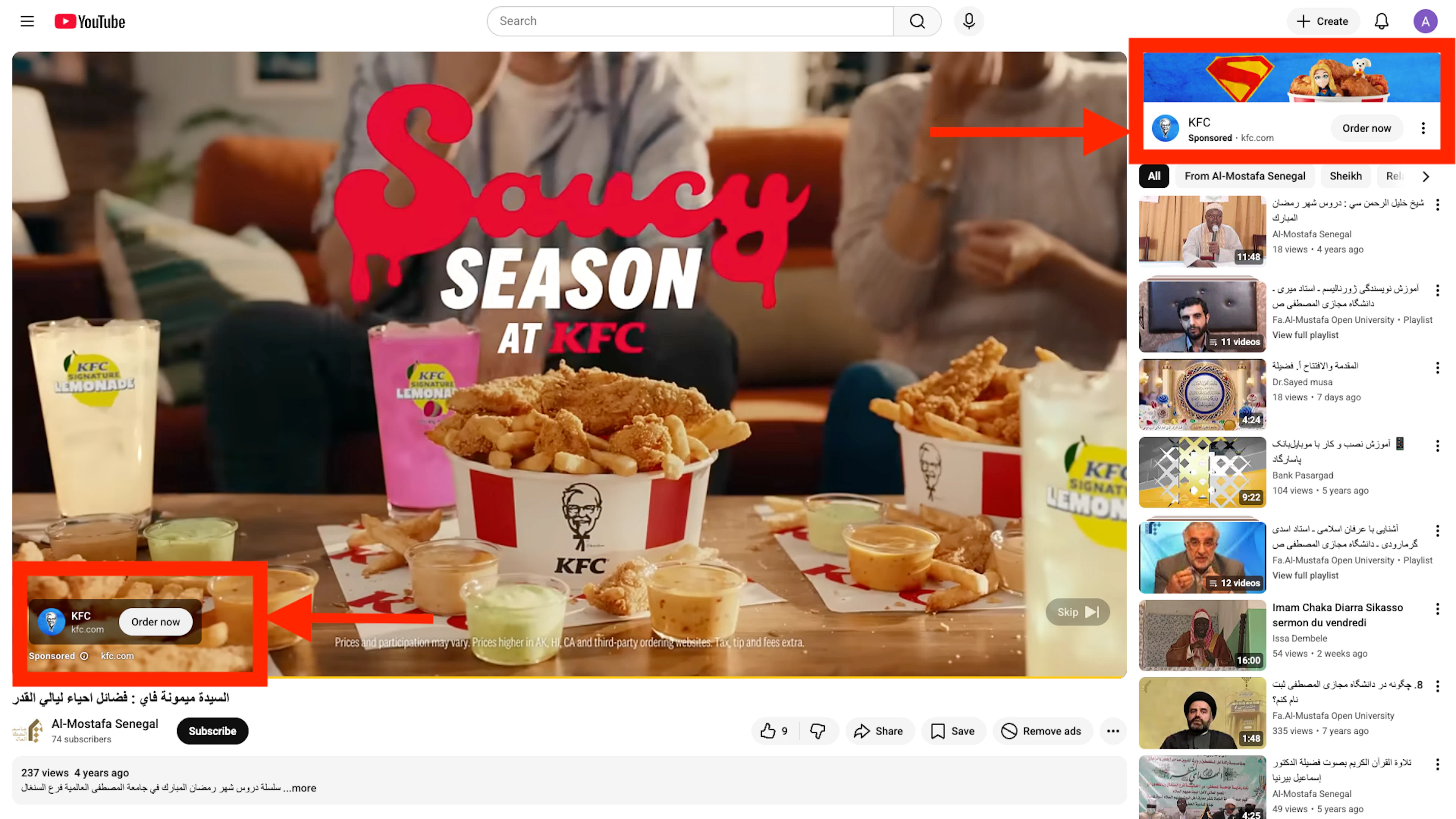
Al-Mustafa International University, an Islamic seminary school that the U.S. says is used by Iran for recruiting foreign intelligence sources, has a YouTube channel.
Al-Mustafa International University, an Islamic seminary school that the U.S. says is used by Iran for recruiting foreign intelligence sources, has a YouTube channel.
Surabaya Hobby CV, an Indonesia-based drone maker sanctioned for supplying the IRGC, appears to have a YouTube channel called “Surabaya Hobby Official.” The channel was created in October 2024 and has more than 113,000 views. Its videos show Surabaya’s WhatsApp number and match content posted on Surabaya Hobby’s official Instagram account.
The channel primarily posts YouTube Shorts videos promoting its small drones. The videos feature ads, including one for Subaru. The company’s one long-form video also featured in-feed and in-stream ads, including one for Liberty Mutual insurance.
OFAC announced sanctions on Surabaya Hobby in December 2023, saying it was part of a network that supplied components to an IRGC organization involved in military drone production.
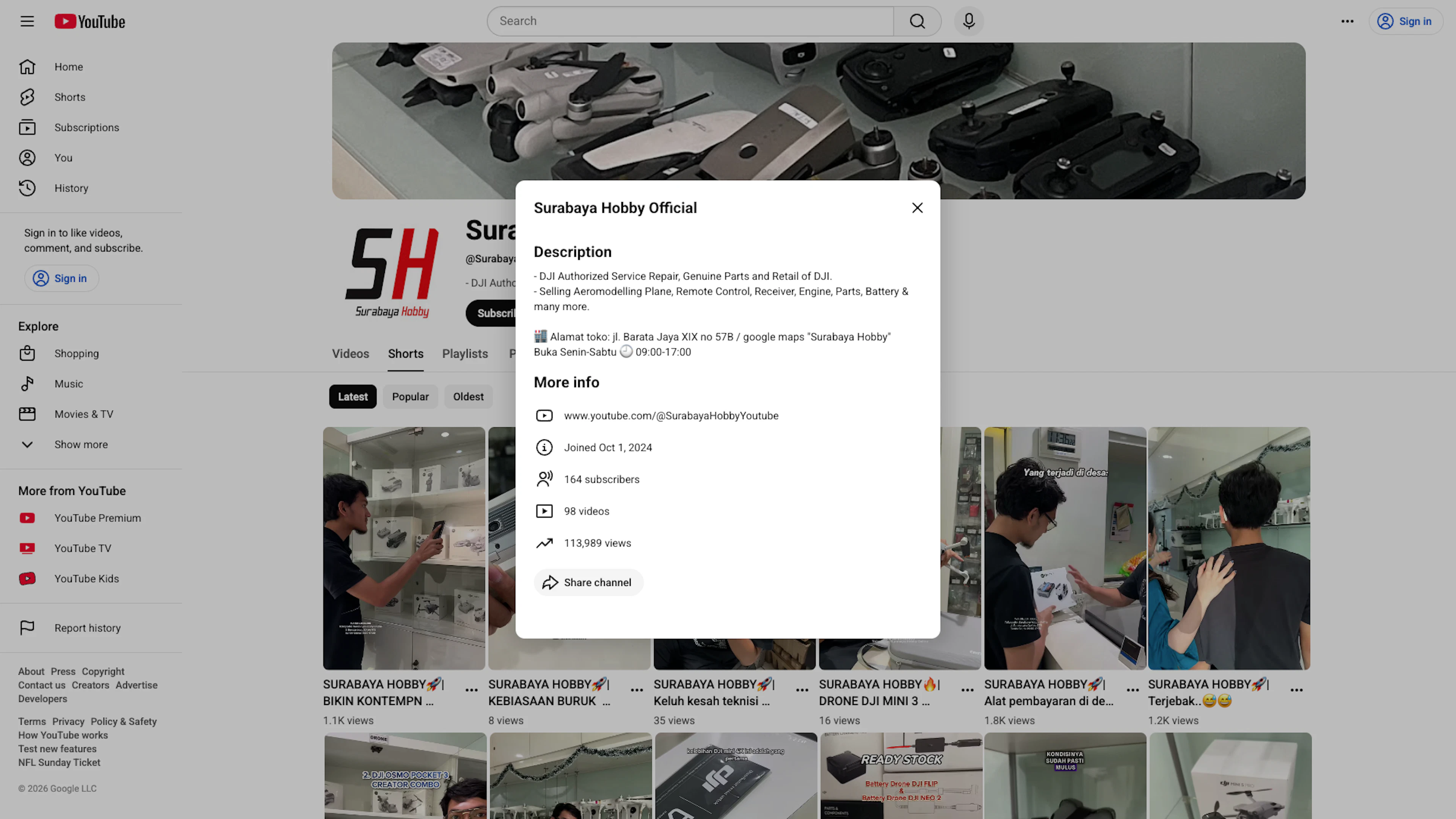
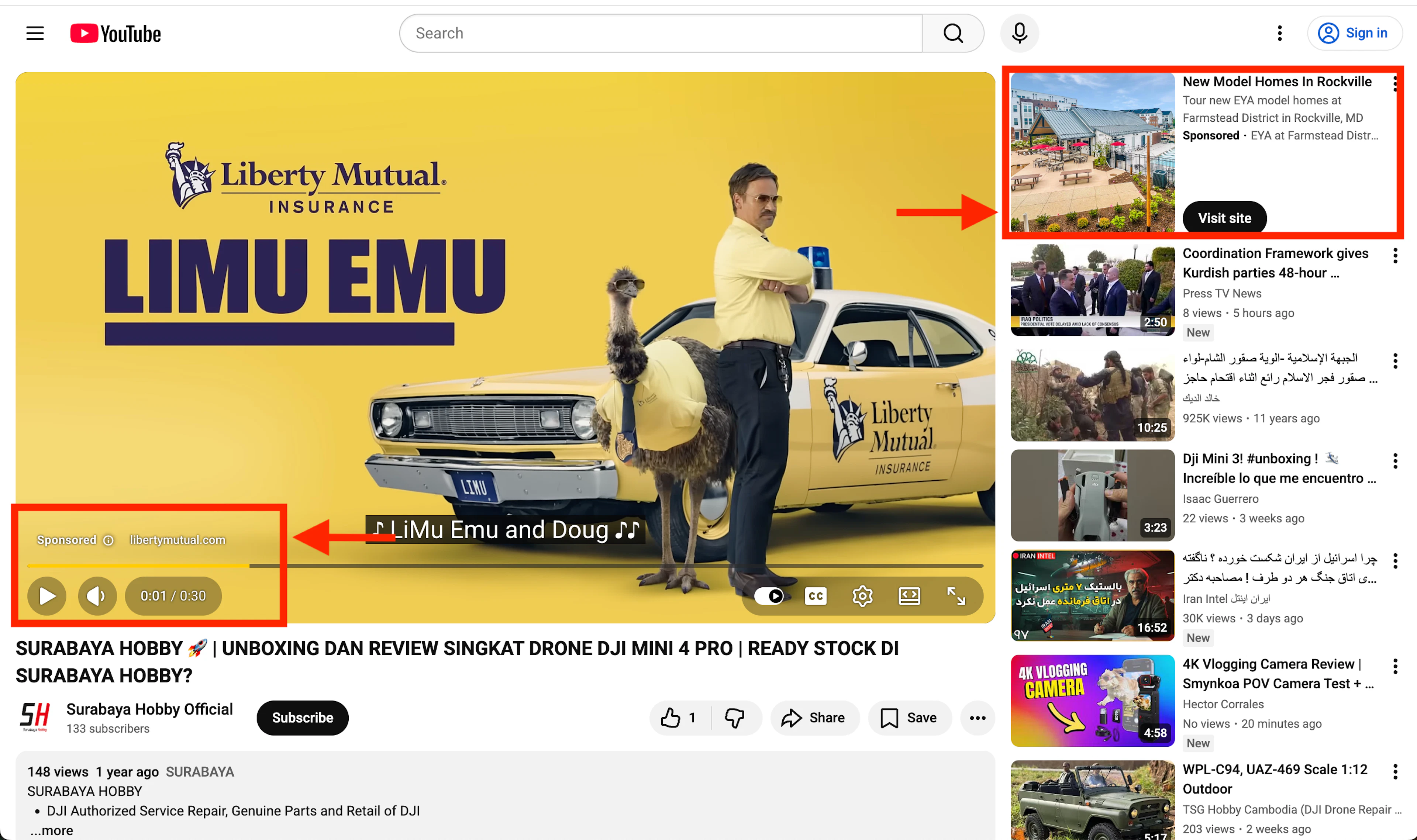
TTP also identified a YouTube channel for Surabaya Hobby SV, an Indonesian company sanctioned for supplying Iran with drone components.
TTP also identified a YouTube channel for Surabaya Hobby SV, an Indonesian company sanctioned for supplying Iran with drone components.
Other regime enforcers
Iran’s counter-terror special forces unit appears to have a YouTube channel called “NOPO Official.” The channel, which was created in December 2025 and has amassed more than 6.7 million views, posts promotional videos about police activities. It is linked on a Telegram account for the unit.
One of the channel’s videos featured an in-feed ad for MIT’s professional development courses, while its YouTube Shorts feed had an ad for the Morgan & Morgan law firm.
OFAC announced sanctions on the special forces unit in December 2021, saying it “used excessive and lethal force, firing upon unarmed protestors, including women and children, with automatic weapons.” In the announcement, OFAC gave the group’s acronym NOPO, and OFAC’s public database also gives NOPO as one of the group’s aliases.
The channel’s description section links to another YouTube channel called “nopo policenopo” that promotes the unit. This second channel was created in May 2024 and has more than 141,000 views. It featured in-feed ads and YouTube Shorts ads.
Ali Akbar Velayati, who serves as an advisor to Iran’s new Supreme Leader Ayatollah Mojtaba Khamenei after doing the same for Khamenei’s father, appears to have a YouTube channel in his own name. The channel, which shows news clips of Velayati speeches and interviews, was created in June 2013 and featured in-feed ads.
Since the outbreak of war with the U.S. and Israel, Velayati, a former Iranian foreign minister, has been vocal in taunting Trump and U.S. forces. On May 5, Velayati warned U.S. forces near the coast of Iran they are “extras in a movie show for Trump’s next presidential election” and could “end up in an abattoir,” according Iranian state Press TV.
OFAC announced sanctions against Velayati in November 2019, saying he gave the regime of former Syrian dictator Bashar Assad a “lifeline” through oil and investment deals. (Assad was ousted in December 2024.) OFAC also cited the fact that Velayati was charged with homicide in connection with the 1994 bombing of a Jewish community center in Buenos Aires, Argentina that left 85 people dead. Argentine prosecutors have called Velayati one of the “ideological masterminds” behind the attack.
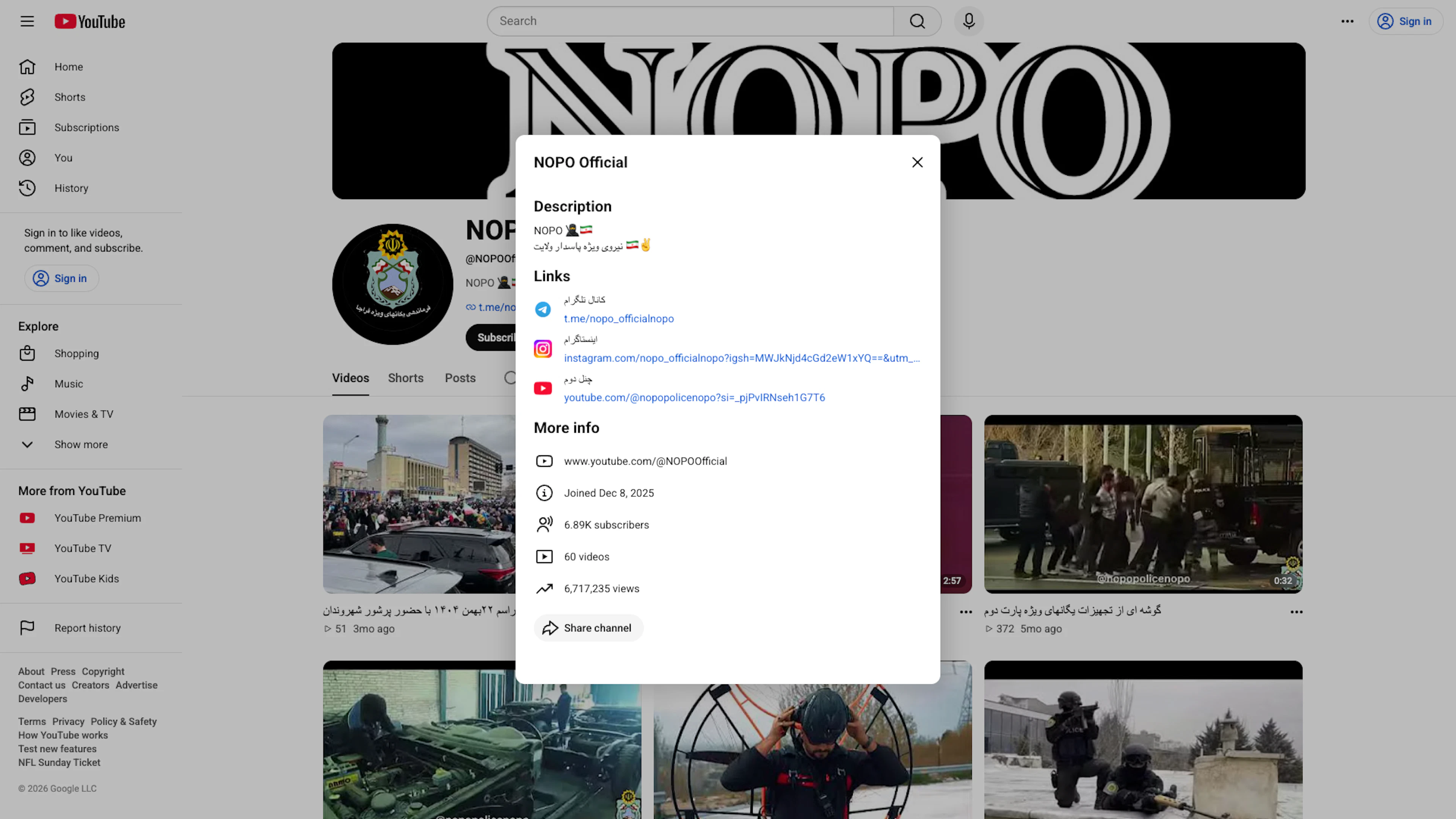
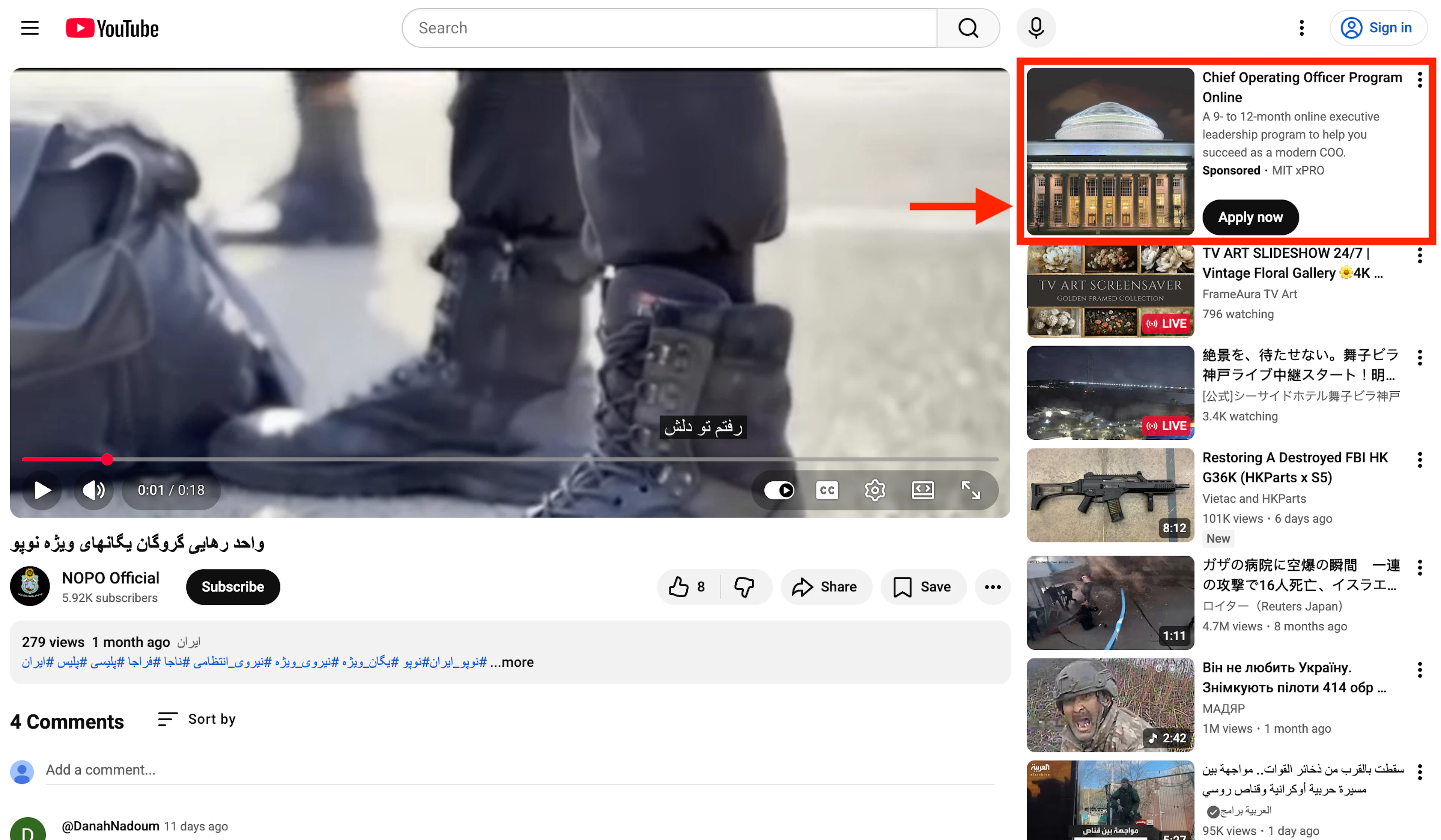
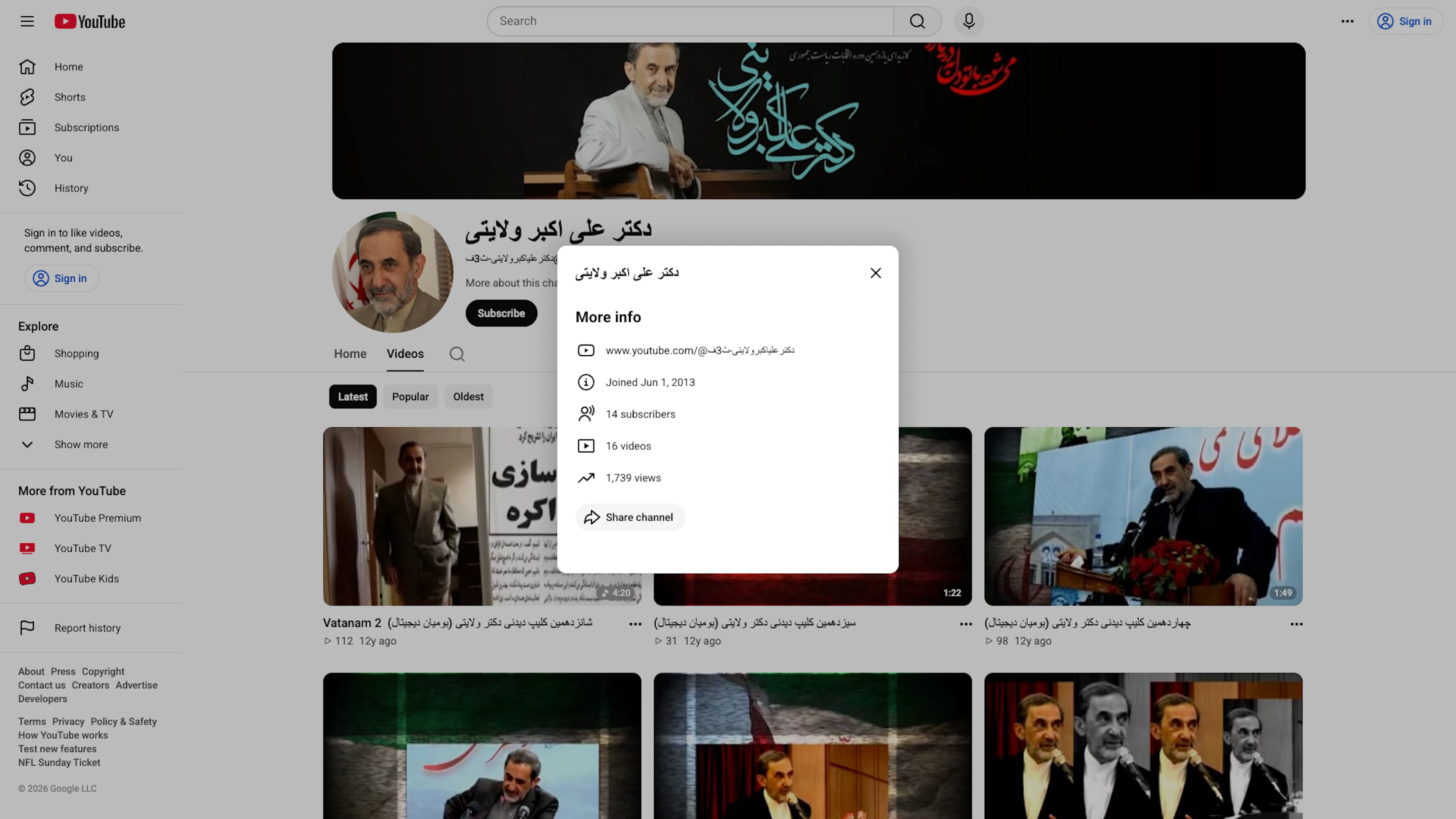
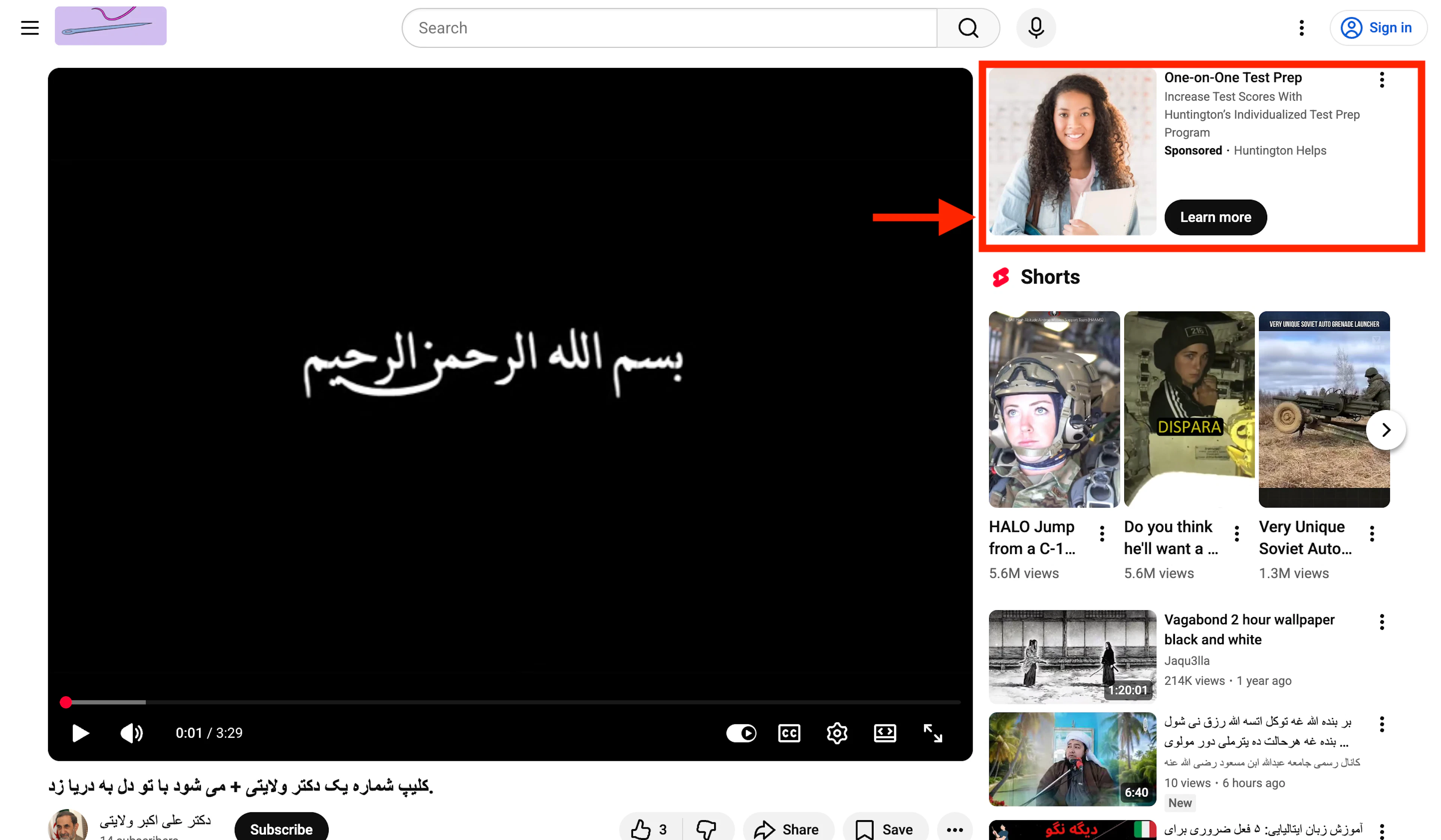
Iran’s counter-terror special forces unit, which is under U.S. sanctions, appears to have a YouTube channel.
Iran’s counter-terror special forces unit, which is under U.S. sanctions, appears to have a YouTube channel.
Naji Sharifi Zindashti, an Iranian accused of hunting down regime opponents abroad, appears to have a YouTube channel under his own name. The channel was created in March 2020 and gives Zindashti’s name in both Farsi and Turkish. It features videos of him taking part in what looks like an official event this year. The channel included both in-feed and in-stream ads, including for Intuit’s TurboTax and Washington, D.C. mayoral candidate Kenyan McDuffie.
The U.S. announced sanctions against Zindashti in January 2024, saying he is a narcotics trafficker who leads a network targeting Iranian dissidents for assassination and kidnapping at the behest of Iran’s Ministry of Intelligence and Security. The U.S. Justice Department has charged Zindashti with plotting to murder an Iranian defector living in Maryland, and he is on the FBI’s Most Wanted list.
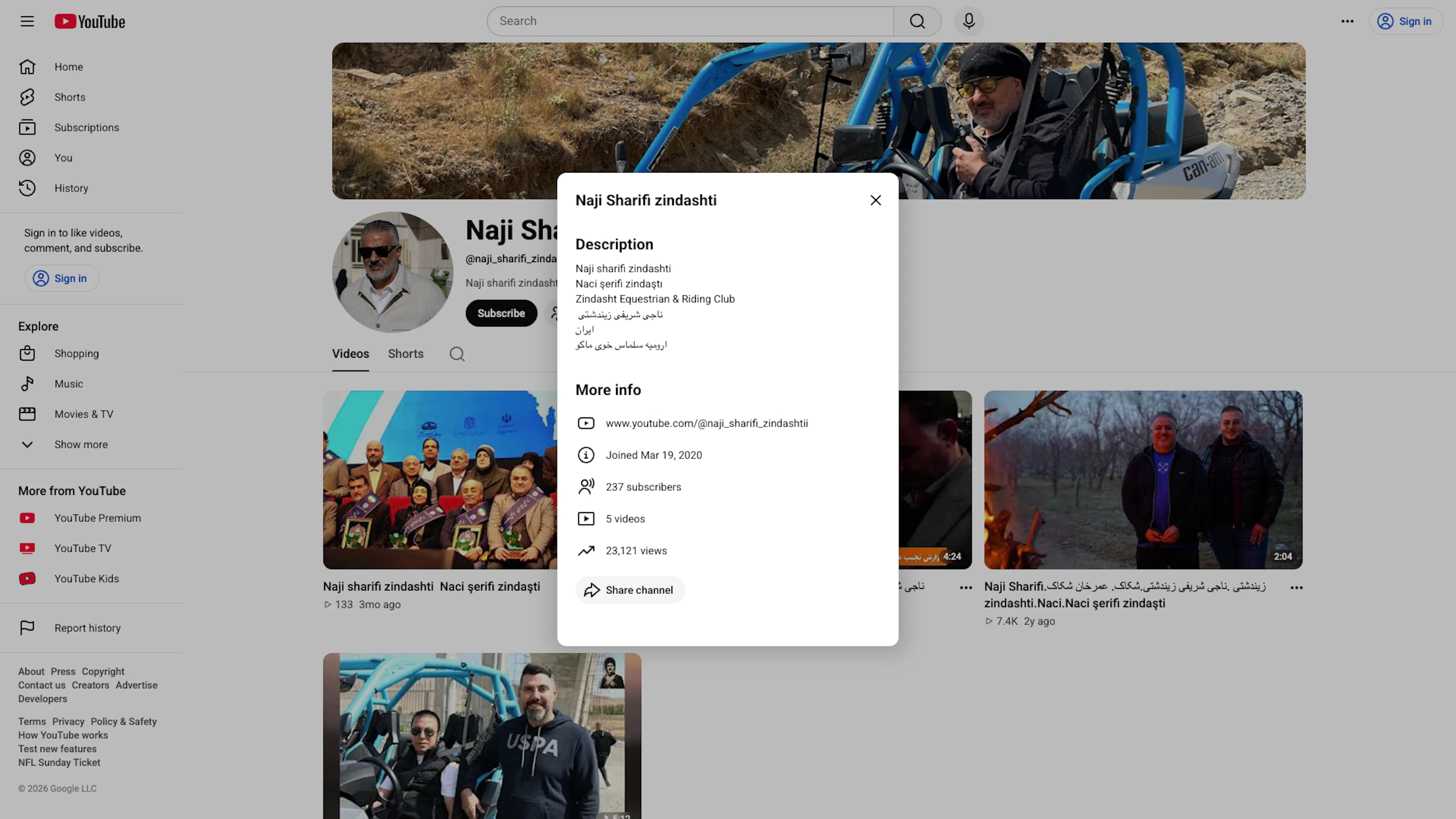
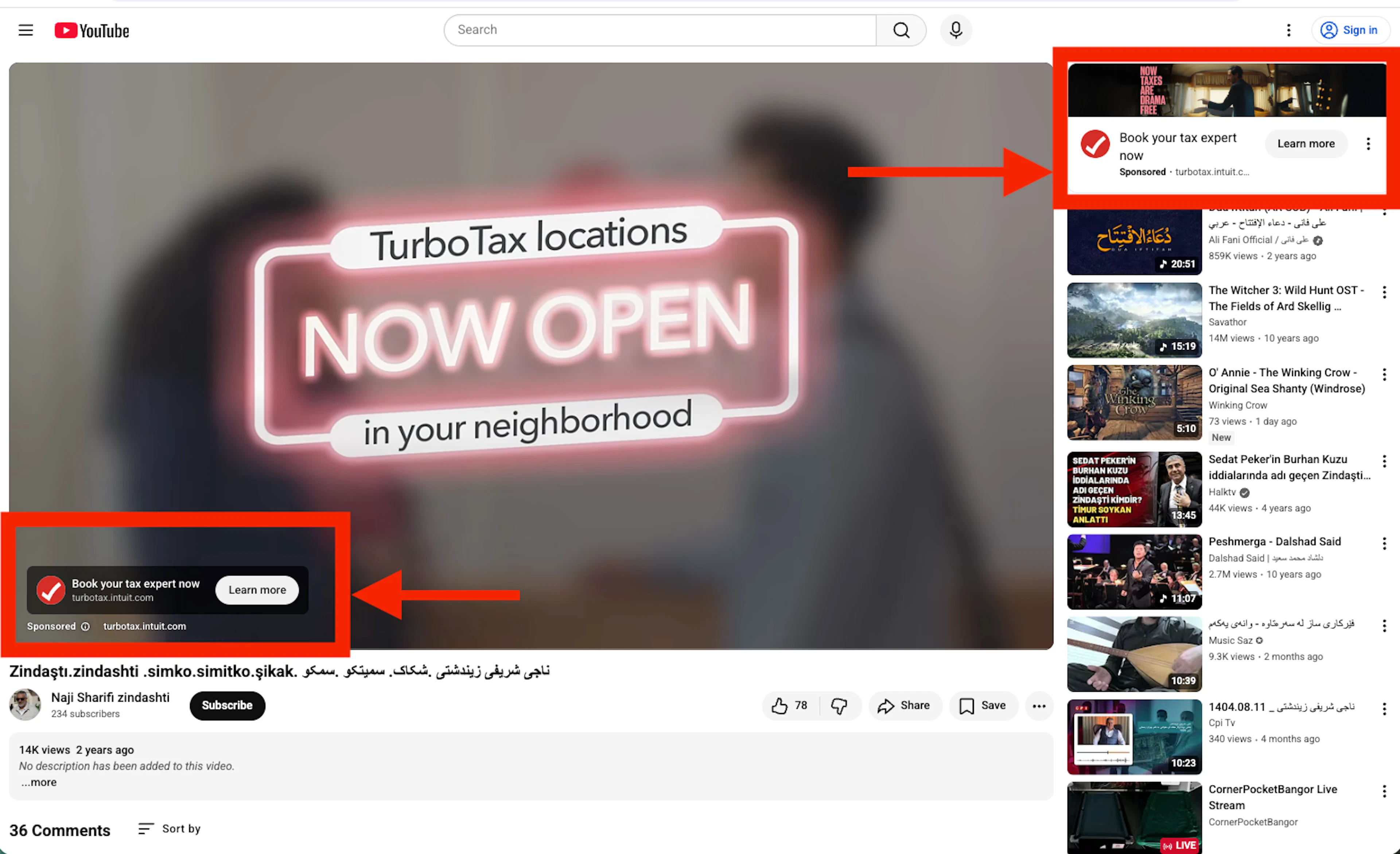
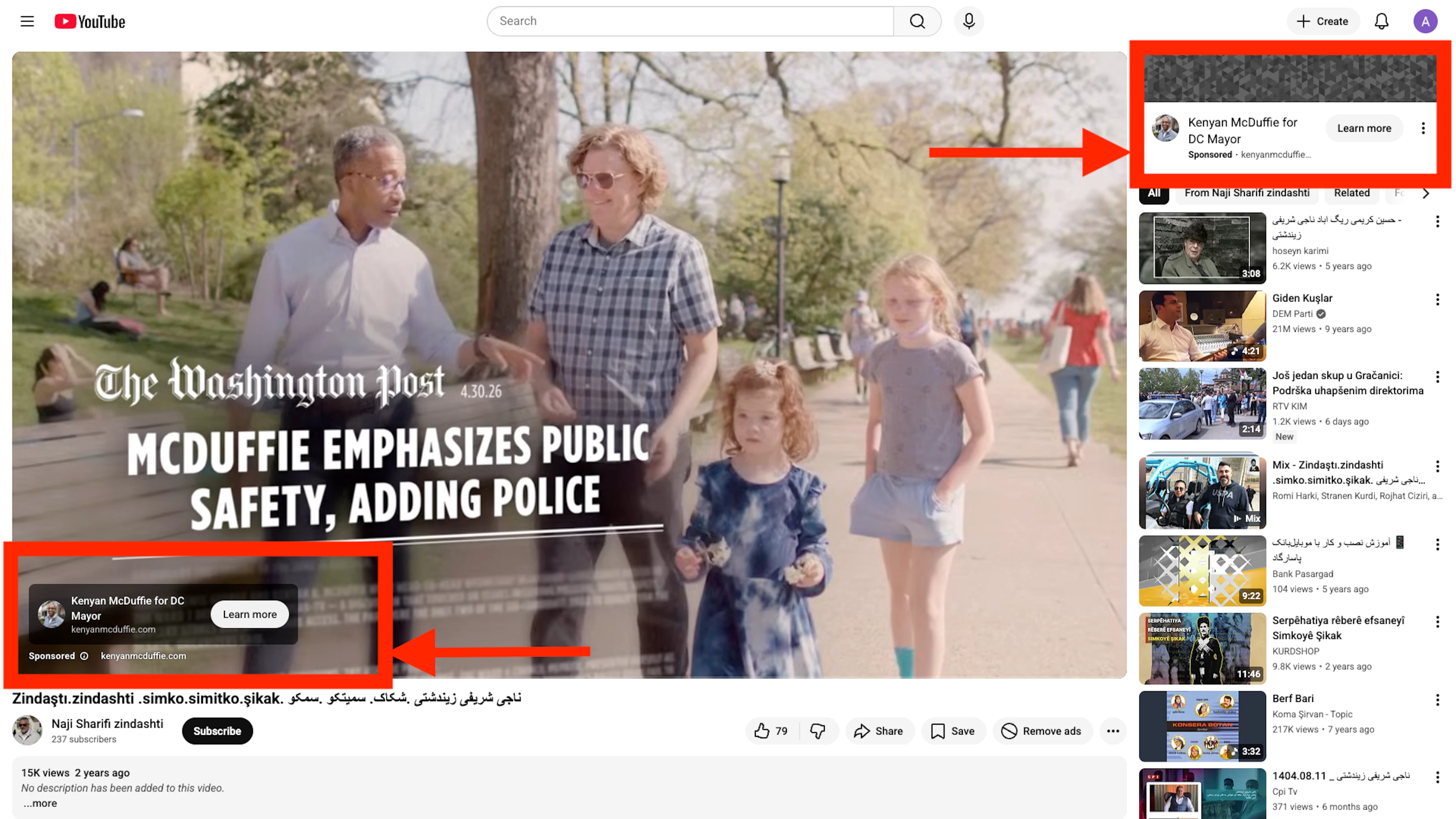
Naji Sharifi Zindashti, who is accused of targeting opponents of the Iranian regime for assassination, appears to have a YouTube channel.
Naji Sharifi Zindashti, who is accused of targeting opponents of the Iranian regime for assassination, appears to have a YouTube channel.
State media and banks
Islamic Republic of Iran Broadcasting (IRIB), the organization overseeing all of Iran’s radio and TV, operates an Africa-focused network, Hausa TV, which has a YouTube channel in its own name. The channel, which gives its location as Nigeria, was created in November 2024 and has over 154,000 views. It is linked on HausaTV’s official Telegram account.
The channel, which features news segments in support of the Iranian regime, included in-feed ads, in-stream ads, and YouTube Shorts ads. It showed an in-stream ad for petroleum giant BP and a Shorts ad for haircare influencer Daviana Mercedes.
OFAC announced sanctions against IRIB in February 2013, saying it distributed distorted and false news reports and broadcast forced confessions of political detainees. As a property of IRIB, Hausa TV would likely also be subject to U.S. sanctions. (Under OFAC’s 50% rule, any entity that is more than 50% controlled by an SDN is also subject to sanctions.)
Other IRIB-operated networks had channels that were active for years before being removed from YouTube. For example, the Spanish-language HispanTV, had a channel with the handle @nexo_latino that was taken down in late February 2026. It had 18,000 subscribers and featured in-feed and YouTube Shorts ads, including for AI coding agent Zencoder.
Another YouTube channel for Press TV, IRIB’s English-language outlet, was created in May 2020 and got removed sometime between April 22 and May 12, 2026. Before it was taken down, the channel had nearly 10,000 subscribers and over 660,000 views. It included in-stream ads, in-feed ads, and YouTube Shorts ads. TTP saw ads for luxury watchmaker Breitling and Verizon. The channel was linked on one of Press TV’s Facebook pages.
Press TV is both part of the U.S.-sanctioned IRIB and directly sanctioned itself as a Specially Designated National.
YouTube has previously removed channels for both Press TV and HispanTV, telling media that the removals were done to comply with sanctions.
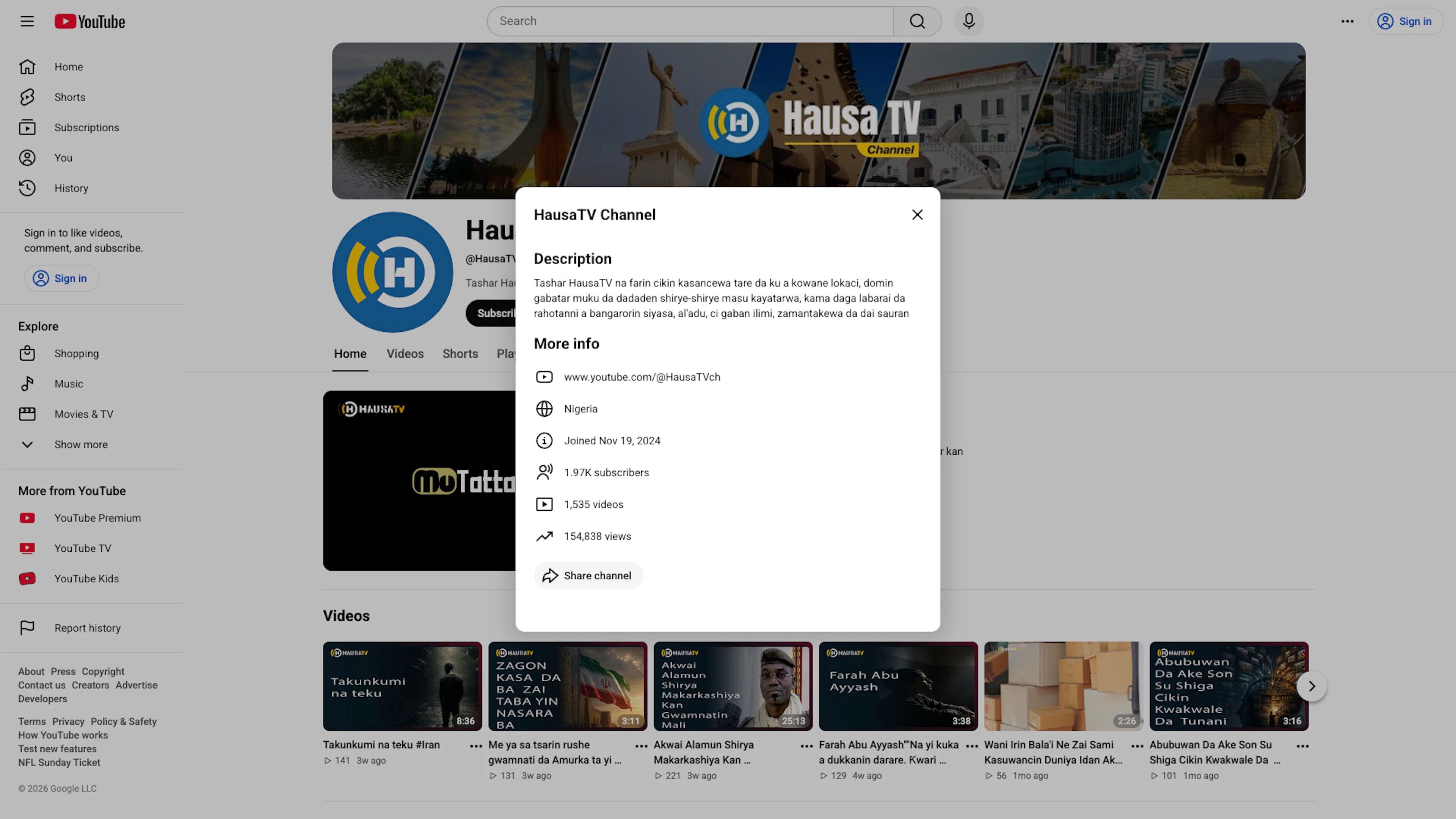
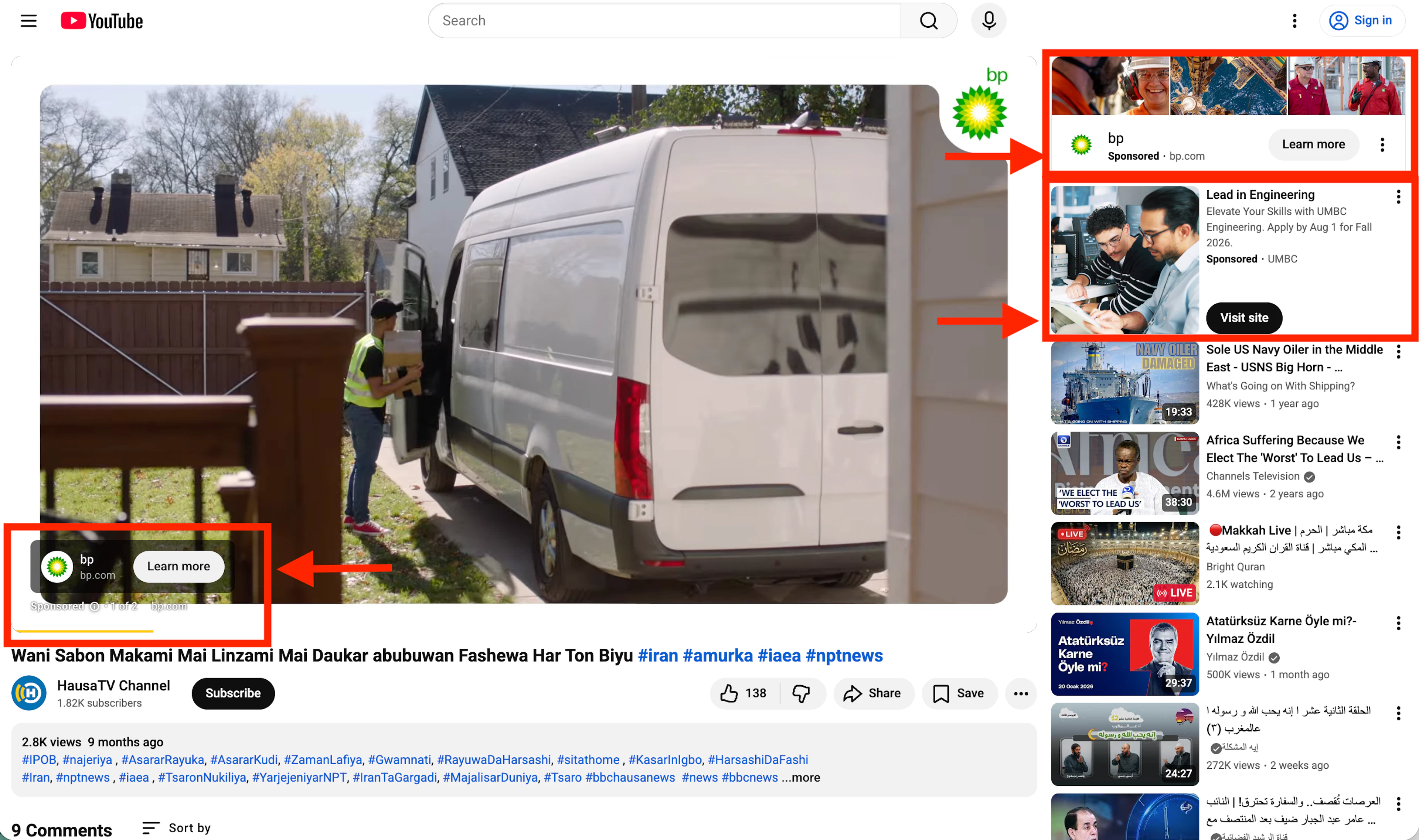
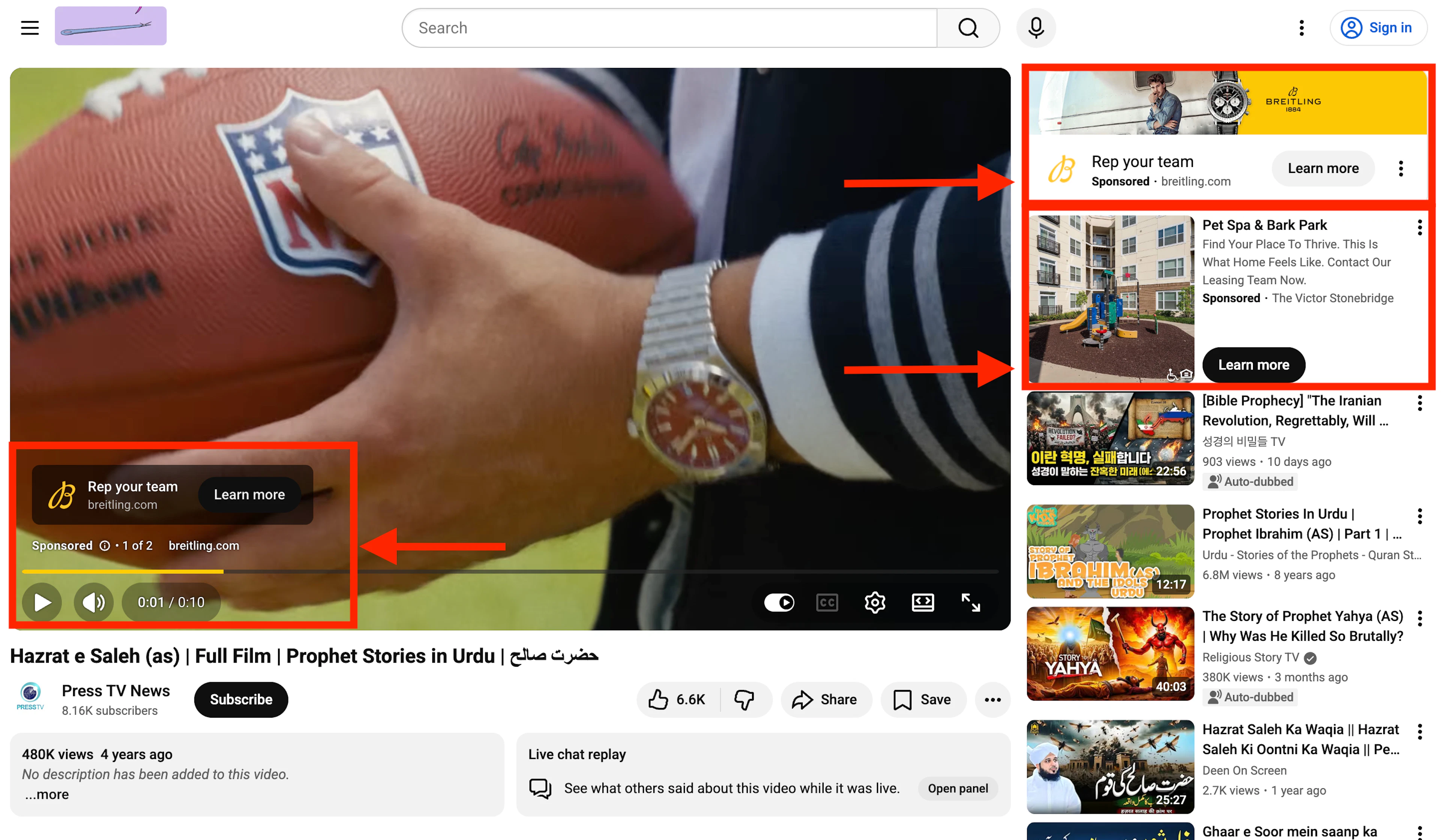
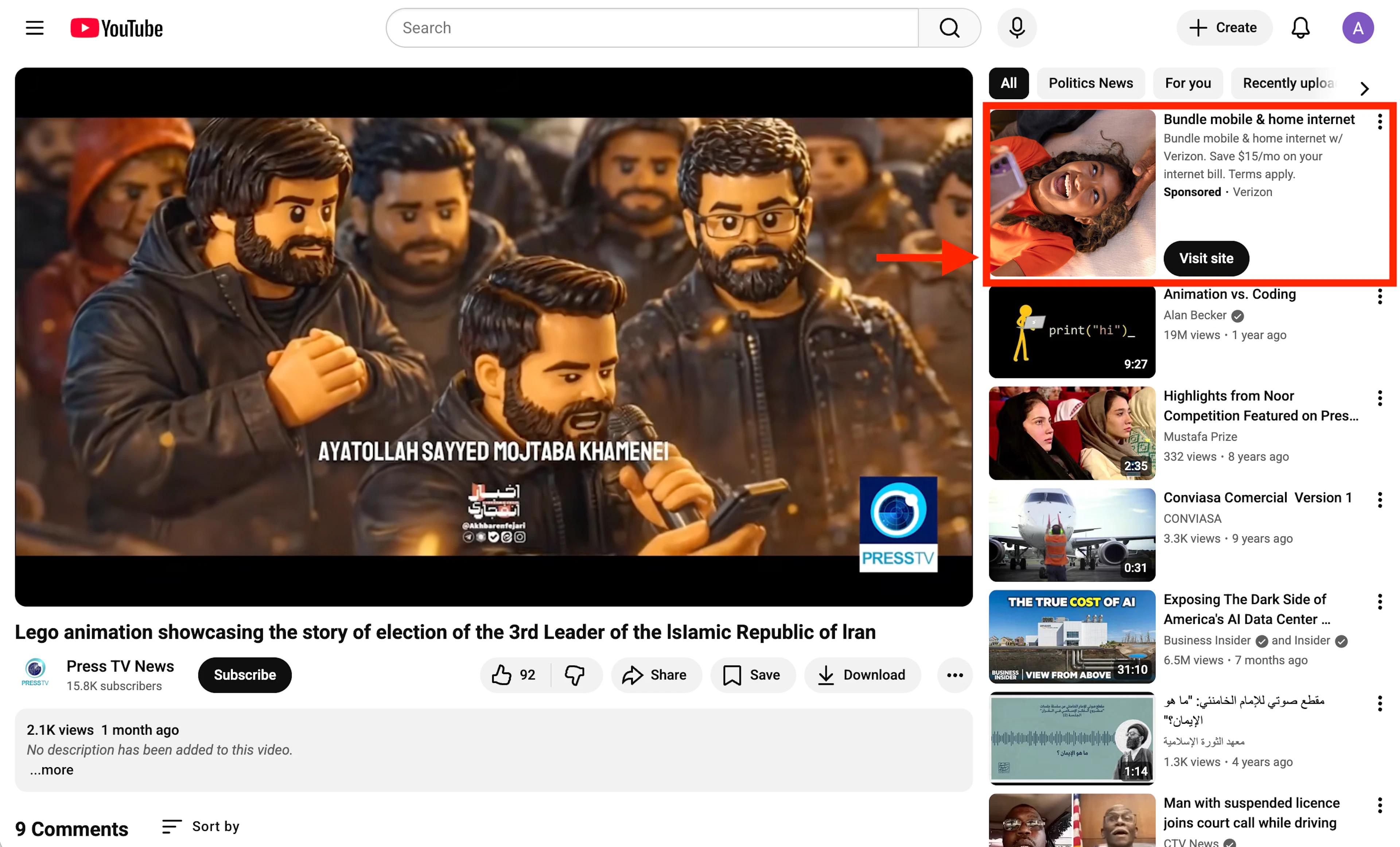
TTP identified several YouTube channels for Iran state broadcaster networks.
TTP identified several YouTube channels for Iran state broadcaster networks.
The U.S.-sanctioned Pasargad Bank has a YouTube channel under its own name. The channel was created in January 2015 and has more than 44,000 views. It is linked on Pasargad Bank’s official X account and uses the bank’s web domain in its email address.
The channel, which promotes the bank’s products and services, featured multiple ads, including an in-stream ad for the weight loss drug Ozempic and an in-feed ad for ZenBusiness featuring billionaire Mark Cuban.
OFAC announced sanctions against Pasargad Bank in October 2020 as part of a broad action designed to deny the Iranian regime financial resources to fund its nuclear and missile programs, terrorist proxies, and “malign regional influence.”
TTP identified several other YouTube channels for banks sanctioned at the same time as Pasargad, including Saman Bank, Bank Keshavarzi Iran, Bank Maskan, and Bank Refah Kargaran.
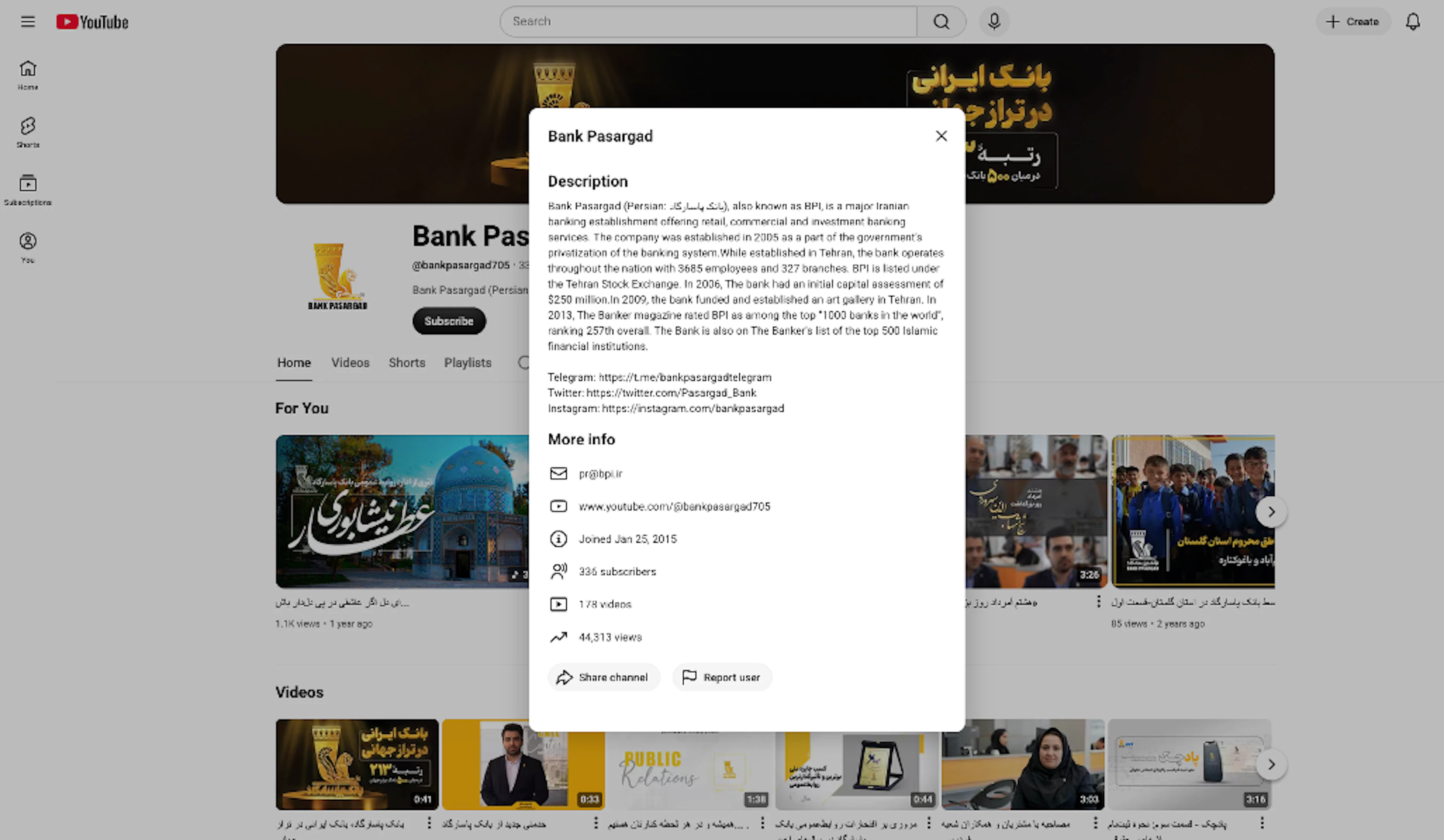
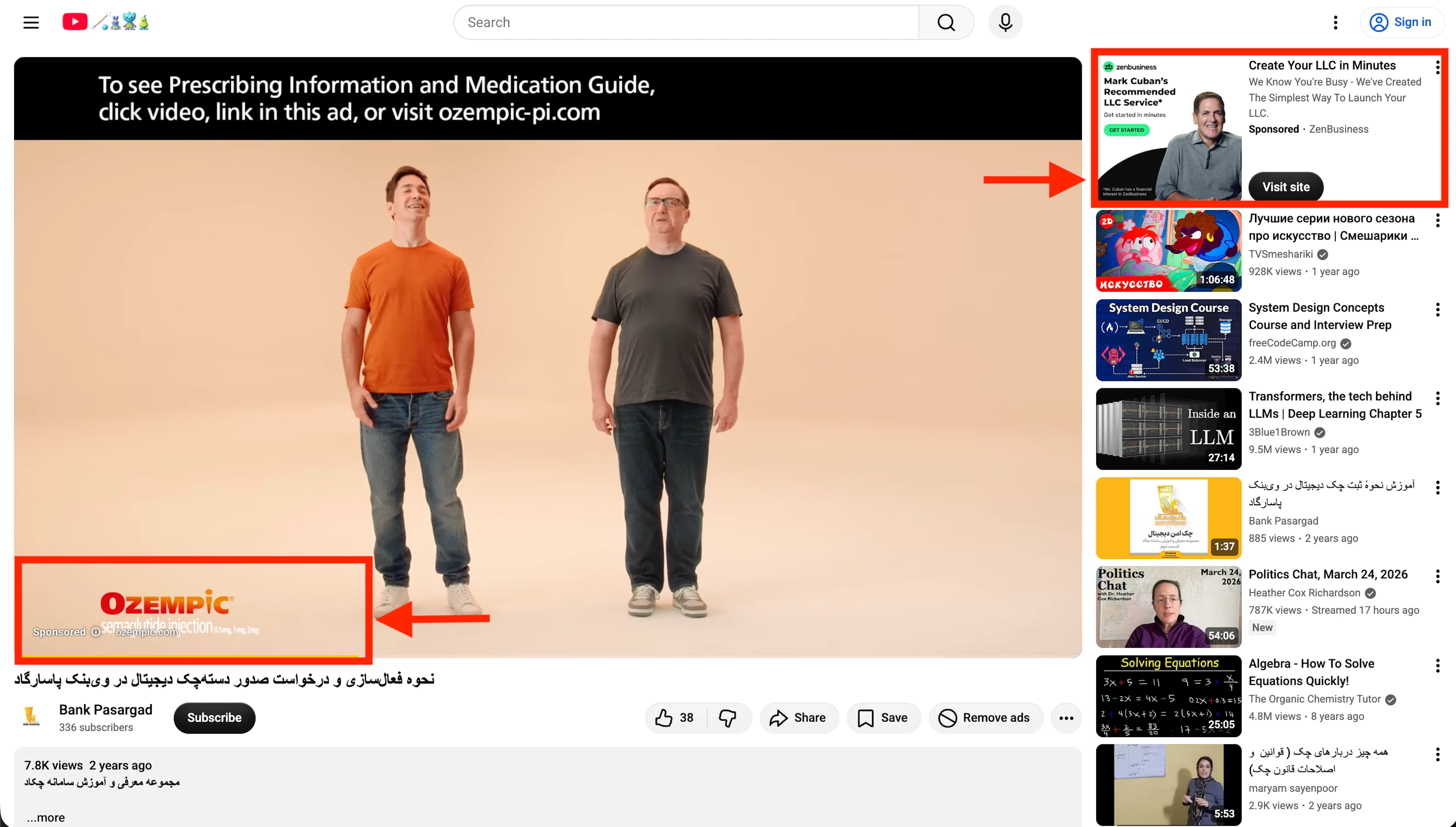
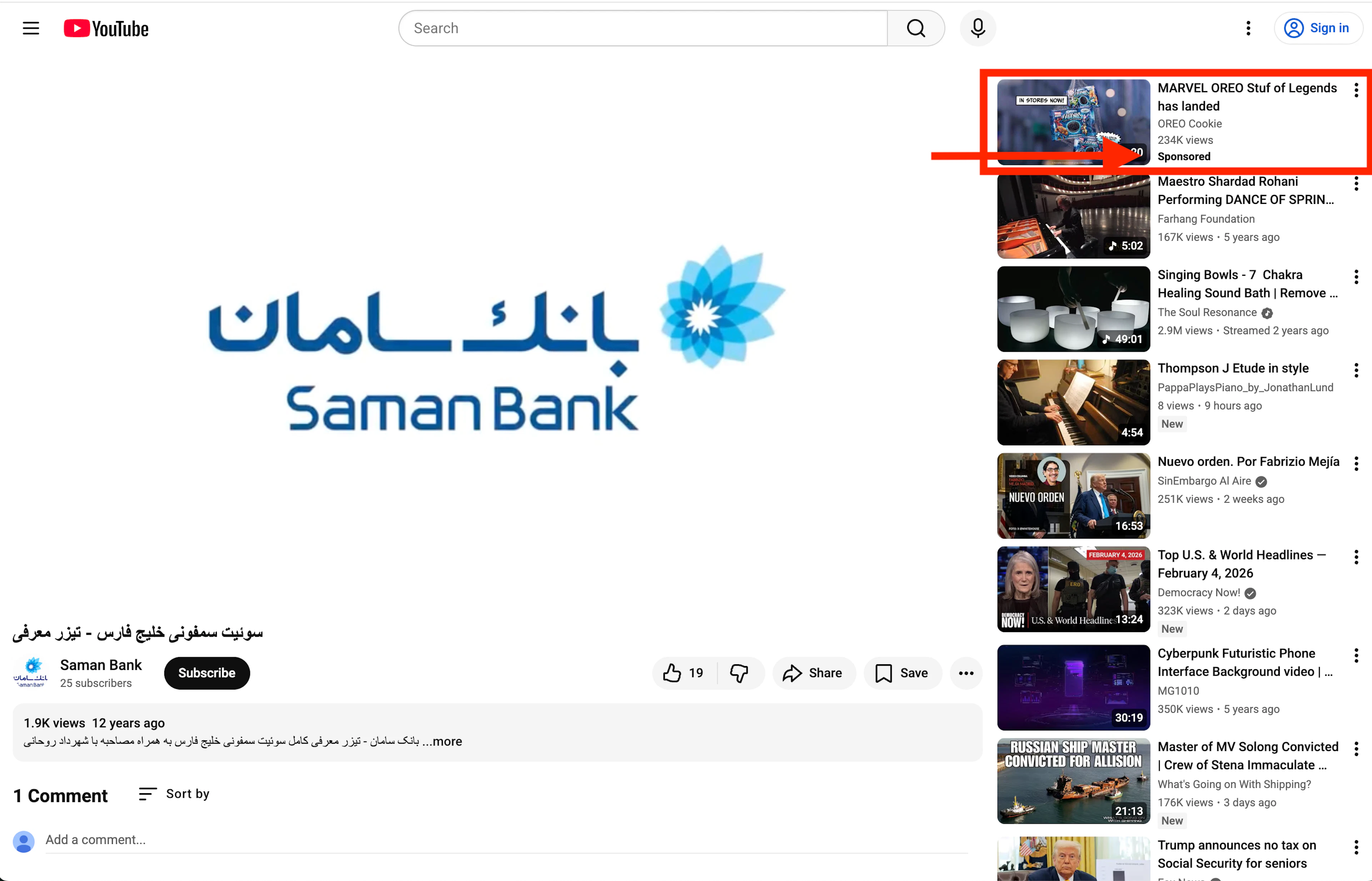
The U.S.-sanctioned Pasargad Bank has a YouTube channel.
The U.S.-sanctioned Pasargad Bank has a YouTube channel.
Iran government entities
TTP identified additional YouTube channels associated with the government of Iran, which has been under U.S. sanctions dating back to the country’s 1979 Islamic revolution. According to U.S. regulations, the government of Iran includes “any entity owned or controlled directly or indirectly” by the government.
Below are some of the key figures in this group.
Masoud Pezeshkian, the president of Iran, has multiple channels on YouTube. One with the name “Dr. Masoud Pezeshkian's information base” in Farsi is linked on Pezeshkian’s official website. The channel features a collection of Pezeshkian speeches, events, and television interviews. The channel, which was created in July 2024, has over 93,000 views and featured both in-feed and YouTube Shorts ads, including one for Rocket Mortgage.
Another channel with the name “Masoud Pezeshkian,” which also promotes Pezeshkian’s speeches and interviews, gives its location as Germany. The channel was created in July 2024 and has more than 4.5 million views. It featured YouTube Shorts ads. The most recent video from the channel was posted in October 2024.
Mohammed Mehdi Mirbagheri, a cleric and member of Iran’s Assembly of Experts, the body that selects and oversees the country’s supreme leader, appears to have two YouTube channels. One channel called “Ayatollah Mirbagheri” was created in August 2021 and gives a contact email with the same domain as Mirbagheri’s official website. It showed videos of Mirbagheri giving interviews, speaking, or reciting prayers, and was monetized with in-stream and in-feed ads, including an ad for a "toxic commando" video game from Focus Entertainment. Another channel with the name “Professor Mirbagheri” in Farsi was created in December 2022 and also featured in-feed ads.
Amir Hossein Sabeti, a hardline member of the Islamic Consultive Assembly, Iran’s parliamentary body, has a YouTube channel called “Iranian historical memory” in Farsi. It is linked on his personal website. The channel, which features Sabeti in most of its videos, was created in February 2022 and has more than 20,800 subscribers and over 3.5 million views. Its description section indicates it is run from the U.S. The channel has continued to post videos throughout the war, with the most recent video posted on May 29.
The channel included in-stream ads, in-feed ads, and YouTube shorts ads. They included an in-stream for pharmaceutical industry trade group PhRMA.
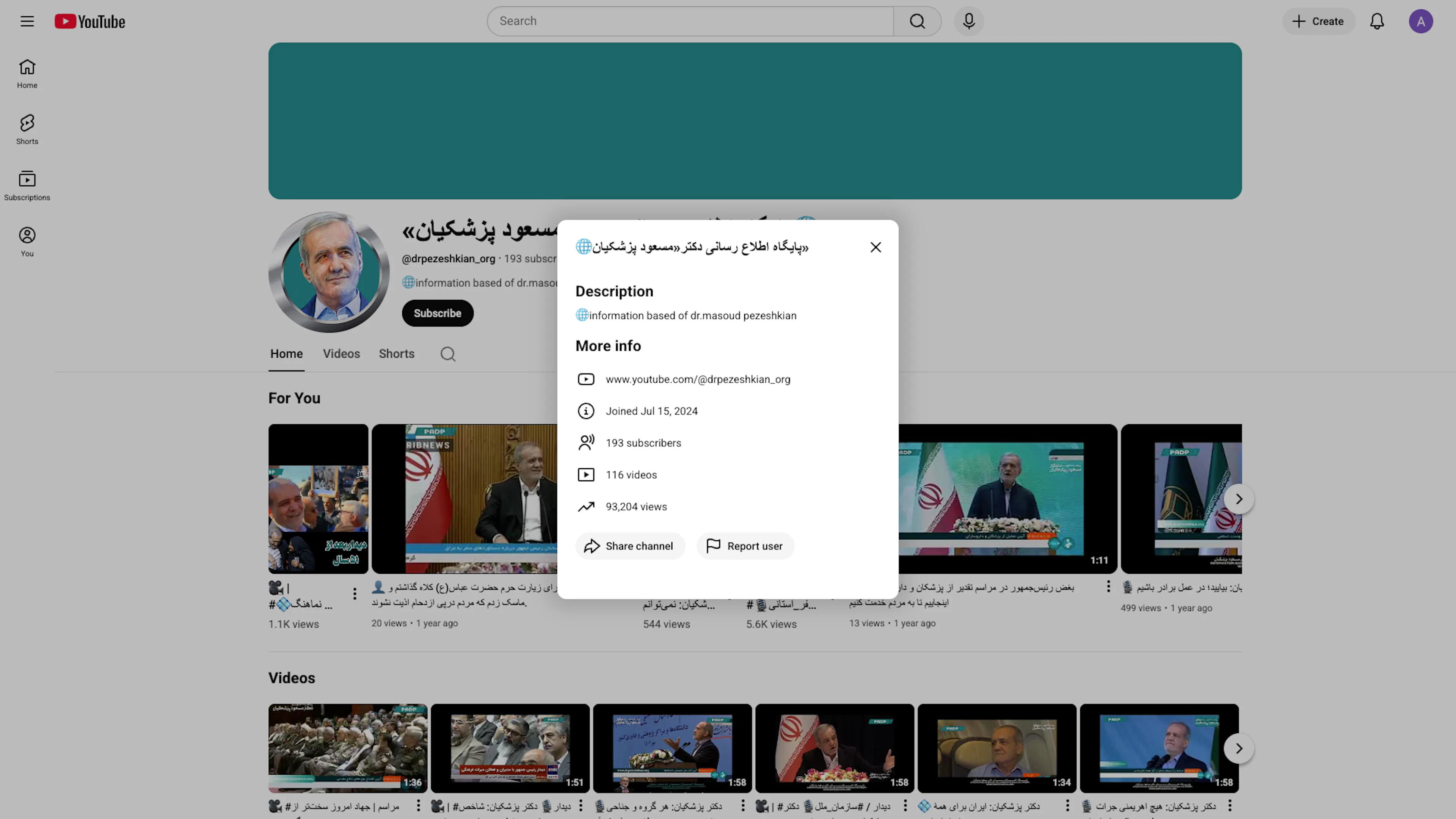
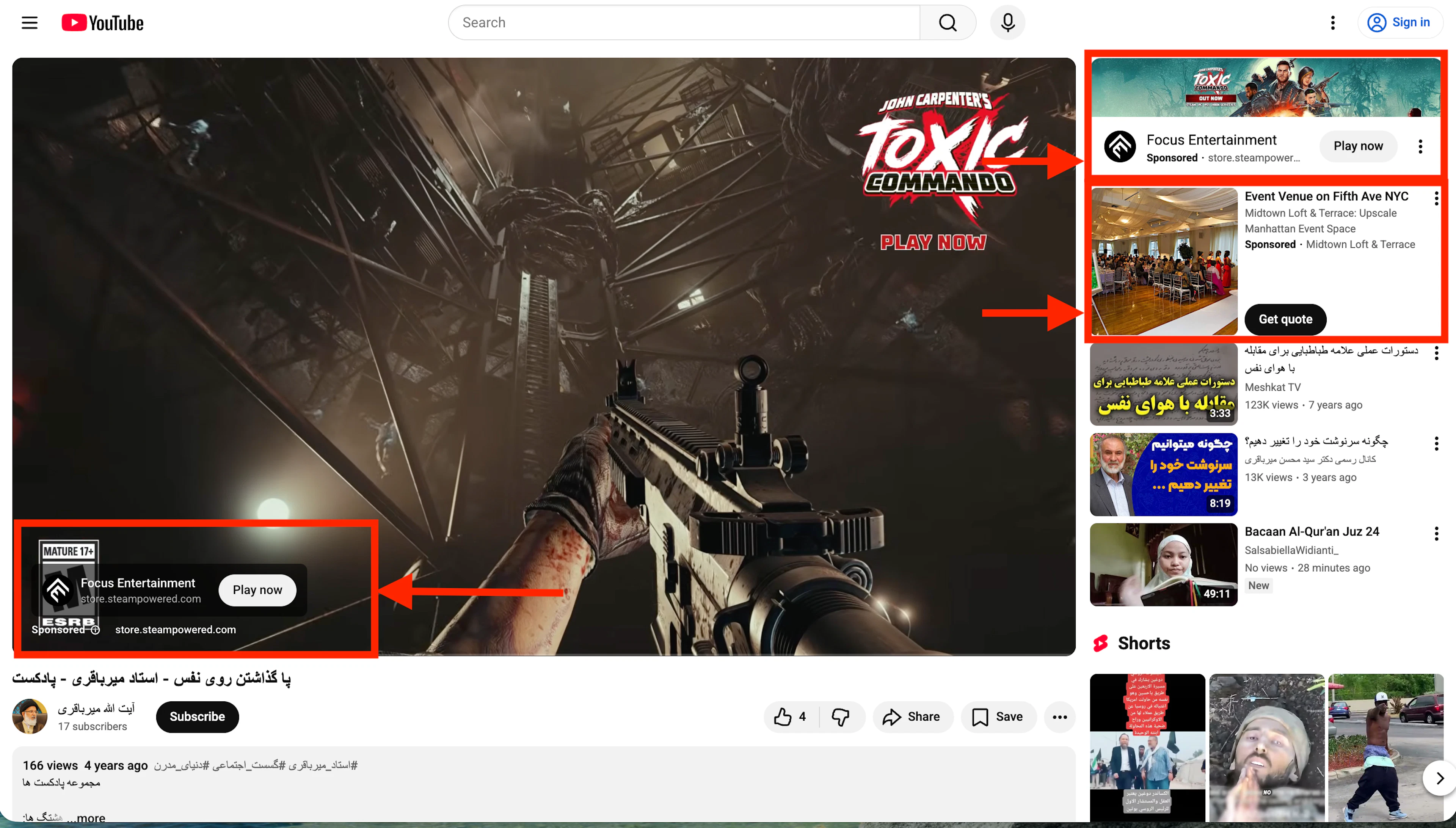
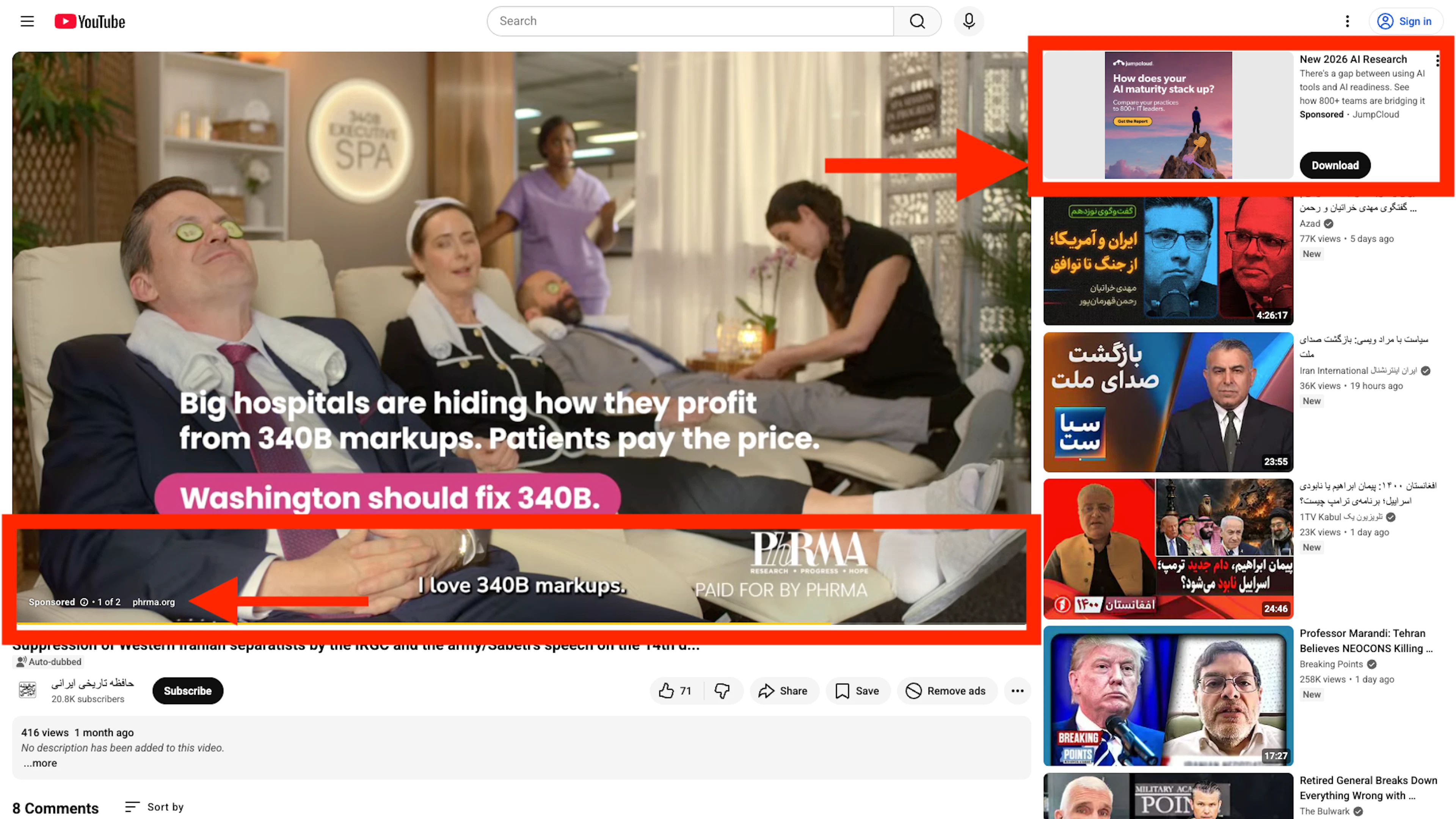
TTP found a YouTube channel for Iranian President Masoud Pezeshkian.
TTP found a YouTube channel for Iranian President Masoud Pezeshkian.
Iran’s Ministry of Cultural Heritage, Tourism and Handicrafts appears to have a channel with the name “MCTH_ir.” The channel, which gives its location as Iran, was created in March 2020 and has over 96,000 views.
YouTube ran in-stream ads and in-feed ads on the channel’s videos. One ad promoted jobs with U.S. Customs and Border Protection. That means YouTube placed an ad paid for with U.S. tax dollars on a channel for an Iranian government ministry.
Customs and Border Protection did not respond to a request for comment, but an agency spokesperson told Wired that it had raised the issue with YouTube.
CBP "ads are placed through a third-party contractor working with Google," the spokesperson said, adding, "We maintain brand safety controls and exclusion lists designed to prevent placement alongside sensitive content and regularly review and update those safeguards.”
Islamic Republic News Agency (IRNA), an Iranian state media outlet, has a YouTube channel in its own name. The channel was created in February 2025 and has 162,000 views. It is linked on IRNA’s official Telegram channel.
The channel featured in-stream ads and in-feed ads, including ad for auto insurance quotes.
TTP identified what appears to be another YouTube channel for the outlet called “IRNA_1313.” The channel, which gives its location as Iran, was created in December 2019 and has more than 27,900 views. It gives an email address that uses the same domain as IRNA’s website. The channel was monetized with in-stream ads.
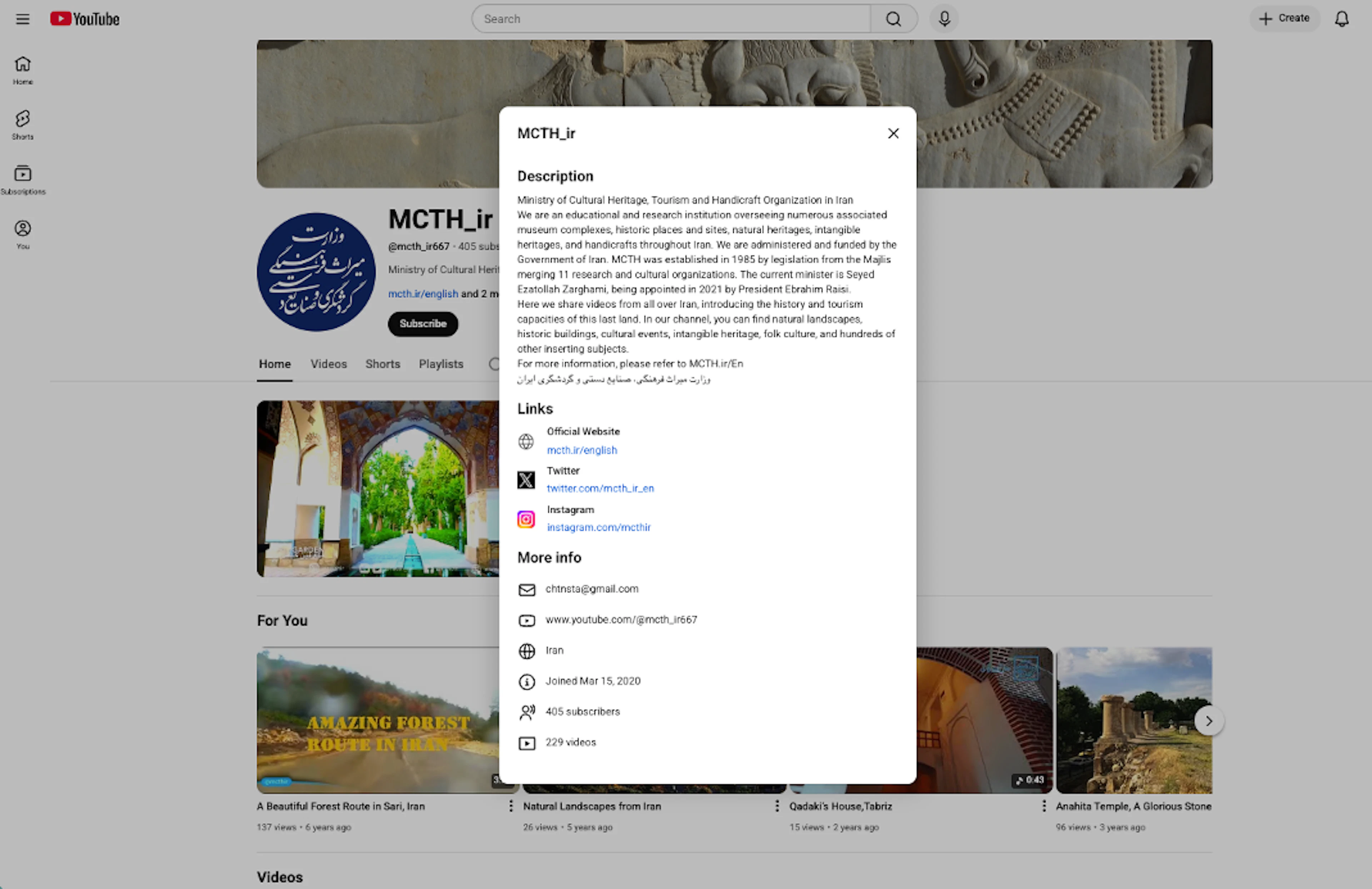
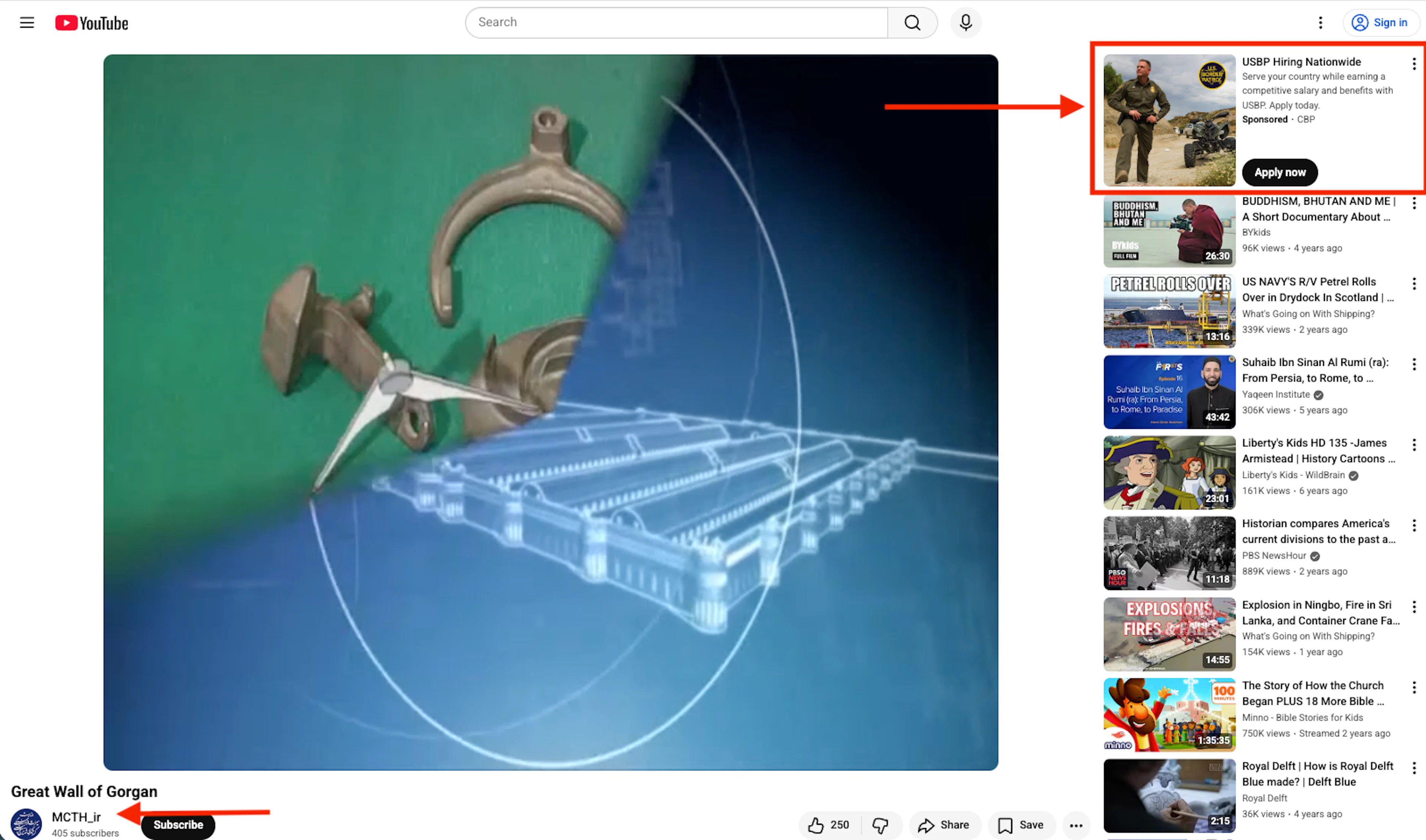
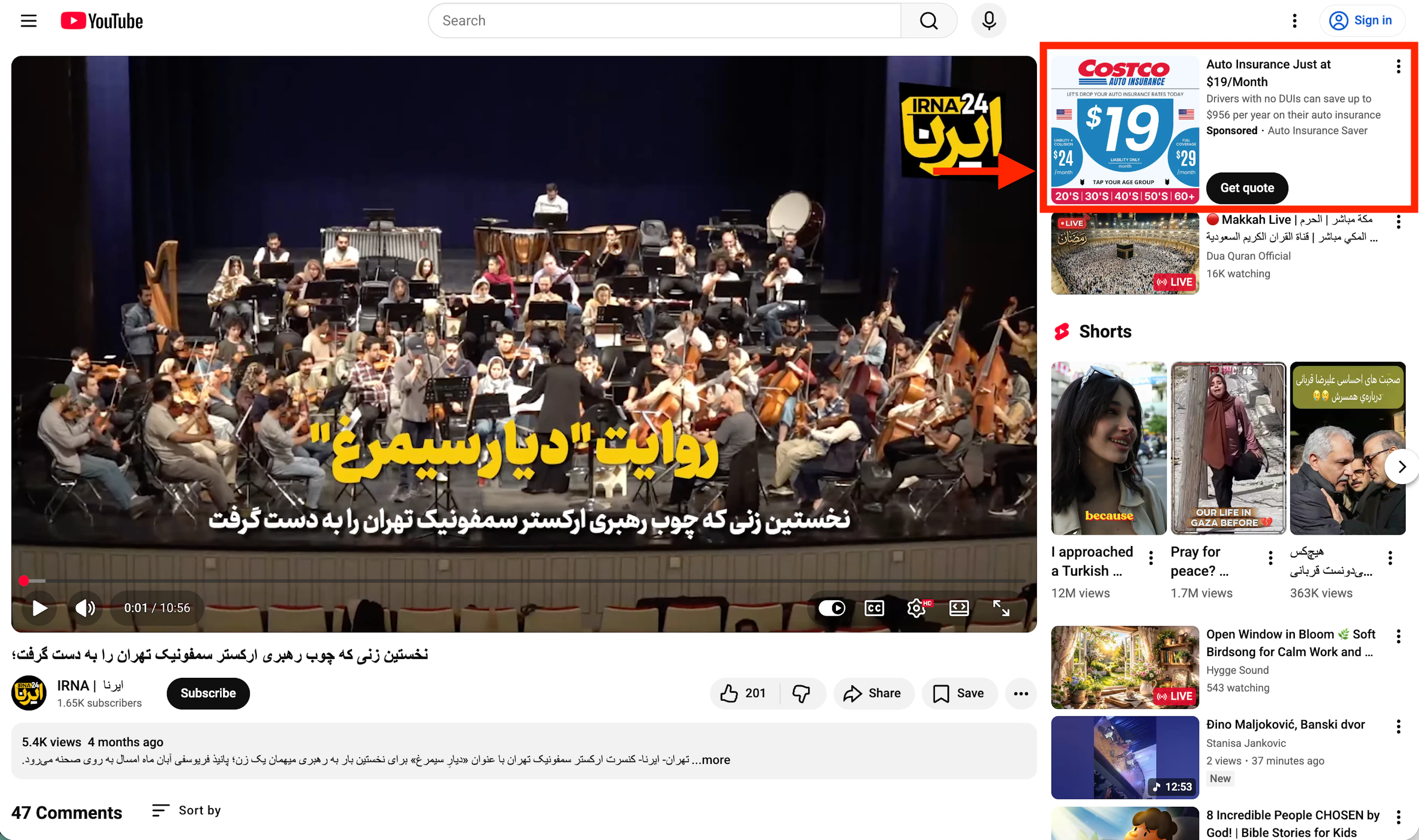
TTP found a YouTube channel for Iran’s Ministry of Cultural Heritage.
TTP found a YouTube channel for Iran’s Ministry of Cultural Heritage.
TTP identified another YouTube channel called “Institute of the Islamic Revolution,” which is dedicated to preserving the works of the late Supreme Leader Khamenei. The channel was created in June 2021 and has 73,000 views. It is linked on the Arabic version of Khamenei’s official website, indicating it is a product of the Iranian government. The channel, which features courses and texts based on Khamenei’s teachings, included in-feed ads. One ad was for corporate giving platform YourCause.
The elder Khamenei, who was killed by an airstrike in the first hours of the U.S.-Israeli campaign against Iran in February 2026, is still subject to sanctions, according to OFAC’s public database. (OFAC designated him as an SDN in June 2019.) Because OFAC regulations prohibit contributions of services “for the benefit of any blocked person,” YouTube may be violating sanctions by providing a platform to this institute or sharing ad revenue with it.
TTP identified another YouTube channel with the name “House of the Islamic Revolution” in Arabic. According to Khamenei’s official website, this is a publishing house that is part of the Office for the Preservation and Publication of the Works of Imam Khamenei. The Arabic-language channel gives its location as Lebanon and was created in February 2020. It featured both in-stream and in-feed ads by YouTube, including an ad for the web browser DuckDuckGo’s AI product and the American Association of Nurse Practitioners.
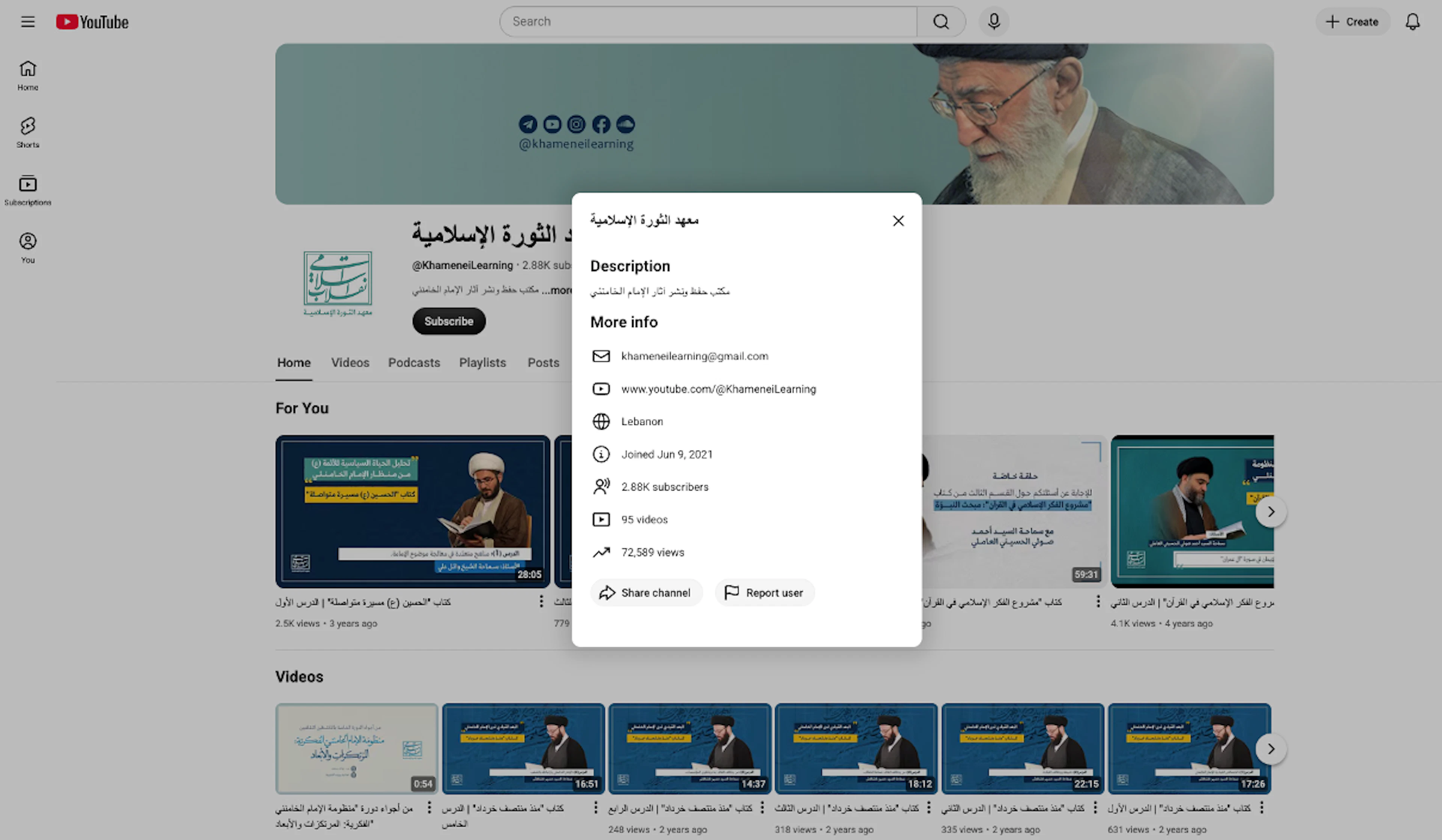
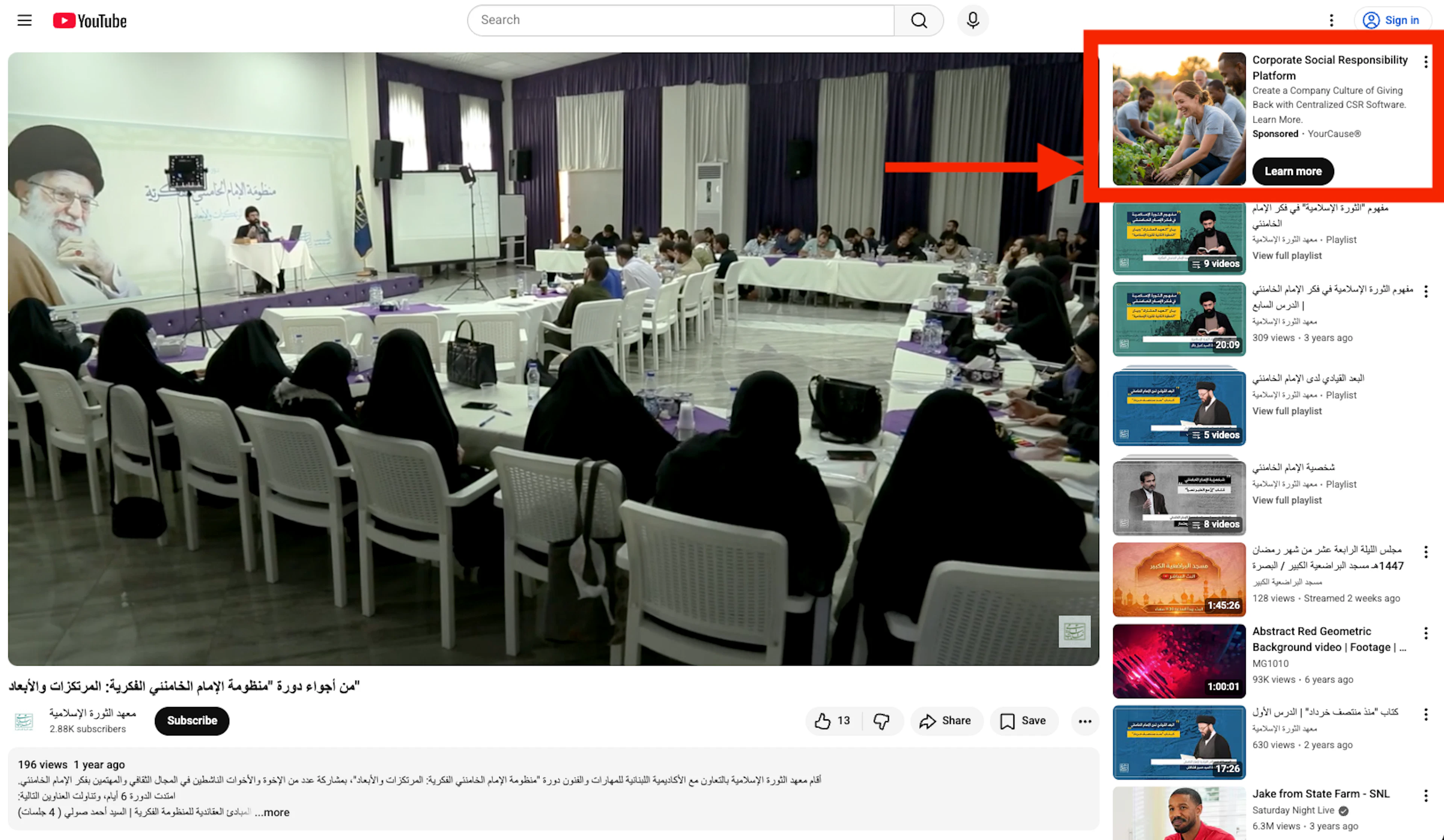
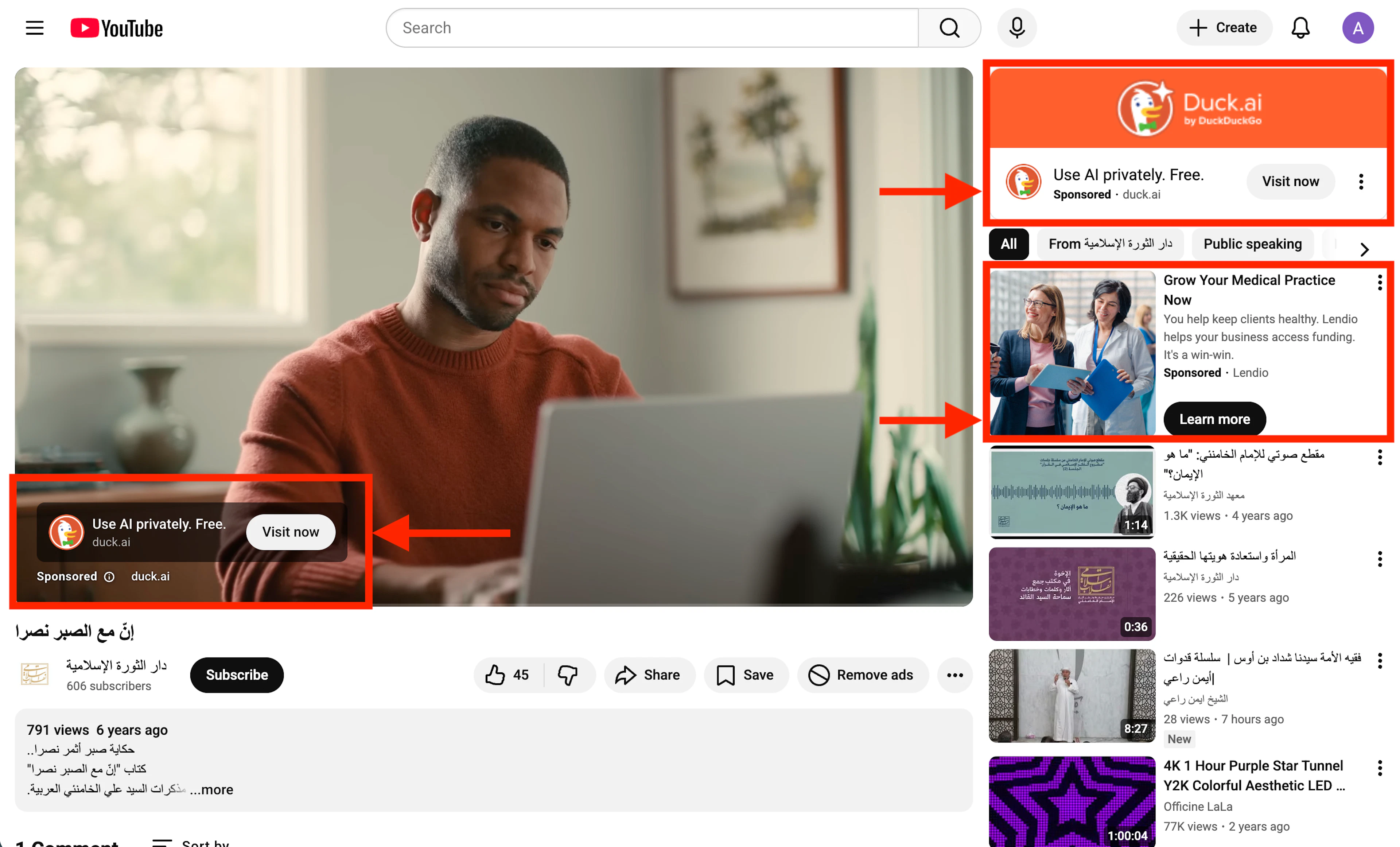
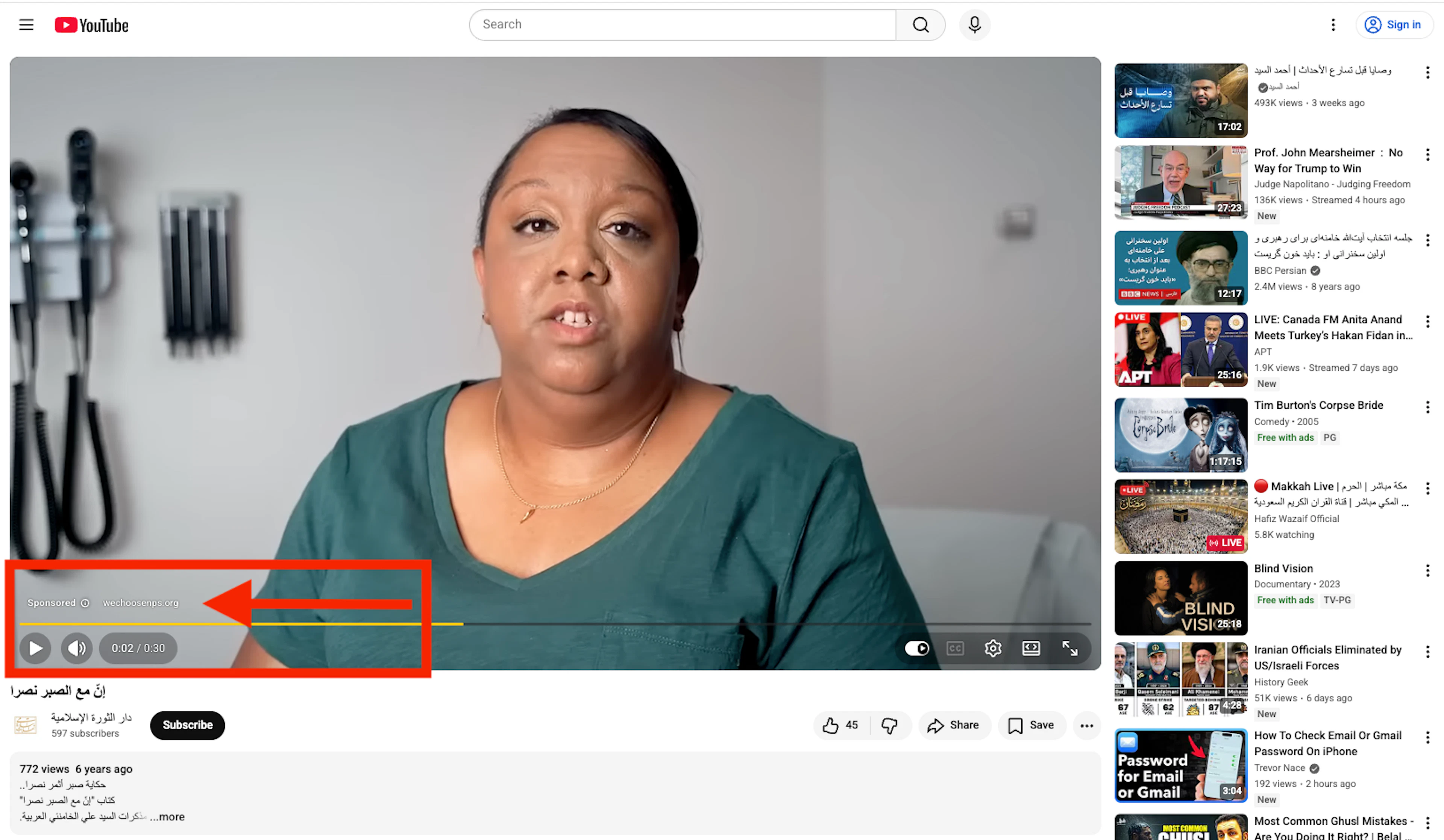
TTP found a pair of YouTube channels for Iranian organizations dedicated to the late supreme leader, Ali Khamenei.
TTP found a pair of YouTube channels for Iranian organizations dedicated to the late supreme leader, Ali Khamenei.
Conclusion
TTP’s findings raise questions about whether one of the biggest tech platforms, YouTube, is abiding by U.S. sanctions against Iran. We could find no indication that YouTube or its parent company Google has sought special permission to do business with sanctioned Iranians, many of whom are deeply involved in Iran’s war effort.
Until YouTube cleans up this problem, advertisers will be vulnerable to having their ads run on content from individuals and organizations deemed a threat to U.S. national security.
Note: Updated with Google comment and Customs and Border Protection comment from Wired report, plus YouTube channel removals.