Key findings:
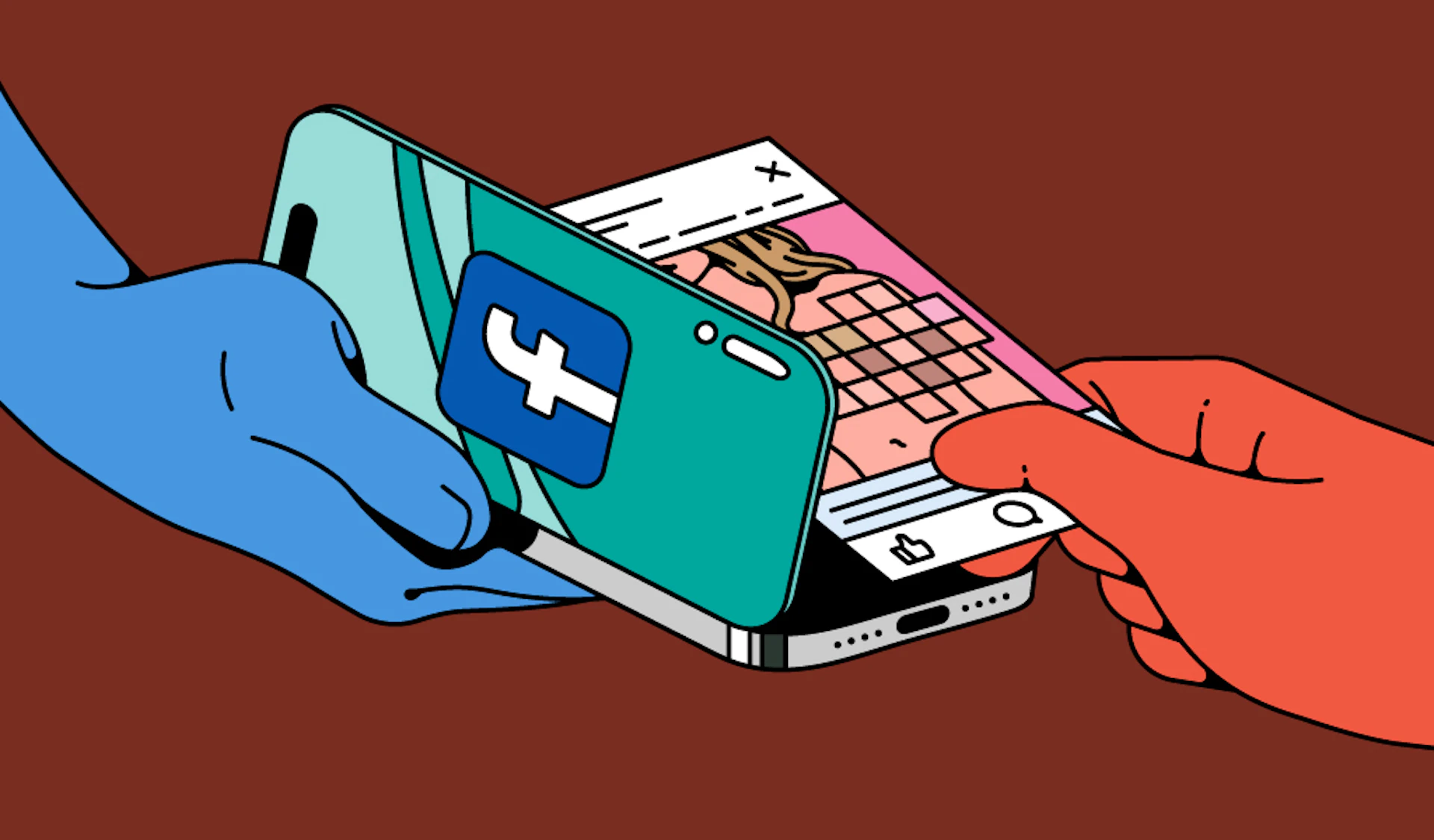
- One of Meta's advertising partners in China, GatherOne, is placing thousands of Facebook and Instagram ads for "nudify" apps, according to Meta's own transparency database.
- Many of the ads show images of women simulating sex acts, violating Meta advertising standards.
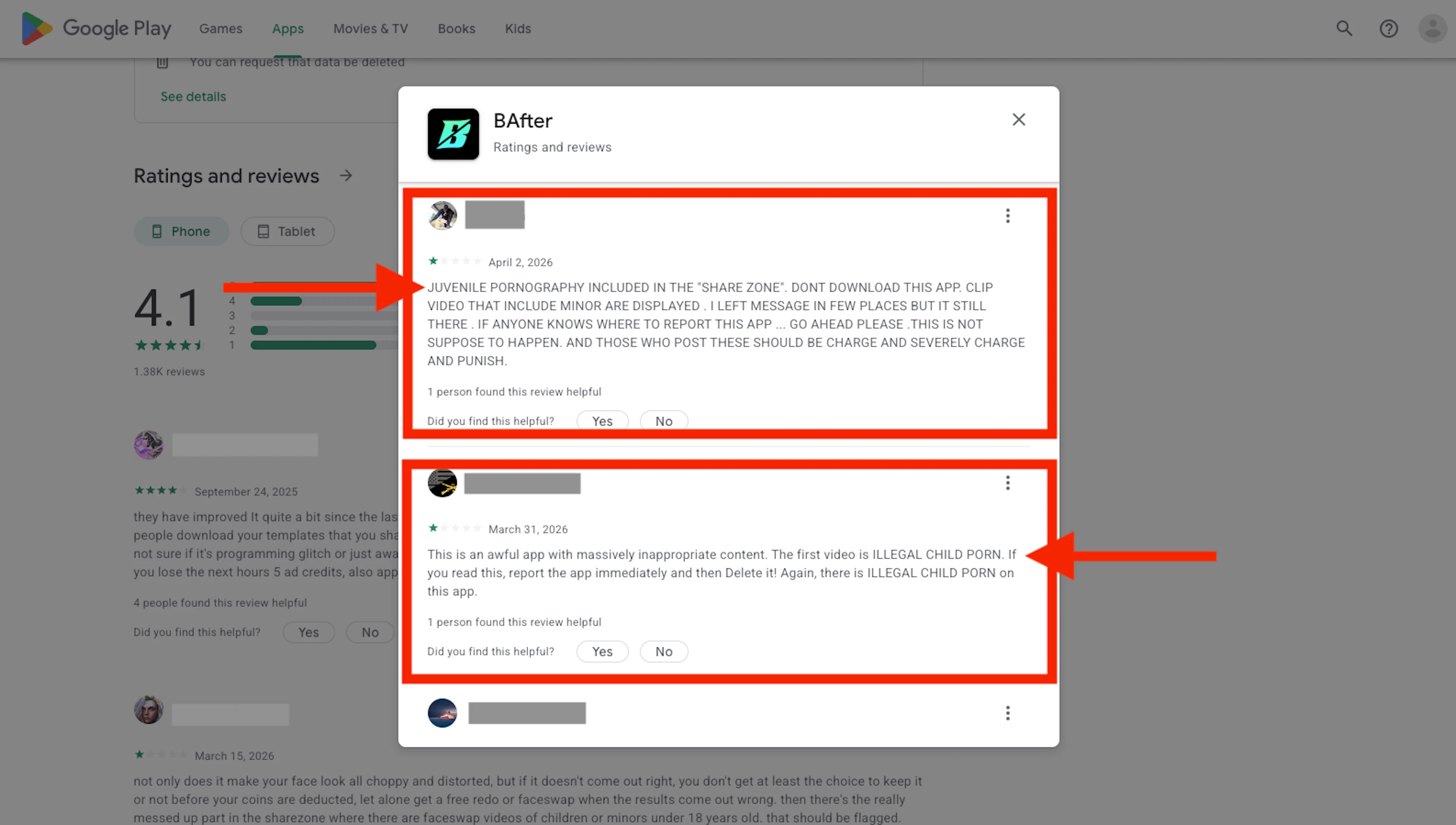
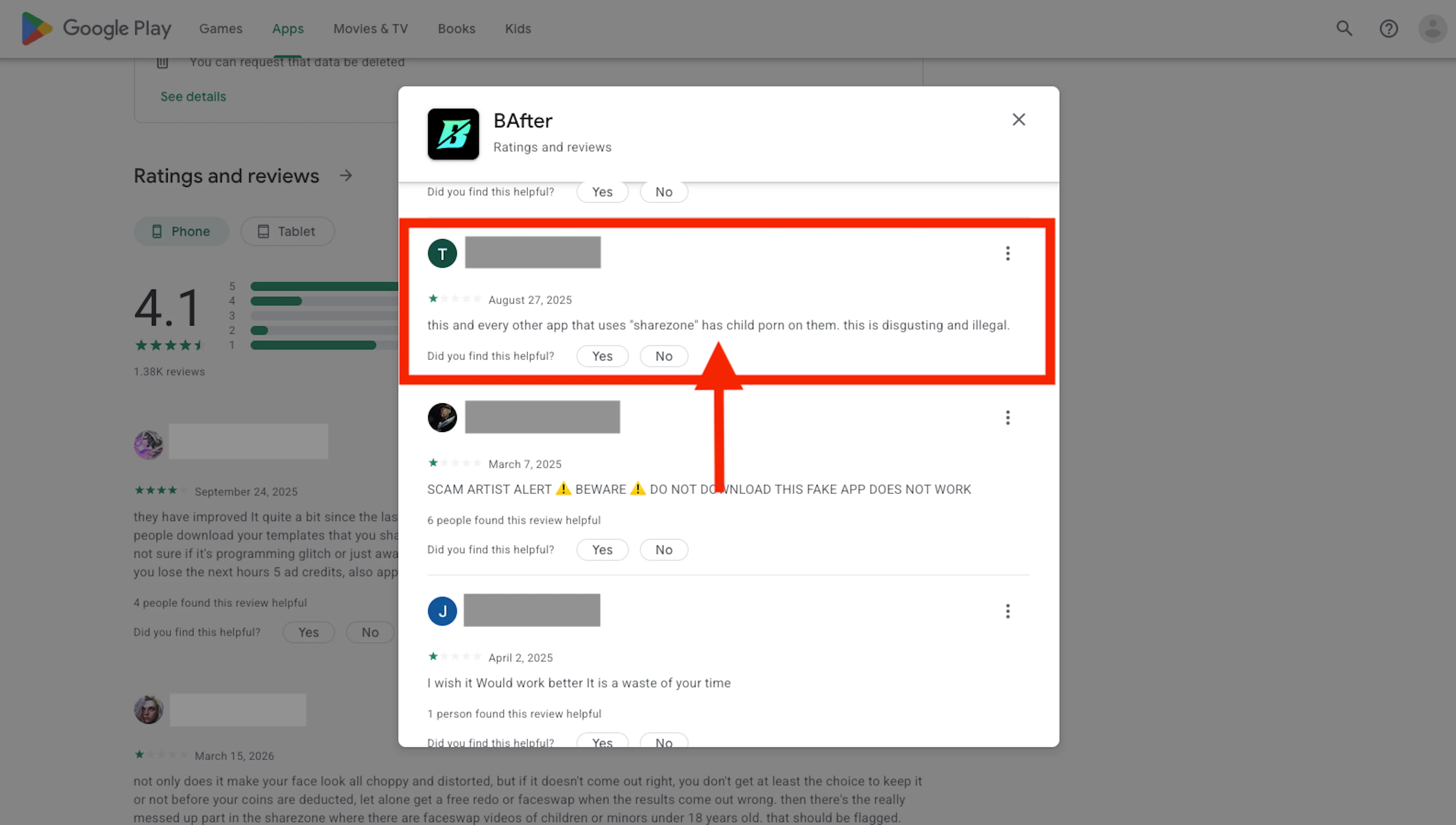
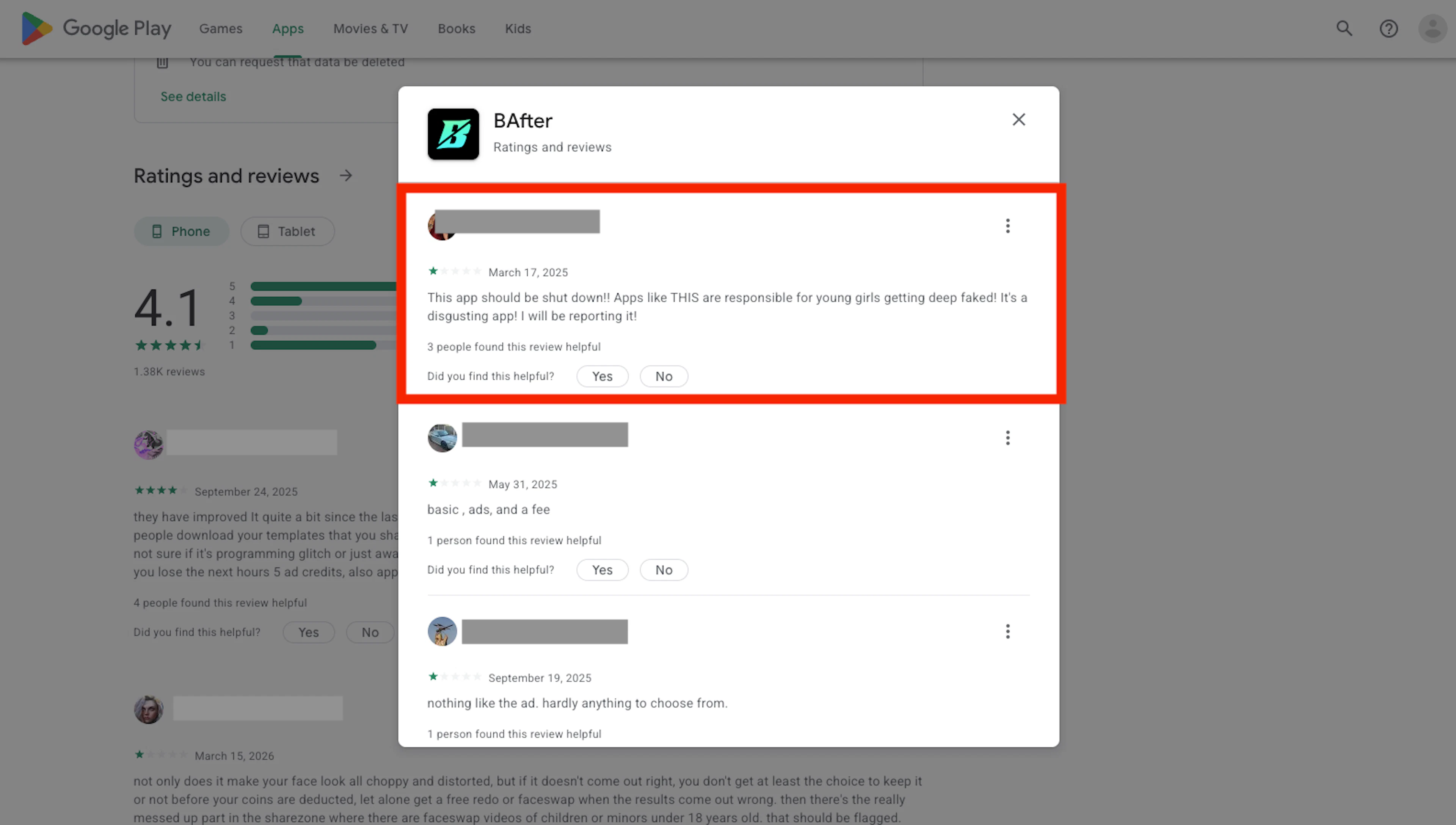
- The ads point to apps that can digitally undress women or put them into pornographic videos. Multiple reviews on one app flagged what appears to be child sex abuse material.
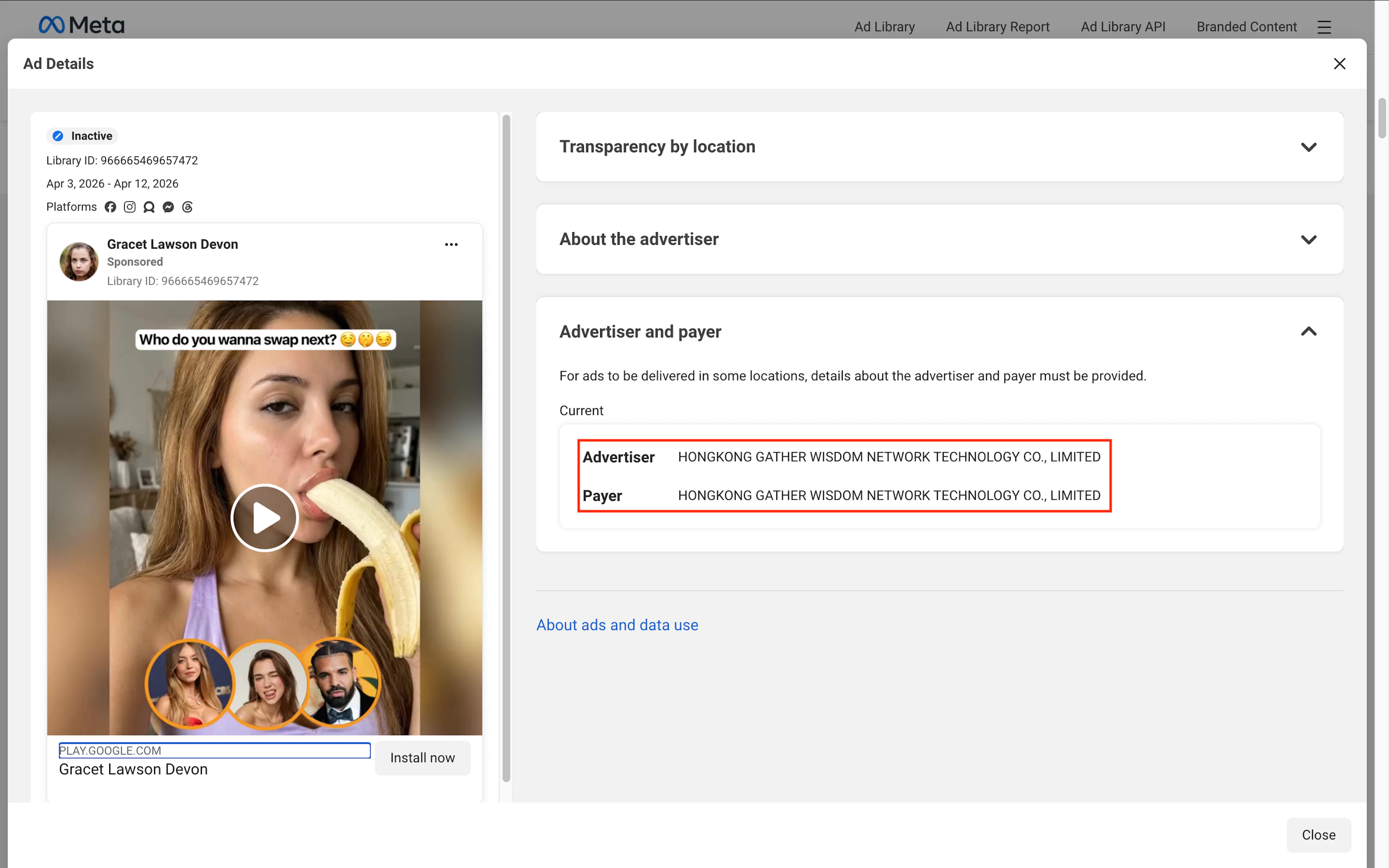
- The ads came from Facebook accounts that name GatherOne as their advertiser and payer.
- GatherOne is one of a select group of Chinese ad agency firms authorized by Meta to place ads on behalf of Chinese clients.
- Meta says it has a "zero tolerance" policy for ads promoting nudify apps, but it appears to be giving a pass to GatherOne.
One of Meta’s key business partners in China is behind a vast network of Facebook and Instagram ads promoting “nudify” apps, according to Meta’s own transparency database, raising questions about the company’s enforcement of its rules against sexual deepfakes.
The partner, GatherOne, is one of roughly a dozen Chinese ad agency firms authorized by Meta to place ads on behalf of Chinese clients. Because China blocks Facebook and Instagram inside the country, Chinese advertisers who want to use Meta platforms to reach foreign audiences must in theory go through one of these intermediary firms.
But the Tech Transparency Project found GatherOne’s fingerprints on thousands of ads promoting AI apps that can digitally undress women or put them into pornographic videos. Many of the ads contained explicit imagery, showing women undressing or simulating sex acts.
The ads violate Meta’s ban on promoting AI nudify apps, and their content often violates Meta standards on nudity, sexual activity, and sexually suggestive content. Many of the ads appear to be run by fake accounts, which would also violate Meta’s policy against inauthentic behavior.
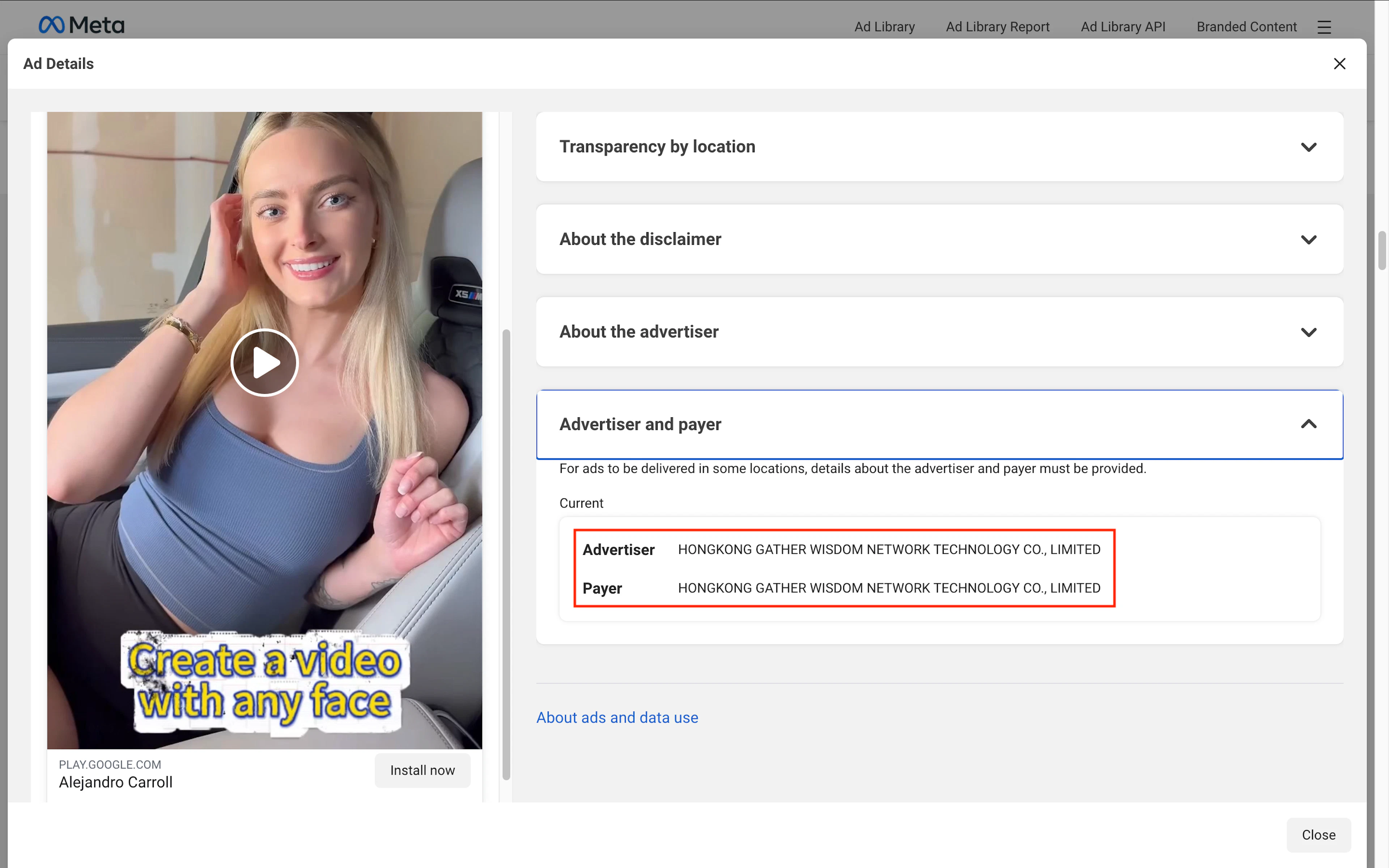
TTP established the ads’ connection to GatherOne through their disclosures in the Meta Ad Library, Meta’s database of advertising that runs on its platforms. The ads all came from accounts that named GatherOne or its full corporate name as their advertiser and payer.
During the course of TTP’s investigation, Meta’s systems removed many of these ads or disabled the accounts behind them for violating its standards. But accounts in the network continue to advertise. It is not clear why Meta has failed to dismantle the network, but GatherOne's volume of business may offer a clue: The company says it generates more than 30,000 ads per month.
TTP’s findings suggest that Meta is tolerating policy violations by one of its principal partners in the lucrative Chinese market. The findings also highlight Meta’s role in the spread of nudify apps that can be used to create nonconsensual sexualized images, contributing to exploitation and psychological harm.
Meta did not respond to TTP's questions, but in a statement to Bloomberg News, which covered this report, Meta said it takes "aggressive steps" to combat nudify apps and said advertisers who fail to comply with its policies risk cancelation of ads, financial penalties, and termination of ad accounts.
After publication of this report, GatherOne told TTP it has suspended new ad account applications related to AI nudify, face swap, and girlfriend services. According to Bloomberg, GatherOne is also "undertaking a comprehensive compliance upgrade to address the technical evolution of synthetic media."
The developers of the apps discussed in this report did not respond to a request for comment and questions.
Warning: This report contains images that some readers may find offensive or disturbing.
Background
In China, Meta’s ad sales work differently than they do in the rest of the world. Nearly all the company’s ads are placed through eleven hand-picked ad agencies, known as “top-tier resellers.”
This system represents a tacit compromise between Meta and the Chinese government. Despite years of efforts by Meta CEO Mark Zuckerberg to ingratiate himself with China’s leadership—efforts that reportedly involved building censorship tools and asking President Xi Jinping to name his firstborn child—Beijing continues to ban Meta’s social apps. But through the ad reseller system, Meta still has access to Chinese advertising dollars, and Chinese businesses still have access to Meta’s global audience.
Through this arrangement, China has become one of Meta’s most important markets. The company's China revenue went from $13.69 billion in 2023 to $18.35 billion in 2024, representing roughly a tenth of Meta’s total annual revenue. According to a December 2025 report by Reuters, which cited internal Meta documents, the company calculated that “about 19% of that money—more than $3 billion—was coming from ads for scams, illegal gambling, pornography and other banned content.”
Per Reuters, Meta whitelists the Chinese resellers’ accounts and does not immediately act when their ads are flagged by Meta’s automated systems. The report further describes how Meta allows the resellers to share their accounts with smaller, “second-tier” ad agencies. A test by a Reuters reporter found that several second-tier agencies, including one associated with GatherOne, approved obvious financial scam ads.
TTP found that GatherOne is also a vehicle for advertising nudify apps.
As part of our ongoing research into nudify apps, we began looking at Facebook and Instagram ads for these tools. We quickly found a series of sexually explicit ads that promoted AI apps and listed GatherOne as their advertiser and payer in Meta Ad Library disclosures. Some ads named a company called Hongkong Gather Wisdom Network Technology Co. Ltd. as the advertiser and payer, giving its website as gatherone.com.
Chinese corporate records show that a mainland China company called Beijing Juzhi Chuangxiang Technology Co. Ltd. uses the brand GatherOne and website gatherone.com. The company's Hong Kong office address is the same as the one listed on Hongkong Gather Wisdom Network Technology Co. Ltd.'s annual return, indicating it is all one enterprise. Wang Hao is the controlling shareholder of both entities, the records show. (Note: GatherOne confirmed this corporate structure in its statement to TTP after publication of this report.) Many mainland Chinese companies set up Hong Kong entities to handle their global business.
The Meta ads that named GatherOne/Hongkong Gather Wisdom as advertiser and payer ran in the European Union, where social media companies are required by the Digital Services Act to state who who benefitted from ads and who paid for them. Before a March 2026 terminology change by Meta, the disclosures named GatherOne as "beneficiary" instead of advertiser.
Focusing on the EU, TTP identified a total of 210 Facebook pages that named GatherOne/Hongkong Gather Wisdom in their ad disclosures and ran a collective 30,800 ads promoting face swap and other AI apps on Facebook and Instagram. Our analysis found that:
- 43 of the Facebook pages ran more than 7,600 ads for AI apps that TTP verified are capable of nudifying women. These apps can swap women’s faces onto naked or bikini-clad bodies or put them in pornographic videos.
- 160 of the pages had ads viewable in the Meta Ad Library that showed women undressing or simulating sex acts, AI-generated images of people kissing, or text promoting "adult" or "18+" AI apps.
- The vast majority of the pages—179 or 85%—ran ads that Meta later removed from its Ad Library for violating its standards on adult sexual exploitation, adult sexual solicitation and sexually explicit language, or adult nudity and sexual activity.
Meta prohibits advertising for apps that make “non-consensual intimate imagery”—a.k.a. nudify apps. It also bars ads that contain “nudity, sexual activity, depictions of people in explicit or sexually suggestive positions, or activities that are sexually suggestive.” Also prohibited: ads for "AI kissing" apps, which use AI to generate fake videos of people kissing.
TTP was not able to examine all of the apps advertised by the GatherOne-linked accounts because some apps had been removed from the Google or Apple app stores by the time of our research. TTP only reviewed the apps' free features, so if the app required a paid subscription to access additional tools, we were not able to determine if it had nudify capabilities behind a paywall.
As noted above, Meta has removed many of the GatherOne ads from its Ad Library over policy violations, but it's not clear if they were deleted during or after their scheduled run. TTP found that at least two dozen of the Facebook pages linked to GatherOne continued to advertise after they had ads flagged and removed by Meta.
Meta has long insisted that it punishes advertisers that break its rules, and the company announced last year it is suing the Chinese company behind CrushAI apps for offering nonconsensual nude images. But GatherOne—which is facilitating a large network of ads for sexual deepfake apps—appears to have avoided serious consequences.
Meta has a close relationship with GatherOne. In January 2026, GatherOne attended the Meta 2026 Agent Summit in Hong Kong and received four awards for its industry performance. Wang Hao, co-founder and CEO of GatherOne, posed for a photo holding one of the awards, flanked by Meta’s top China executives. GatherOne has attended many such events in recent years.
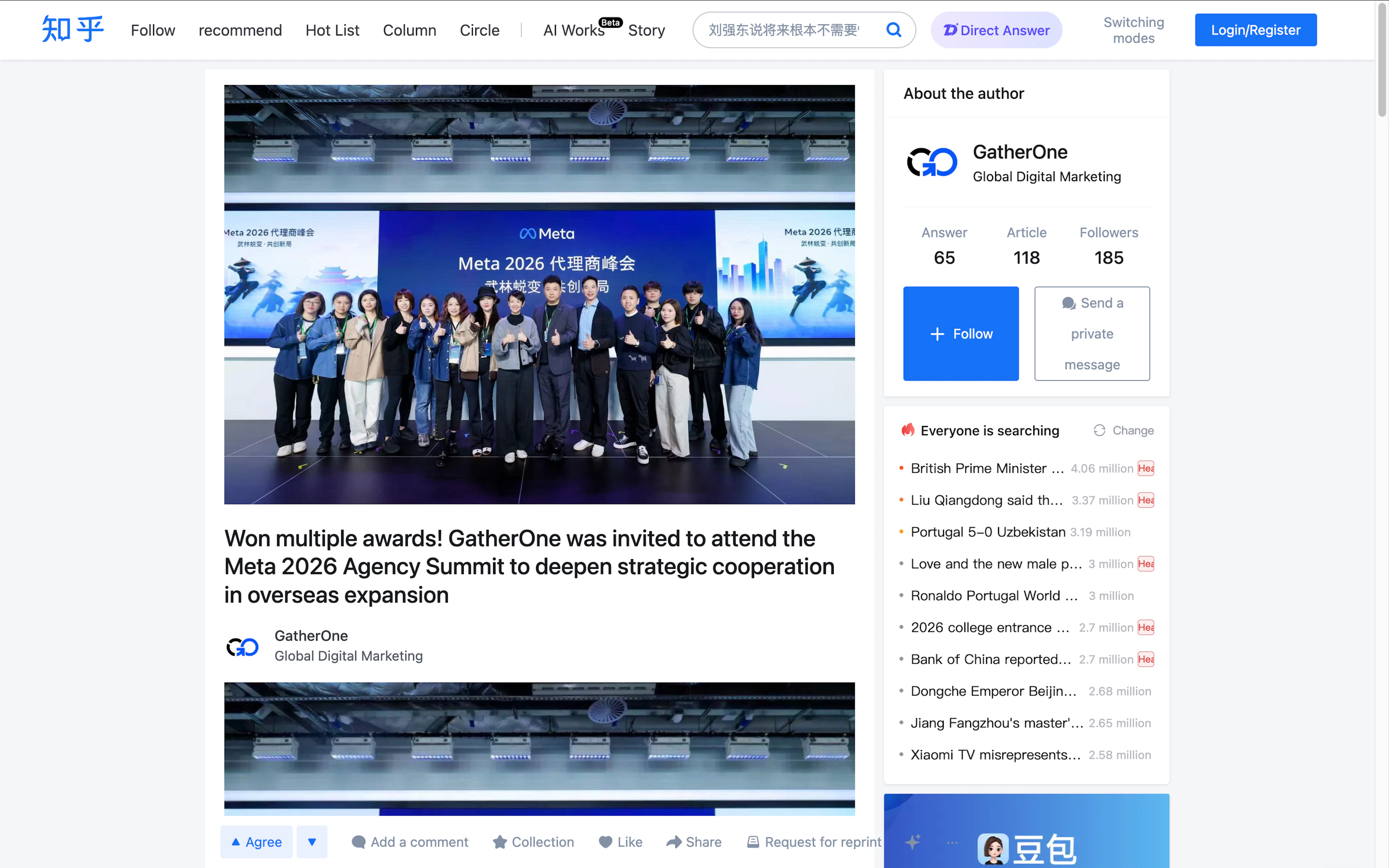

GatherOne received four industry performance awards at the Meta 2026 Agent Summit in Hong Kong.
GatherOne received four industry performance awards at the Meta 2026 Agent Summit in Hong Kong.
‘One-Click Undress’
Many of the GatherOne-linked ads identified by TTP encouraged users to upload photos of real women and use AI to place them in intimate or pornographic video scenes. These apps can turn regular users into directors—and their friends, acquaintances, and celebrity crushes into victims of sexual exploitation.
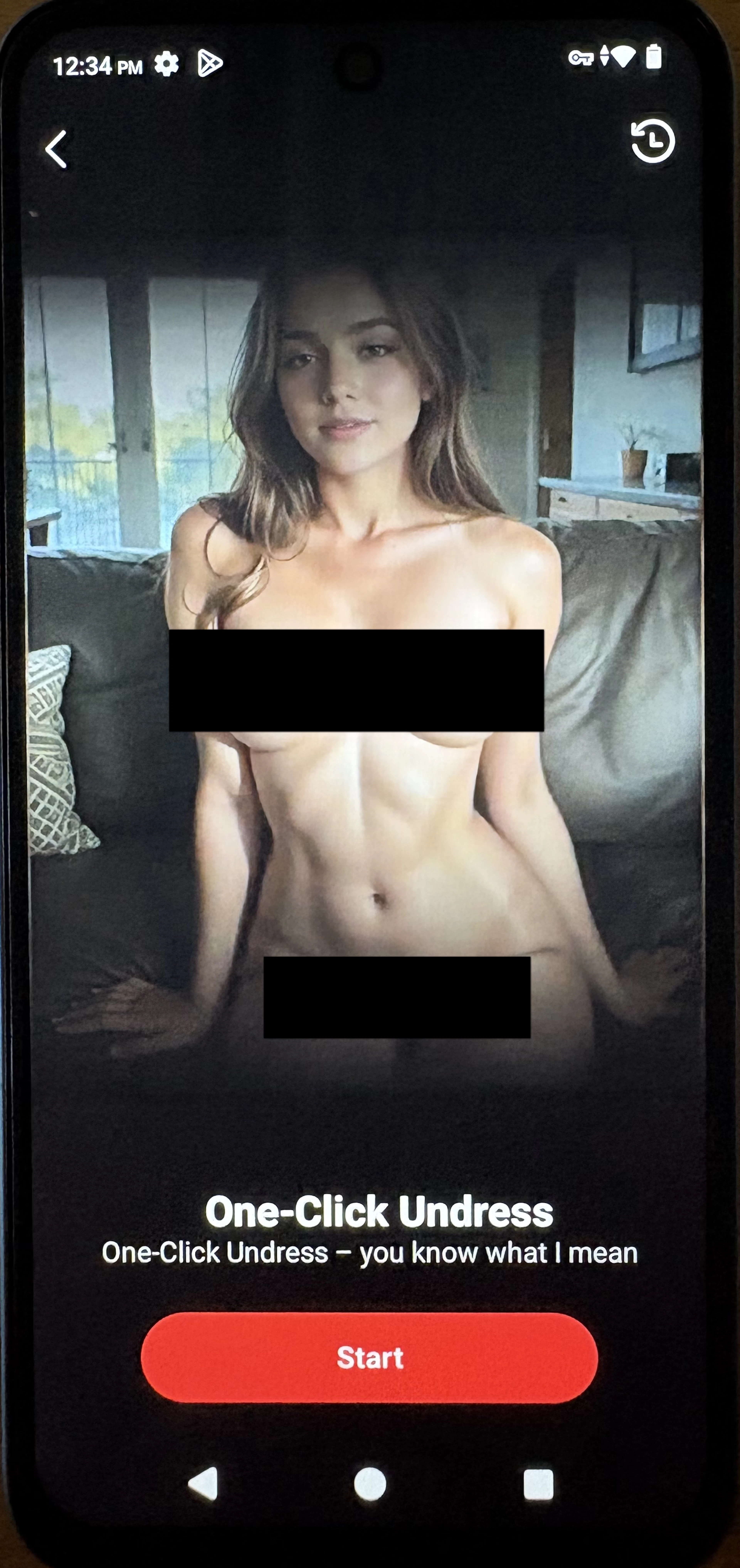
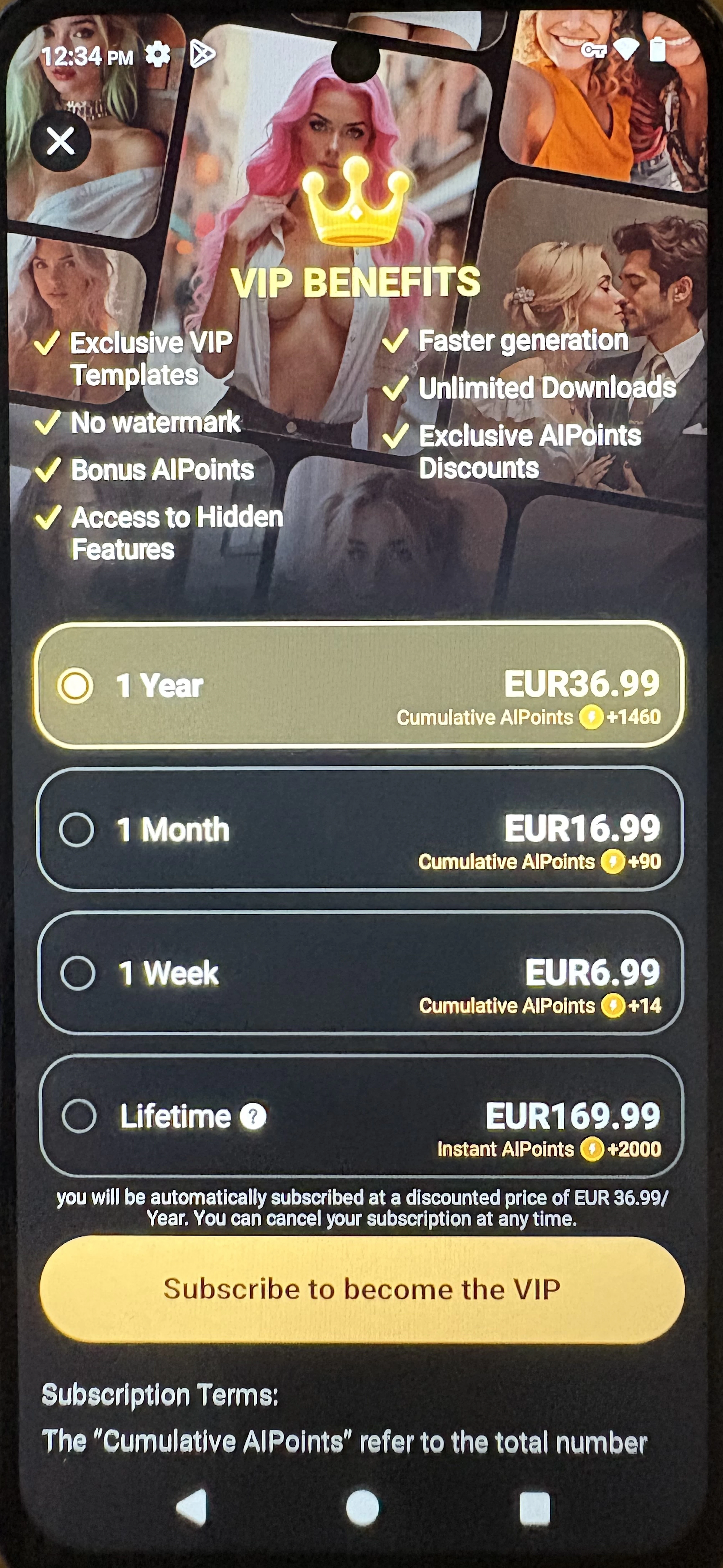
For example, TTP identified one set of GatherOne-linked ads that promoted AI face swaps, showing women in lingerie or minimal clothing. The ads directed users to a Google Play app called BAfter from a developer in China’s Guangxi region. TTP downloaded the app on an Android phone, using a virtual private network to pose as a user in the Netherlands. (We wanted to review an EU version of the app because it was advertised in the EU.)
The first thing TTP encountered after opening the app was a "ShareZone" of AI face swaps created by other users. They were all explicitly pornographic, showing women engaged in sex acts. TTP did not look at all the images, but at least six Google Play user reviews on the app expressed alarm that people had created sexual images of children. One reviewer flagged “ILLEGAL CHILD PORN” in the app.
The app offered tools like “One-Click Undress,” which promised to remove all the clothes from a person in an uploaded photo. To access “VIP Templates” and other exclusive features, the app required a paid subscription ranging from €6.99 ($8.11) a week to €169.99 ($197.28) for a lifetime membership. It was rated as suitable for all ages in the Google Play Store.
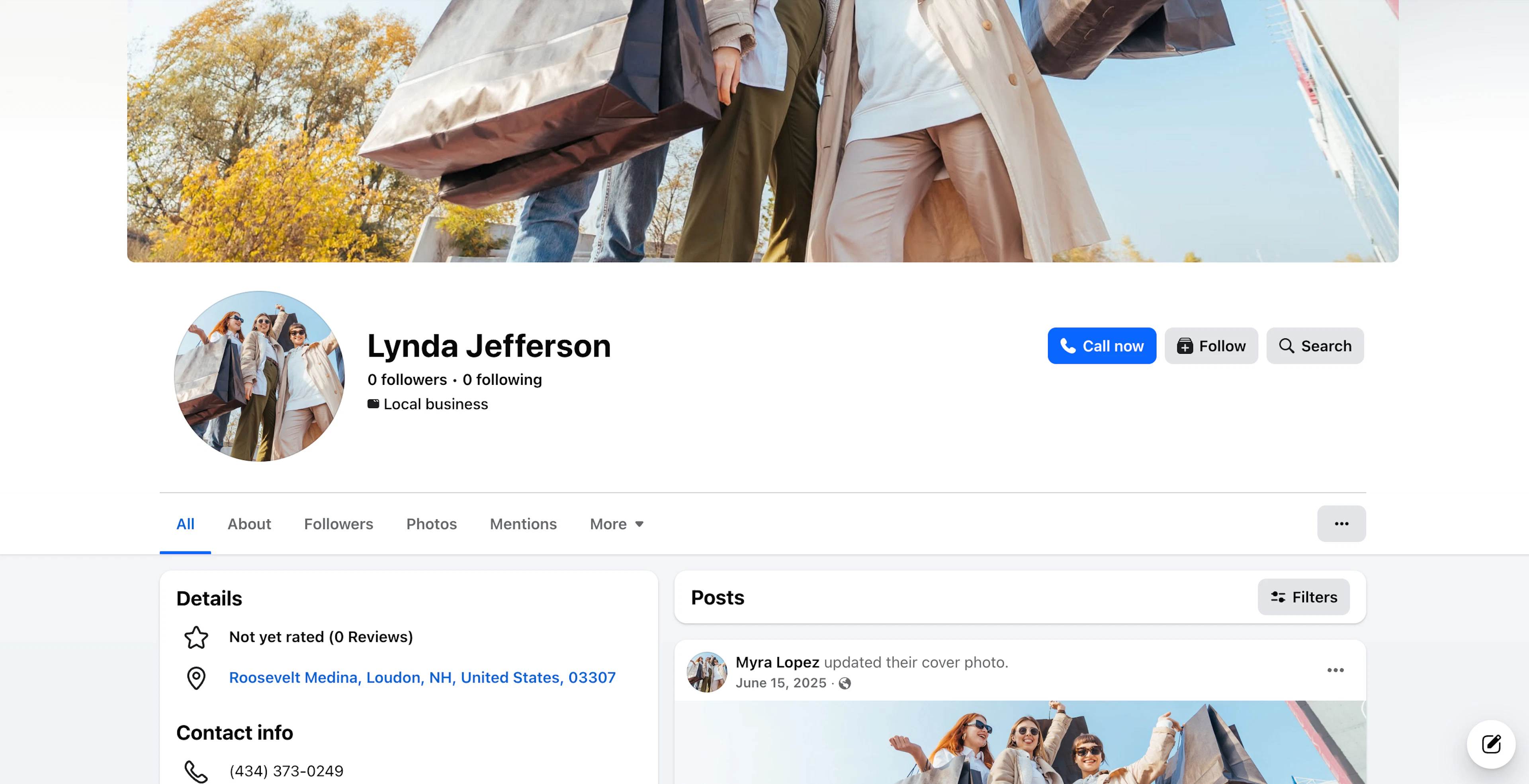
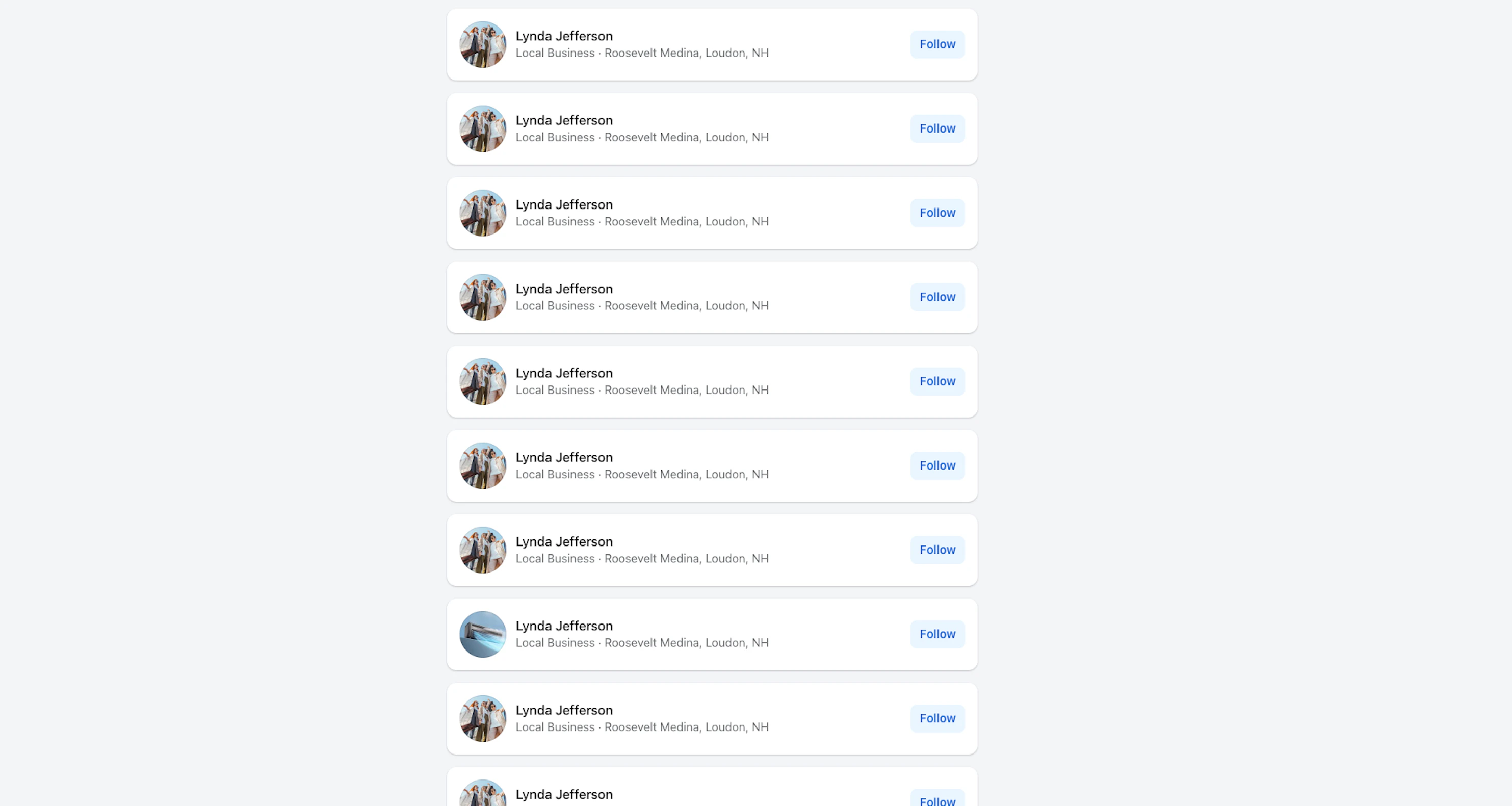
The Facebook page that ran the above ads, "Lynda Jefferson," had zero followers and no content beyond a profile image of women with shopping bags. Hundreds of other Facebook pages for Lynda Jeffersons use the same profile picture or give the same location of a fictitious town in New Hampshire.
The app disappeared from the Google Play Store in late July 2026, but it had been available since December 2024, according to data from mobile analytics firm AppMagic. Meta told Bloomberg it has now banned BAfter.
Note: Some of the apps shown below blocked users from taking screen videos or screenshots, so TTP used a secondary device to capture images.
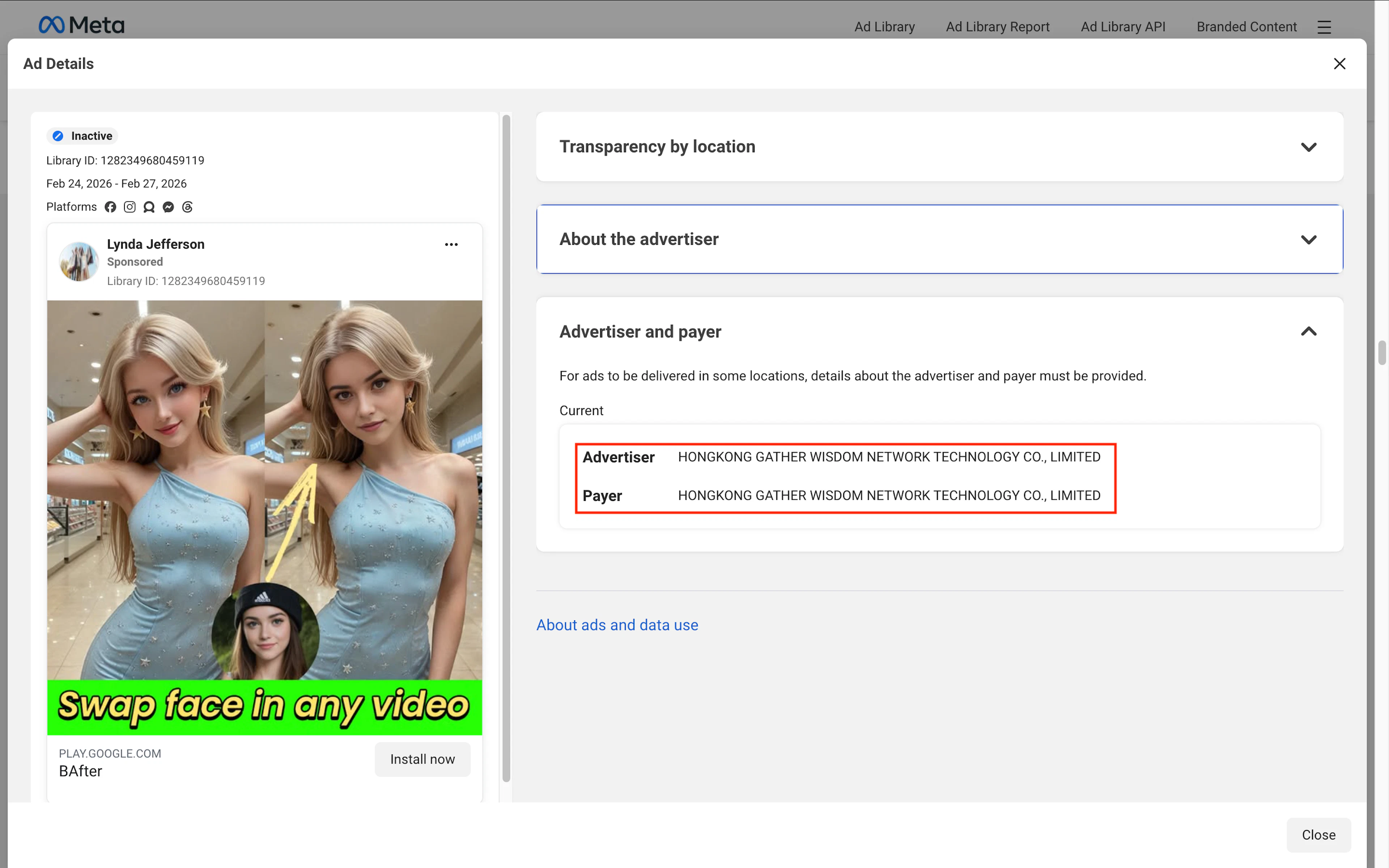
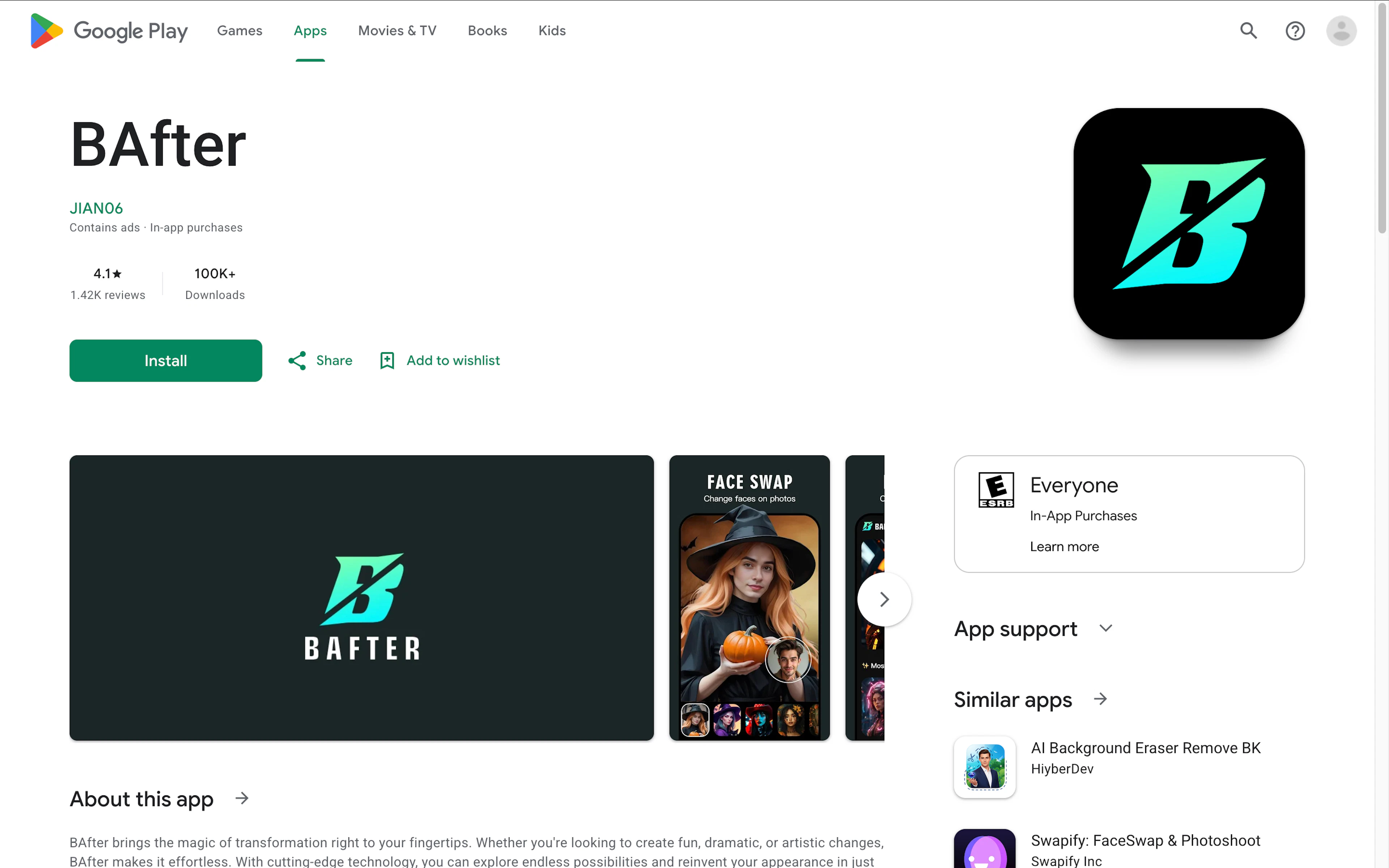
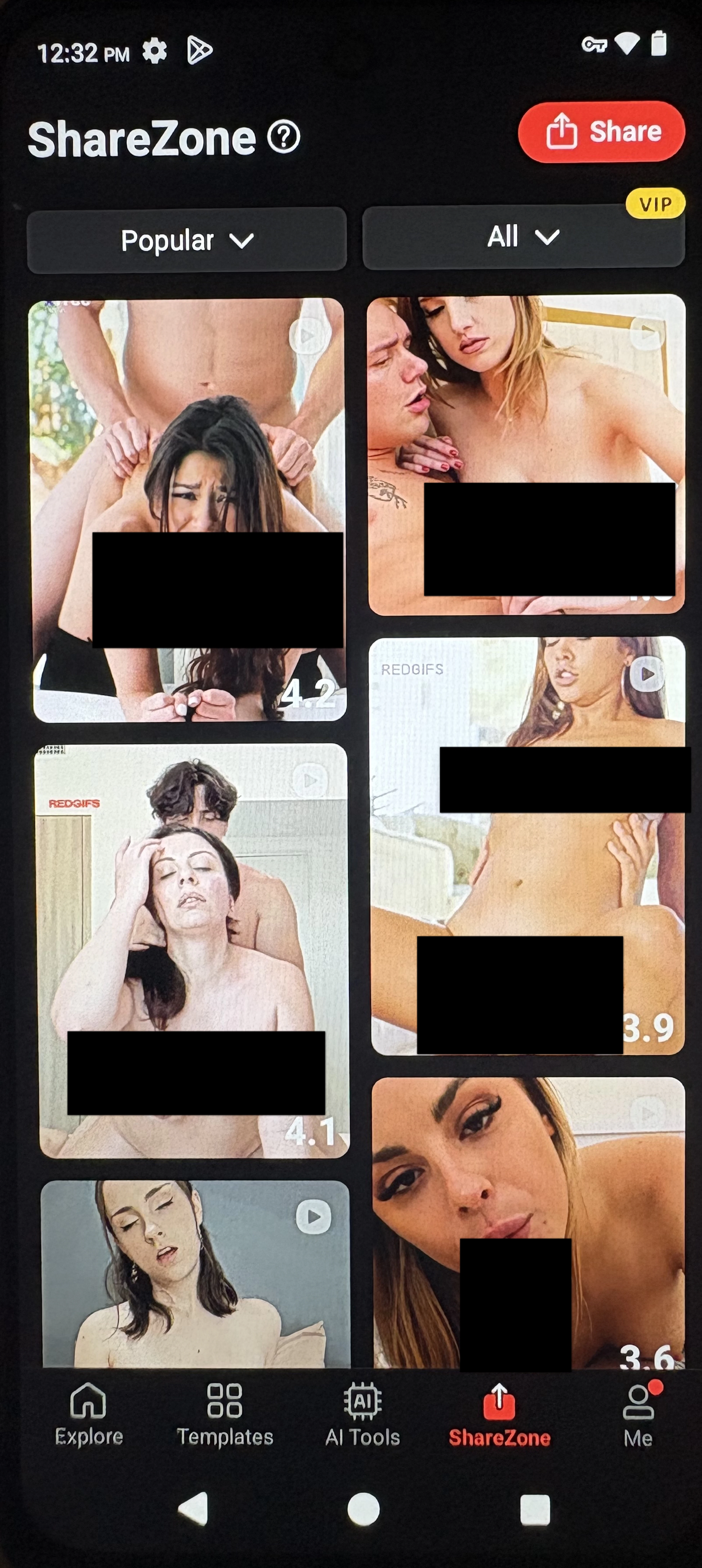
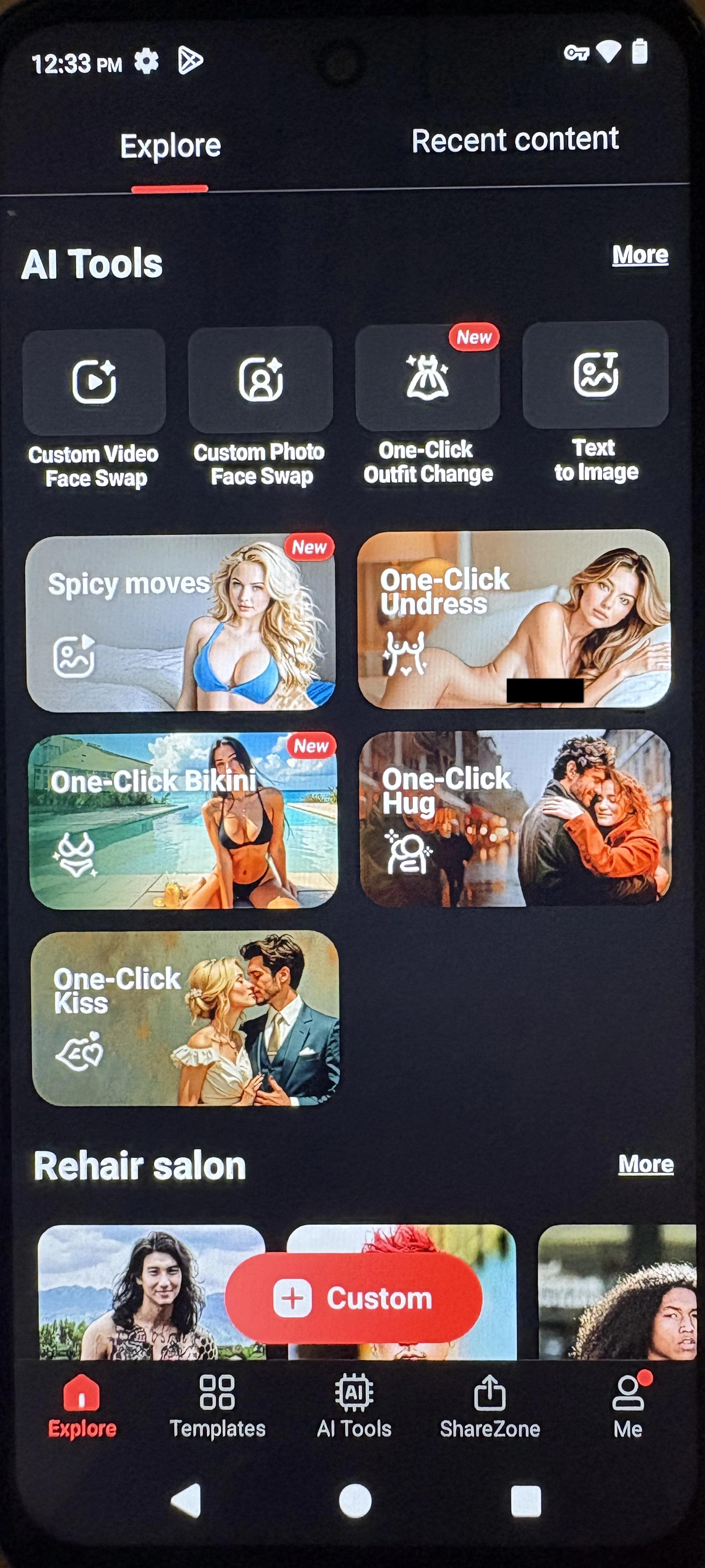
This GatherOne-linked ad promoted a face swap app.
This GatherOne-linked ad promoted a face swap app.
Another set of GatherOne-linked ads showed women sucking on bananas and lollipops and demonstrated how celebrity faces like Sydney Sweeney, Dua Lipa, and Drake could be swapped onto the figures.
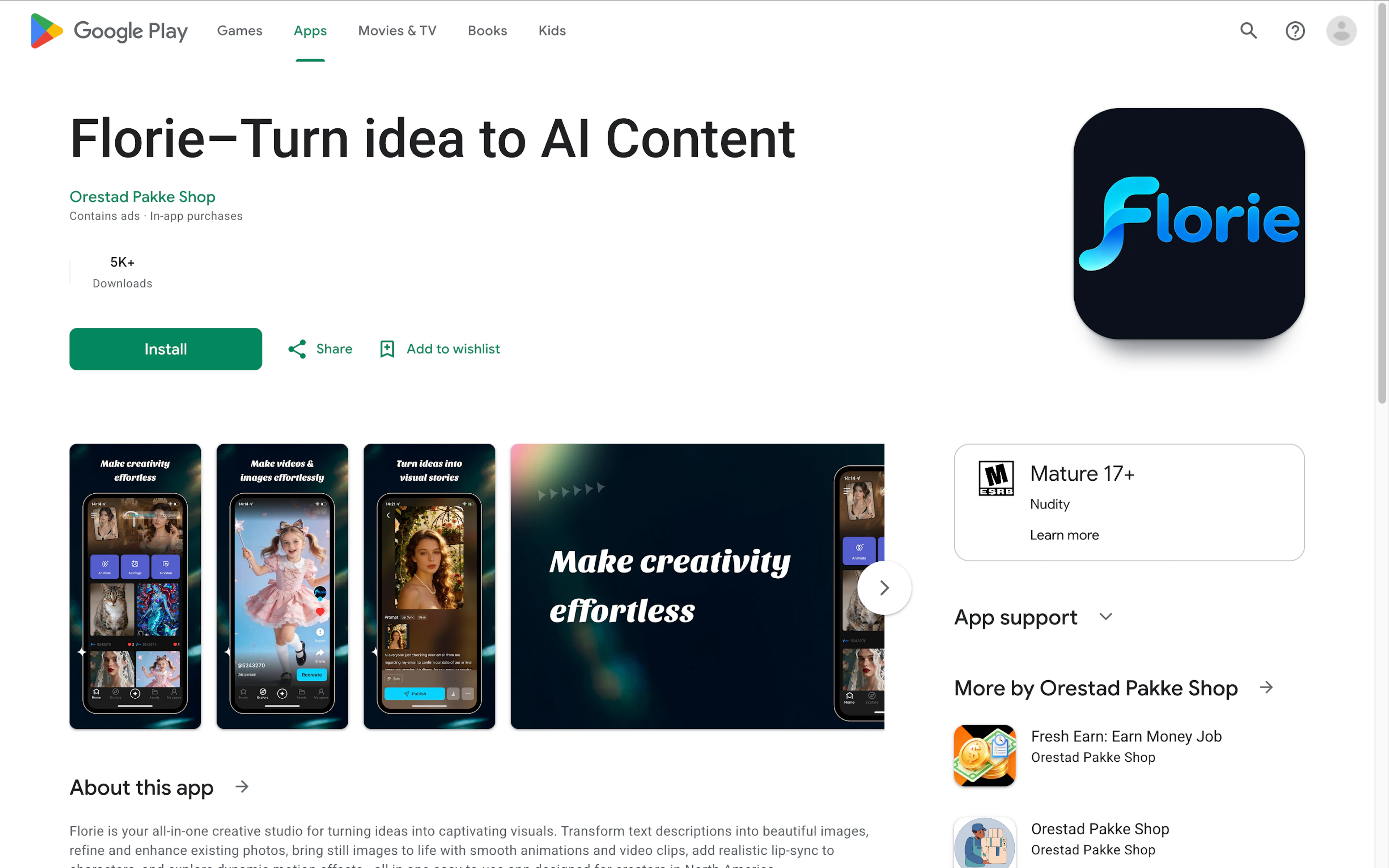
The ads promoted a Google Play app called Florie, which lists its address as a package shop in Denmark. TTP downloaded the app, which featured a variety of explicit face swap templates. They included a woman naked from the waist down, another with legs spread toward the camera, and another in a topless bunny outfit.
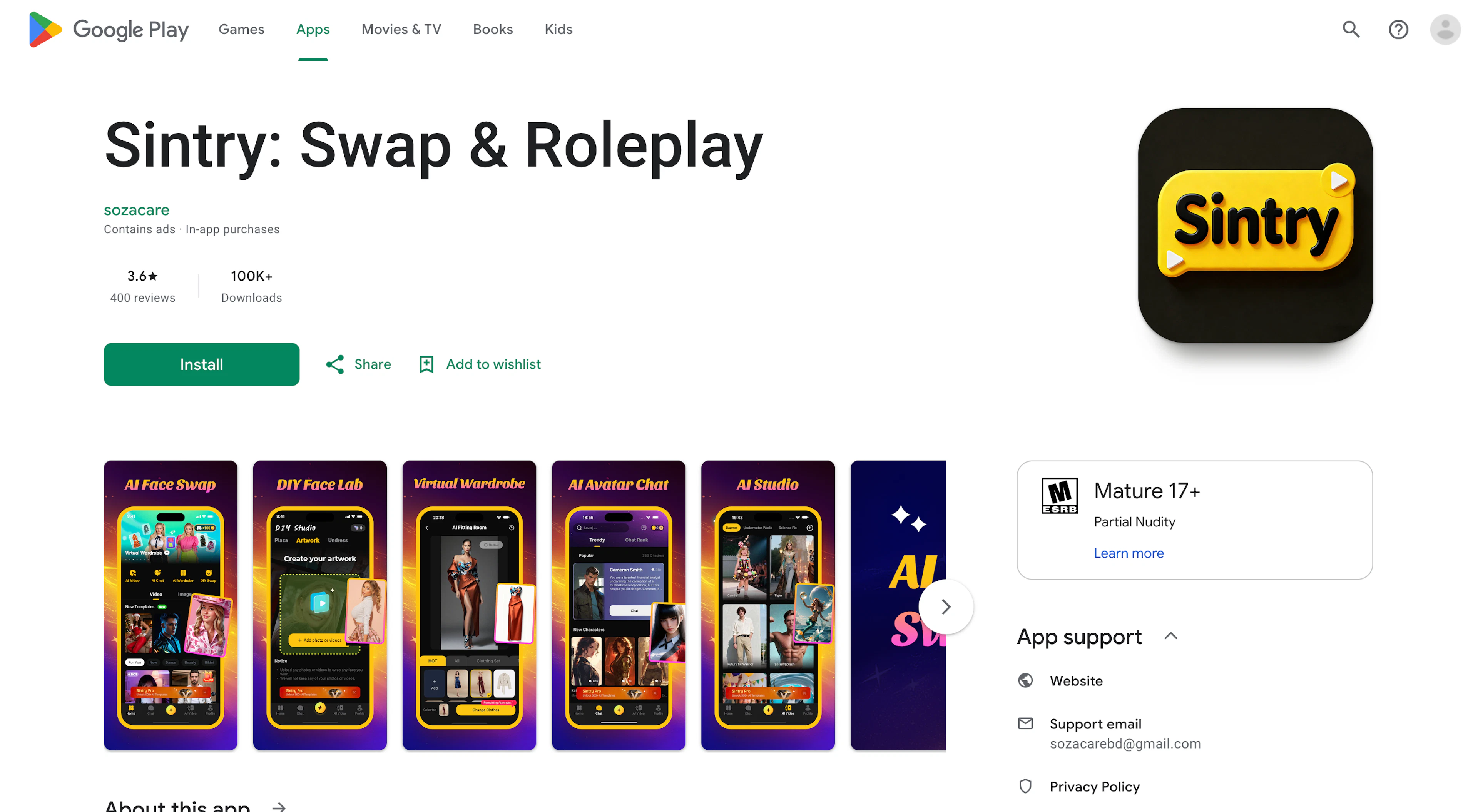
TTP also found GatherOne ads pointing to an app called Sintry. The ads showed women engaging in oral sex and other sex acts but with the X-rated part just off camera. Some of the women appeared to be of high school age.
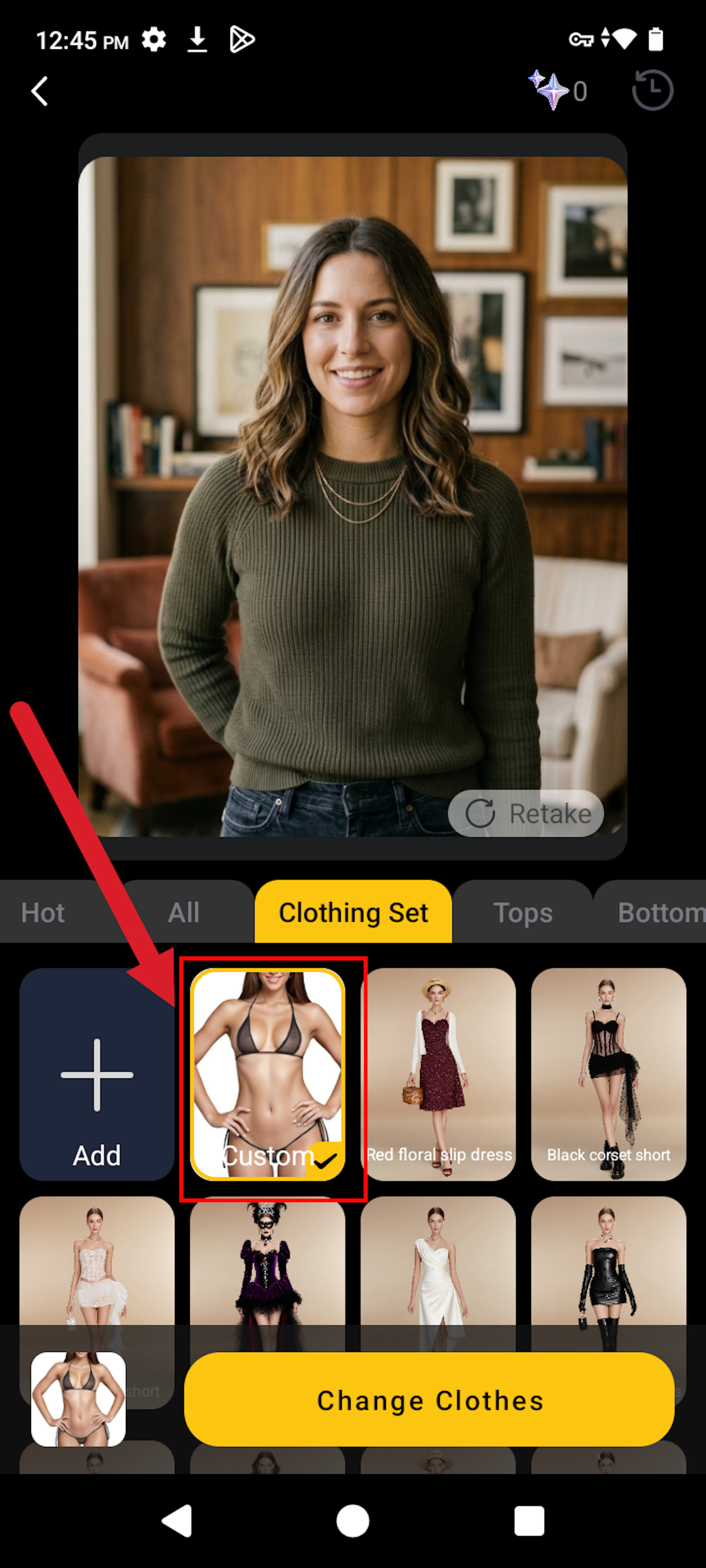
Sintry had a clothes swap feature that could put a woman in a bikini. It also offered face swap templates for naked and scantily clad men as well as chatbots that flirt with users and send them AI-generated images.
Some of the ads pointing to Sintry called the app “adults only” and “18+ required.” But at the time of our review, it was rated for users 12 and up. The app later disappeared from the Google Play Store but returned with a mature rating that noted “partial nudity.”
The Facebook pages that ran the ads for these apps appear to be for fake people.


This GatherOne-linked ad promoted a face swap app.
This GatherOne-linked ad promoted a face swap app.
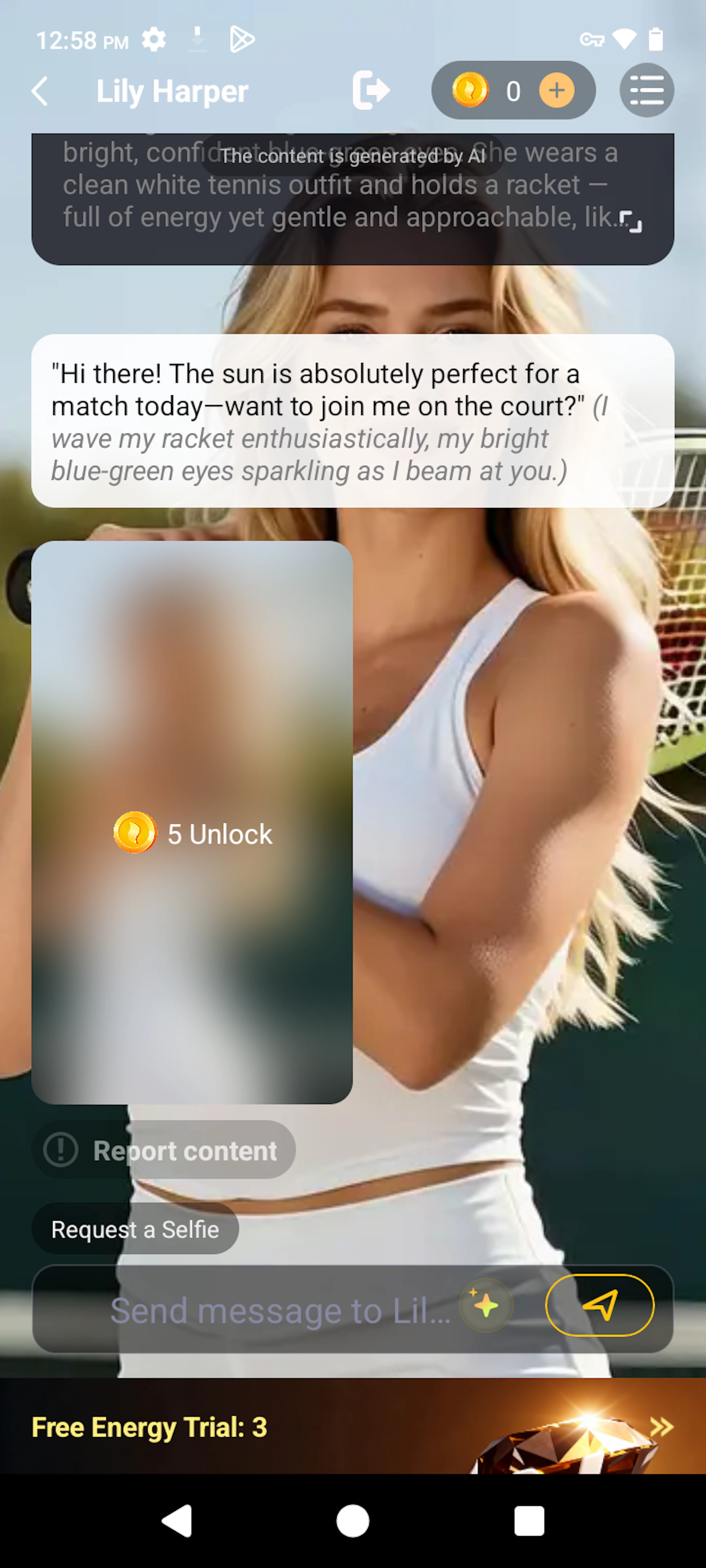
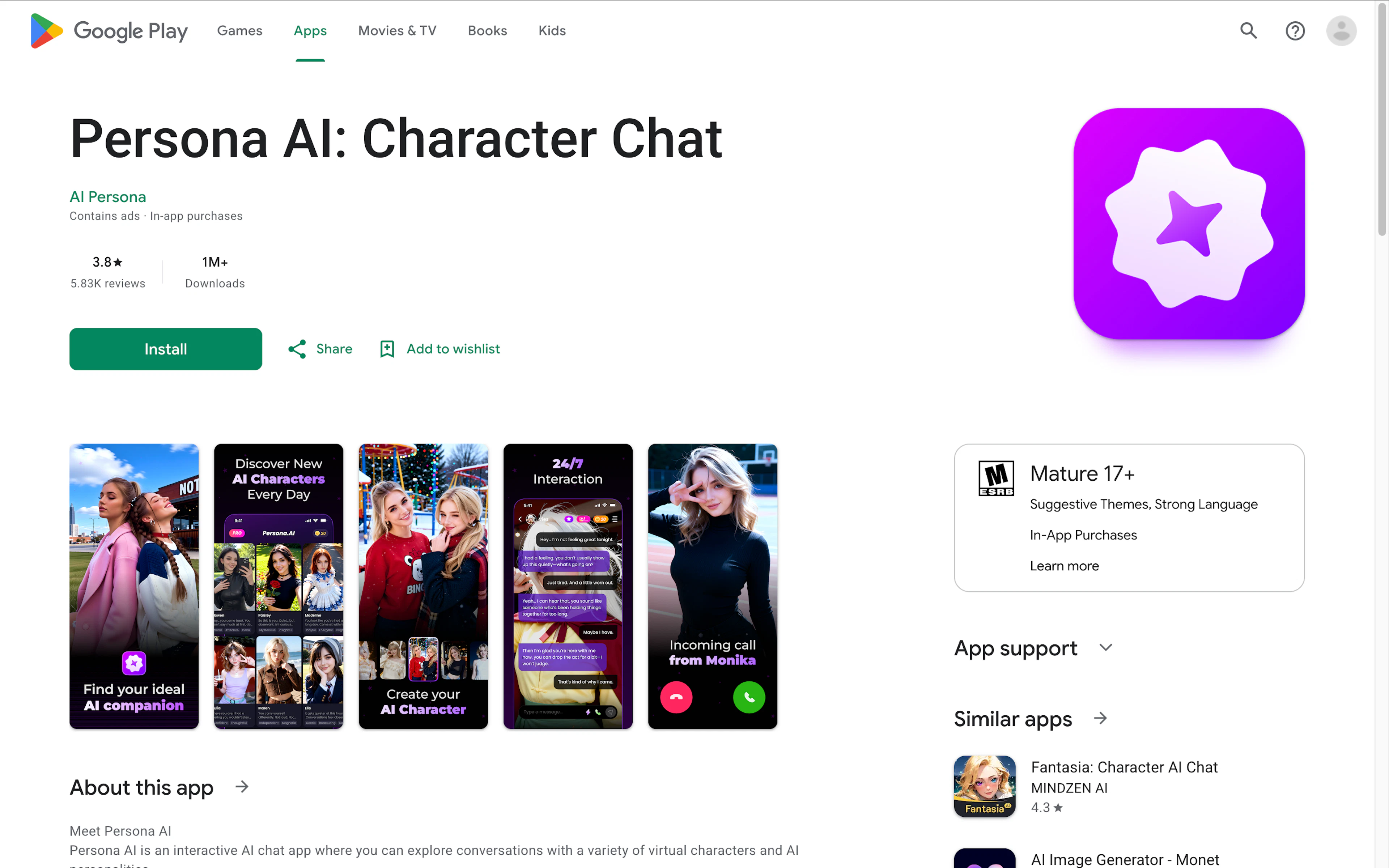
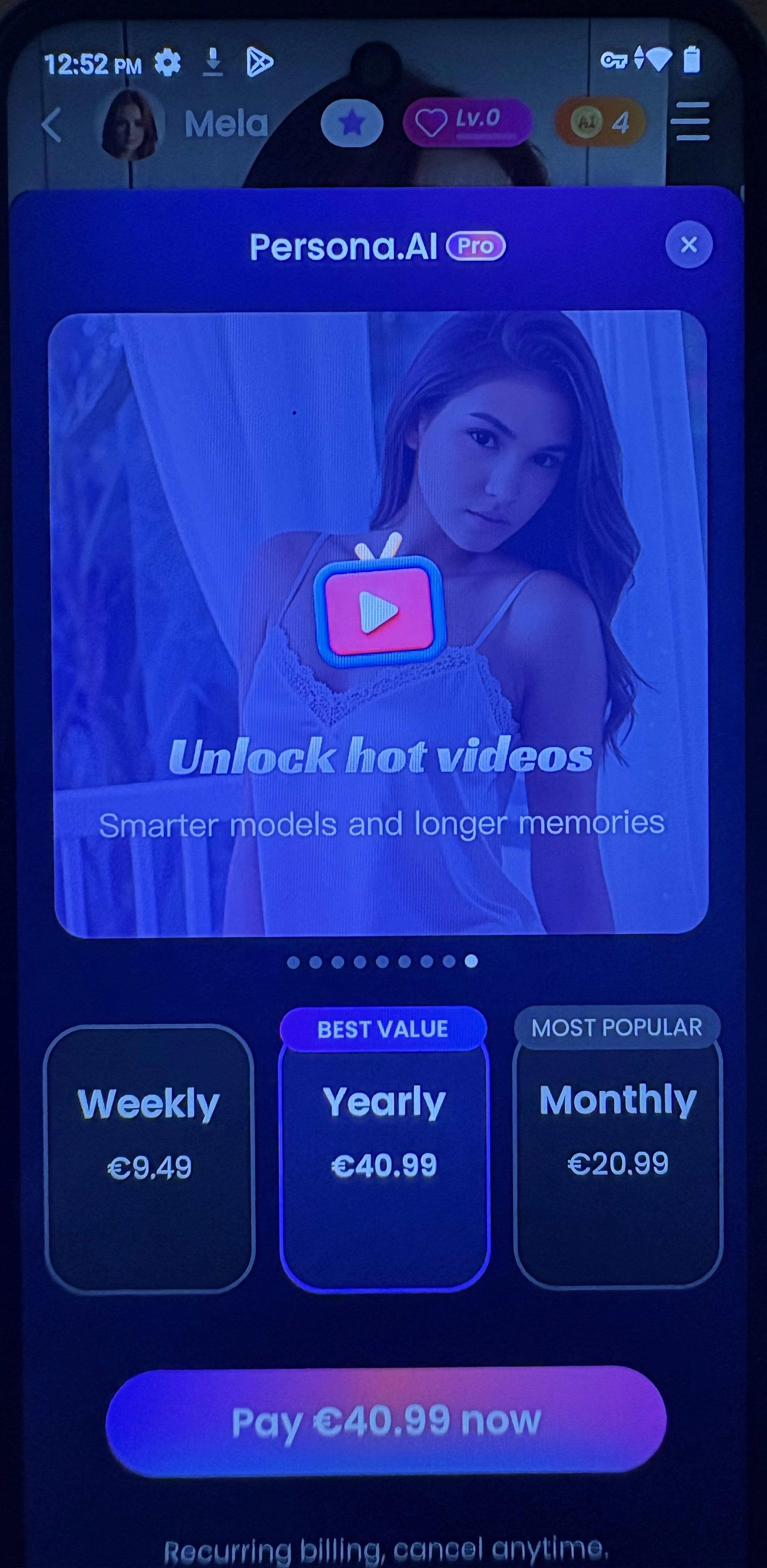
Some GatherOne-linked ads pointed to an app called Persona AI. The ads showed women posing in maid outfits, lingerie, and skintight clothing with the text, “She’s always happy to hear from you. Deeper chats. More attention.” One ad promoted chats with women in various stages of undress. The app developer gives an address in China’s Shanxi province.
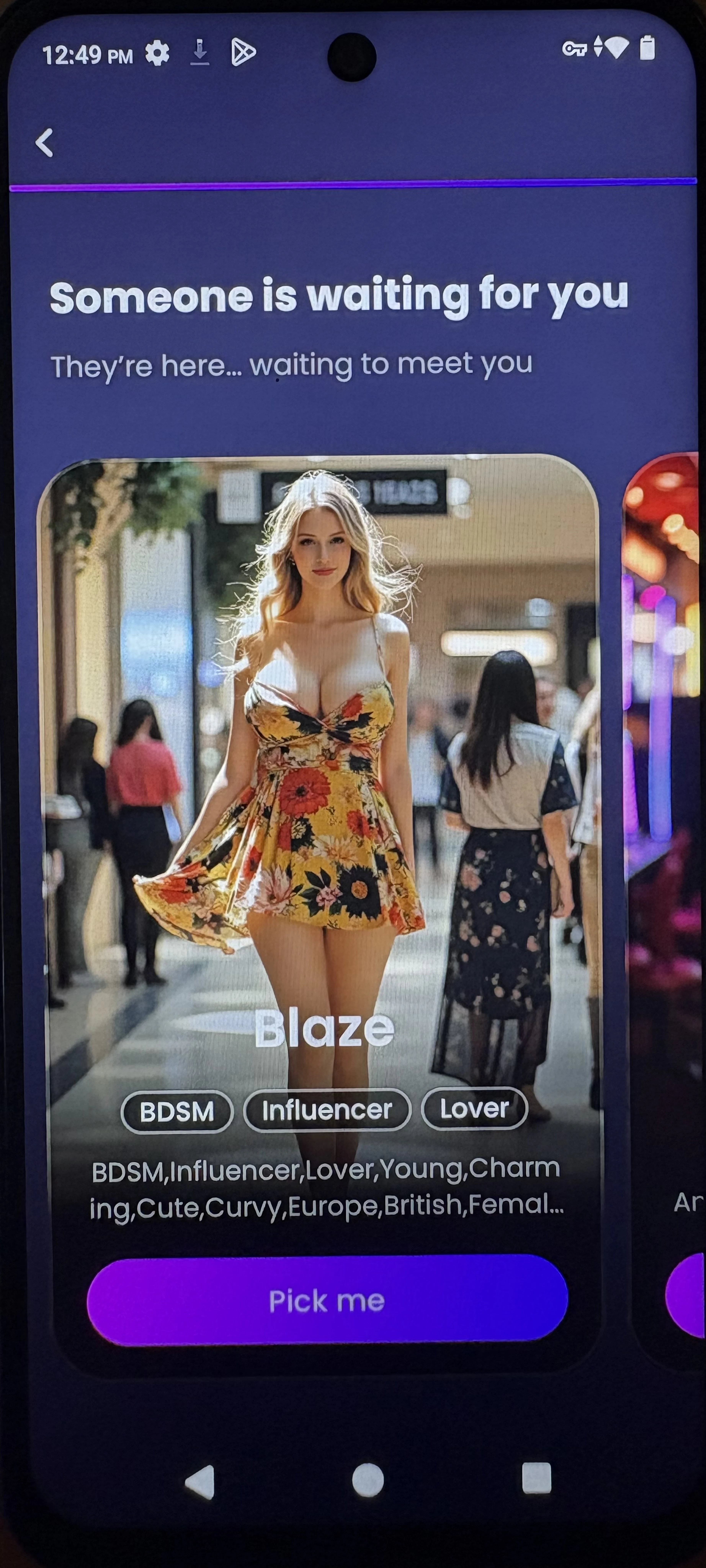
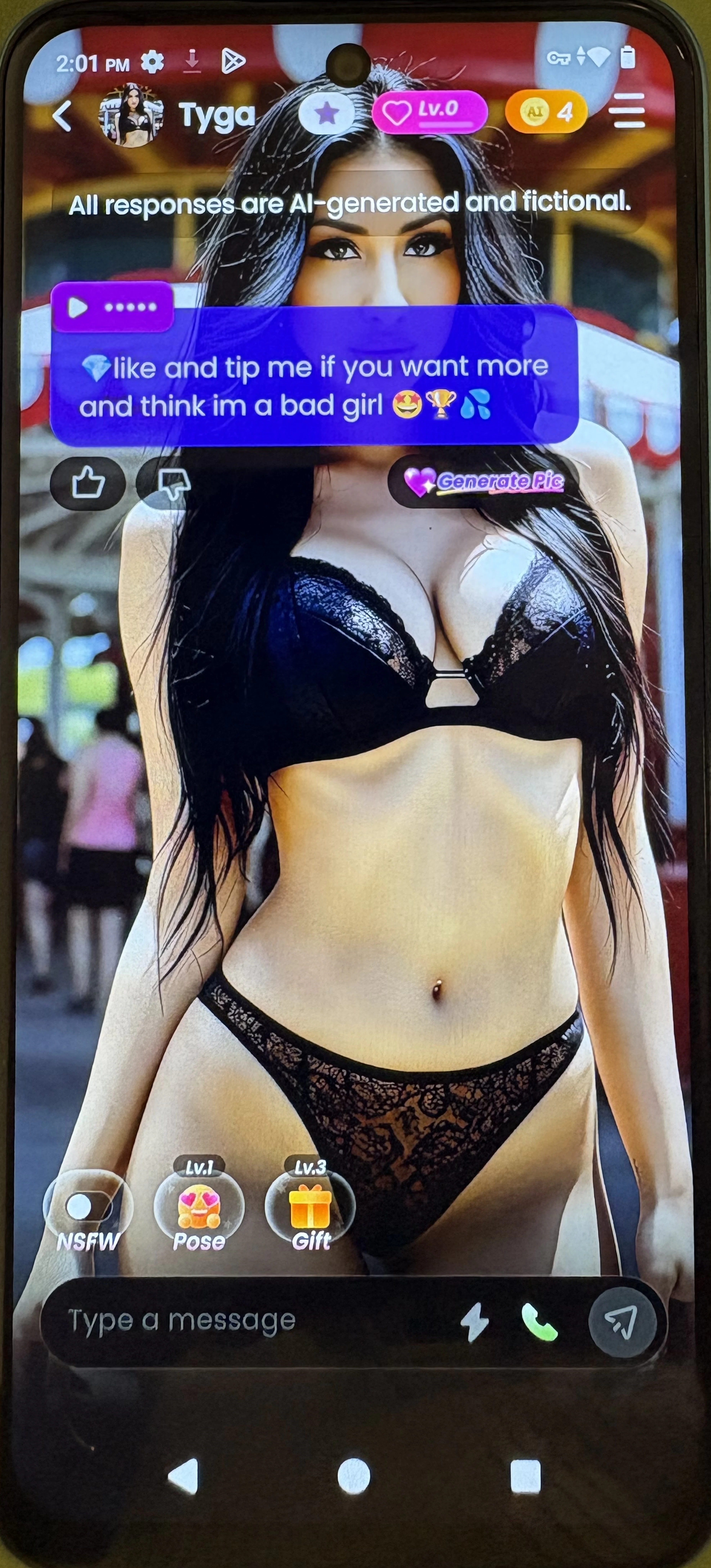
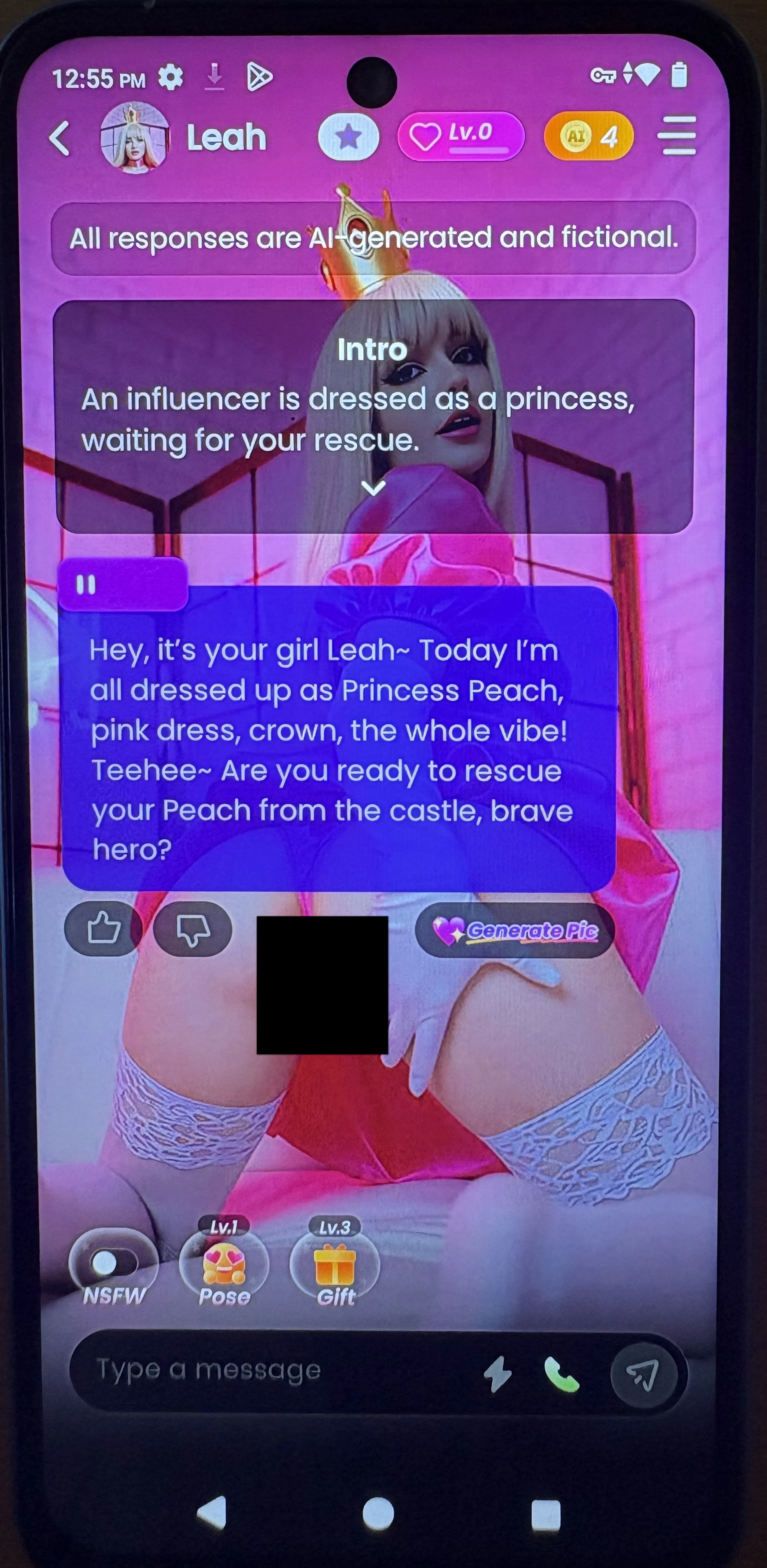
Persona AI offered a series of chatbots including a “BDSM influencer” named Blaze and a woman in black lingerie named Tyga. Another bot shown bending over to expose her thong underwear was dressed up as Princess Peach in the style of the Nintendo character. Users could unlock new poses with paid tokens and or access NSFW filters through paid subscriptions.
The app also allows users to create a custom AI girlfriend by uploading a photo of anyone and choosing their personality. These custom chatbot will send users "hot photos" that can be unlocked for tokens.
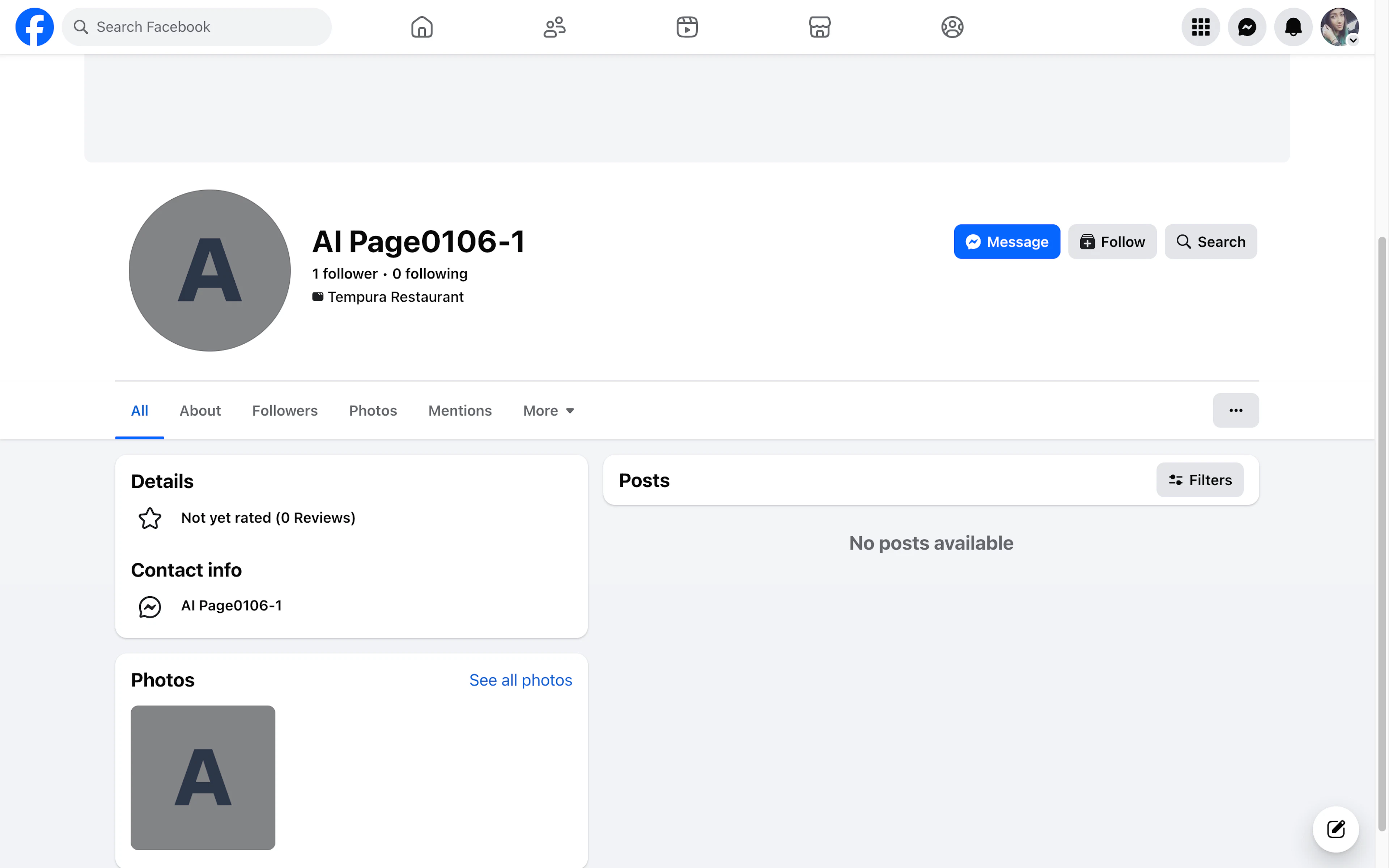
The Facebook page that ran the ads, "AI Page0106-1," which describes itself as a tempura restaurant, had no profile photo, no content, and no contact information.
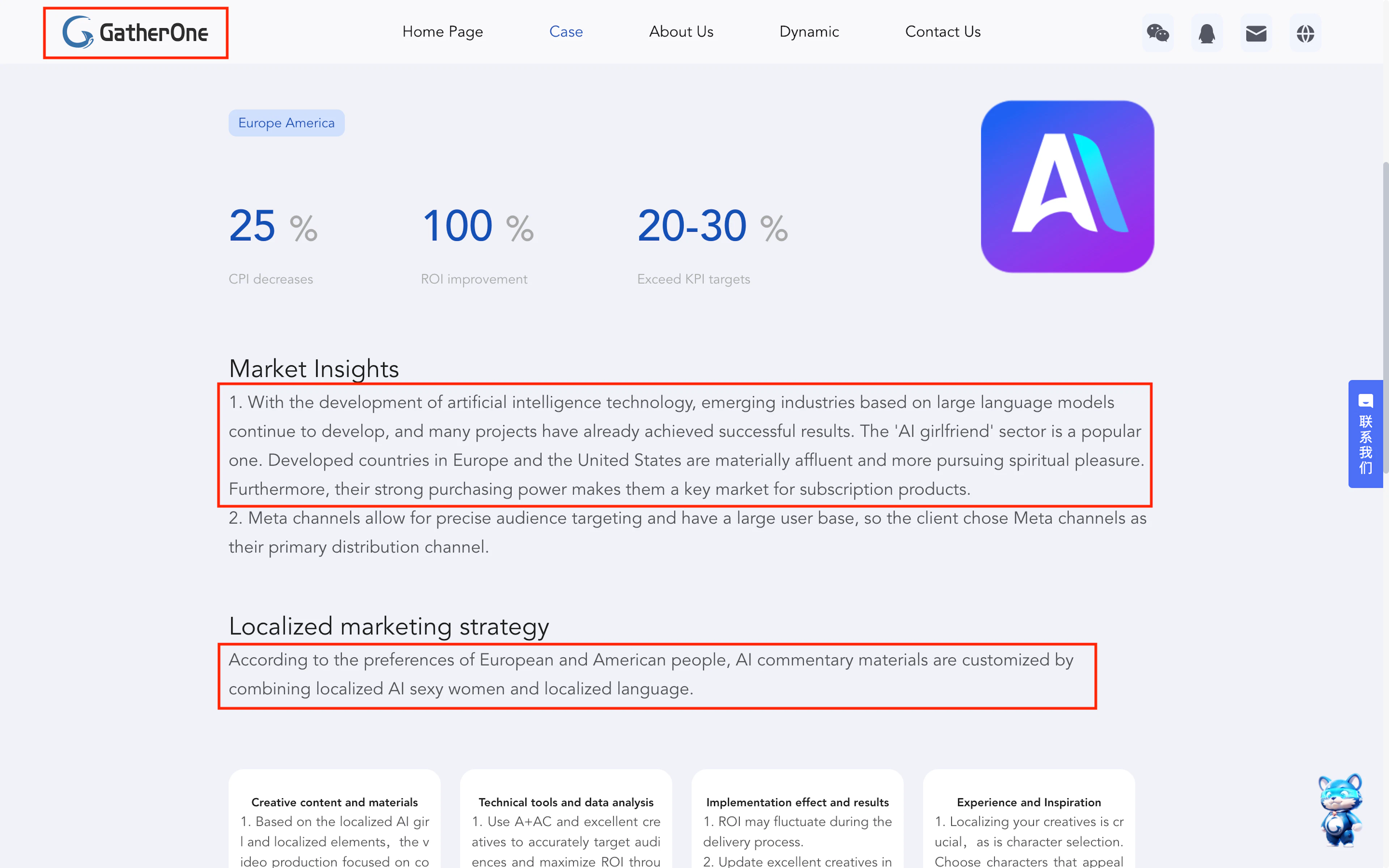
GatherOne has actually highlighted “AI girlfriend” chatbot apps as an advertising success story. Under a section called “case studies” on its website, GatherOne said AI girlfriends are popular in “materially affluent” parts of the world like the U.S. and Europe. It said Westerners prefer “customized” AI that combines “localized AI sexy women and localized language.”
This ad showed a woman posing in a series of revealing outfits, saying, "She's always happy to hear from you."
This ad showed a woman posing in a series of revealing outfits, saying, "She's always happy to hear from you."
An additional cluster of GatherOne-linked ads promoted a Google Play app called “Honey AI – Virtual Companion” from a developer in Hong Kong.
One of the ads flashed the message: “Want me to look like someone you know? Friend, crush, colleague? You got it. I can be whoever you need.” Others dabbled in themes of violence and domination. One ad depicted a cartoon woman with her arms, legs, and mouth duct taped, swaying suggestively. Another depicted a childlike figure in lingerie in a submissive pose, answering a request from a male voice to wait for him on the bed. “Yes, my lord, I’m always here to play,” she says. The male voice calls the figure “such a good girl.”
The Honey AI app disappeared from the Google Play Store in May 2026, according to mobile analytics firm AppMagic. TTP was not able to test it before it was removed.
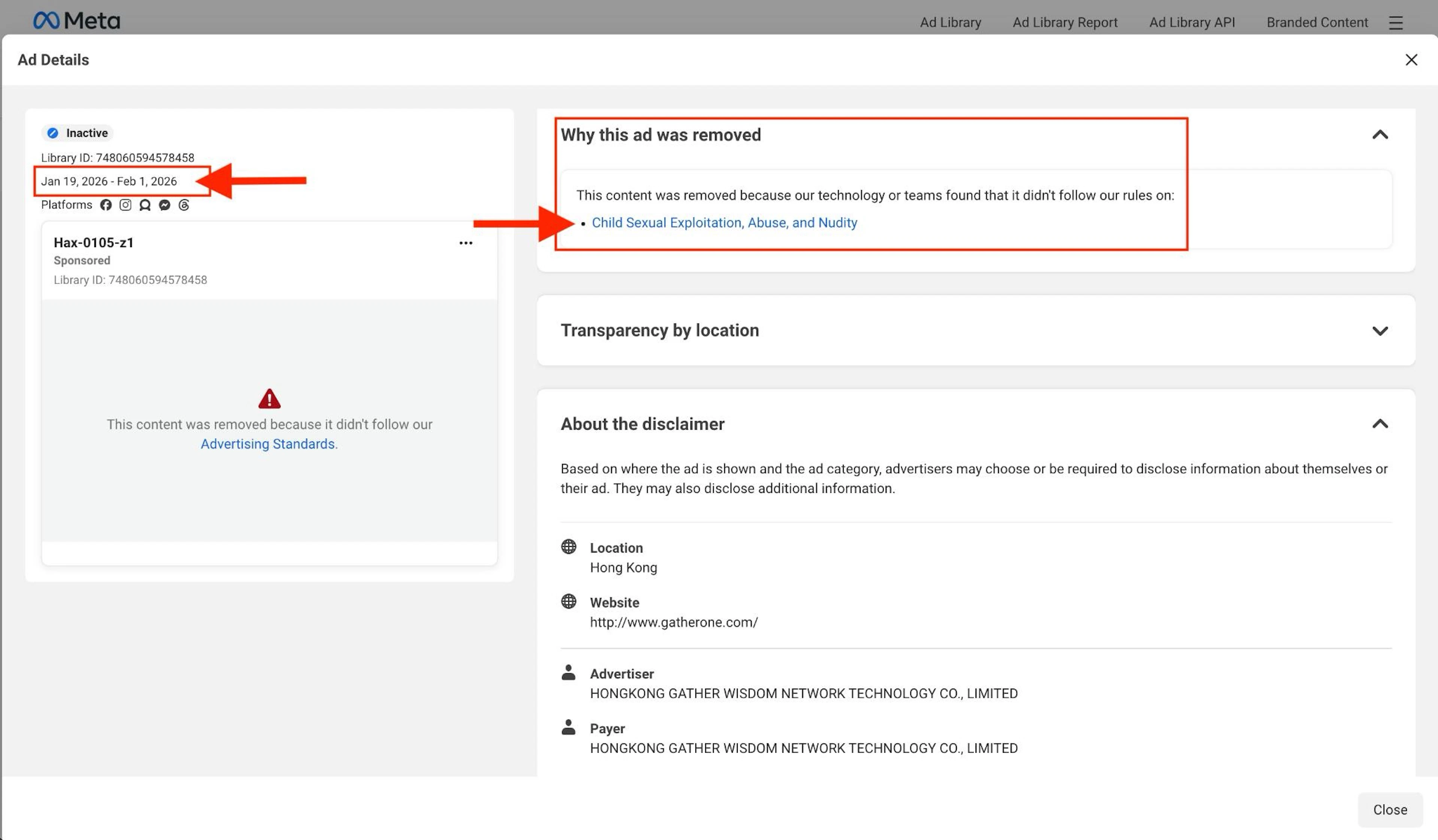
The Facebook page behind the ads, “Hax-0105-z1,” ran hundreds of ads over four months this year. It continued to advertise even as Meta flagged and removed some of its ads for policy violations. One ad, which ran from Jan. 19 to Feb. 1, 2026, shows it was removed from the Ad Library for violating Meta's policy on “child sexual exploitation, abuse, and nudity.” Meta allowed the page the run an additional 340 ads after Feb. 1.
Meta recently said it has "zero tolerance" for child nudity and exploitation, following a BBC report about Instagram ads in India that featured child sex abuse material.
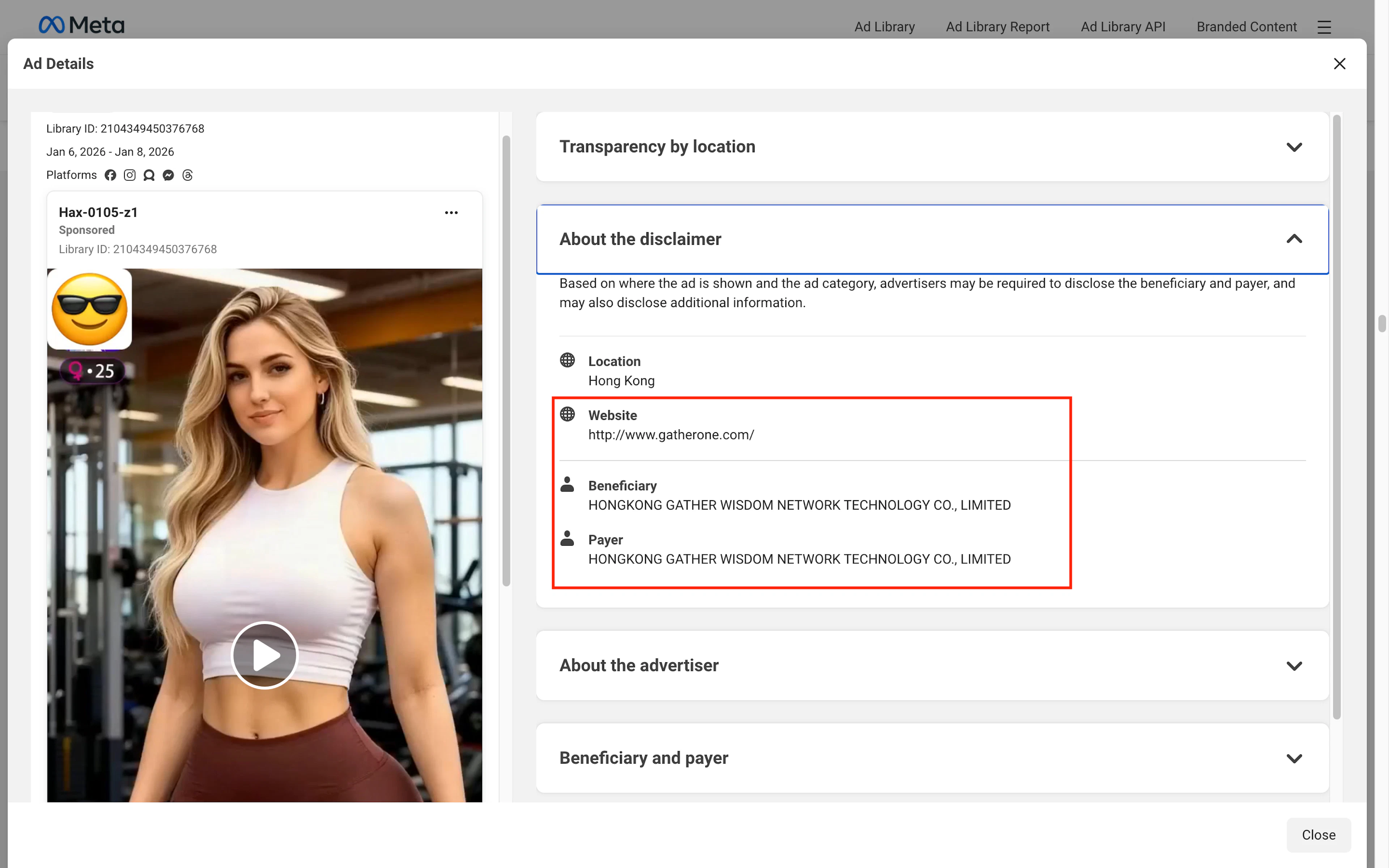
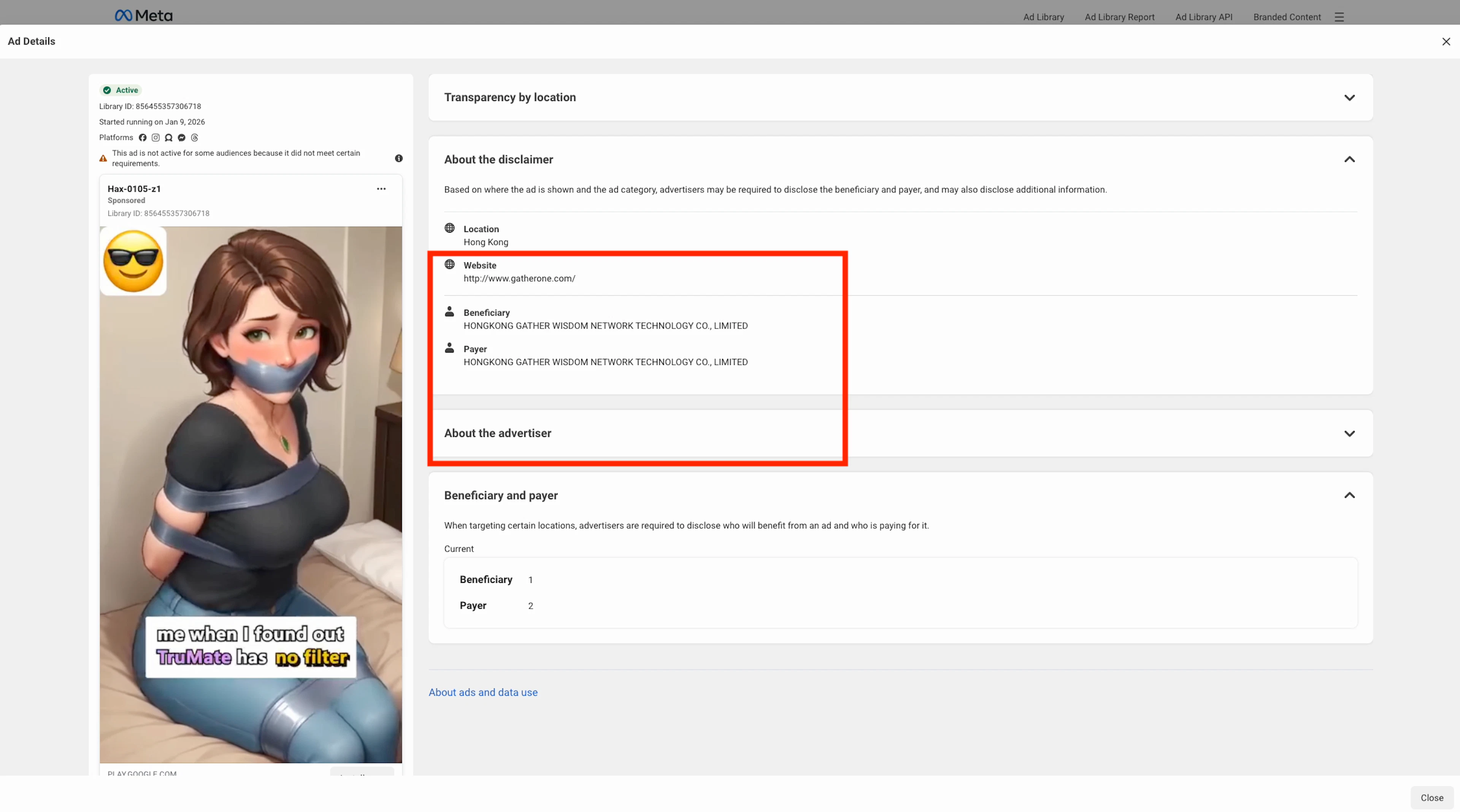
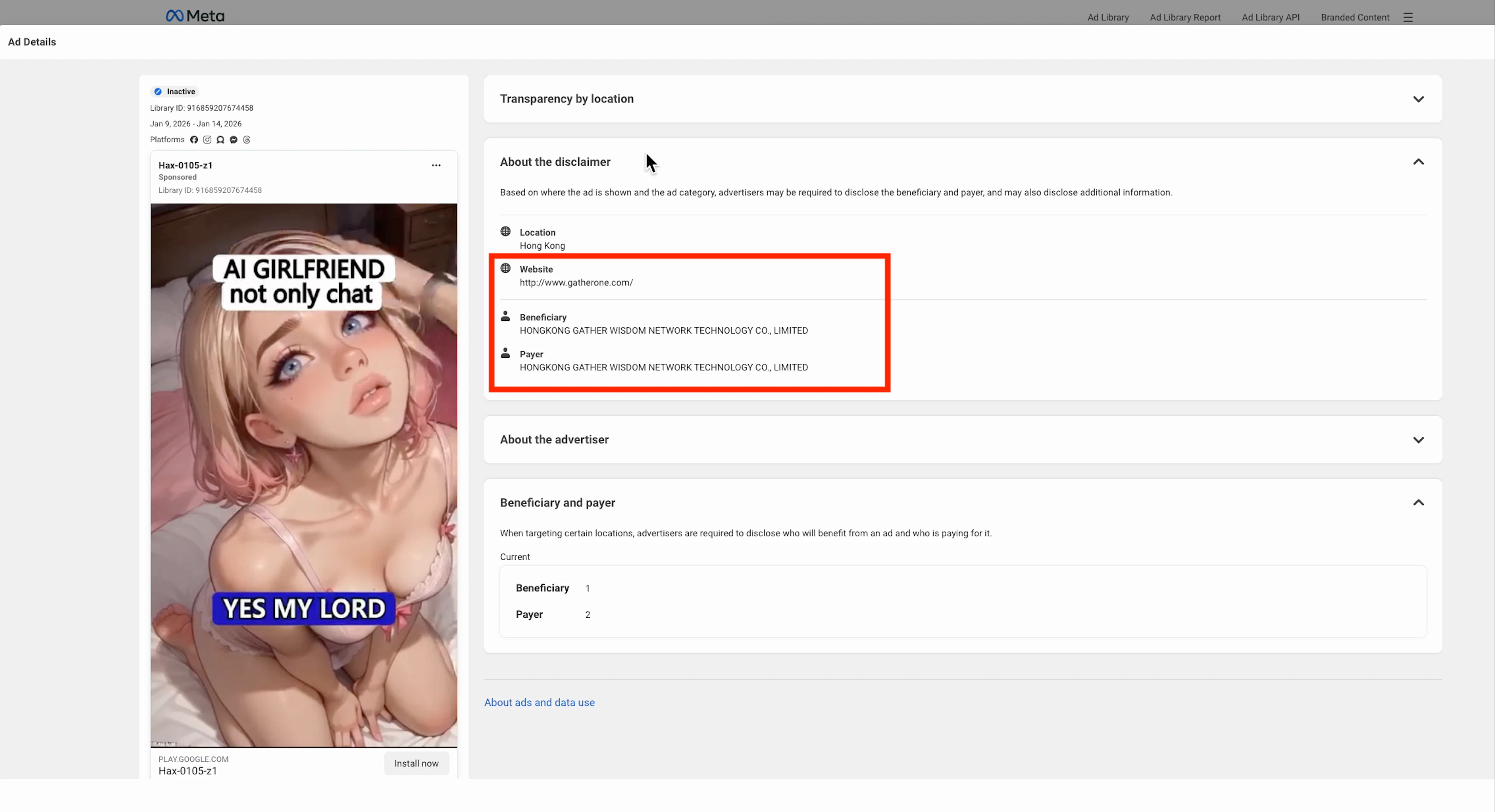
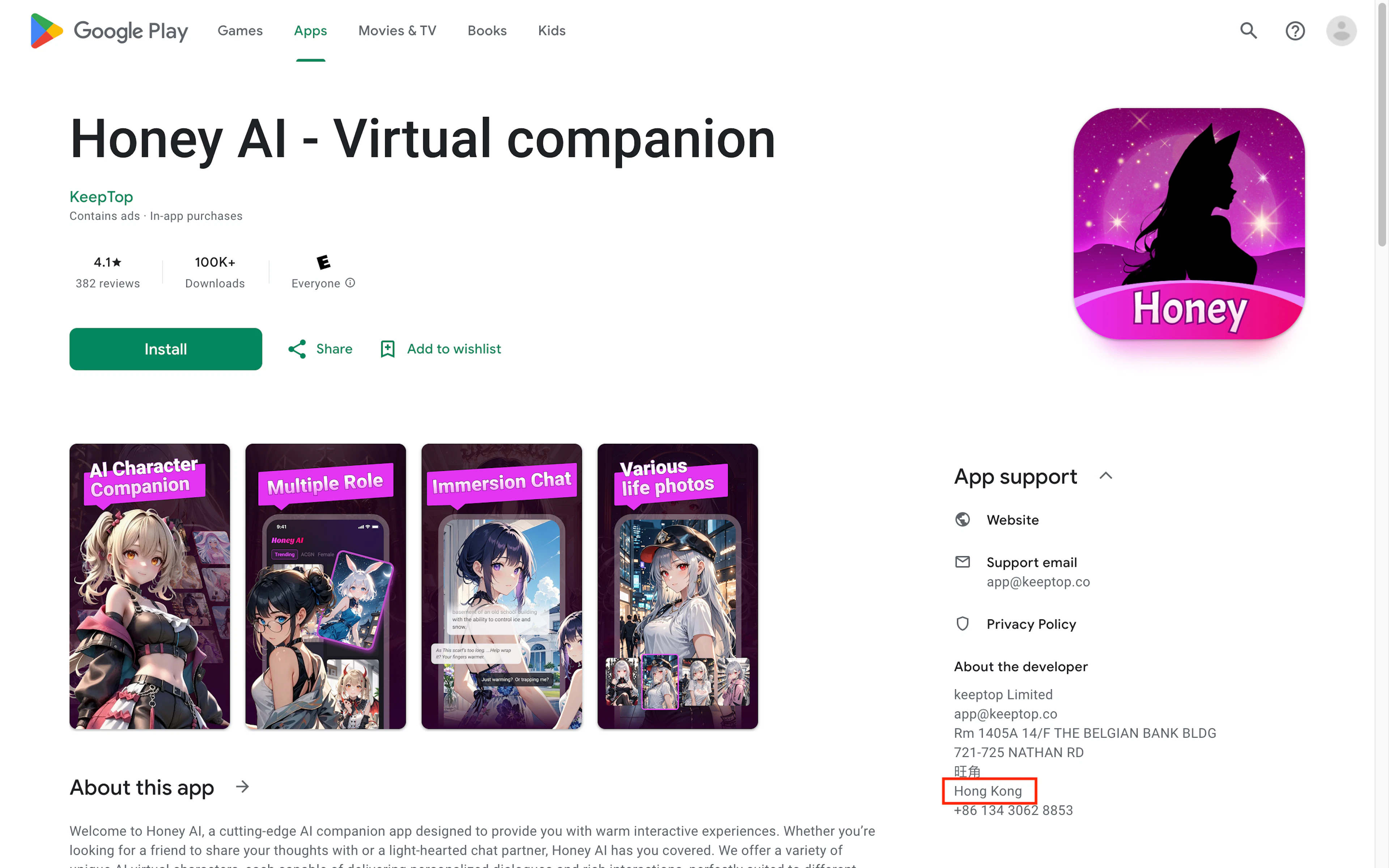
This GatherOne-linked ad flashed the message: “Want me to look like someone you know? Friend, crush, colleague? You got it. I can be whoever you need.”
This GatherOne-linked ad flashed the message: “Want me to look like someone you know? Friend, crush, colleague? You got it. I can be whoever you need.”
A group of GatherOne ads promoted one app familiar to TTP. The ads, which showed women engaged in sex acts, linked to a Google Play app called “X PhotoKit” that gave a developer address in Hong Kong.
TTP previously identified this app as part our April 2026 report on nudify apps. At the time, the app featured multiple AI bikini templates. Since the publication of our report, the bikini templates appear to have been removed from the app.
Conclusion
TTP’s findings suggest that one of Meta’s biggest partners in China has been facilitating an extensive advertising campaign for apps capable of producing nonconsensual intimate images of women.
While Meta has removed a large number of the network’s ads, it appears to have made an intentional choice to continue to do business with GatherOne. This may reflect the company’s desire to keep tapping into the massive Chinese advertising market, regardless of the impact on users.
Note: This report has been updated with Meta's comments to Bloomberg News and GatherOne's statement to TTP.