After Australia passed the world’s first social media ban for children under 16, threatening to cut Meta off from the lucrative teen demographic, the company turned to one of its favored tactics for pushing back.
In July 2025, five months before the ban took effect, Meta invited a group of Australian parent influencers to something called “Instagram Safety Camp.” At a trendy waterfront venue overlooking Sydney Harbor, attendees were showered with outdoors-themed swag and snacks like personalized scout badges, gourmet s’mores, and tent photo stations.
Meta’s head of child safety, Ravi Sinha, told the group that blanket social media bans don’t work—and Instagram’s parental supervision tools are more effective at keeping kids safe online. “What we worry about is pushing teens into places that are less safe,” he said. “We think our approach strikes the right balance.”
The parent influencers then repeated these talking points to their legions of followers. Tammin Sursok, an Australian actress known for starring in the TV series Pretty Little Liars, was typical, gushing that it was an "amazing way to hear what Instagram is doing to keep our teens safe with #instagramteenaccounts."
Not mentioned by these influencers: Two months earlier, the Washington Post had found that the Teen Accounts product "fails spectacularly" to protect young users from inappropriate content and “can’t be relied upon to actually shield kids.”
The Australian influencer campaign is just one example of how Meta has exported tactics developed in the U.S. to an array of other countries where it faces the threat of social media regulation, a Tech Transparency Project review found. From Asia to the Middle East to Europe, Meta has deployed a mix of Instagram influencers and paid parent groups to paint a rosy picture of its child protection efforts and shape policy debate in the company’s favor—essentially laundering its influence efforts through sympathetic third parties.
Meta is ramping up this global effort as a wave of whistleblower revelations reveal the damaging impact its platforms can have on kids—and child safety lawsuits begin to saddle the company with large financial penalties. The stakes are getting higher for Meta as more and more countries follow the lead of Australia and move to ban or restrict teens on social media.
In a statement, Meta said it has held over 40 events globally since 2024 to promote its teen safety tools and works with influencers "because they are local voices trusted by parents in their communities."
"Their platform helps us reach families at scale in locations where we can't attend every school event or parent meetup," Meta said. "All paid partnerships are clearly disclosed and comply with relevant advertising standards in each market."
A Meta spokesperson added that "age-appropriate guardrails and conversation between families are a better path forward than blunt bans, which push teens to less safe, unregulated sites."
None of the influencers mentioned in this report responded to questions. Meta said its brand partnerships include confidentiality provisions that are "common across the industry."
Australia and New Zealand
In the U.S., Meta has honed a set of public relations tactics to push back against child safety criticism.
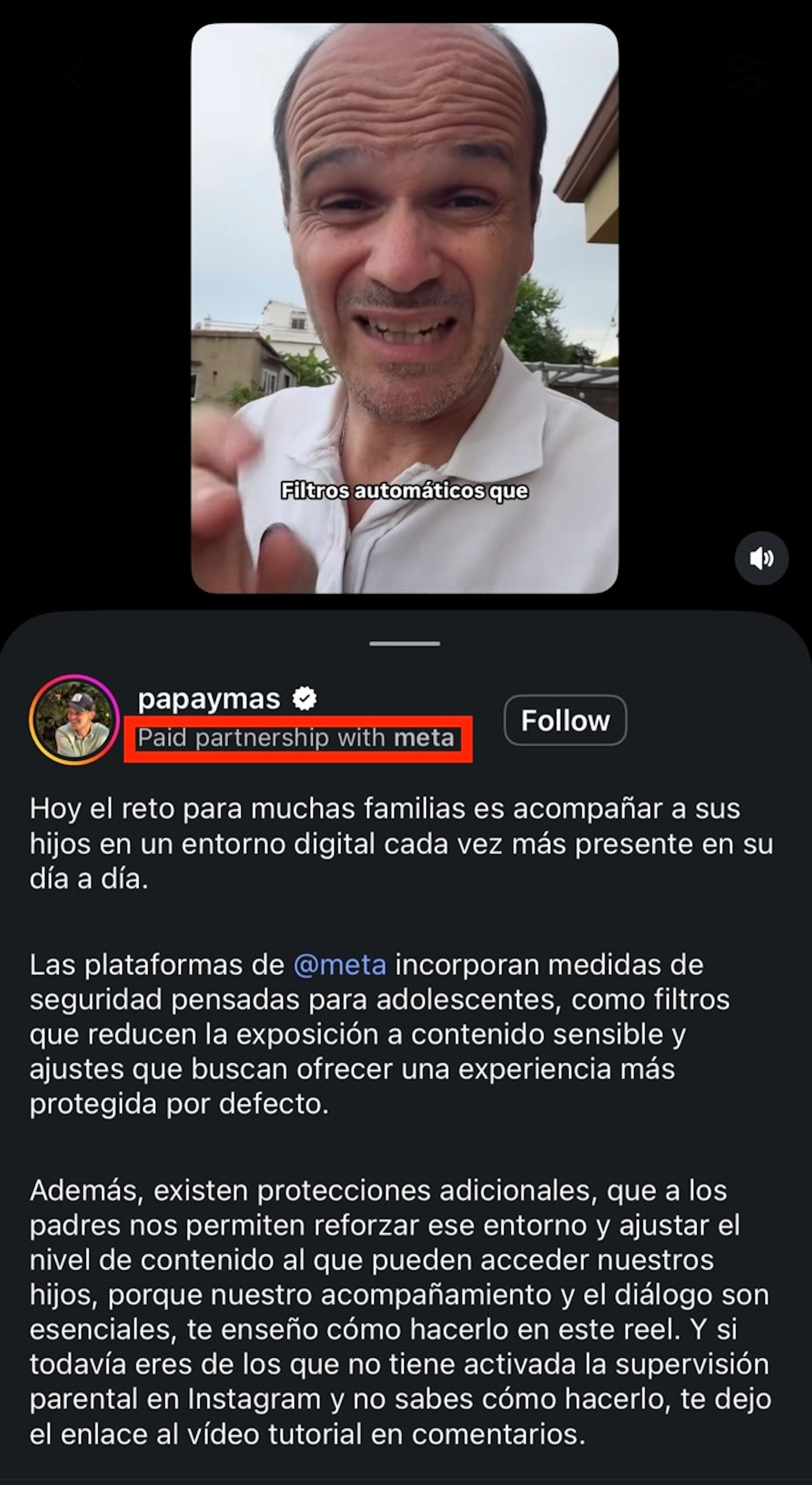
The company holds “Screen Smart” events across the country to promote its Teen Account parental supervision settings, inviting parent influencers with large Instagram followings to the events. The influencers then parrot Meta’s messaging to their followers, often including small disclosures or hashtags showing that they have a paid partnership with Meta. Their glowing endorsements contrast with reports from the Washington Post and TTP, which have found that the Teen Accounts actually fail to protect minors as promised from content related to sex, drugs, and violence.
Meta said influencers who attend the Screen Smart events "share their own genuine experiences and perspectives," though the company acknowledged it offers "suggestions on how to be accurate about specific product features."
Asked about the reported failures of the Teen Accounts, Meta said, "No system is perfect and we continue to improve our protections. When issues are identified, we work quickly to address them."
Meta has also used paid parent groups like the National PTA to deliver its talking points. The PTA participated in U.S. Screen Smart events for years but said in February that it would no longer seek funding from Meta, citing public scrutiny and child safety litigation against the company.
TTP’s review found that Meta is using the same playbook in a host of other countries where it faces public and regulatory pressure over child safety. The campaign is picking up speed as governments around the world push ahead with social media bans for children—posing an existential threat to Meta's business model of hooking new generations of young users.
Australia was the first country to pass a social media ban for kids under 16, with Prime Minister Anthony Albanese saying that too often social media is a "weapon for bullies, a platform for peer pressure, a driver of anxiety, a vehicle for scammers and, worst of all, a tool for online predators." From the start, Meta aggressively opposed the law, saying the legislation was rushed through and “poorly developed.”
In addition to public statements and lobbying, Meta deployed a soft influence strategy, holding the “Instagram Safety Camp" in July 2025. Meta invited dozens of parenting influencers to the Sydney event, which featured Australian TV presenter Sarah Harris, Australian actress Pia Miranda, and youth mental health activist Annie Wylie of ReachOut Australia. After the event, the influencers repeated Meta’s talking points to their online followers.
Sursok, who starred in Pretty Little Liars and the Australian soap Home and Away, posted photos of herself striking poses at the Safety Camp, including with the Sydney Opera House in the background. A mother of two daughters, she has built a 1.3 million Instagram following posting about parenting, acting, and fitness. While admitting the topic of teens and social media makes her “very anxious,” she endorsed Meta’s efforts, saying she had “such an informative day listening to what Instagram is doing to protect teens online.” She ended the post with the hashtag #instagrampartner, indicating she had some kind of paid arrangement with Meta.
Asked about reported failures of the Teen Accounts, Meta said, "No system is perfect and we continue to improve our protections. When issues are identified, we work quickly to address them."
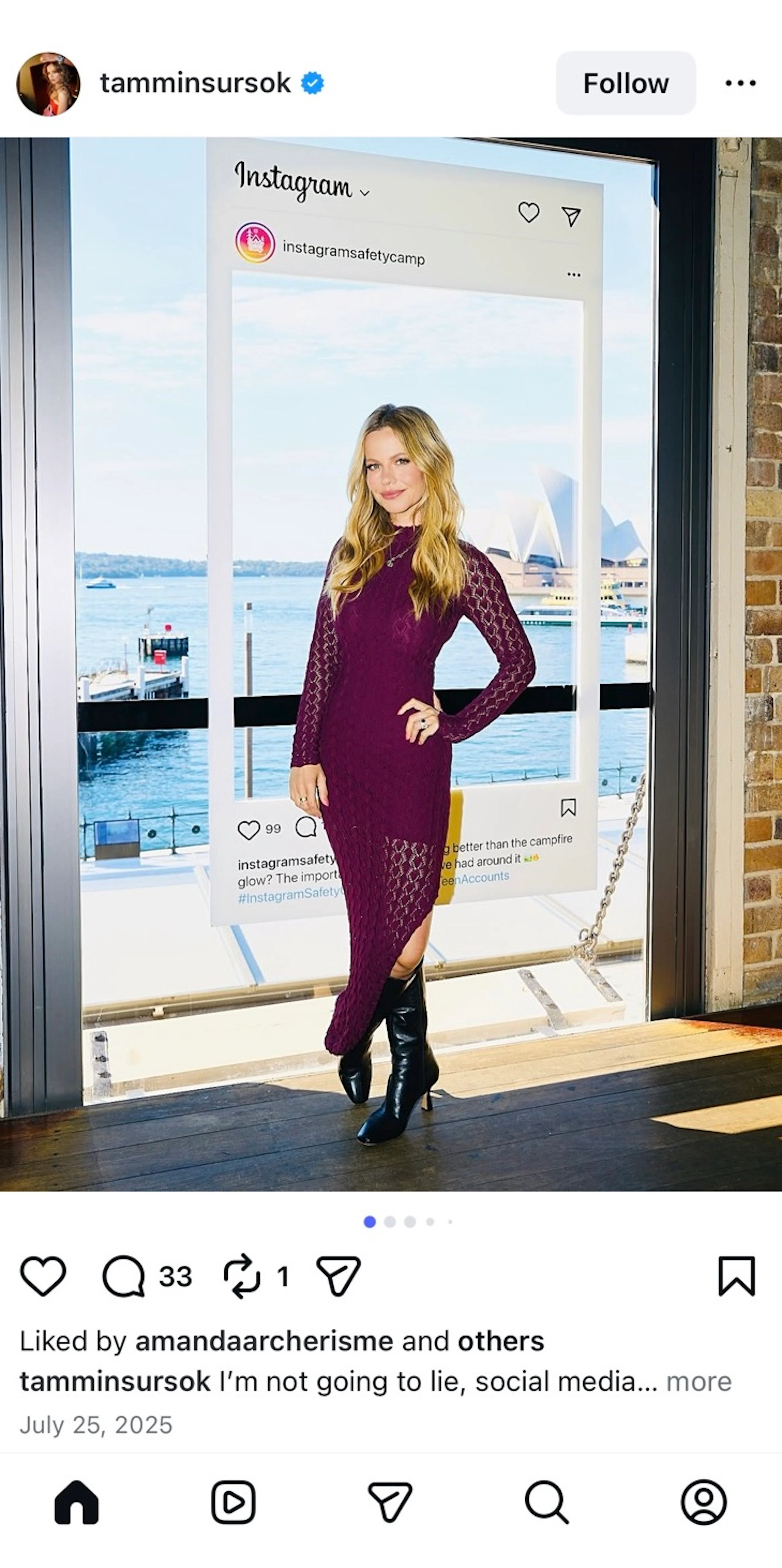
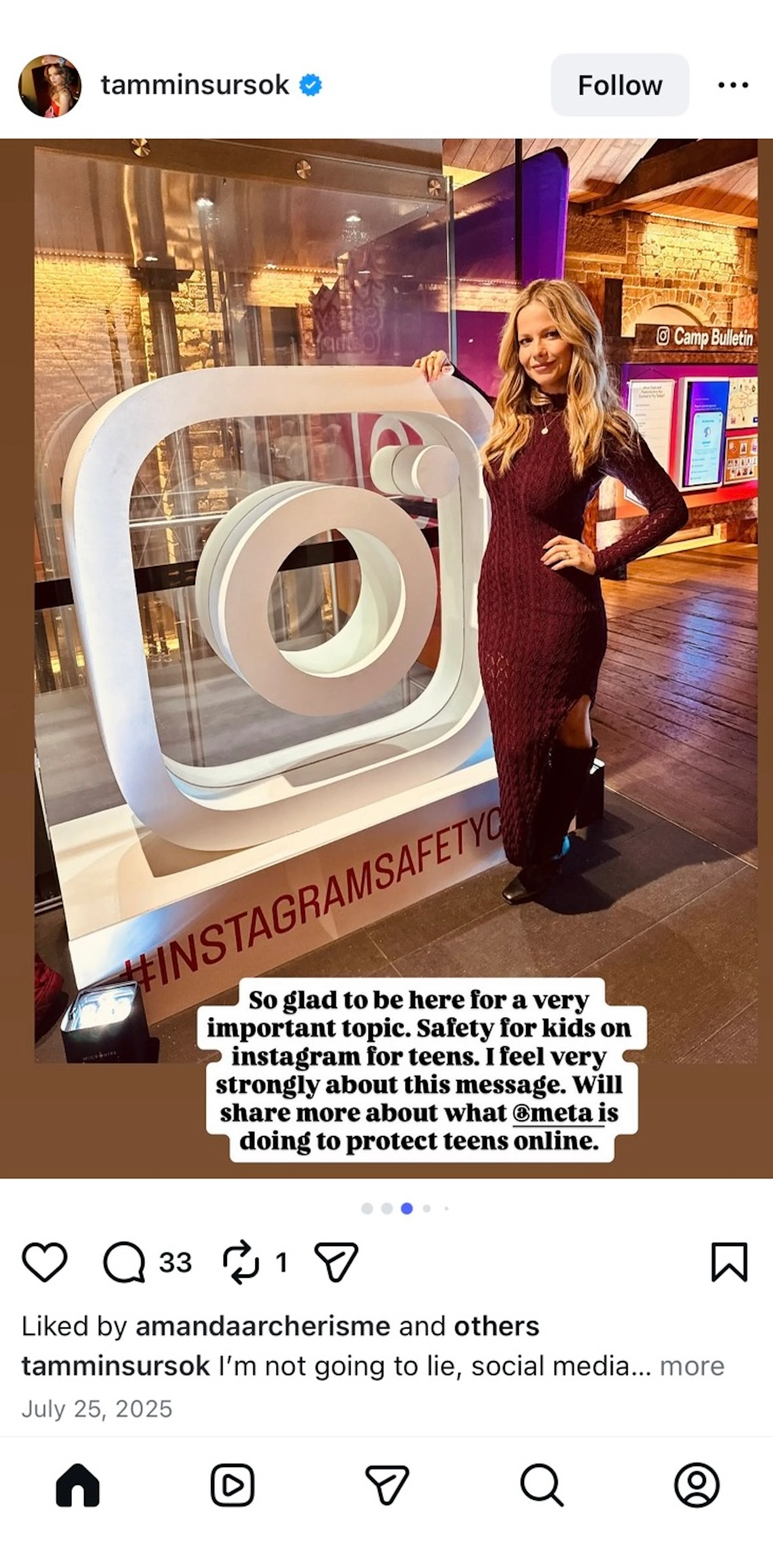
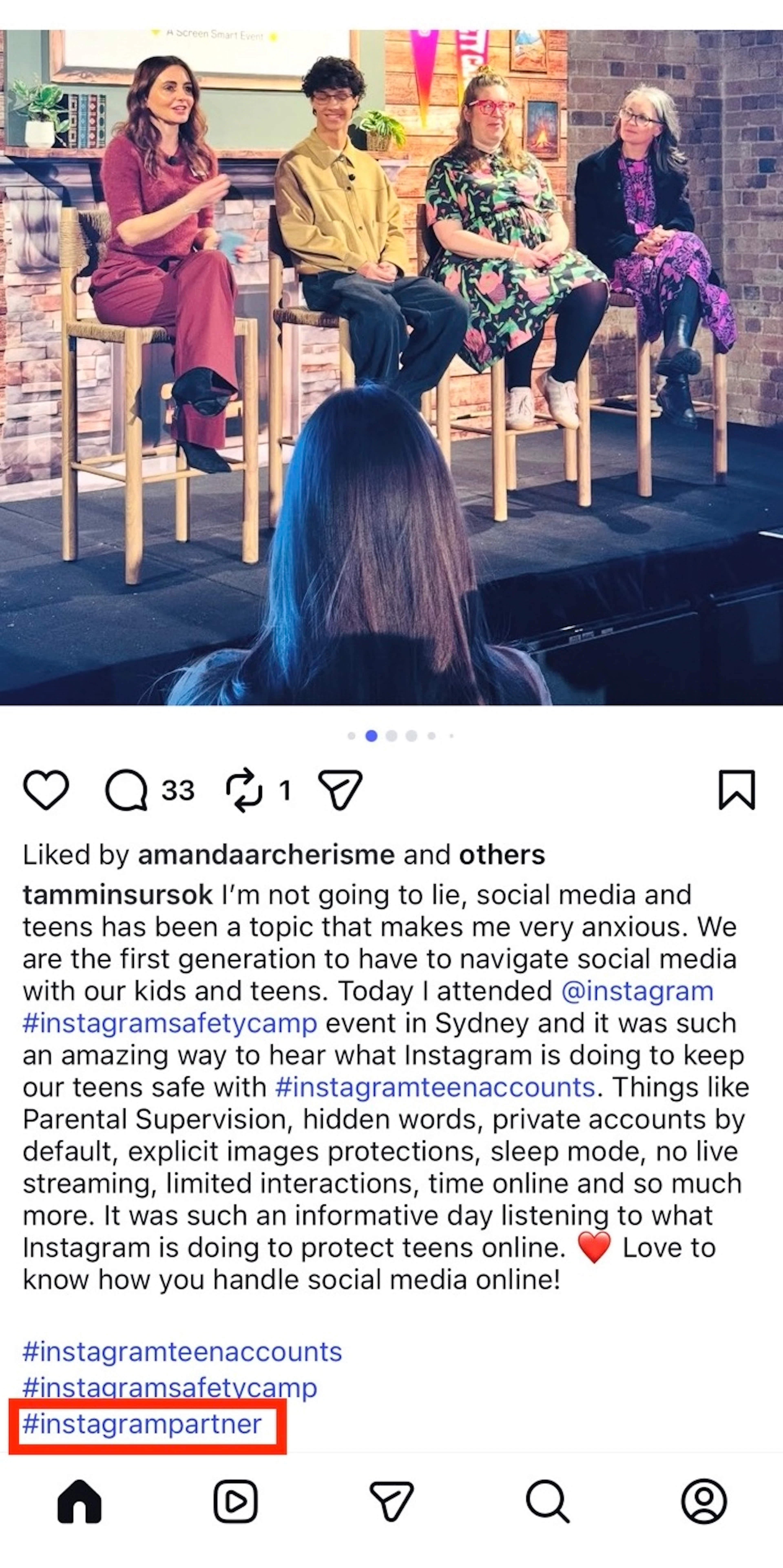
Australian actress Tammin Sursok attended "Instagram Safety Camp" in Sydney, gushing that it was "amazing" to hear what Meta was doing to keep kids safe.
Australian actress Tammin Sursok attended "Instagram Safety Camp" in Sydney, gushing that it was "amazing" to hear what Meta was doing to keep kids safe.
Other attendees at the Meta event included Cameron Merchant, an Australian cricketer and contestant on the reality show Married at First Sight. Merchant has amassed nearly half a million followers on Instagram, where he typically shares breezy content about the ups and downs of parenthood. After the Instagram Safety Camp, he posted a video of himself lounging in one of the event's brightly colored tents festooned with Instagram-branded pillows.
“As a parent, it’s overwhelming trying to keep up with what our kids are doing online,” he said. “I’ve recently learned more about the incredible tools that @instagram has created & helping parents & their teens with at Instagram Safety Camp & honestly… So many game changers.” He also used the #instagrampartner hashtag.
Nathan Stafford, a self-described “lawnmower man” whose soothing yard work and gardening videos have attracted 3.4 million followers on Instagram, was equally effusive after attending the Safety Camp. “Learning about all of things to protect children on social media and what they are doing behind the scenes to keep kids safe online and how we can help keep kids safe,” he posted.
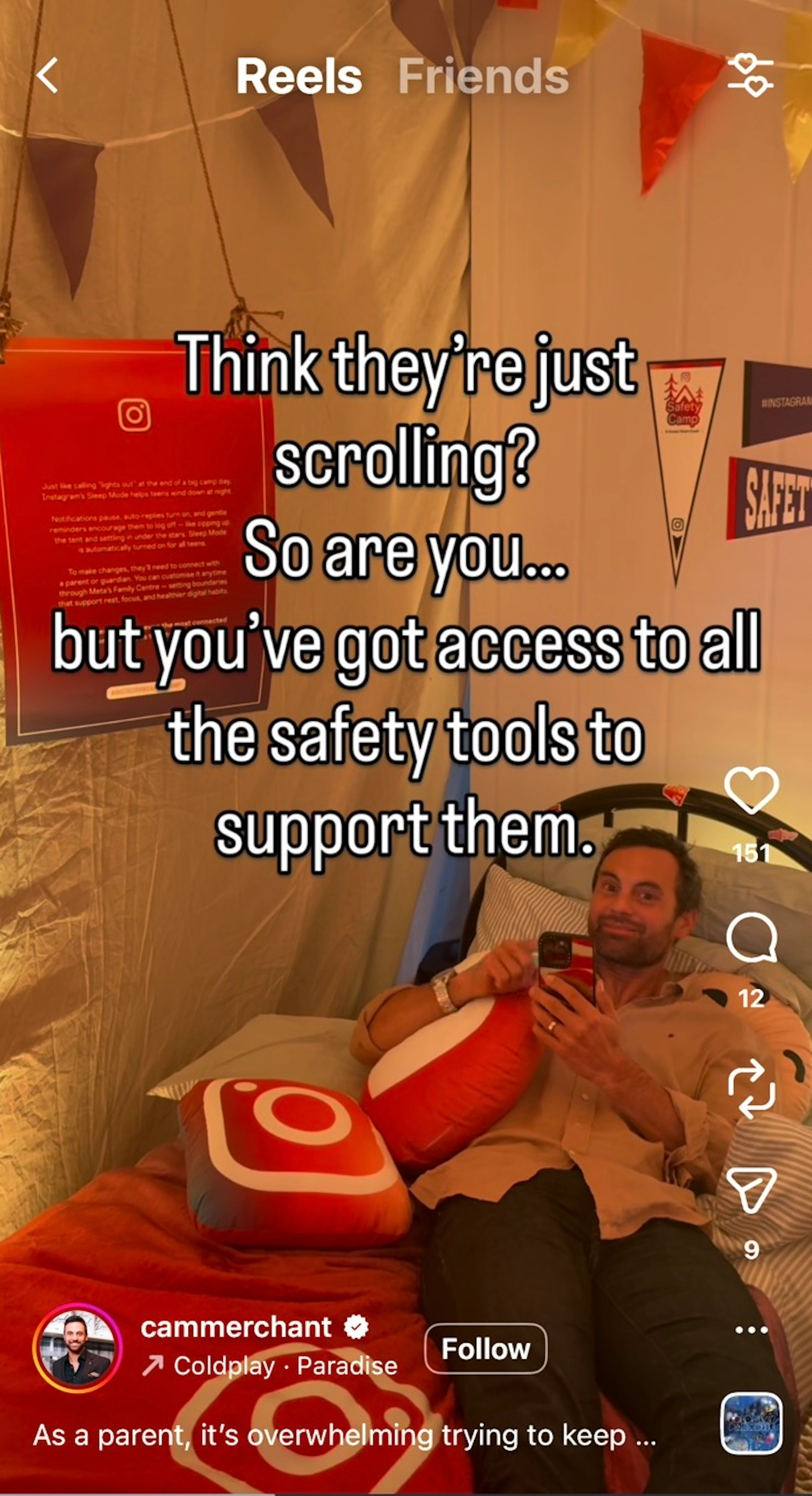
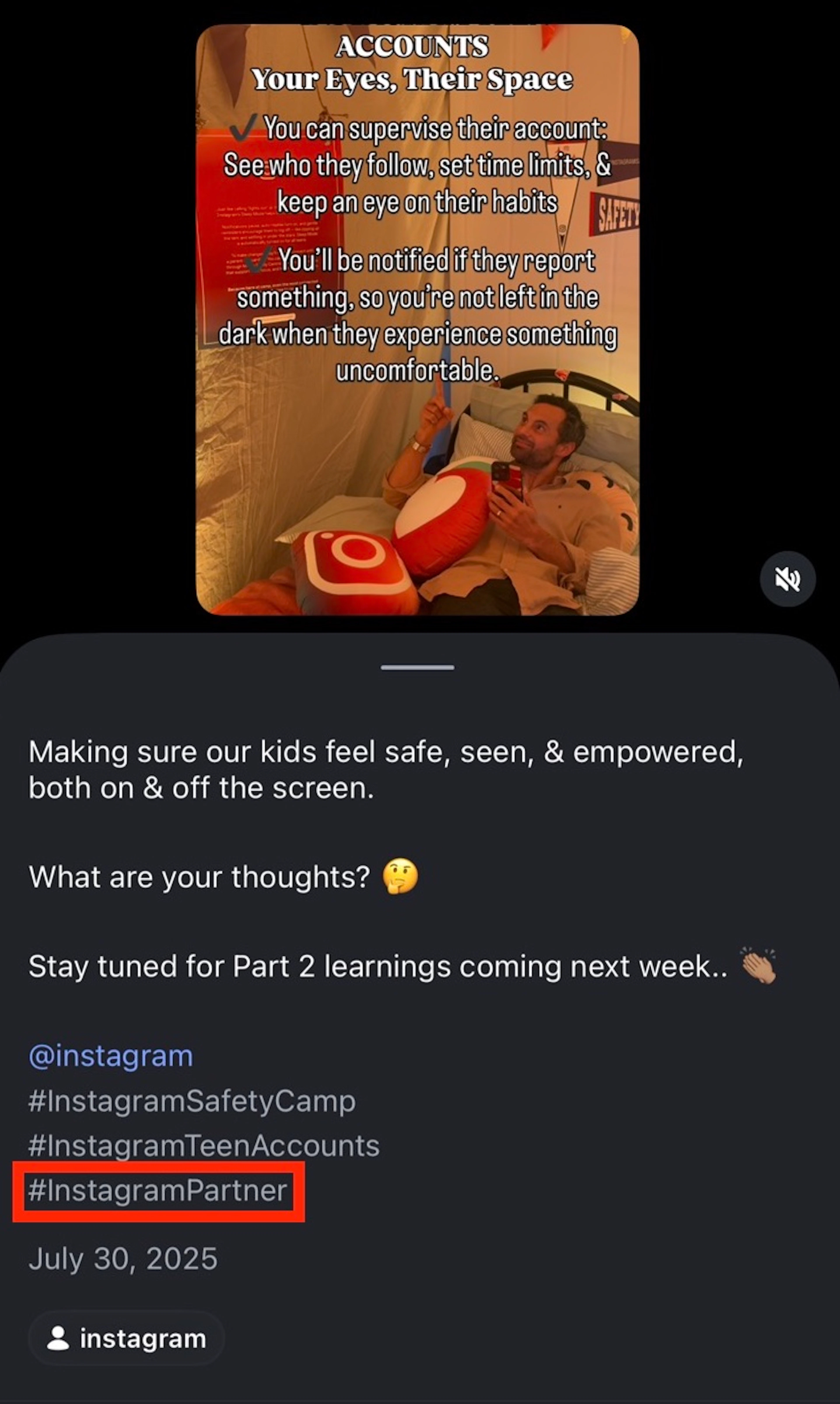
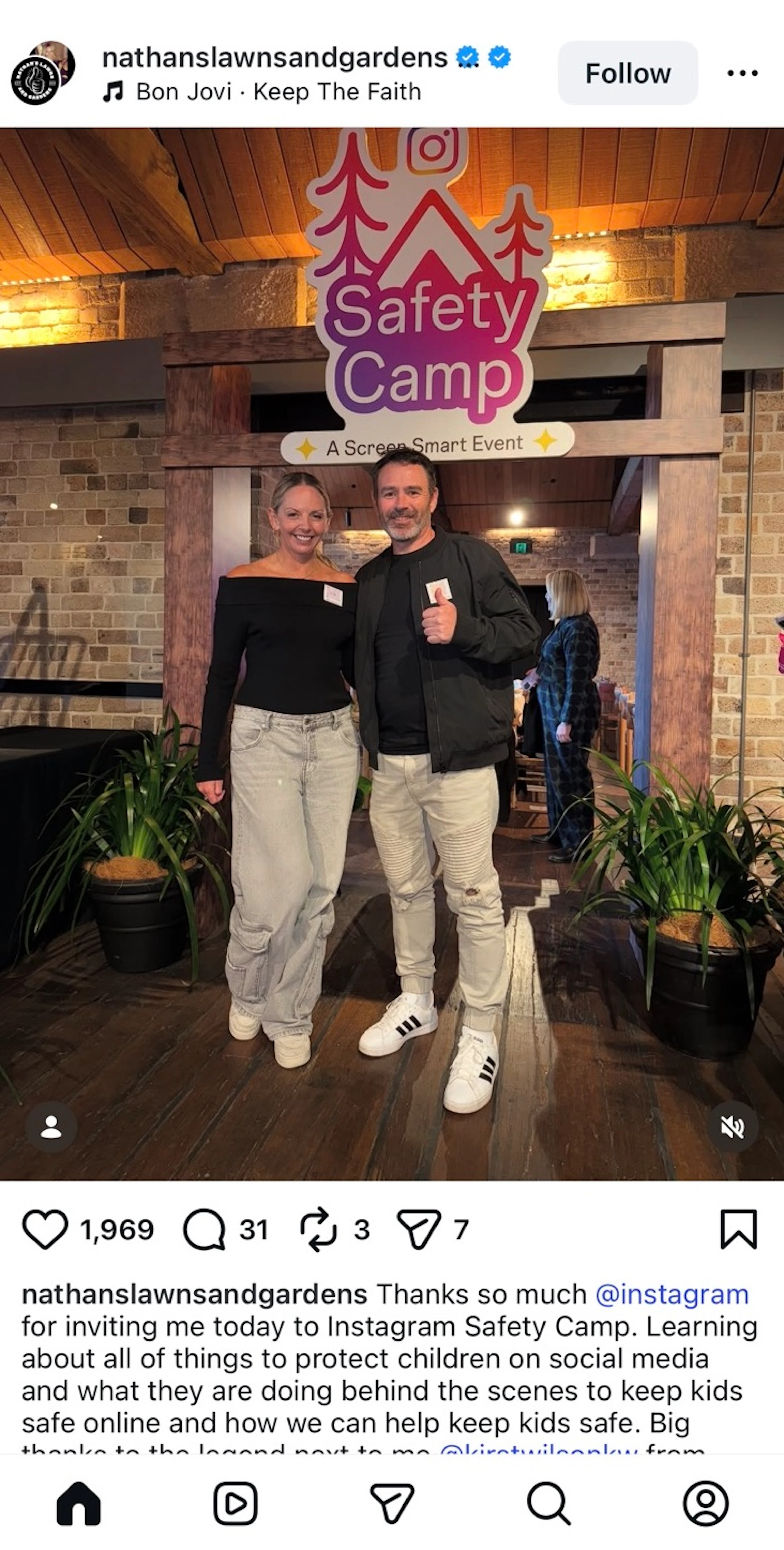
Cameron Merchant, an Australian cricketer and reality show contestant, also attended the Instagram Safety Camp and endorsed Meta's safety tools.
Cameron Merchant, an Australian cricketer and reality show contestant, also attended the Instagram Safety Camp and endorsed Meta's safety tools.
It is not clear if the use of a hashtag would be considered adequate disclosure of a brand partnership under Australian consumer law. According to the Australian Competition & Consumer Commission, influencers should avoid using “vague or confusing language to describe their relationships with brands or to disclose advertising in posts,” including “mixing advertising disclosures into a long list of other hashtags and links in captions.” Misleading or deceptive product endorsements can cost influencers up to $2.5 million in fines.
Asked about the hashtag disclosures, Meta said, "The use of #metapartner or #instagrampartner is standard practice for any company engaging in social media marketing and is a clear disclosure of the relationship."
ReachOut Australia, the youth mental health service that participated in the Instagram Safety Camp, is Meta-funded. Meta is a “gold sponsor” of the group and financed its teen online safety series called Likes and Limits. The series, which heavily promotes the Instagram Teen Accounts and their parent supervision tools, was hosted by Pia Miranda, the same actress who moderated a panel at the Safety Camp.
Meta did not respond to a question about whether it disclosed its funding of ReachOut Australia to attendees of the Safety Camp. But the company said its partner groups are "independent" and "bring their own expertise, research, editorial voice and mission, and they make their own decisions about the advice they provide."
In a statement, ReachOut Australia said Meta does not shape its agenda.
"No partner, including Meta, reviews or approves what we publish or what our people say publicly," the group said, adding that it "remains vocal in advocating for social media companies to make their platforms safe spaces for young people."
Meta has used influencers repeatedly in Australia. Days before the country’s social media ban went into effect in December 2025, a cohort of Instagram influencers posted instructions for parents on how to ensure their children can get their accounts immediately restored once they turn 16. All the influencers used the hashtags #InstagramPartner and #MetaPartner, and some also included a paid partnership disclosure.
Amid reports that many Australian teens have been able to circumvent the social media ban, the country's eSafety commissioner announced in March 2026 that it is investigating whether Facebook and Instagram as well as Snapchat, TikTok, and YouTube are complying with the ban.
In June, Albanese said his government would introduce legislation to double the maximum fine for platforms that fail to prevent teens under 16 from holding accounts. The following month, an eSafety progress report acknowledged that the number of children using age-restricted social media had decreased only marginally but concluded that the primary reason appeared to be "ineffective implementation of age assurance measures by platforms."
This month, in an apparent bid to show it is enforcing the ban, Meta said it has "removed access" to 750,000 Instagram and Facebook accounts it assessed as belonging to teens under 16.
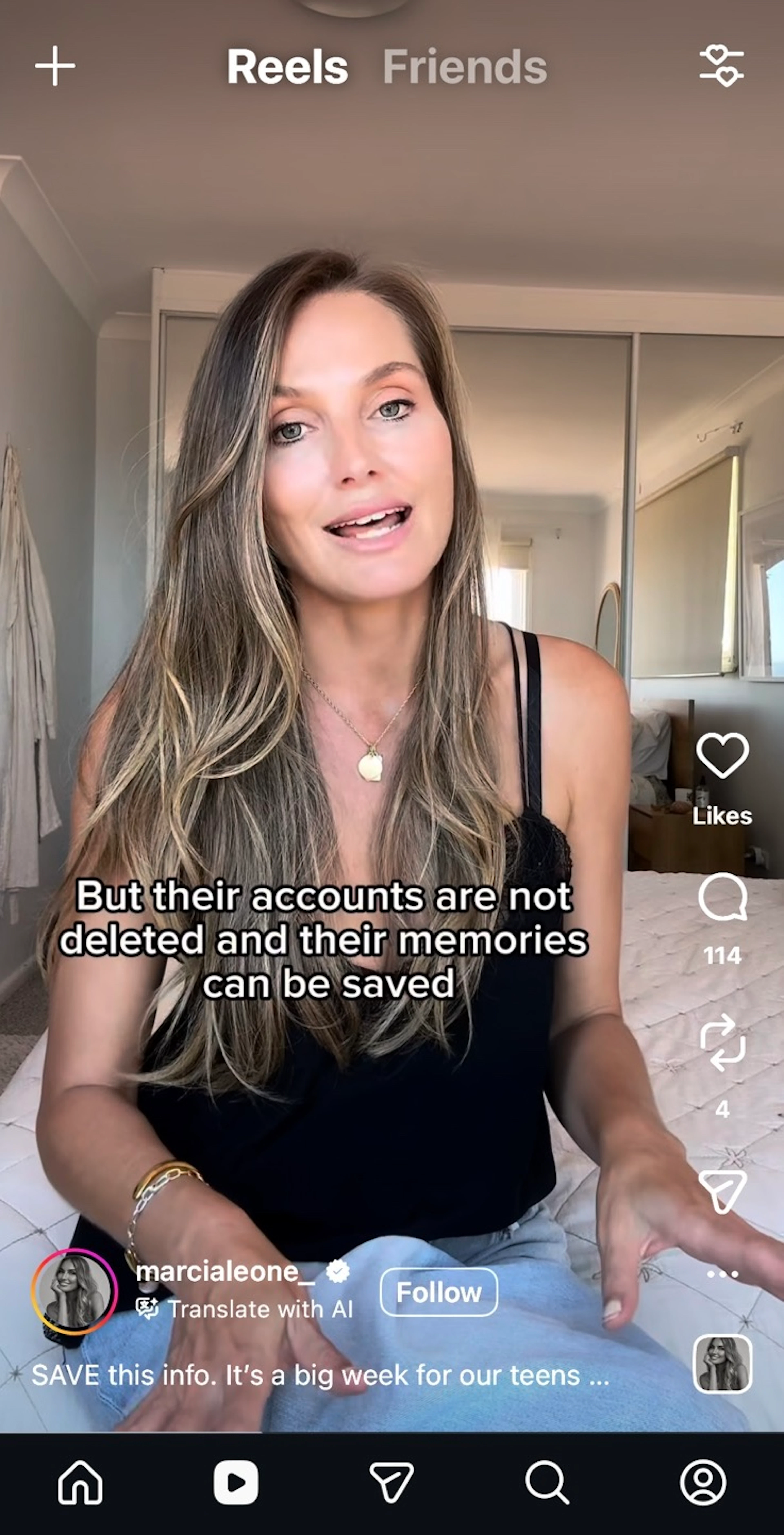
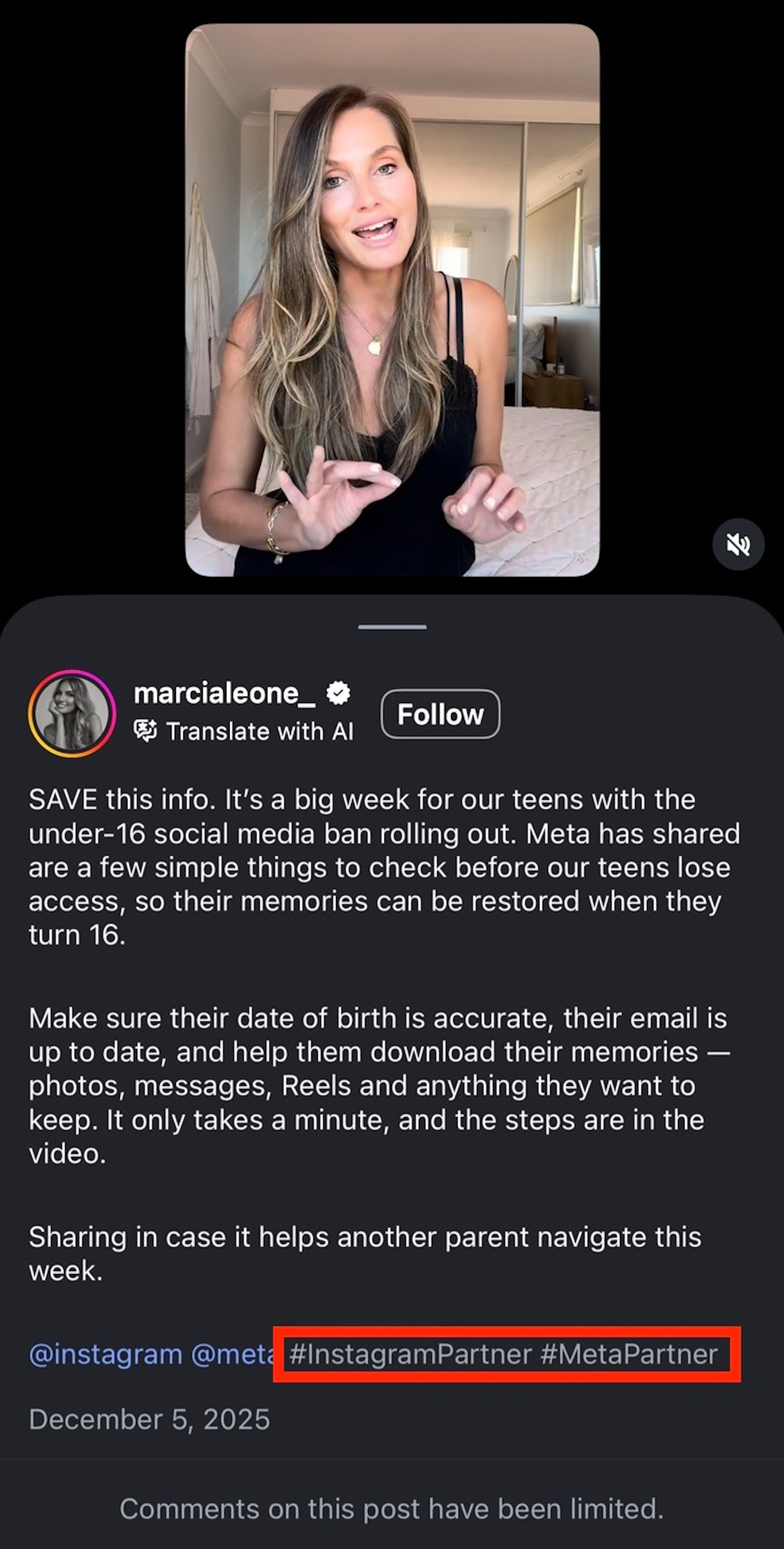
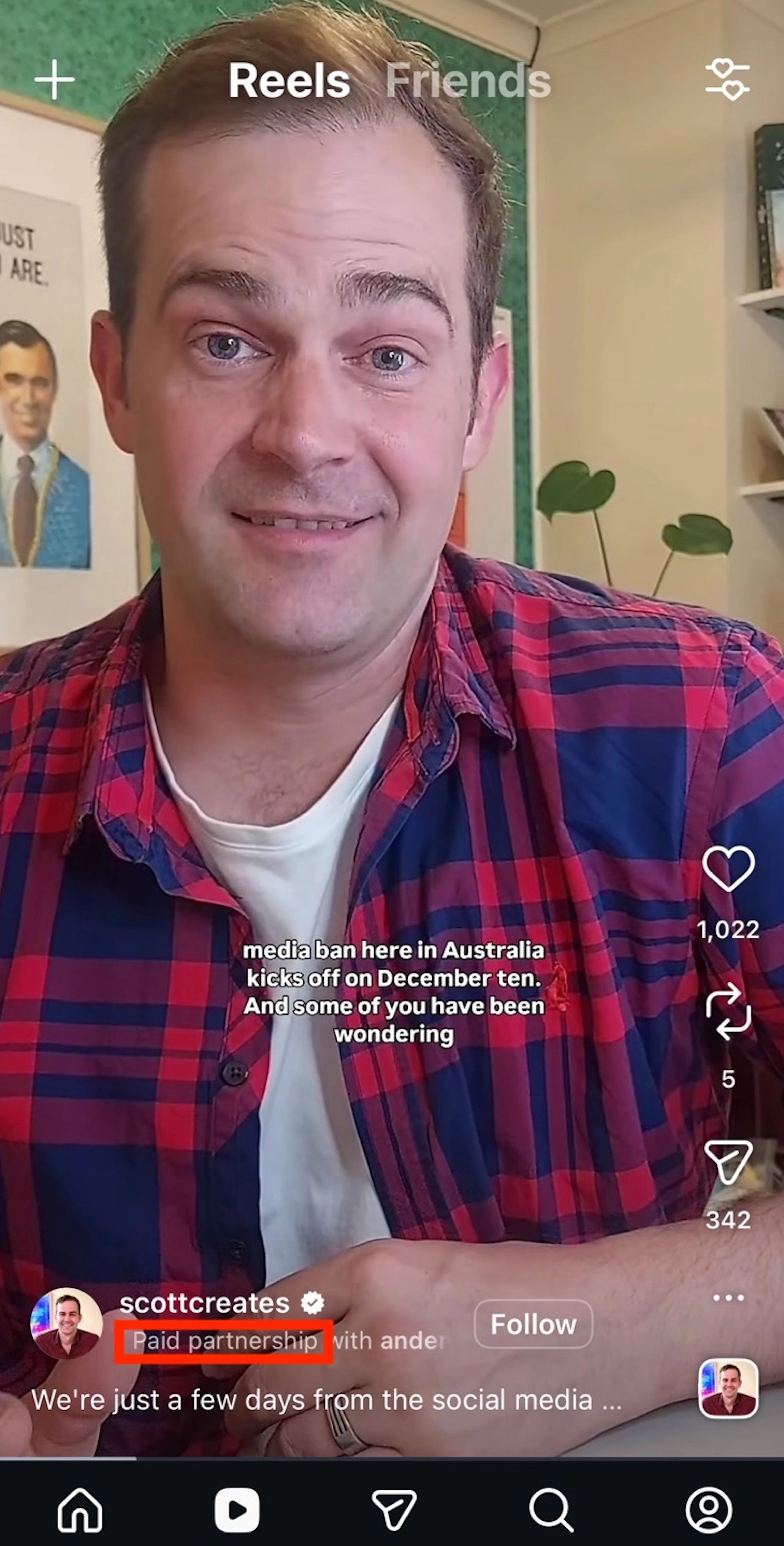
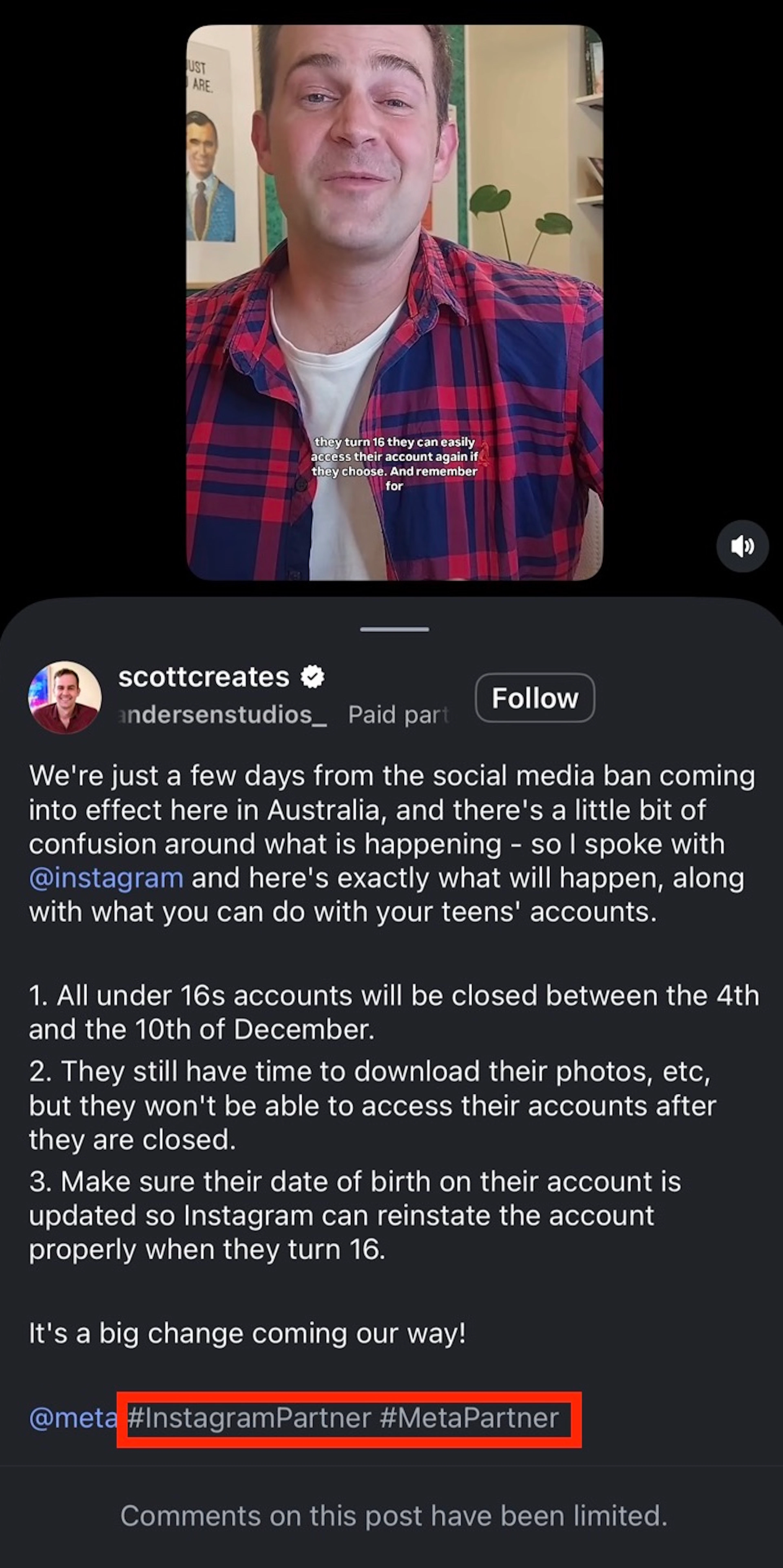
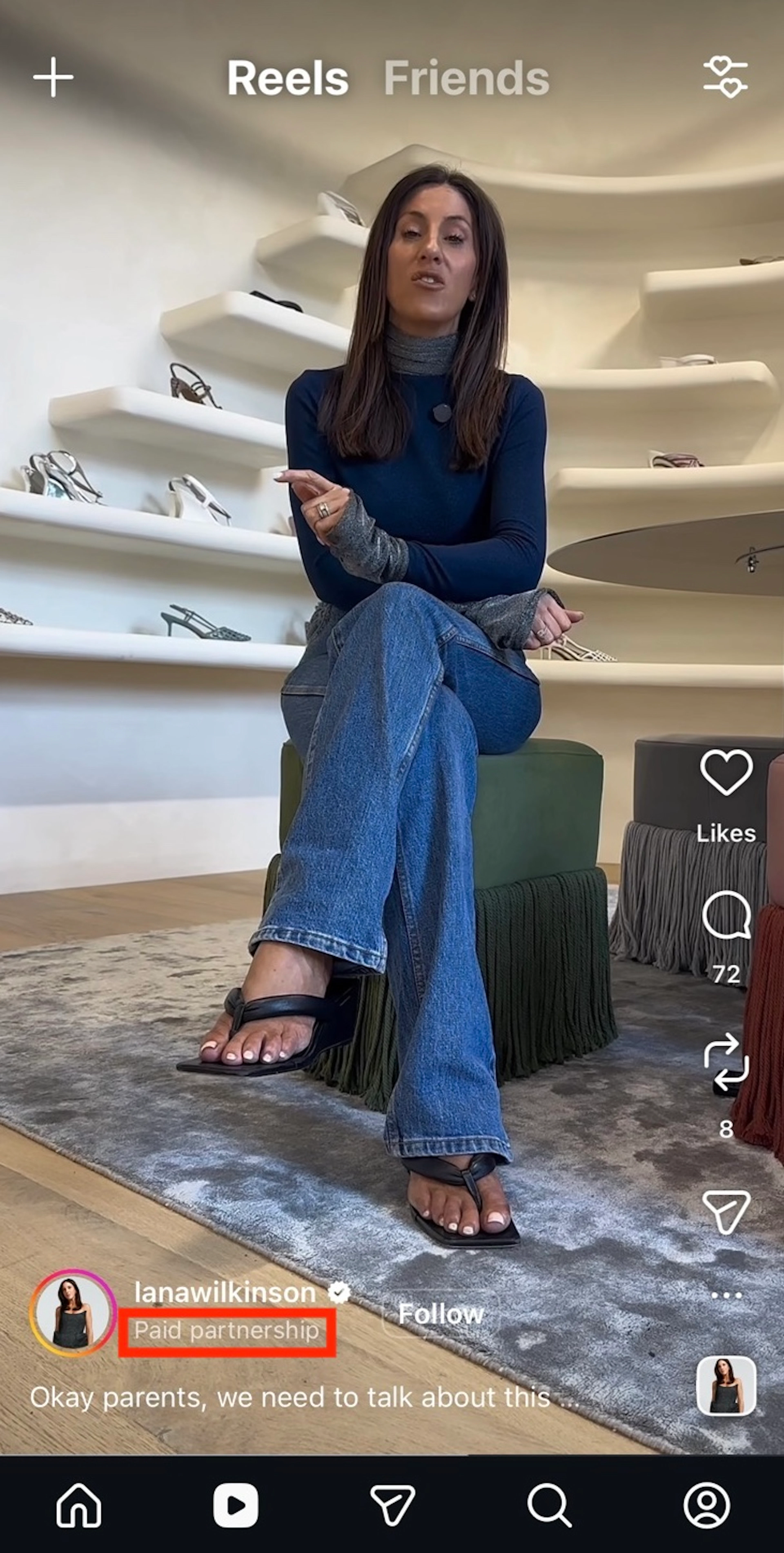
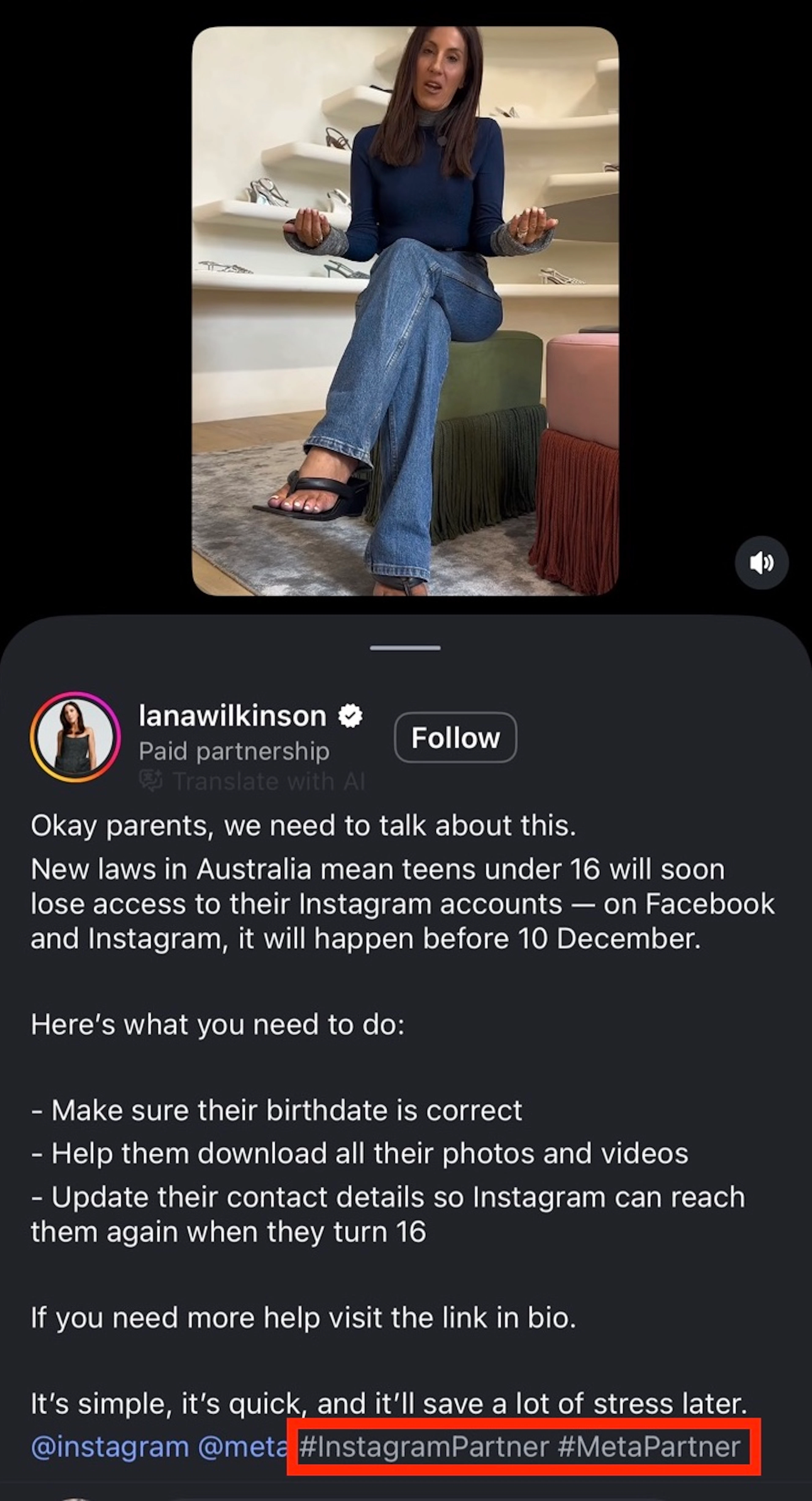
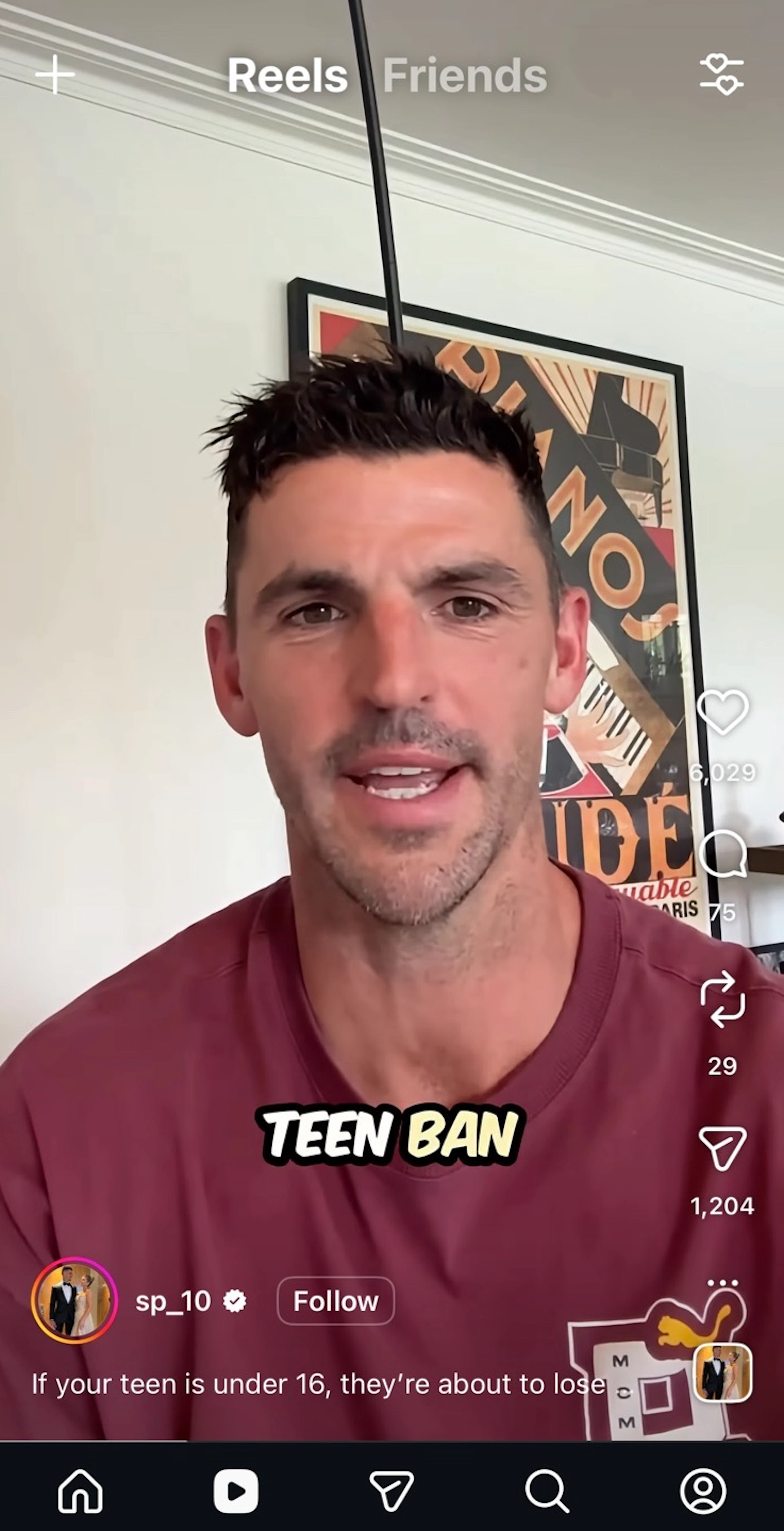
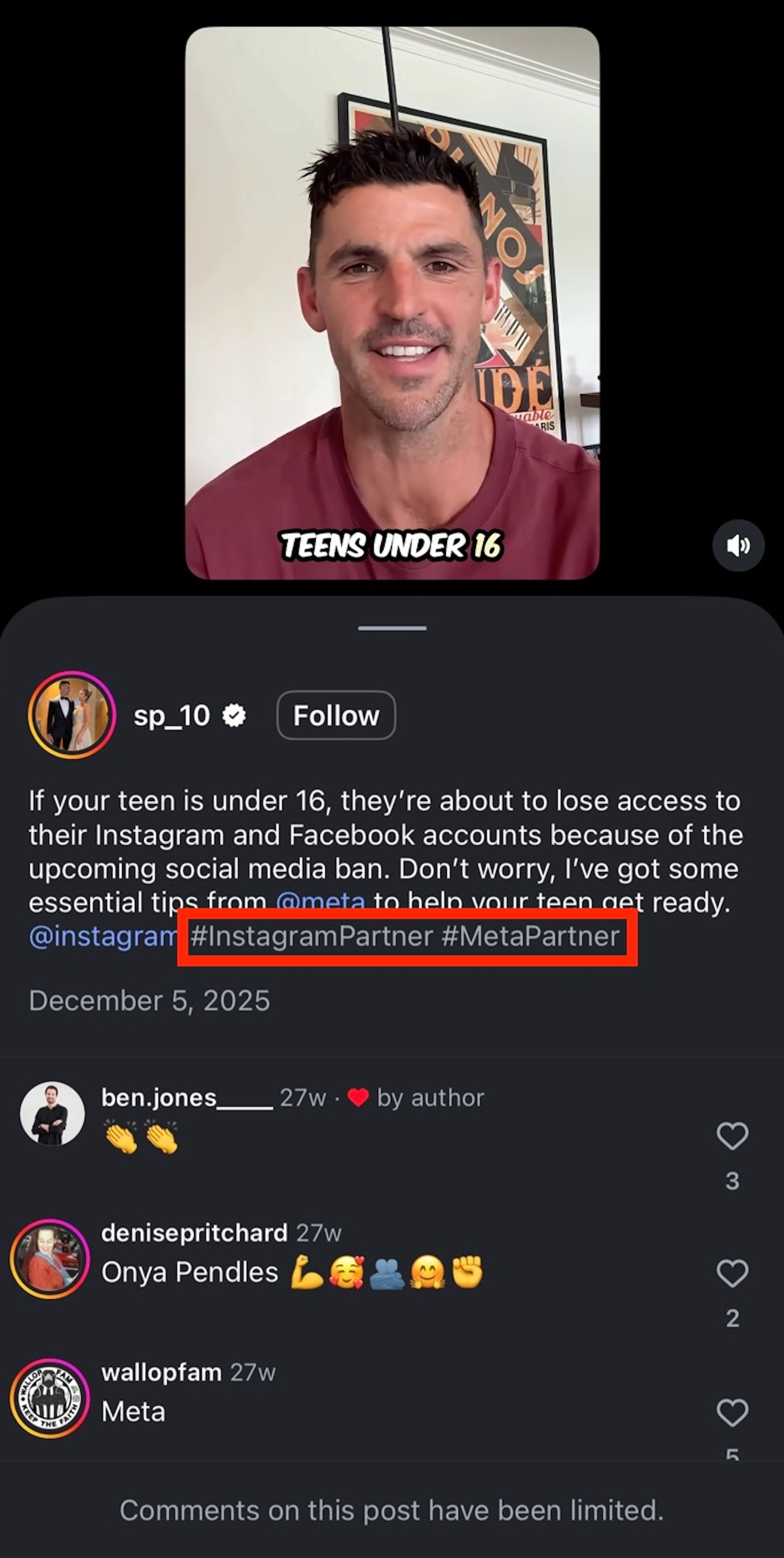
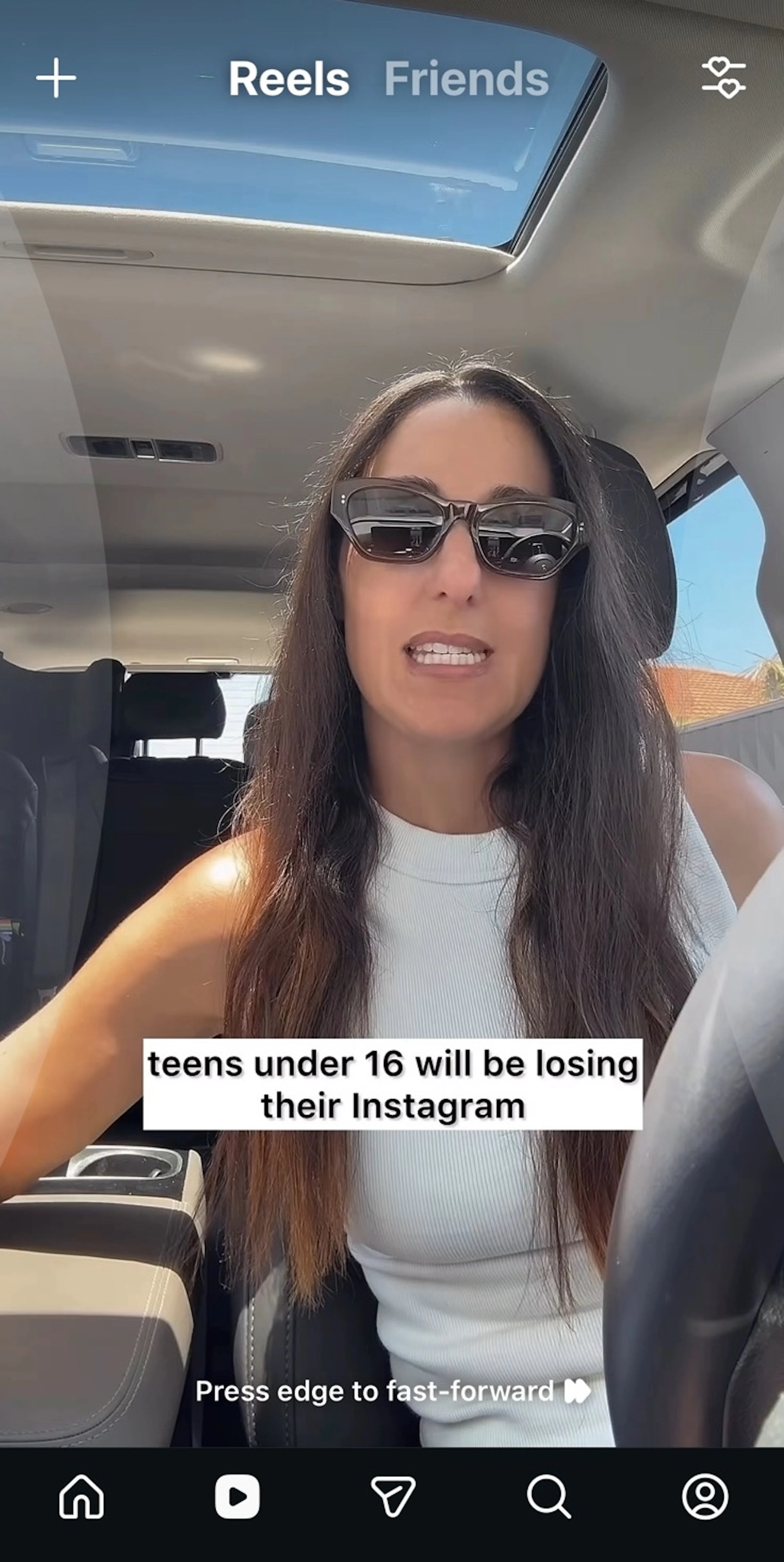
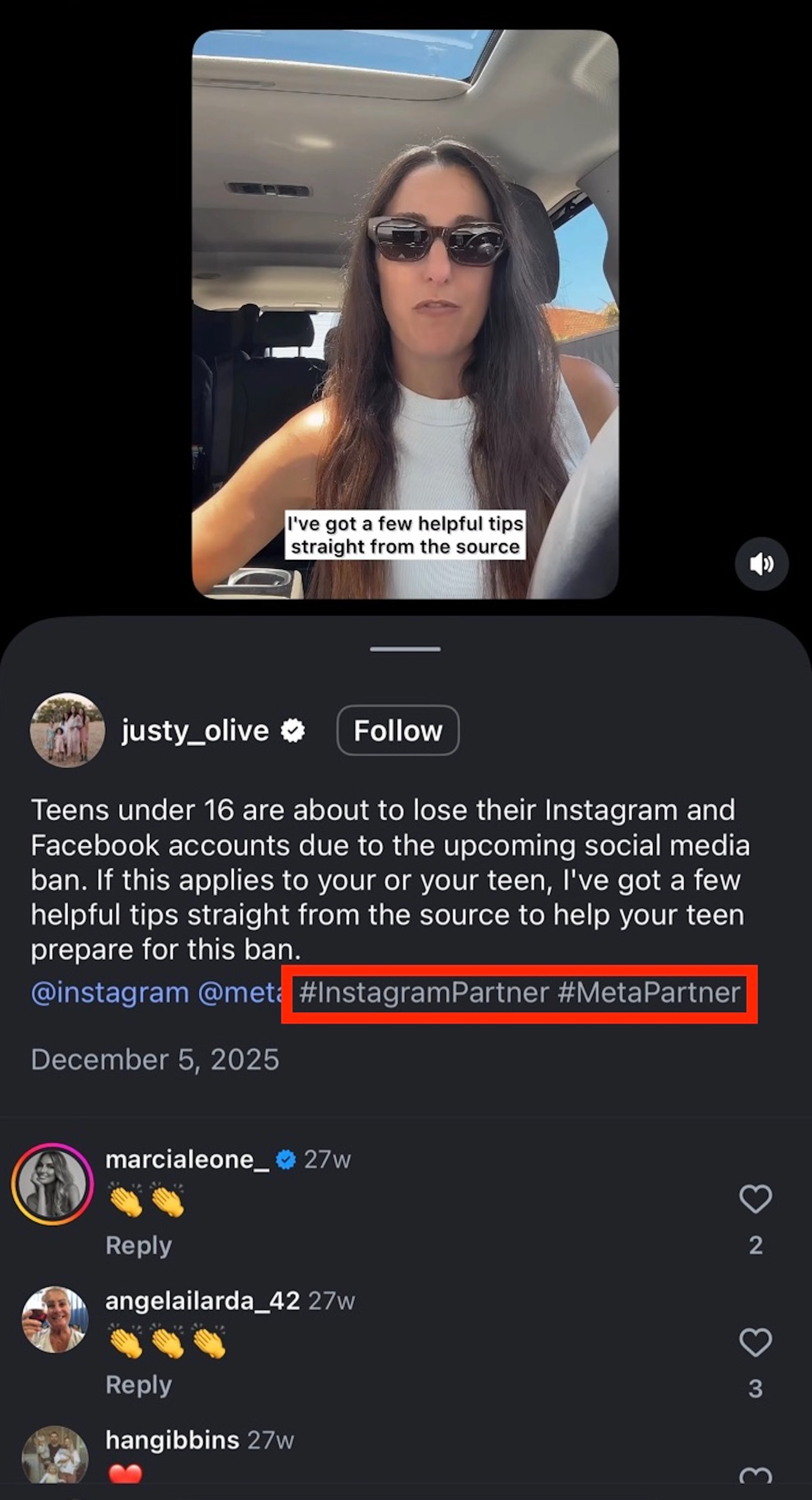
A group of Instagram influencers posted similar messages shortly before Australia's social media ban went into effect. They gave instructions to parents on how to make sure kids get their accounts immediately restored once they turn 16.
A group of Instagram influencers posted similar messages shortly before Australia's social media ban went into effect. They gave instructions to parents on how to make sure kids get their accounts immediately restored once they turn 16.
In February 2026, the Meta roadshow moved to New Zealand, which is weighing its own social media ban for children under 16. The company put on an Instagram Safety Camp in Auckland, moderated by TV presenter Ben Boyce and featuring New Zealand actor Jayden Daniels. Meta’s global head of safety, Antigone Davis, spoke at the event, arguing that social media bans create a false sense of security and drive teens toward “less safe experiences” online. Meta promoted the Teen Accounts and its parental control settings as a better alternative than a blanket restriction.
In conjunction with the event, Meta released a survey it commissioned which found that a majority of New Zealand parents (57%) would prefer to choose when their under-16 teens have access to social media.
Meta used a paid ally to help make its points at the Auckland Safety Camp. Brent Carey, the CEO of Netsafe, a prominent New Zealand online safety group that is funded by Meta, cast doubt on the effectiveness of a social media ban, saying, “We love the idea of a silver bullet, but silver bullets don’t work.” He added: “We need more than just banning and restricting access.” In September 2024, Carey published an op-ed in the New Zealand Herald arguing against a social media ban for kids under 16. The piece carried no disclosure about Meta's funding of Netsafe.
In a statement, Netsafe said Carey's comments at the Safety Camp event reflected the group's "established position that there is no single intervention that will solve the complex issue of online harm" and were "not an endorsement of Meta’s policy position or its products."
"Netsafe does not regard Instagram Teen Accounts, parental controls or any other individual platform feature as sufficient protection against online harm on their own," the group said. "Such features may provide additional safeguards, but platforms must demonstrate that safety measures are effective in practice."
Regarding Carey's op-ed, which did not disclose Meta's funding of Netsafe, the group said its funders are "publicly disclosed through our organisational reporting," adding, "Meta did not commission, approve or determine the policy position expressed in the article."
In the days that followed the Auckland Safety Camp, attendees like Jay-Jay Feeney, a local radio personality, evangelized about the “incredible features” of the Teen Accounts to her more than 100,000 Instagram followers. She used hashtags to disclose her post was advertising and part of a partnership with Instagram. Simone Anderson, a prominent New Zealand wellness and lifestyle influencer, also endorsed the Teen Accounts and their parental supervision features, saying she was “genuinely grateful” for them. Anderson, who has 423,000 followers on Instagram, has sparked multiple complaints to New Zealand’s Advertising Standards Authority, including for failing to disclose commercial partnerships and featuring her baby in a post that promoted alcohol. (Her post about the Teen Accounts did carry a “paid partnership” label.)
The New Zealand government is pushing to pass the under-16 ban legislation, despite opposition from some of its coalition partners.
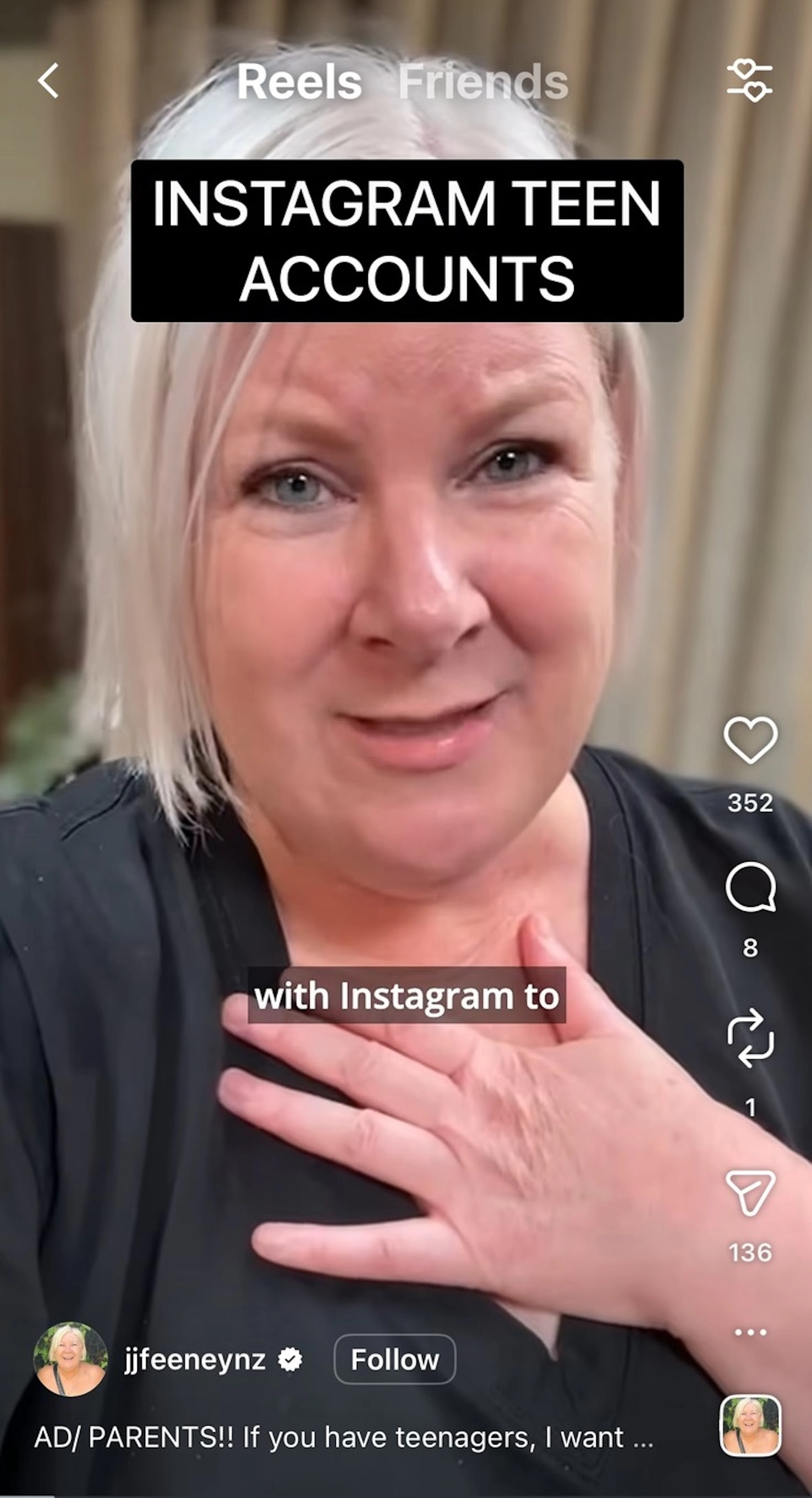
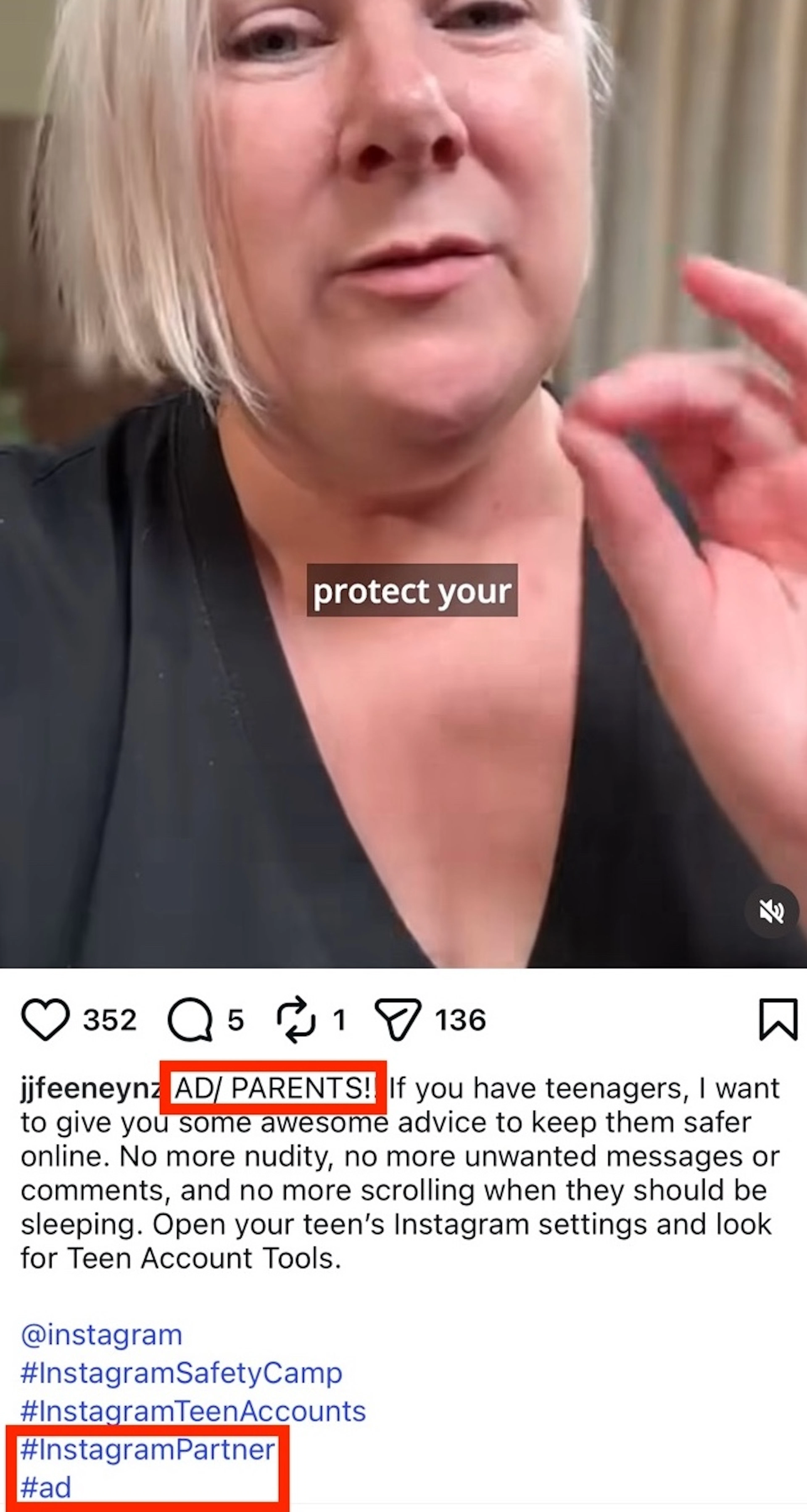
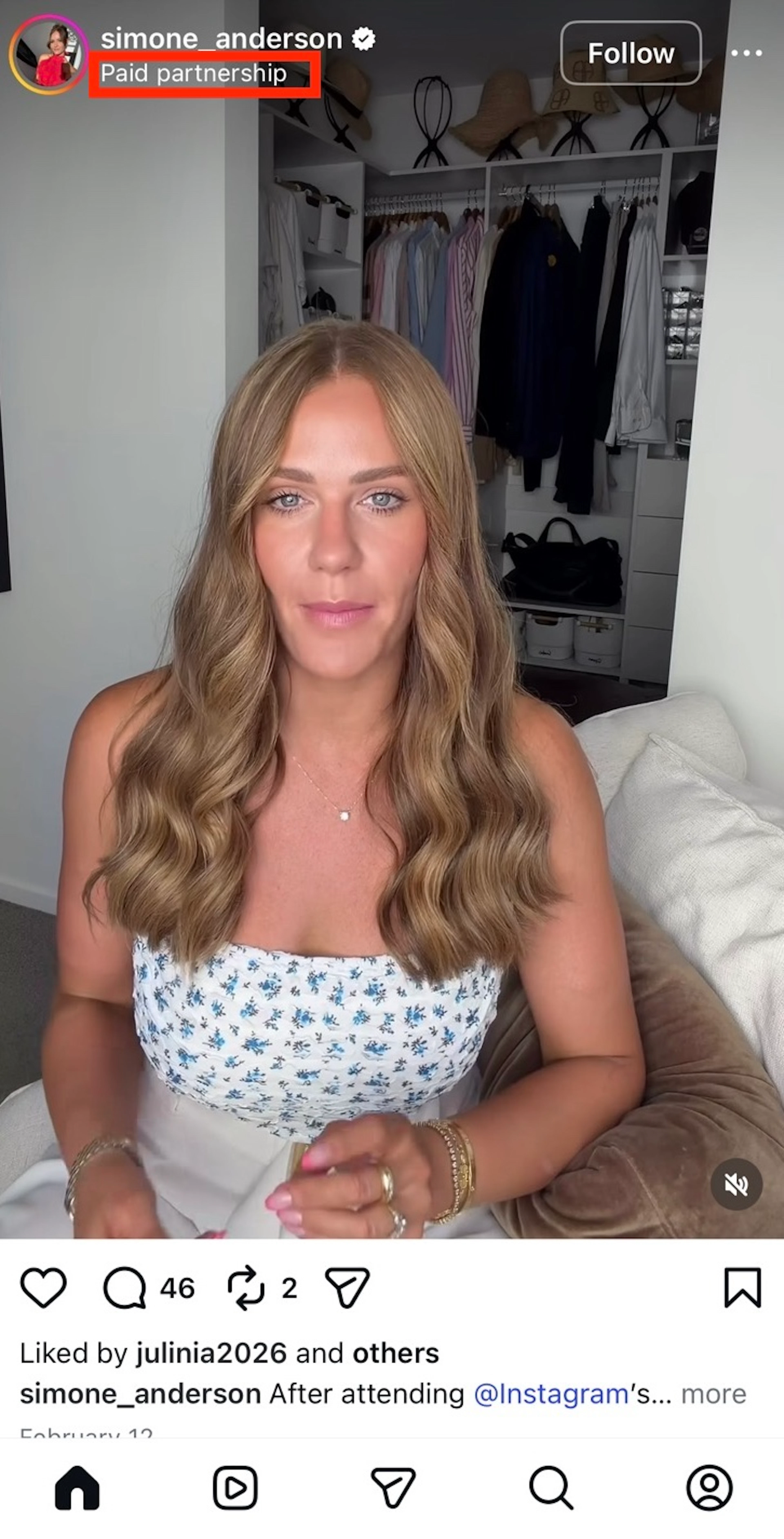
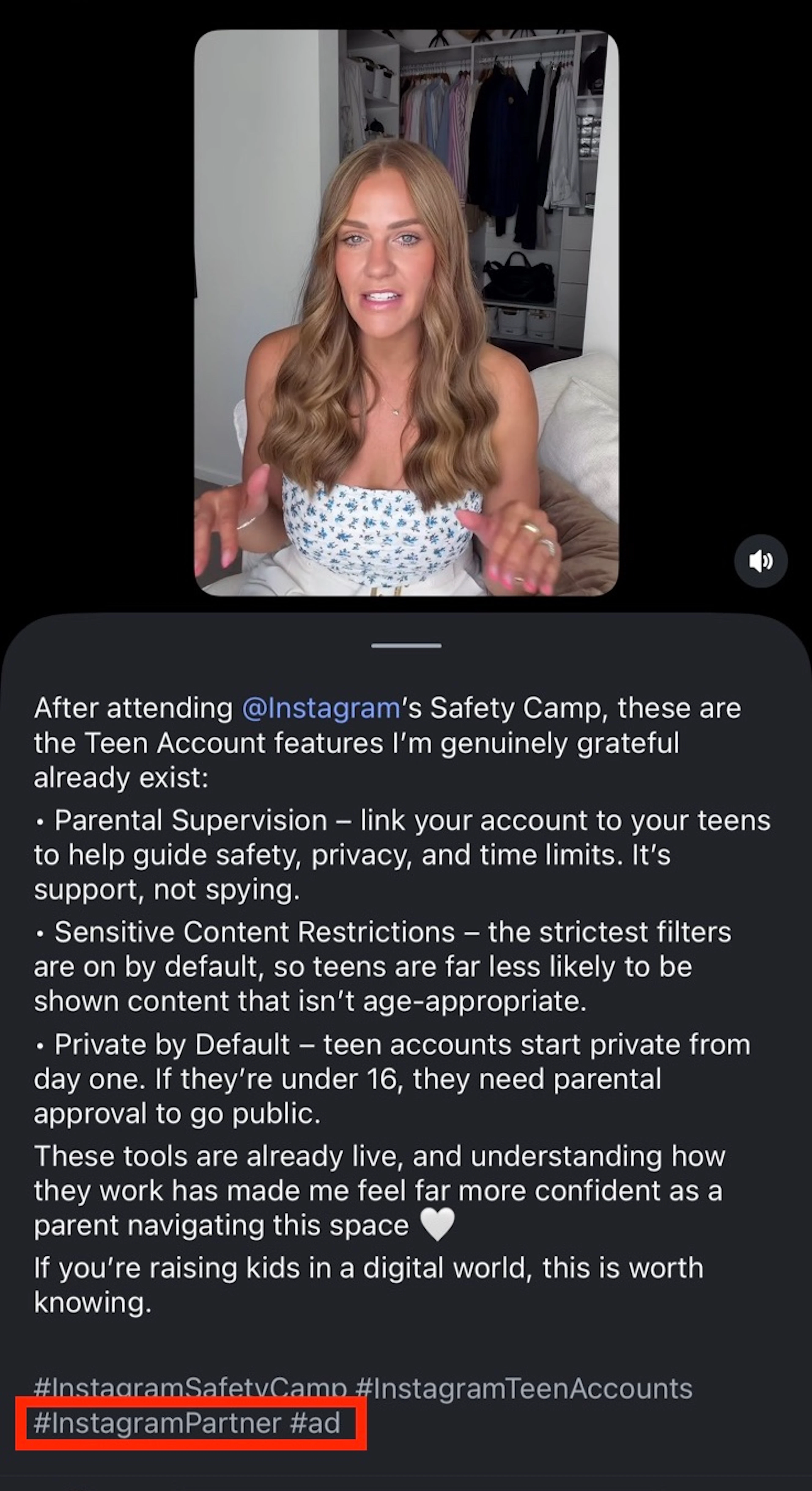
Jay-Jay Feeney, a radio personality in New Zealand, evangelized about the “incredible features” of the Teen Accounts after attending an Instagram Safety Camp in Auckland.
Jay-Jay Feeney, a radio personality in New Zealand, evangelized about the “incredible features” of the Teen Accounts after attending an Instagram Safety Camp in Auckland.
Key Asian markets
Meta has also brought its influence campaign to multiple Asian countries that have enacted or are mulling social media age restrictions, including India, home to the largest number of Instagram users.
India's chief economic adviser, in a national economic survey released in January 2026, floated "age-based access limits" on social media, citing the fact that "younger users are more vulnerable to compulsive use and harmful content." Weeks later, India's minister of information technology confirmed the government was discussing age-based restrictions with social media companies. In March, the Indian state of Karnataka took matters into its own hands, announcing plans for a social media ban for teens under 16.
Meta criticized Karnataka’s move, warning that governments “should be careful not to push teens toward less safe, unregulated sites, or logged out experiences that bypass important protections — like the default safeguards we offer in Instagram’s Teen Accounts.”
Within months, a group of Indian “momfluencers” with large Instagram followings began posting about the virtues of the Teen Accounts. The posts all included small disclosures that the influencers had paid partnerships with Meta and used the hashtag #ad.
One of the posts was from Juhi Parmar, an actress and self-described “Emotional Safety & Self-Leadership Coach” with 1.3 million followers on Instagram. Speaking in what looks like a living room, she explains the Teen Account features in a mixture of English and Hindi, concluding, “So now parents can be reassured that their teens are in a safer space online when it comes to Instagram.” Actress Chhavi Mittal, who has 780,000 Instagram followers, posted a similar message.
It's not clear if Meta's efforts have changed the course of events in India. Prime Minister Narendra Modi recently praised Australia's social media law during a visit to the country, calling it "highly inspiring for the world." He added: "We are learning a lot from your efforts and taking many lessons from them."
Meanwhile, Meta has been engulfed in a scandal over Instagram running paid advertisements with child sexual abuse material (CSAM) in India, as reported by the BBC.
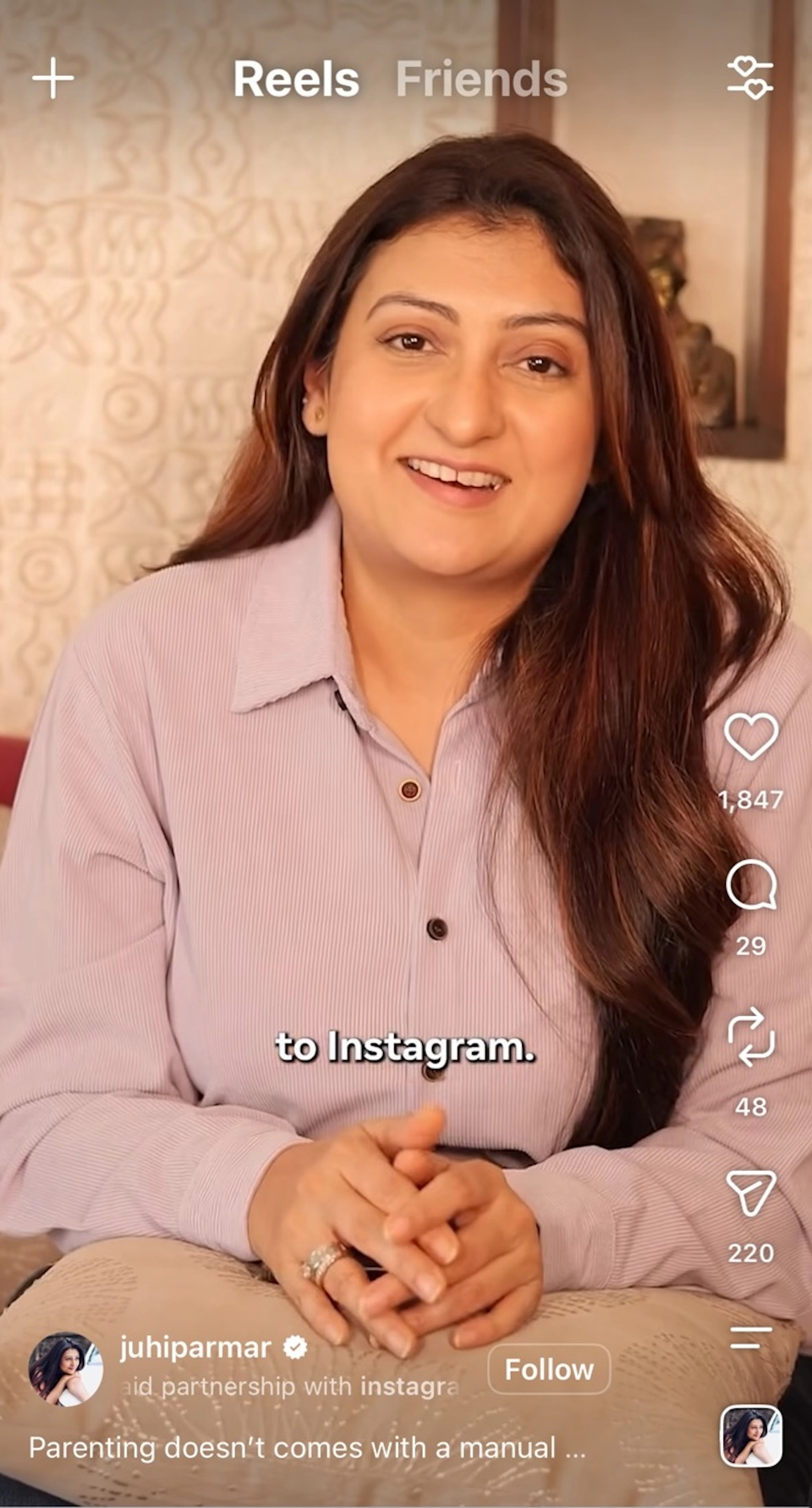
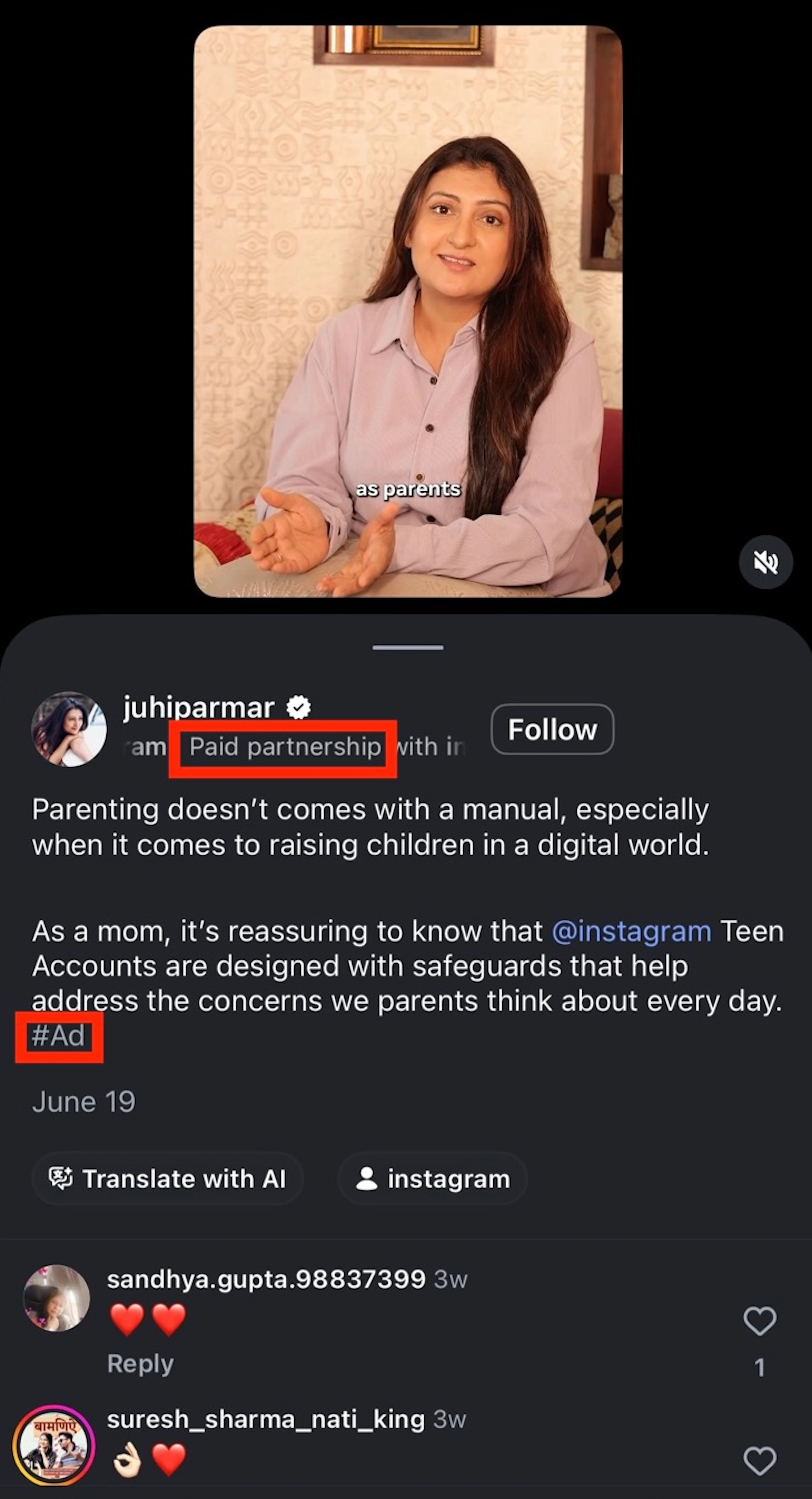
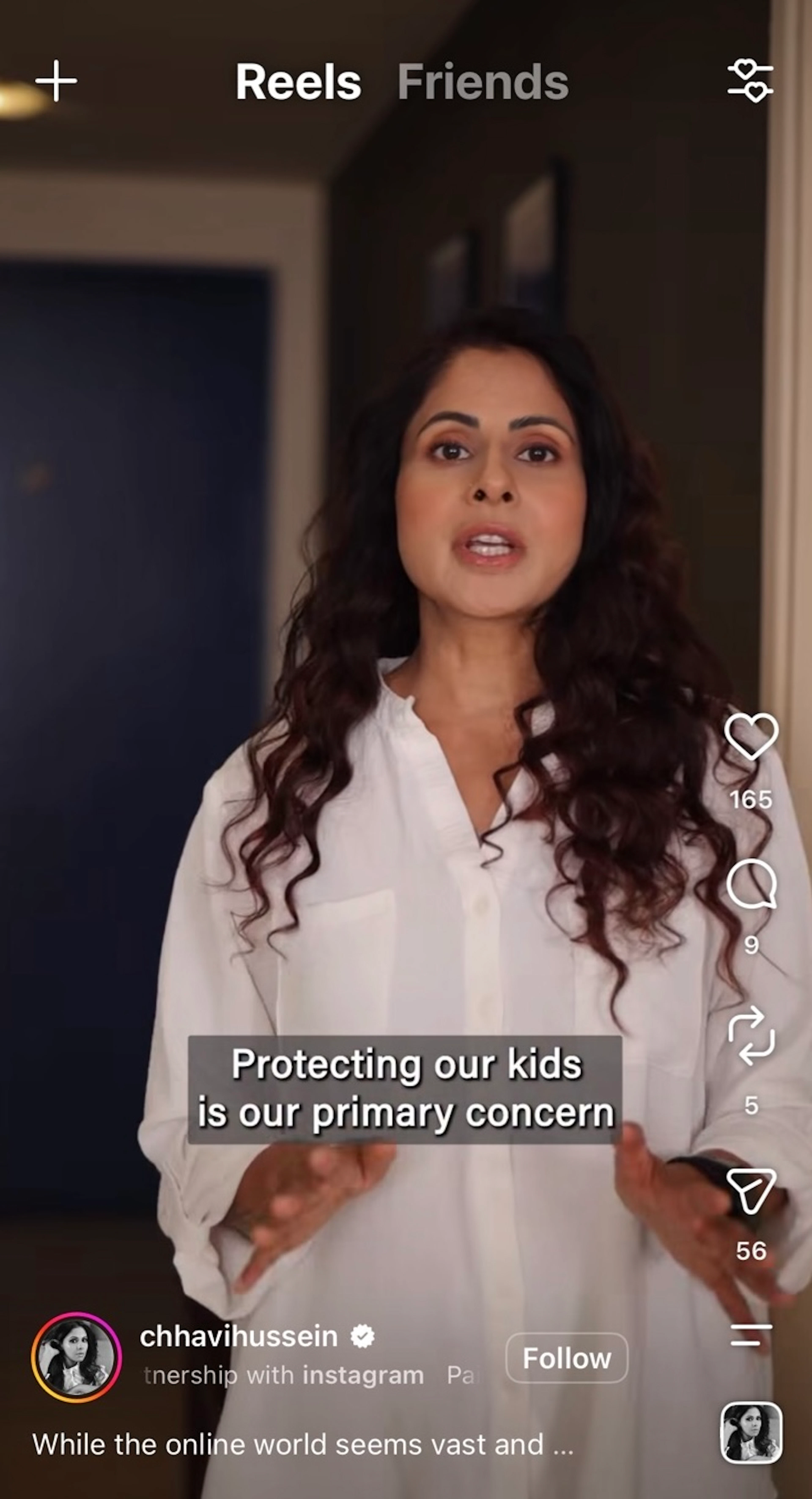
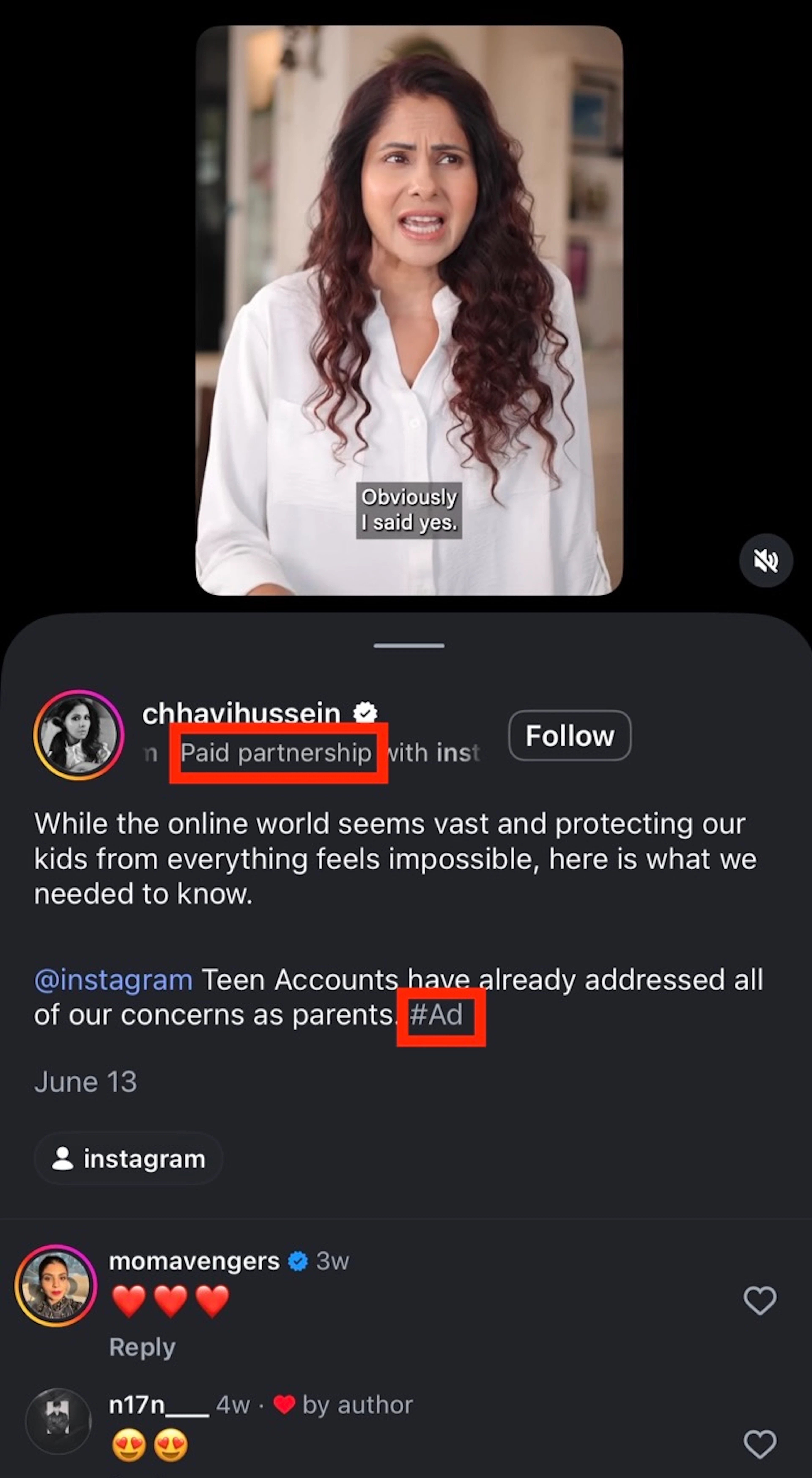
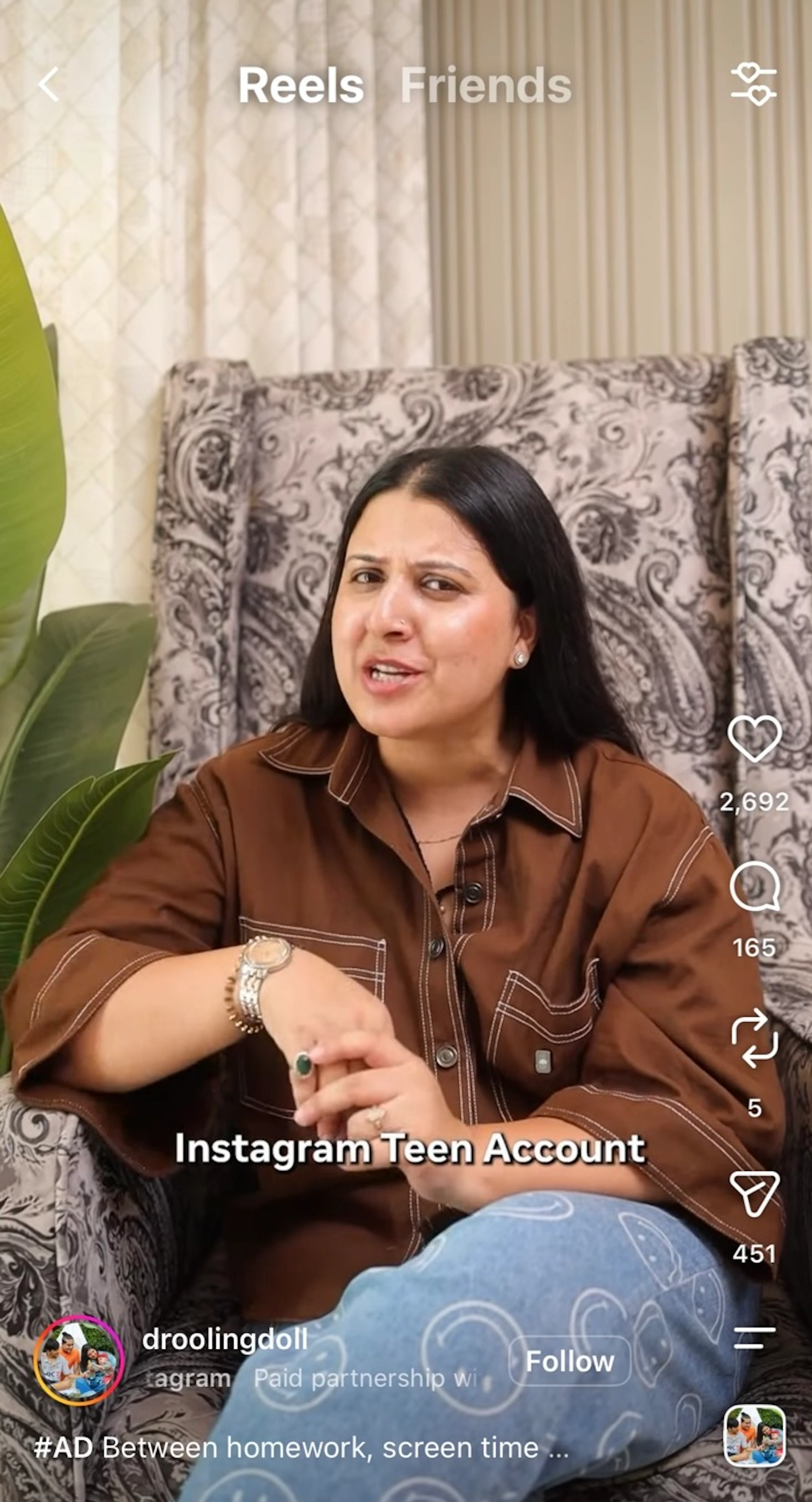
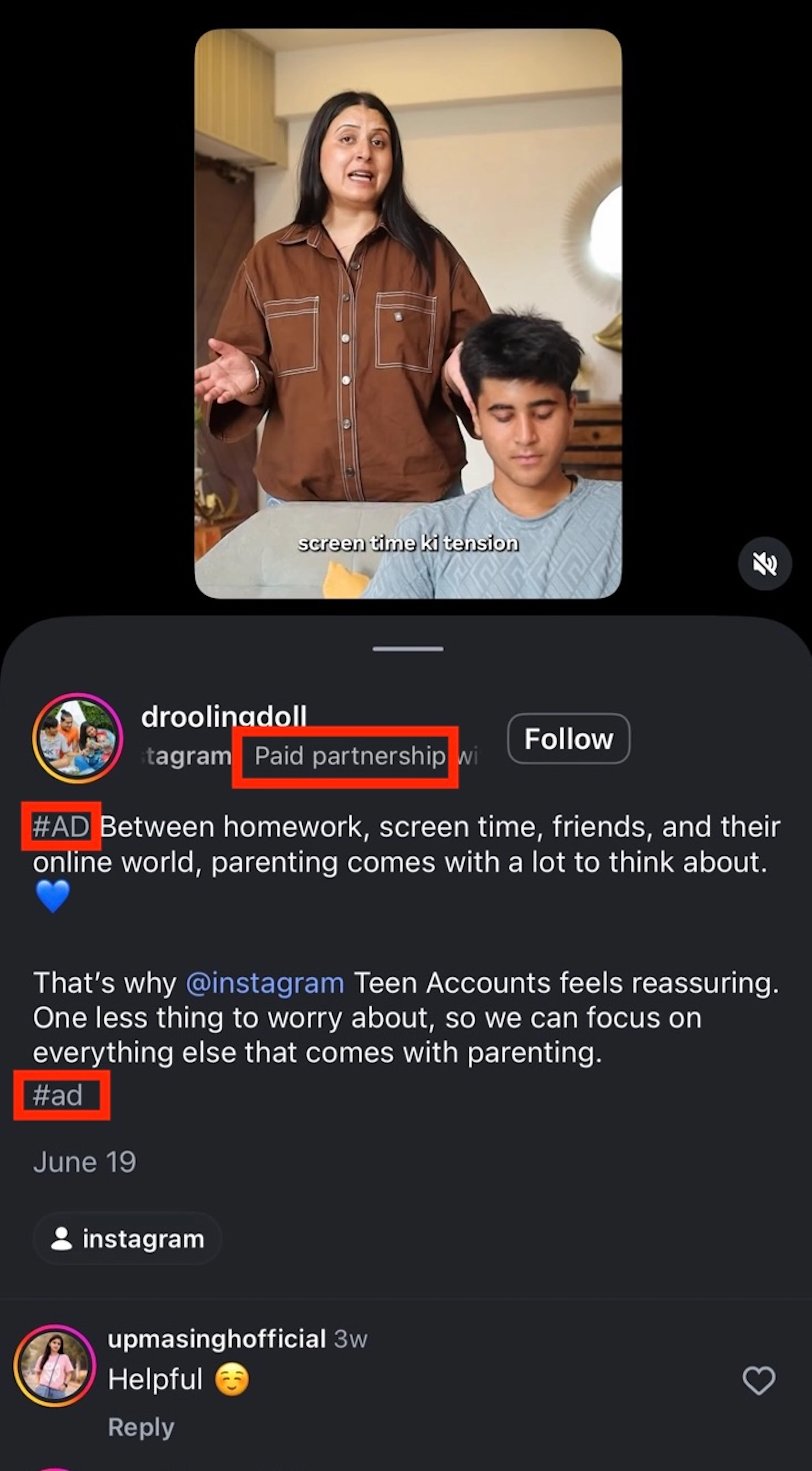
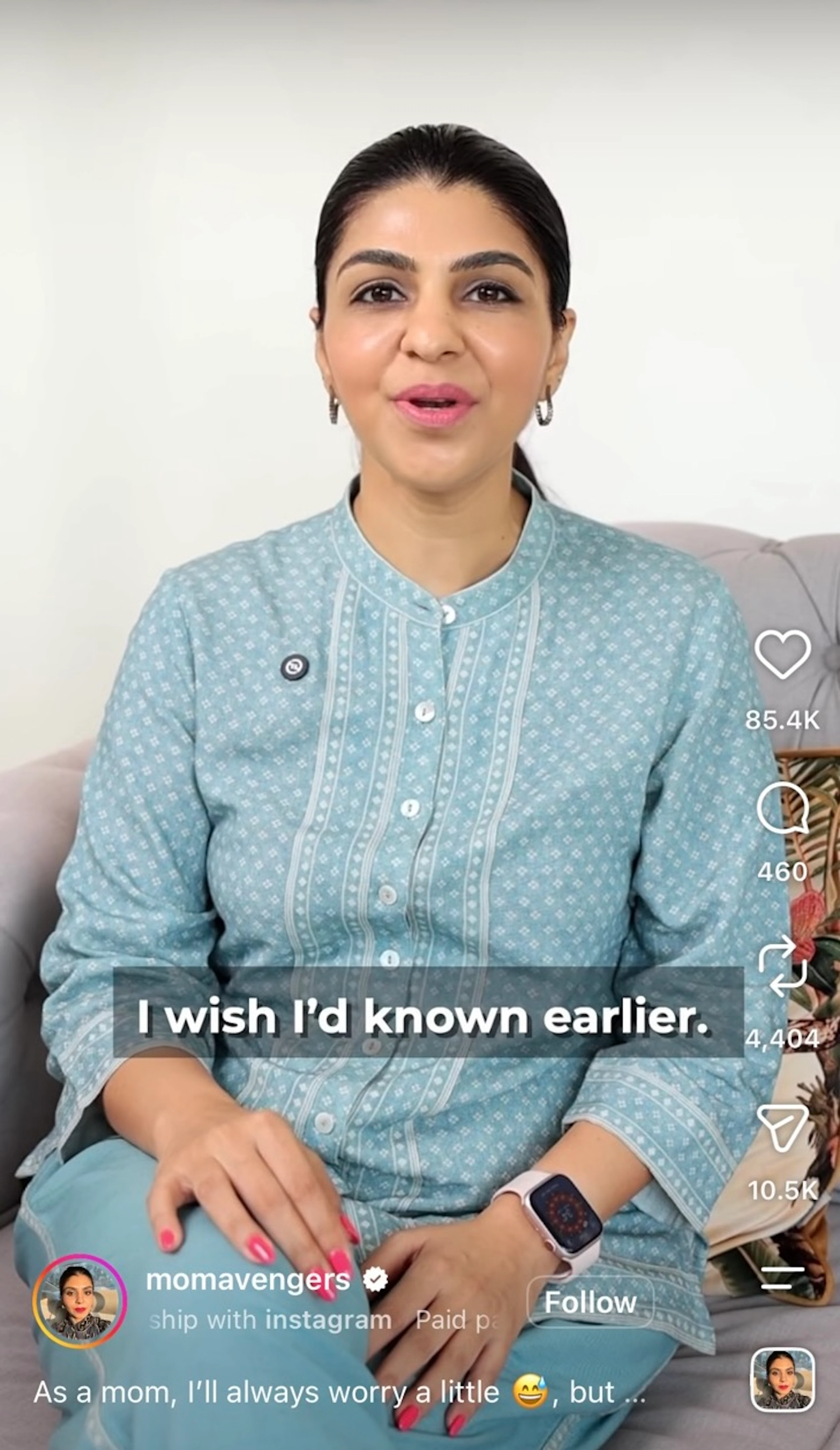
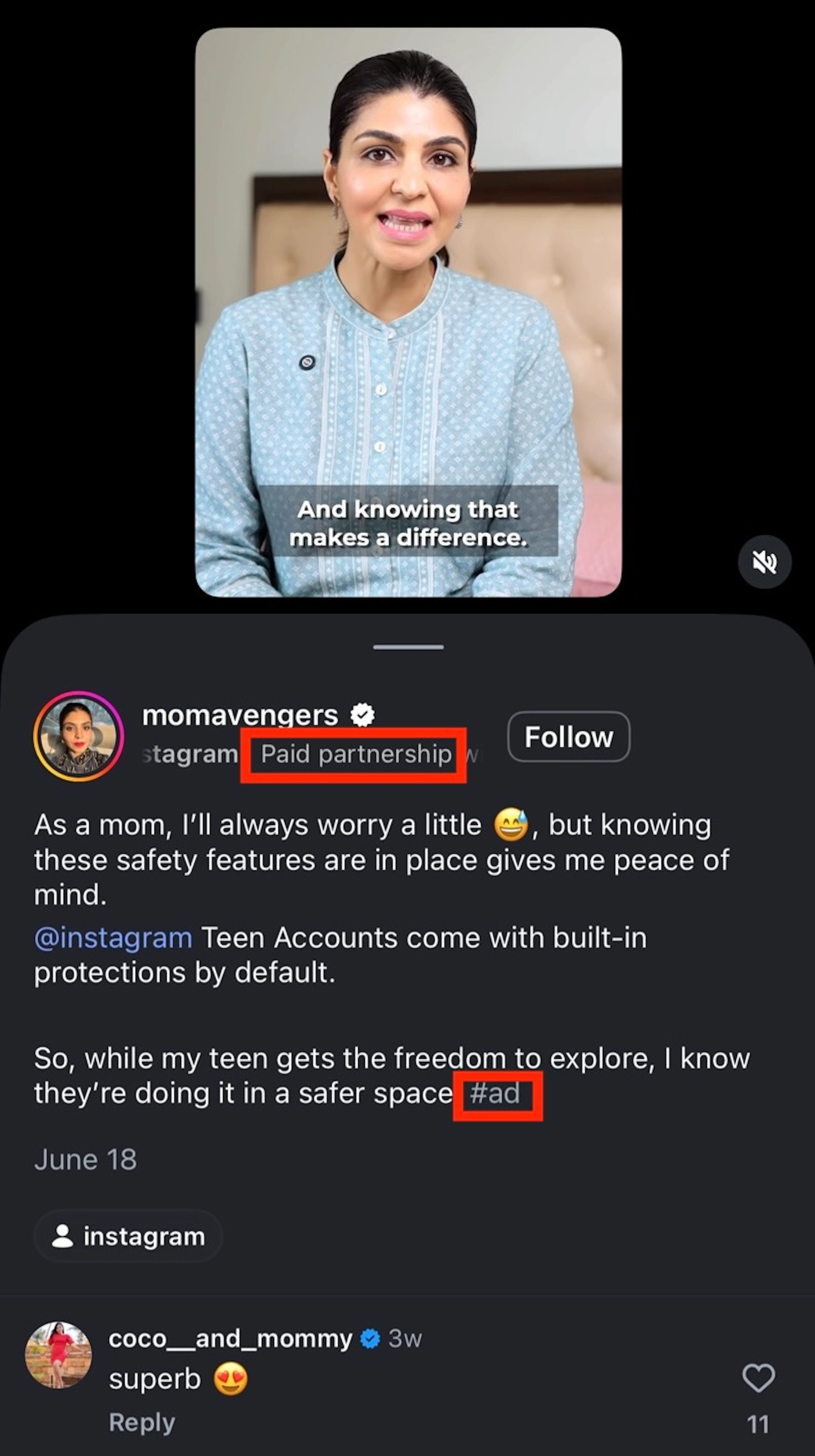
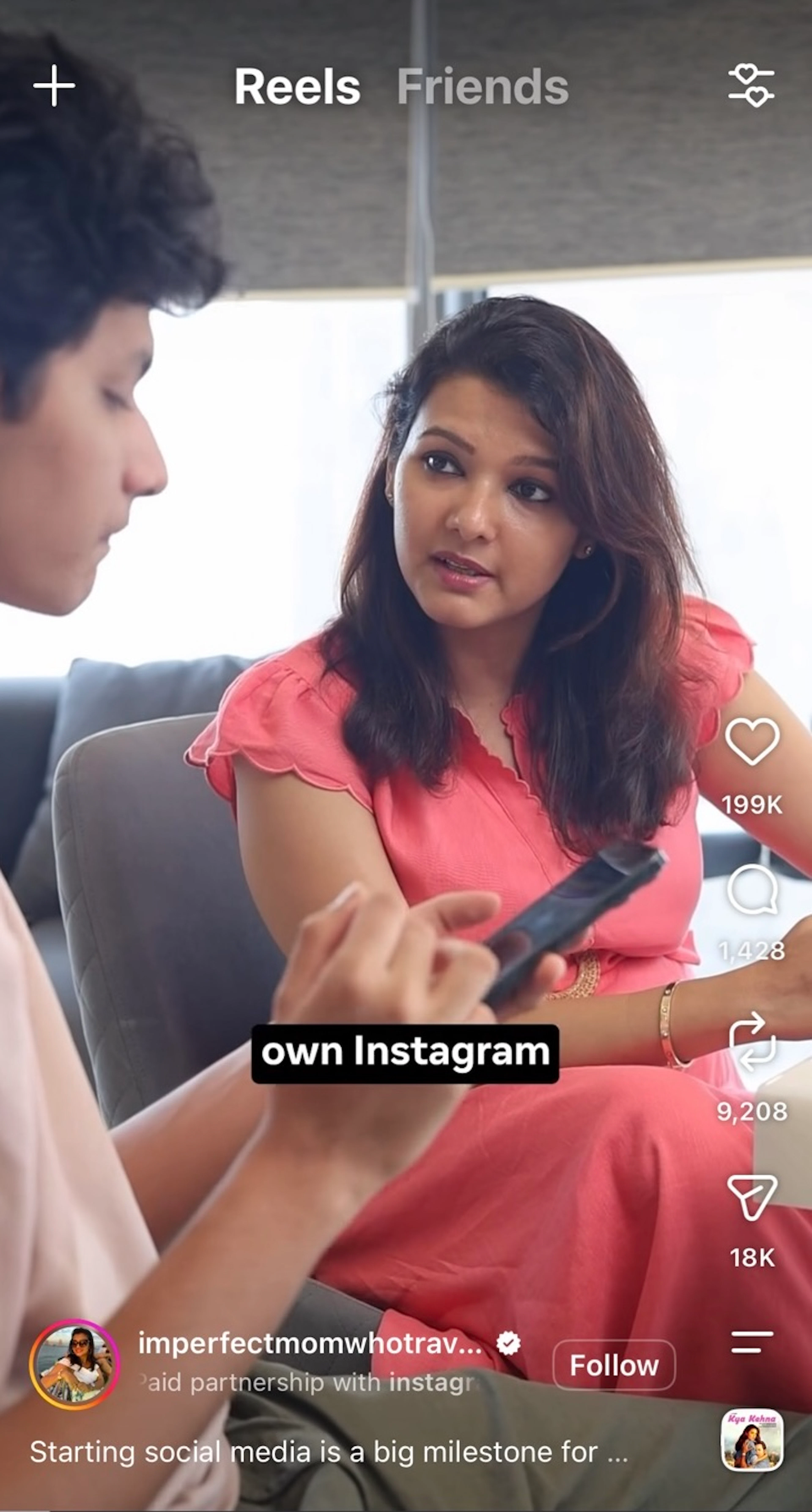
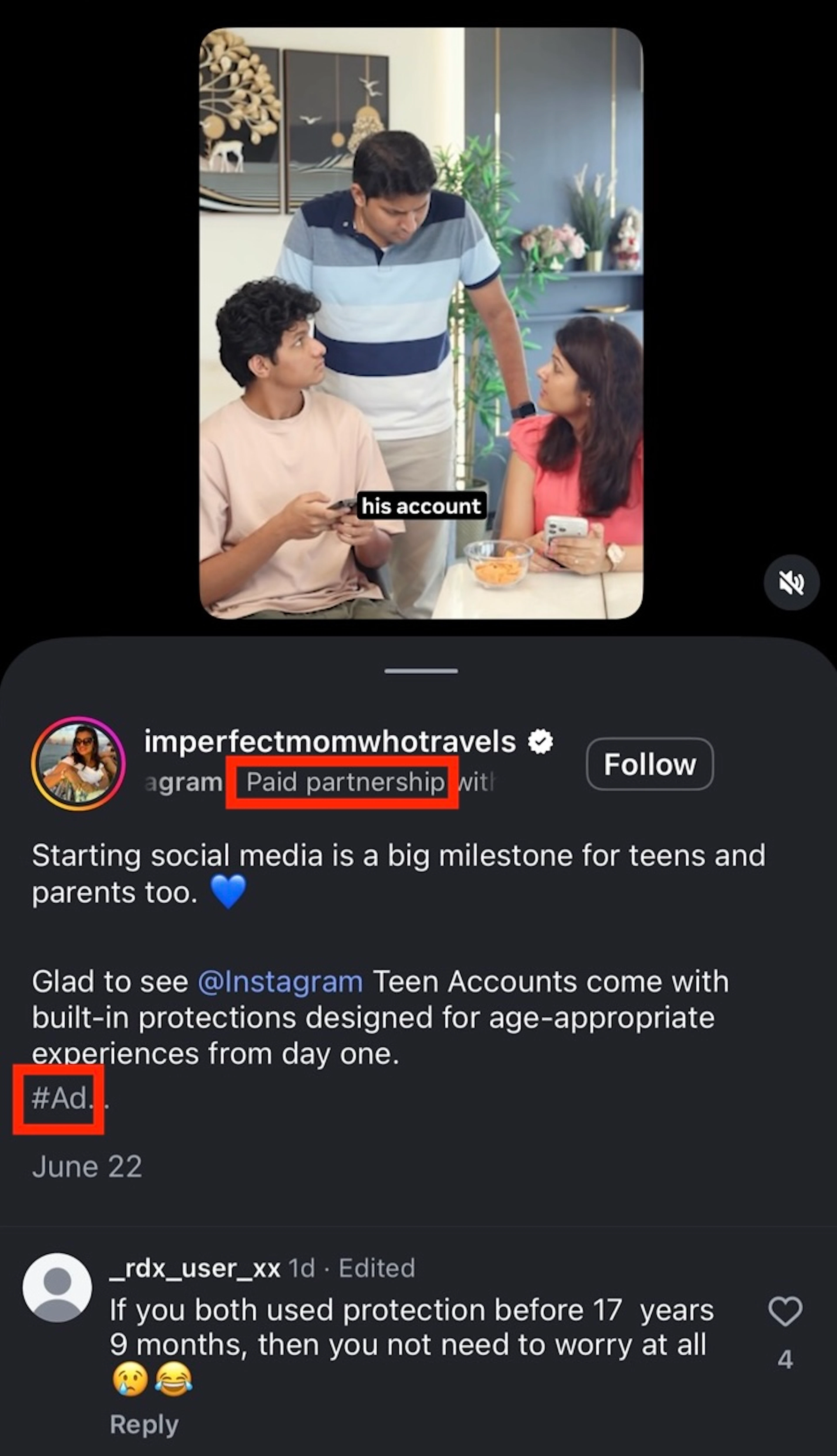
Juhi Parmar, an Indian actress with 1.3 million followers on Instagram, told parents they "can be reassured that their teens are in a safer space online when it comes to Instagram.”
Juhi Parmar, an Indian actress with 1.3 million followers on Instagram, told parents they "can be reassured that their teens are in a safer space online when it comes to Instagram.”
Meta made a similar push in Indonesia, Malaysia, and the Philippines.
In January 2025, the Indonesian government announced plans for a minimum age for social media “to protect children in digital space.” Meta soon cranked up its influence campaign.
That April, the company co-hosted a “Smart Digital 2025” conference at one of Jakarta’s upscale venues, the Ritz-Carlton “Glass House." The event was meant to "provide guides and practical tools to accompany teenagers in exploring the digital world," according to a news account. TV anchor Cisca Becker moderated a panel with Meta global safety chief Antigone Davis.
Meta also commissioned market research firm Ipsos to survey Indonesian parents about their children’s social media habits. The results, released in September 2025, revealed “overwhelming” parental support for teen accounts with safety features, according to Meta. The company used the survey to argue against social media bans, saying, "Limiting access for under-16s could reduce valuable opportunities for connection, learning, and entertainment.”
A month later, Meta imported its “Instagram Safety Camp” to Indonesia to promote the Teen Accounts. Radio personality Tommy Prabowo emceed the event, which took place around a fake firepit and featured Indonesian actor Darius Sinathrya. “Come on, parents try this feature to make your children safer and smarter in the digital world!,” Sinathrya told his 1.8 million Instagram followers after the event. He used the hashtag #InstagramPartner.
After the Indonesian social media ban took effect in March 2026, Meta hosted another “Smart Digital” conference, where it unveiled enhanced Teen Accounts features. Attendees included Indonesian digital oversight chief Alexander Sabar and actress-influencer Ersa Mayori. In a post to her one million Instagram followers, Mayori wrote that Meta’s child safety features “give parents more peace of mind.”
Meta said at the event that it would hold training sessions on a “Smart Digital Parenting” curriculum in four Indonesian cities—Denpasar, Yogyakarta, Batam and Kupang—from June to October, according to the Antara news agency. The curriculum, which Meta developed with regional advocacy groups, heavily emphasizes the Instagram Teen Accounts.
TTP sent a request for comment and questions to Sabar, the Indonesian digital oversight chief, via the country's Ministry of Communications and Digital Affairs but did not hear back.
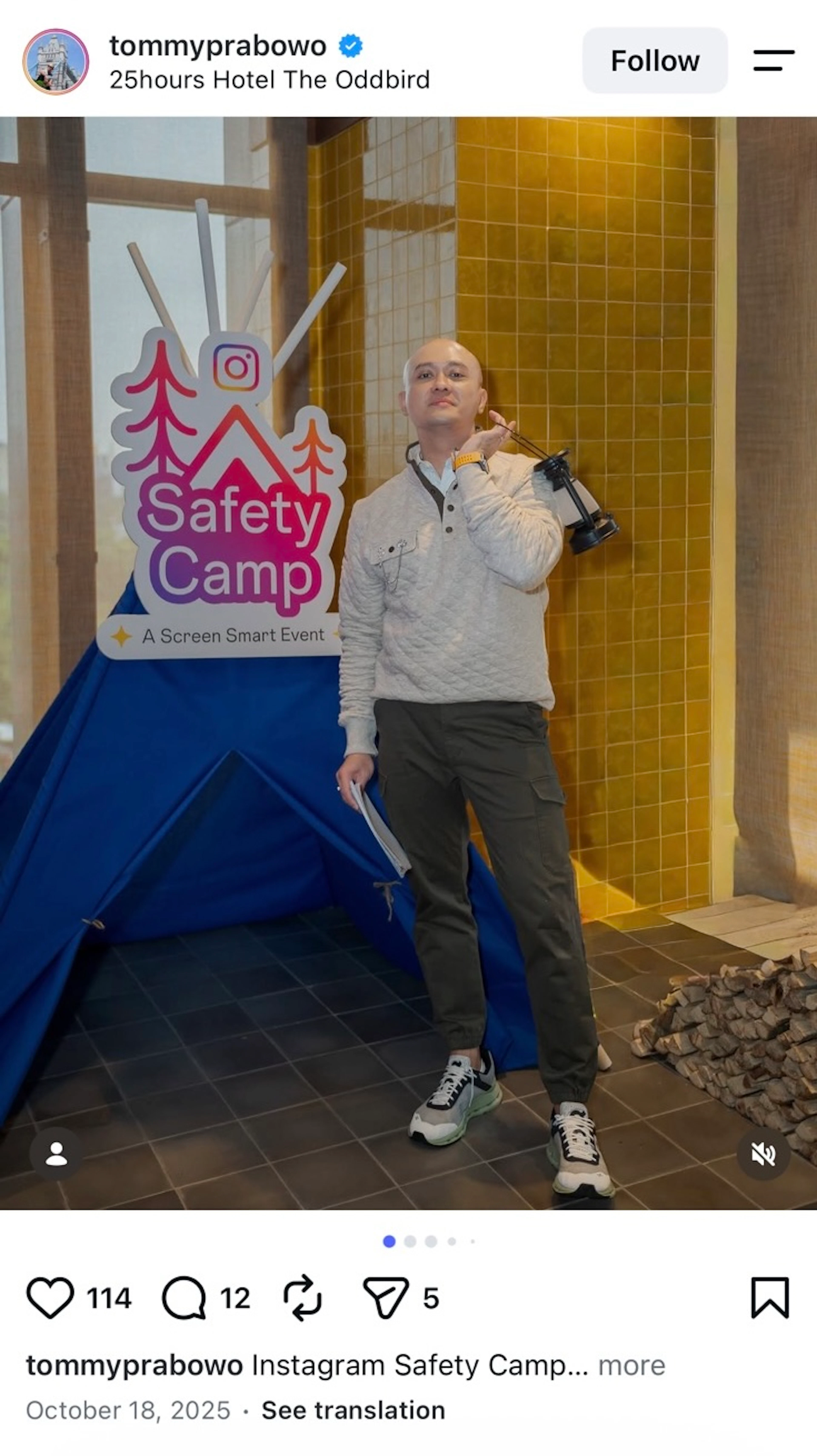
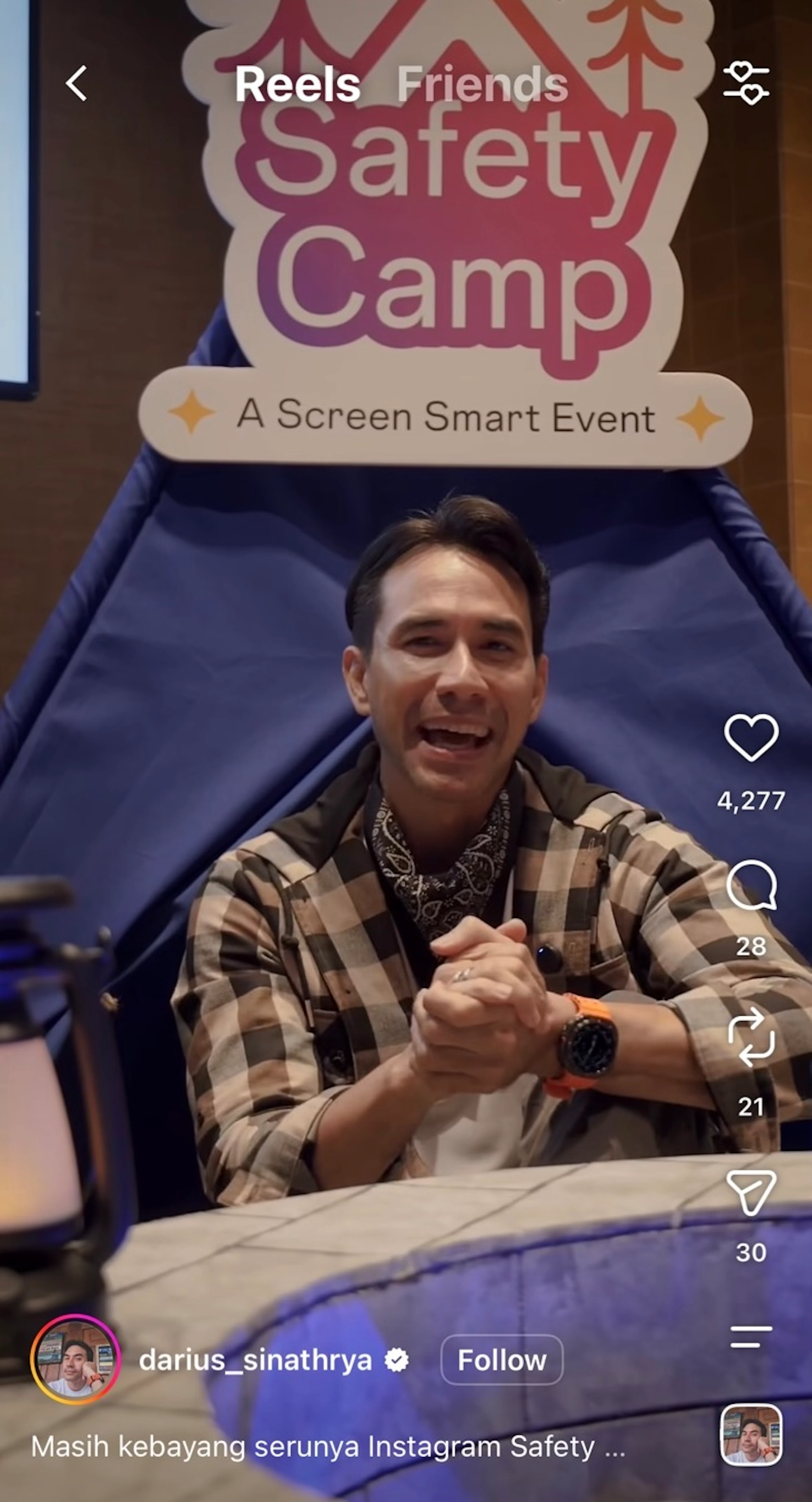
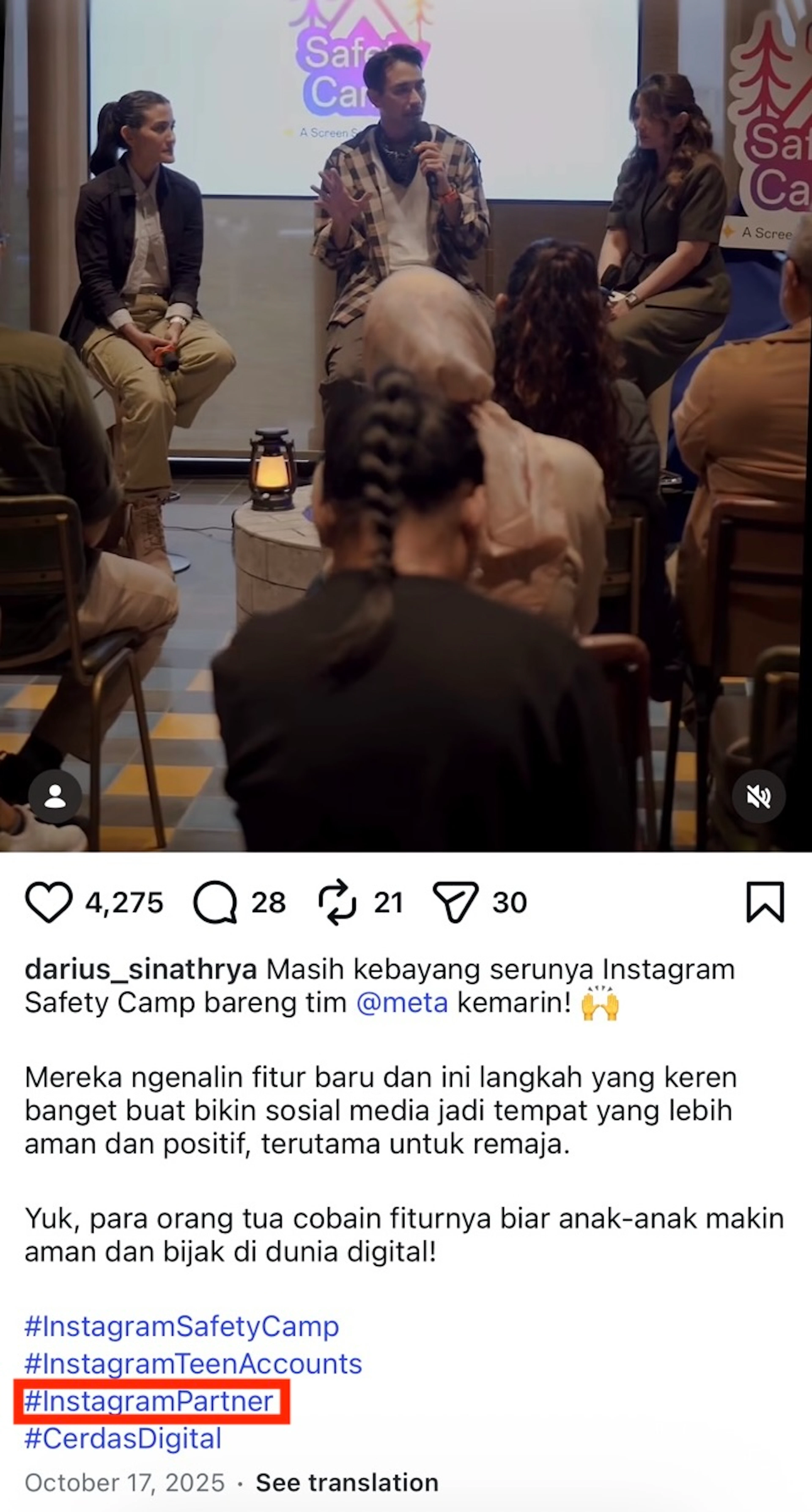
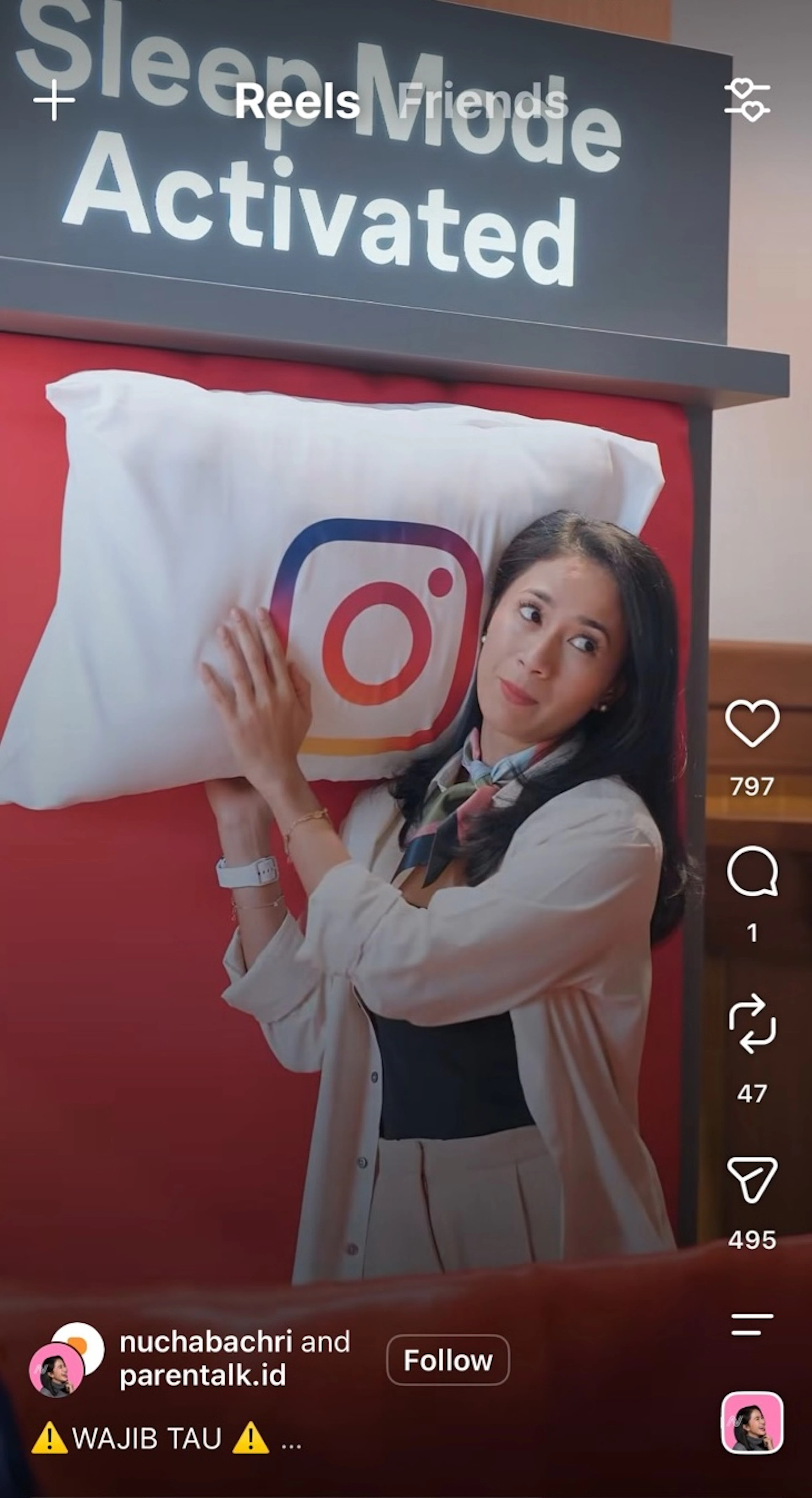
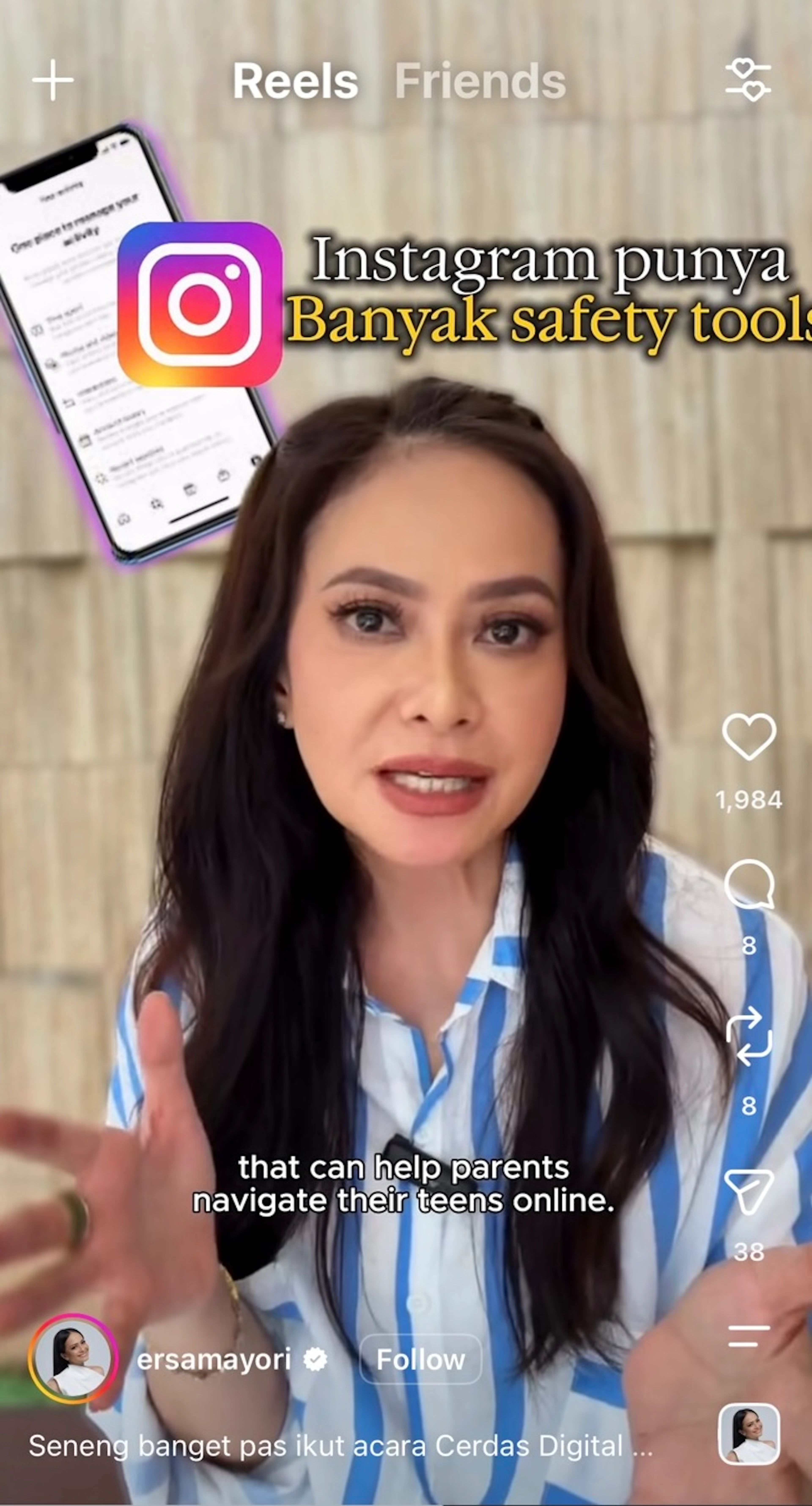
Indonesian radio personality Tommy Prabowo emceed an Instagram Safety Camp in Jakarta.
Indonesian radio personality Tommy Prabowo emceed an Instagram Safety Camp in Jakarta.
In March 2026, Meta hosted a Screen Smart event in Malaysia as that country prepared to begin enforcing a social media ban for children under 16.
The event in Kuala Lumpur featured radio and television host Aishah Sinclair and a panel with Ministry of Education official Fadzliaton Zainudin and youth leader Andesh Thevendran, who took part in a Meta-supported digital fellowship. Meta offered perks to attendees like make-your-own charm bracelets and customized eye pillows with flaxseed, dried flowers, and essential oils.
TTP sent a request for comment and questions to Zainudin via the Malaysian government but did not hear back. Efforts to locate contact information for Thevendran were not successful.
Instagram influencers who attended the Screen Smart event dutifully repeated the company's talking points about the Teen Accounts. Swati Abhilash, a family and lifestyle influencer in Kuala Lumpur with 143,000 Instagram followers, provided this Meta-friendly summary:
It's clear Meta's working to make the platform more suitable for younger users. But with the Malaysian government's recent discussions on social media regulations and restrictions for minors, the real question is, is it too late? Or is this exactly the kind of balance we've been waiting for?
Malaysia's social media ban went into effect in June, though social media platforms have requested extra time to comply, according to the country's communications minister.
Meta also targeted the Philippines, which is in the midst of debating a social media ban for children.
In February, Philippine lawmakers were circulating at least four bills that set minimum ages for social media use. According to the news outlet Rappler, which covered a committee hearing on the bills, Meta voiced its support for an "age-appropriate" framework for social media regulation that stopped short of an outright ban.
Philippine Sen. Sherwin Gatchalian added to the pressure in April, introducing a Social Media Safety for Children Act that would restrict teens under 16 from accessing social media platforms. “We should not wait for the problem to worsen before we act,” Gatchalian said.
Two months later, Meta hosted a Screen Smart event at the Fairmont Makati, a five-star luxury hotel in the Manila area, where the company announced it would be launching additional Teen Accounts features in the Philippines. The company also said it would work with the country's National Youth Commission to hold “Meta camps” to train parents, teachers, and students on how to use its safety tools. Jeff Ortega, the chair of the youth commission who appeared at Meta's event, was appointed by Philippine President Ferdinand Marcos Jr.
The fate of the proposed social media ban in the Philippines remains unclear. Sen. Gatchalian, who is now Senate president, has pushed for passage of his bill, citing concerns that violent online content may have motivated the teen suspects in a recent mass shooting.
Gatchalian's office did not respond to a request for comment and questions. TTP sent questions to Ortega via the National Youth Commission but did not hear back.
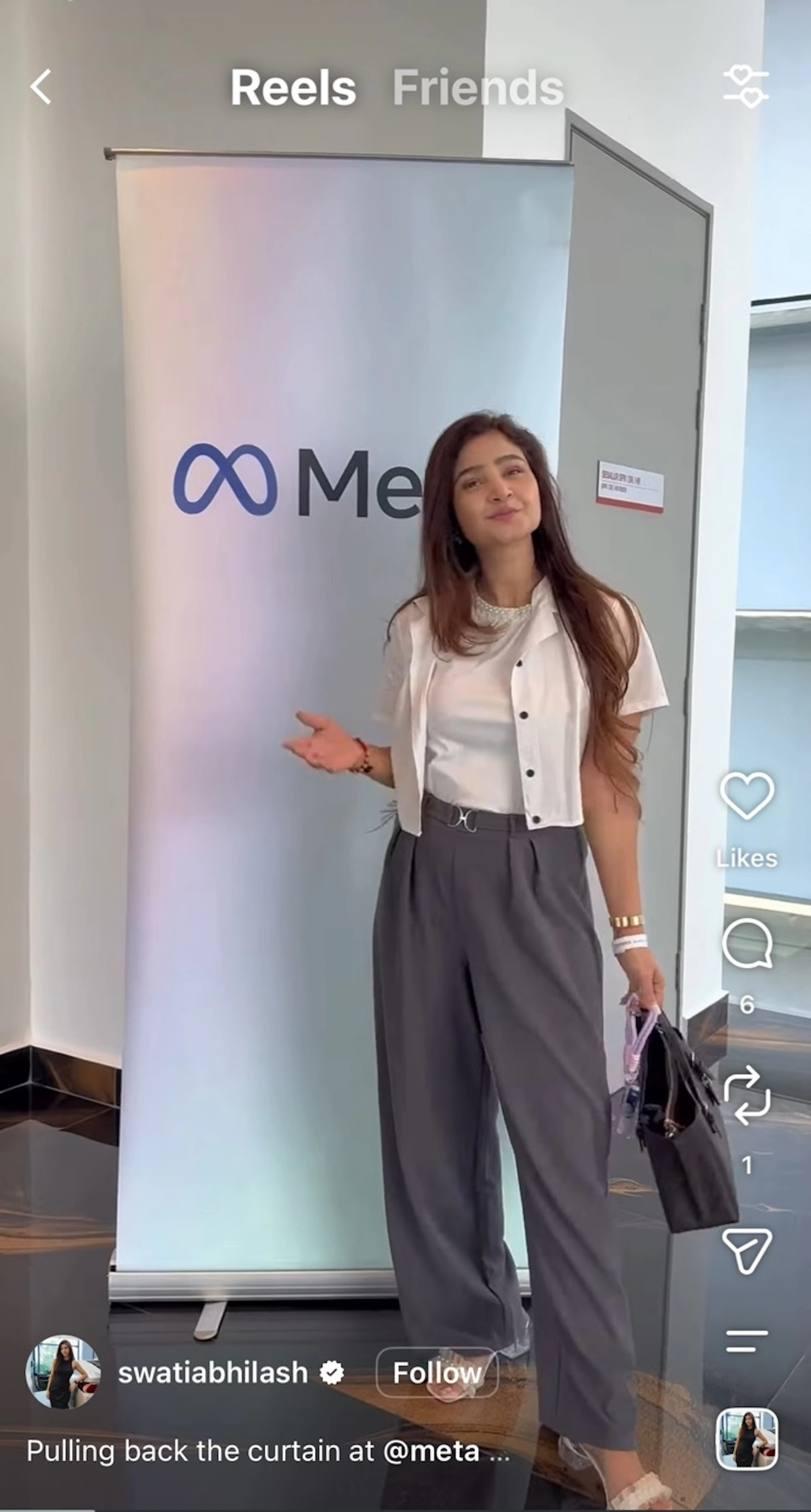
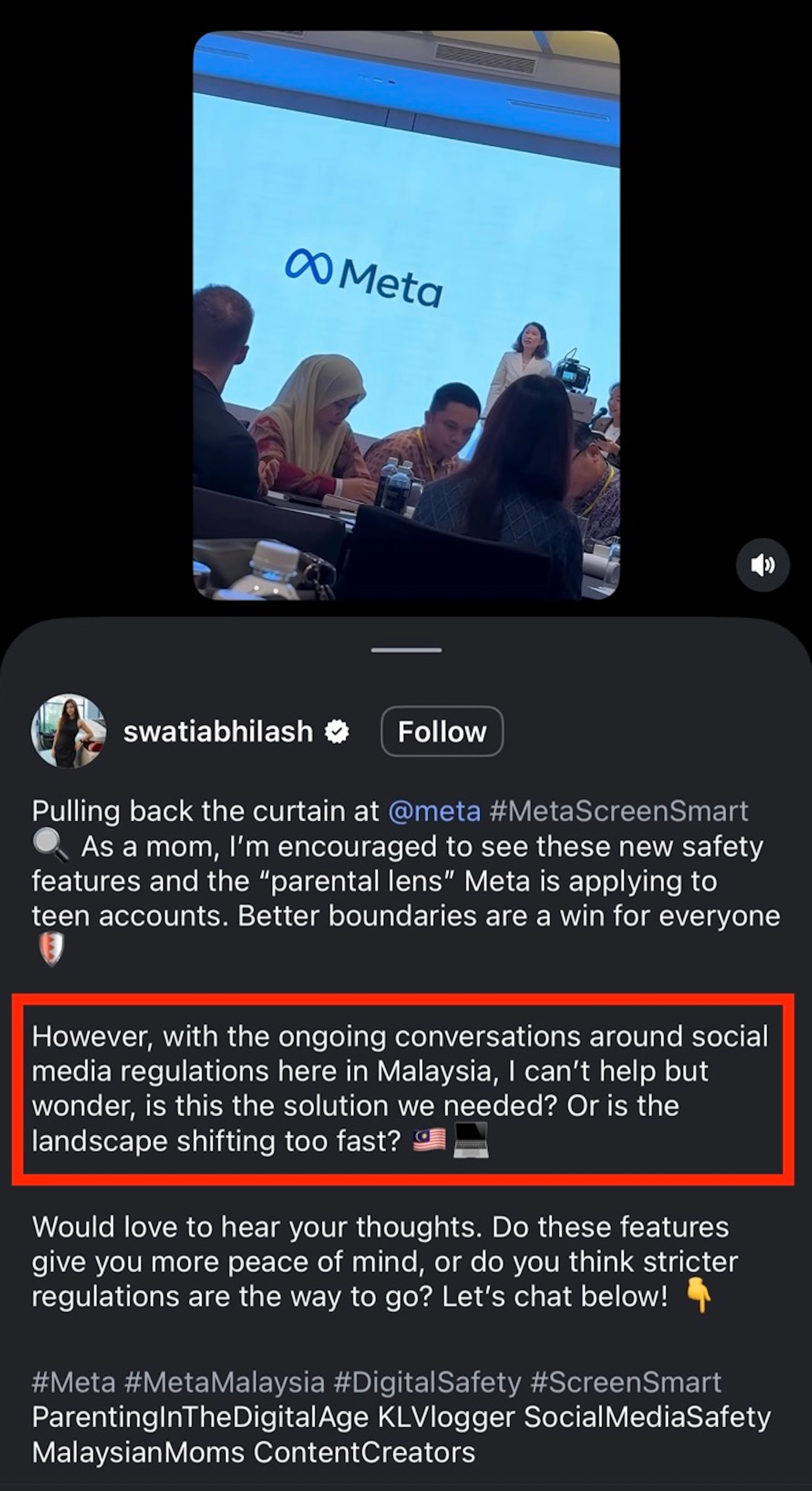

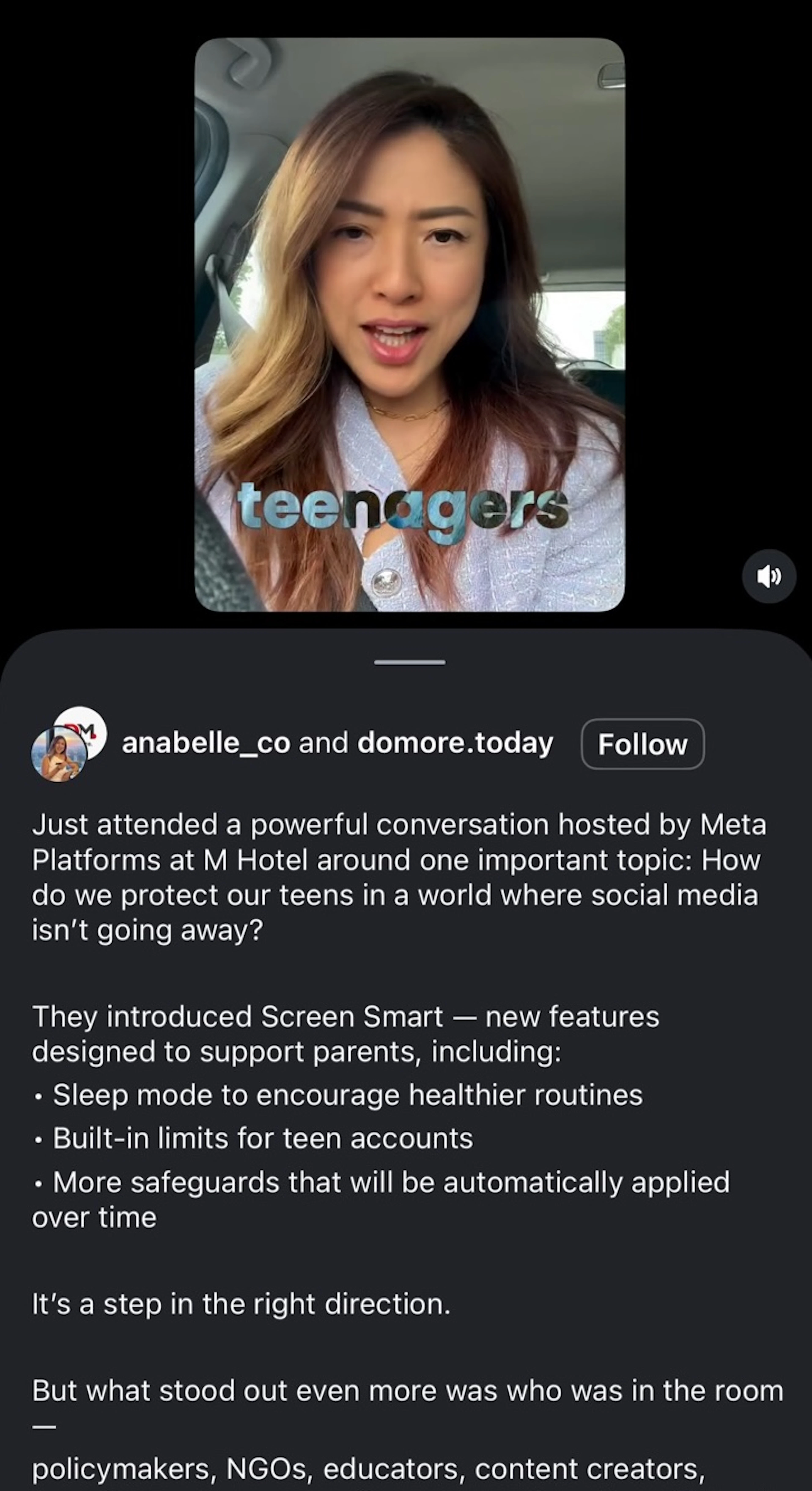
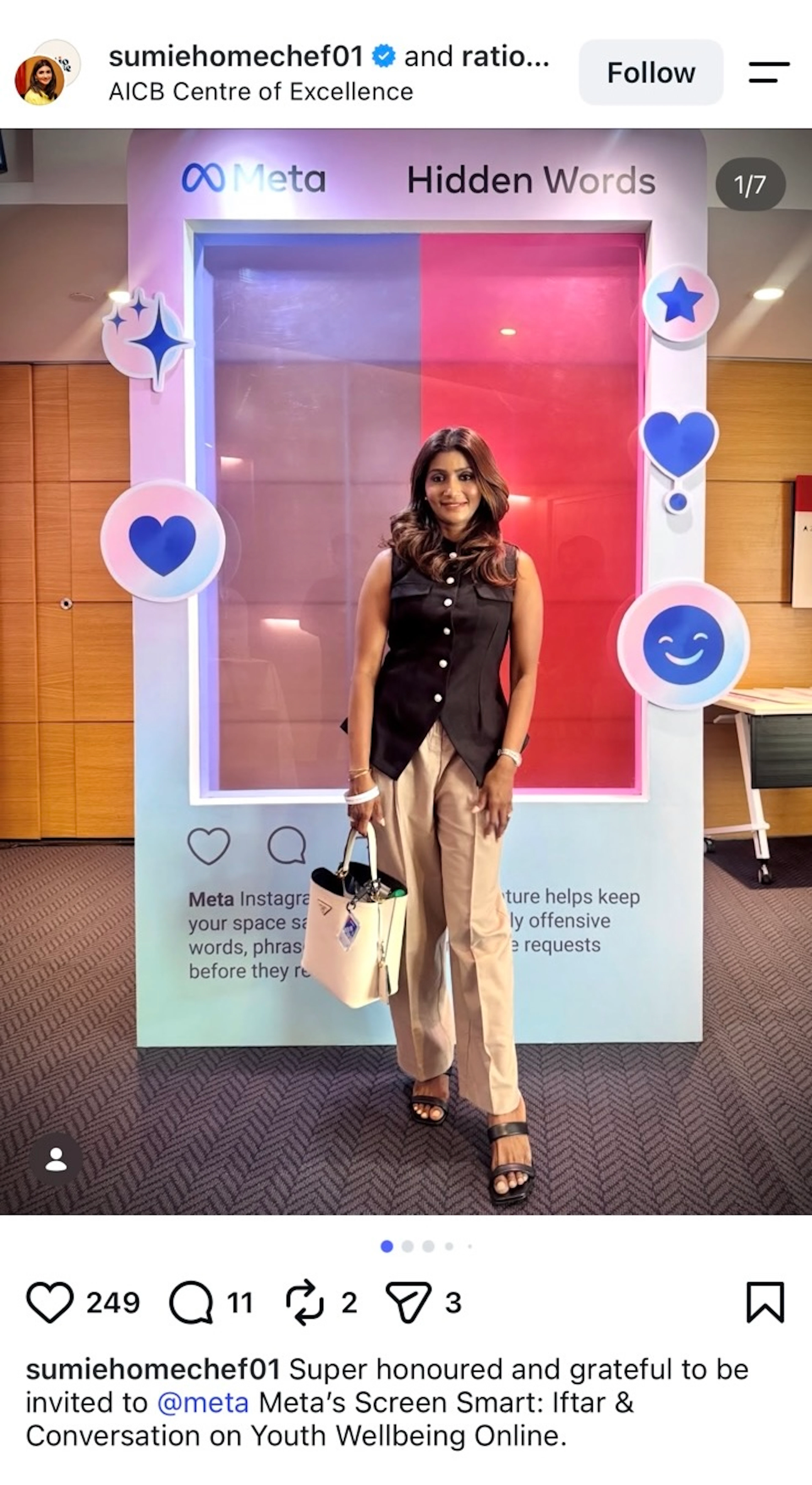

Swati Abhilash, a lifestyle influencer in Malaysia, praised the Teen Accounts after attending a Screen Smart event in Kuala Lumpur.
Swati Abhilash, a lifestyle influencer in Malaysia, praised the Teen Accounts after attending a Screen Smart event in Kuala Lumpur.
In Japan, Meta convened a roundtable of child safety experts in March, as the government there debated how best to protect minors on social media. One of the panelists, Lucy Thomas of PROJECT ROCKIT, a Meta-funded anti-cyberbullying group in Australia, appeared to discourage social media bans. “If we view blanket regulations as the solution, we risk overlooking the complex reality of how young people actually engage with the online world,” Thomas said, according to a translation of her remarks from a Japanese-language Meta press release. She promoted safety settings like teen accounts.
The Japanese government issued a draft report in early June recommending age verification for minors using social media but not an Australia-style social media ban for young teens. The aim is to finalize a policy by the end of the year.
PROJECT ROCKIT, a longtime recipient of Meta funding, has been a key booster for the Teen Accounts and other Meta products in Australia, as TTP described in an August 2025 report. Thomas did not respond to a request for comment and questions sent to PROJECT ROCKIT.
Brazil and the UAE
In Brazil, Instagram’s third-largest market, Meta used the same playbook.
A new Brazilian child safety law that took effect in March prohibits online platforms from using addictive features like infinite scroll and video auto-play and requires them to have an effective age verification system. Platforms with parent-supervised teen accounts like Meta will be exempted from the age verification requirement. But Brazil remains a potential trouble spot for Meta, with lawmakers continuing to push for a social media ban for children under 16.
In June, Meta held what appeared to be an Instagram Safety Camp in Brazil. Comedian Fábio Porchat hosted the event, and panelists included Talitah Sampaio, who runs a popular Instagram account with her daughter, Yasmin. The Sampaios posted a video recap of the event to their 766,000 followers.
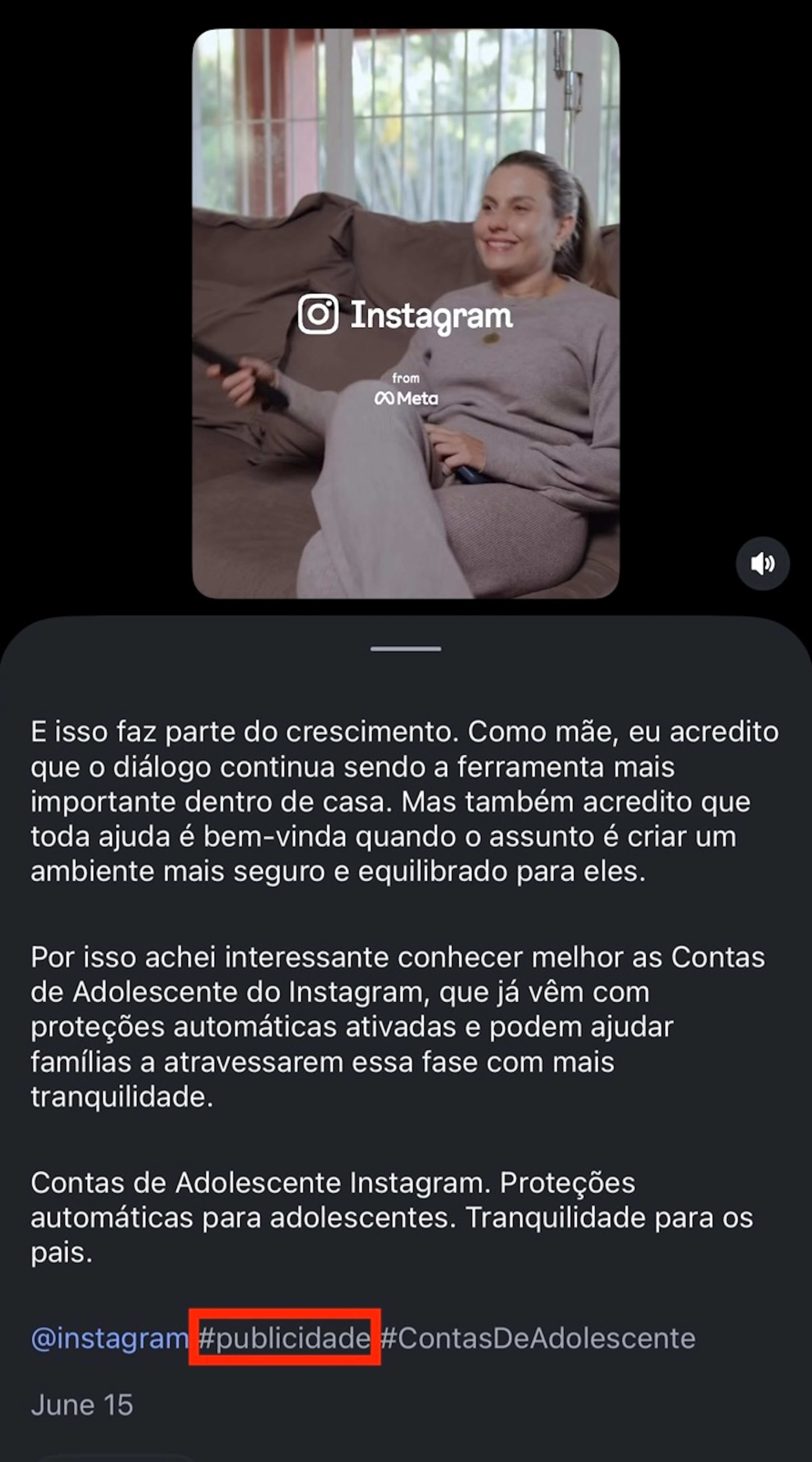
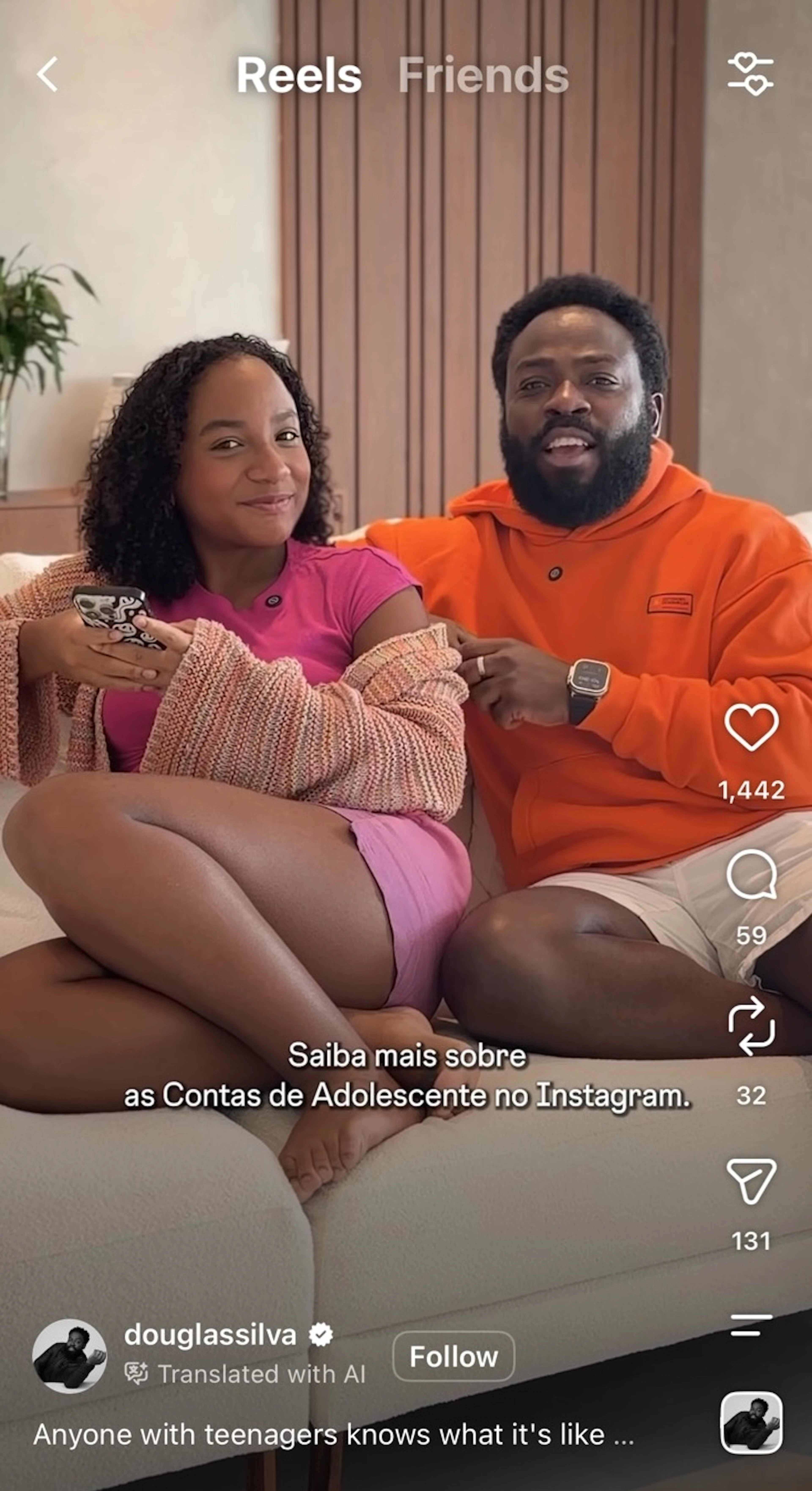
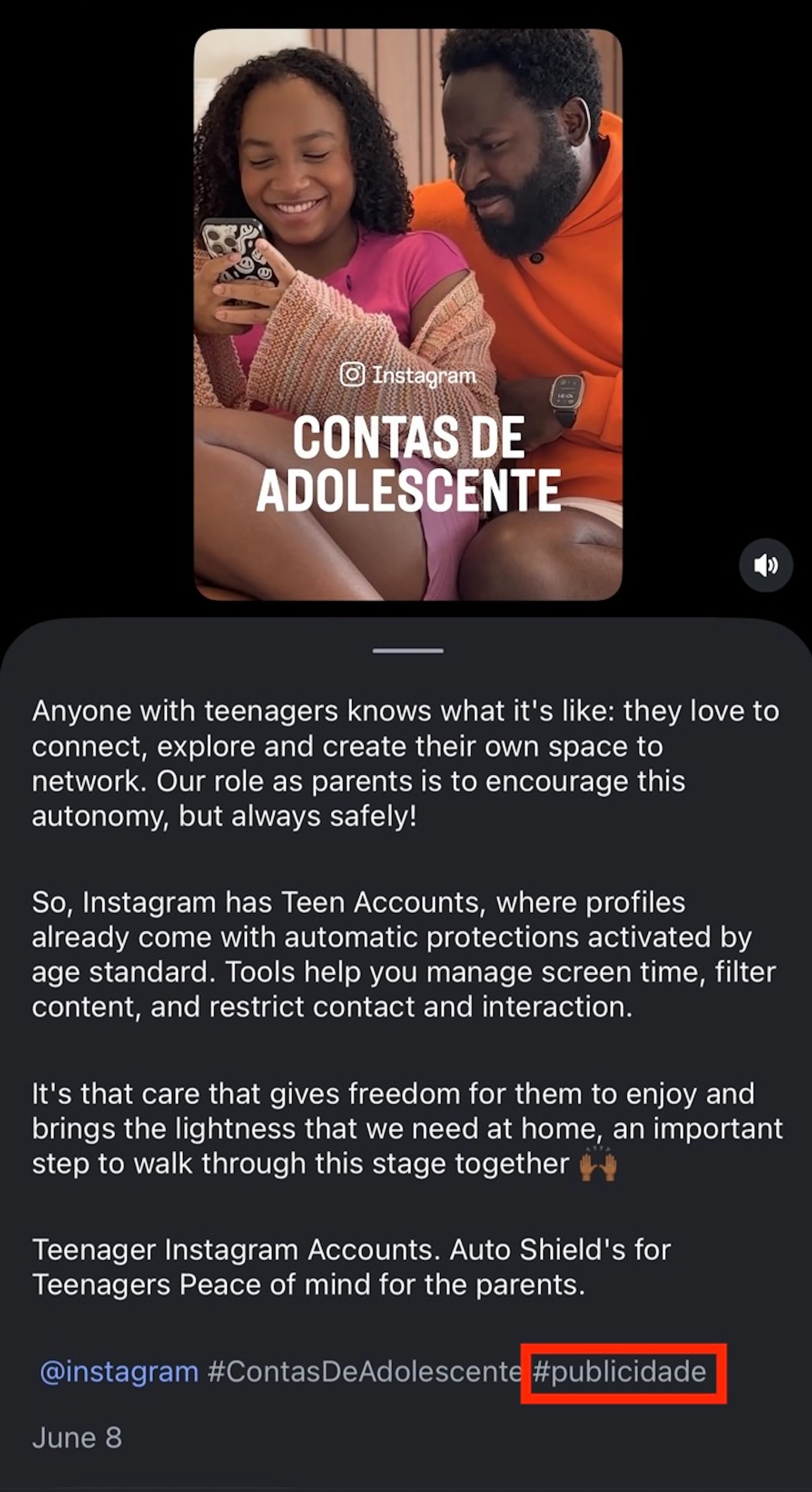
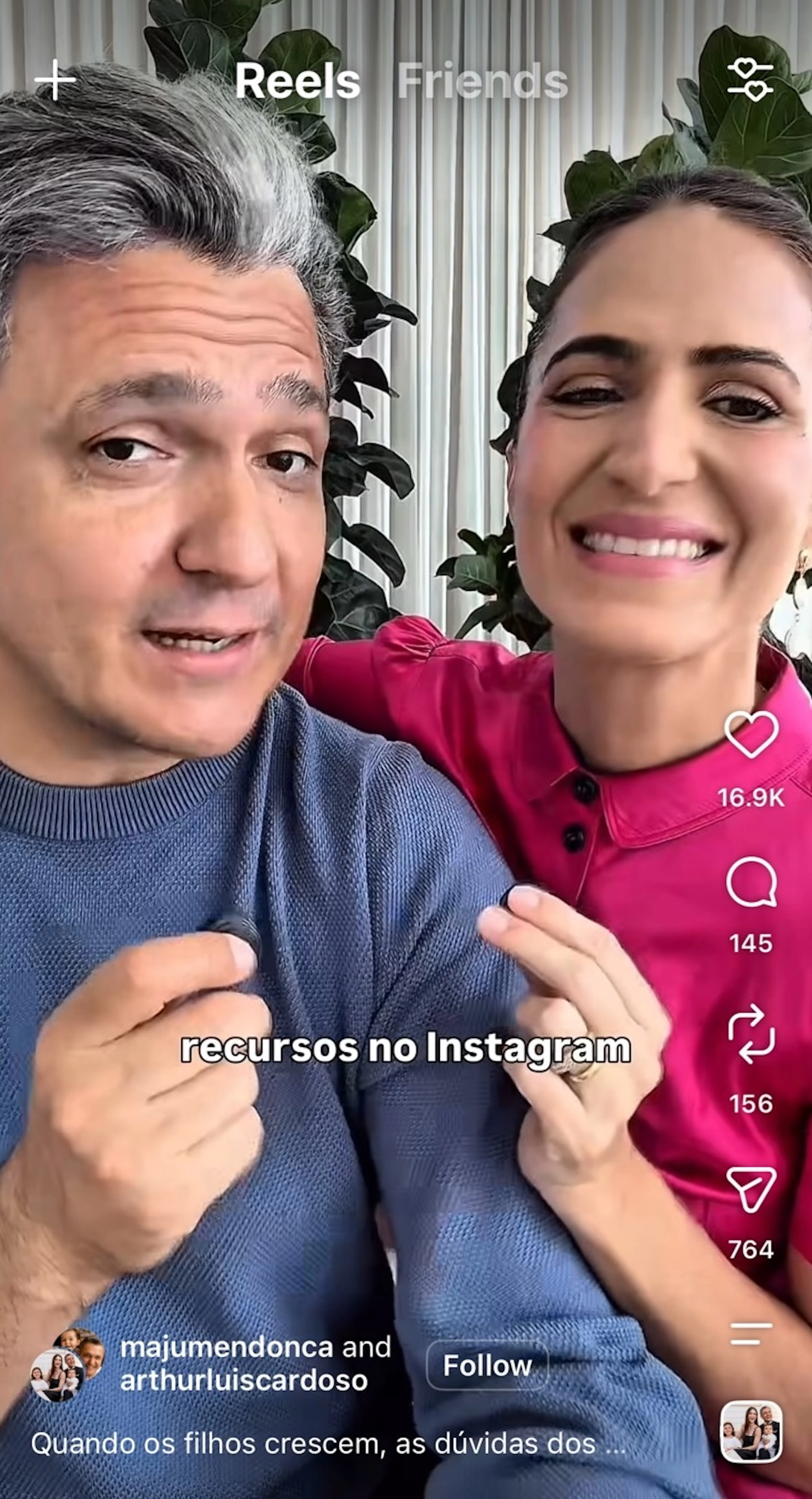
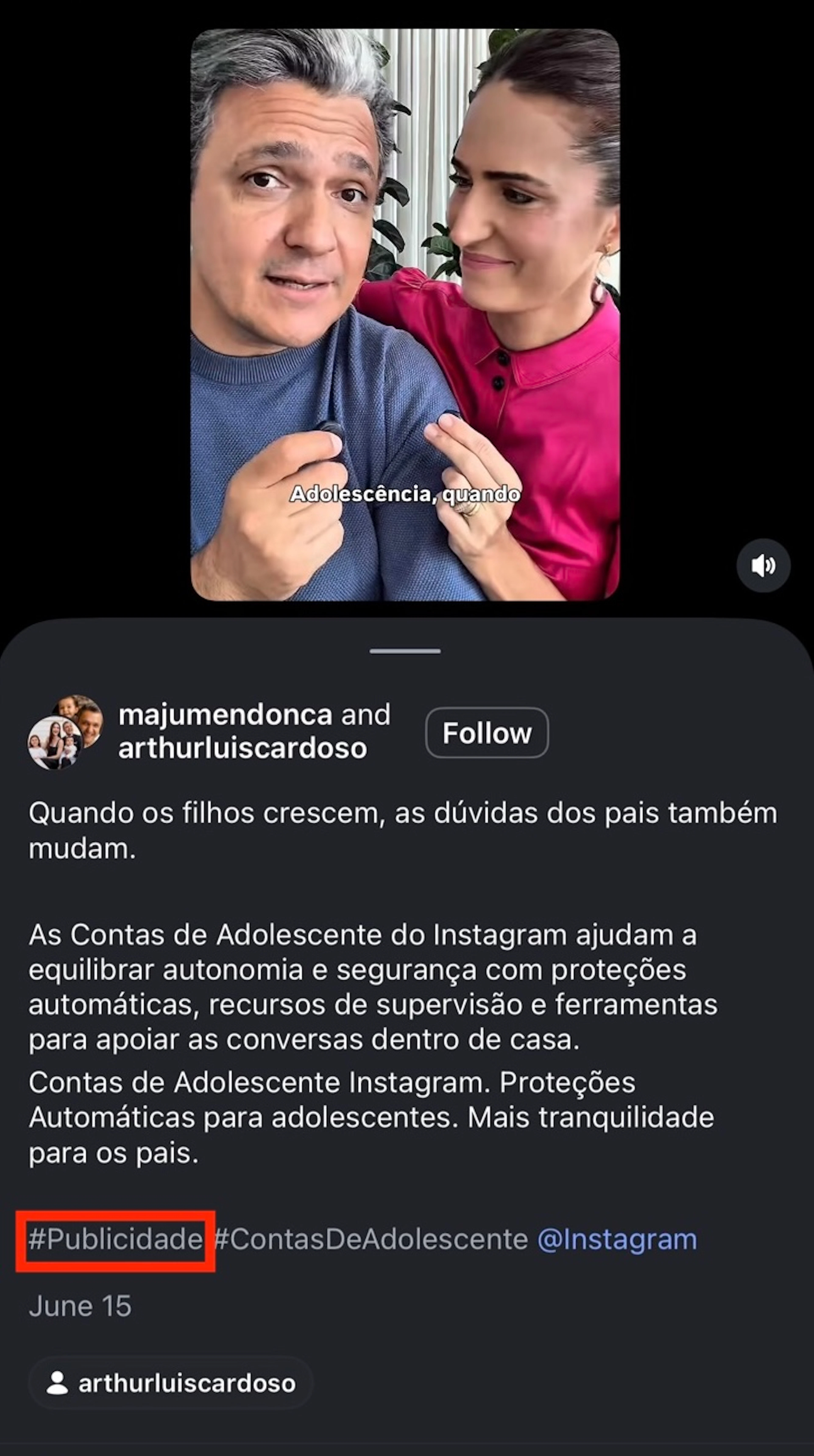
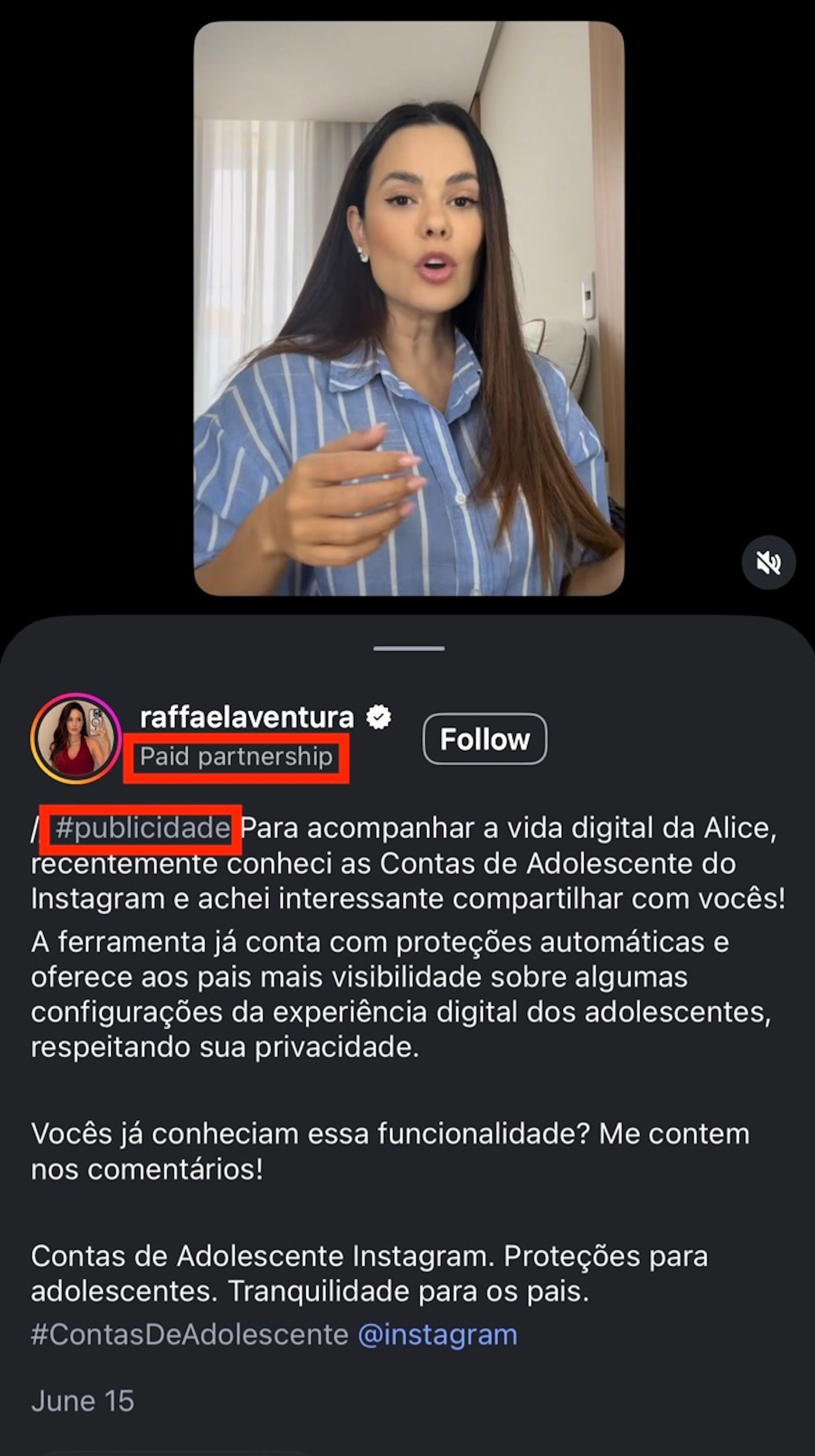
TTP identified a slew of Brazilian paid influencer posts promoting the Teen Accounts in June. They include parent influencer Fernanda Fabris, who has more than 1.3 million followers on Instagram; Douglas Silva, a prominent Brazilian actor and singer with three million Instagram followers; and the married couple of journalist Maju Mendonça and radio executive Arthur Luis Cardoso, who have a combined 10 million followers on Instagram. All used the hashtag #publicidade, or “advertisement” in Portuguese.
The Mendonça-Cardoso post includes the line, “Automatic protections for teenagers. More peace of mind for parents,” which closely tracks language from Meta’s press materials about the Teen Accounts. (“Built-In Protections for Teens, Peace of Mind for Parents.”)
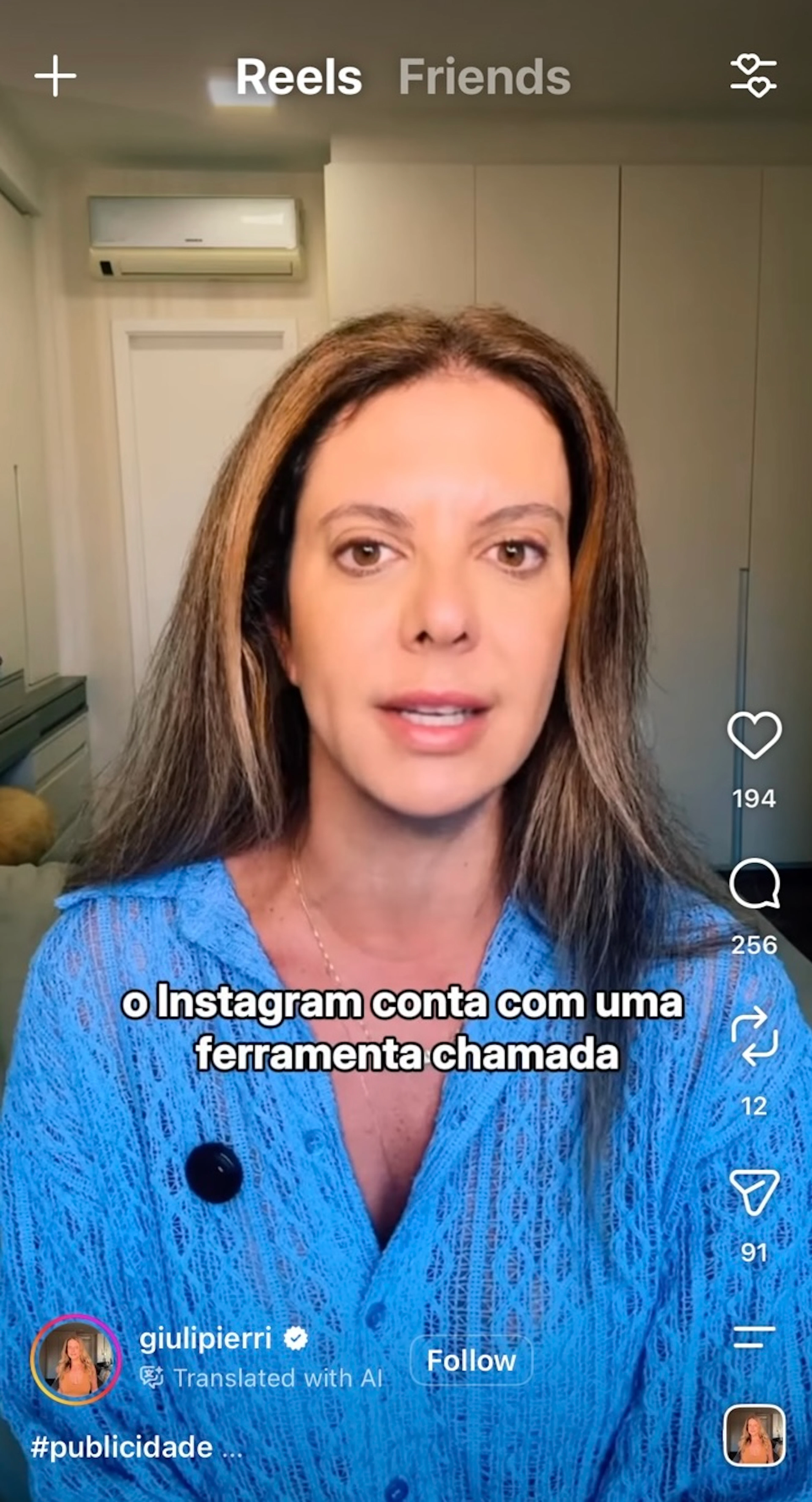
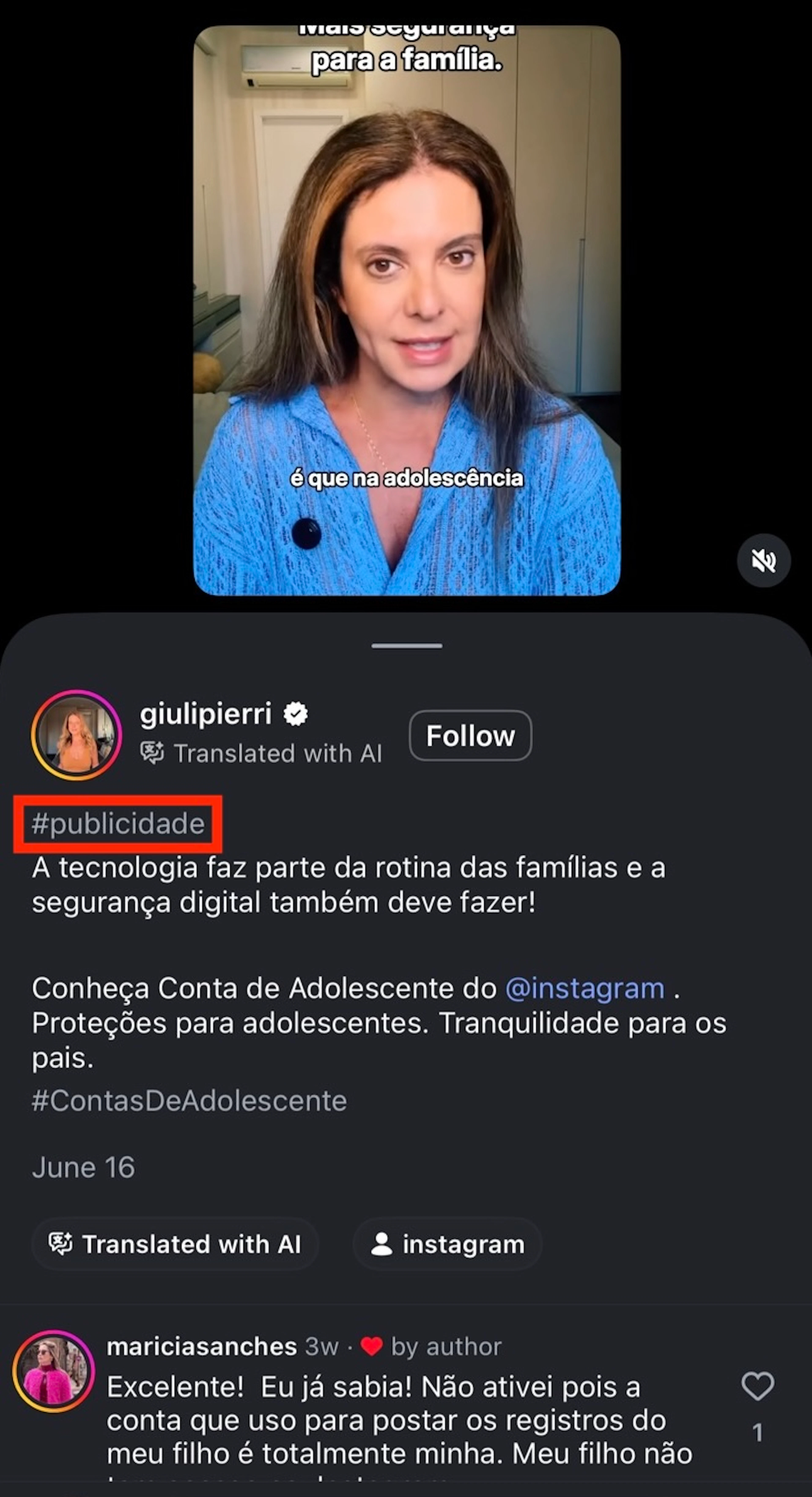
An influencer named Giuliana Medeiros Pierri da Silva, who identifies herself as a psychologist, also talked up the Teen Accounts in a June Reel, saying they can give “peace of mind for parents.” Like the others, she used the #publicidade hashtag—and tagged Instagram’s official account as a collaborator.
The use of a psychologist mirrors Meta's tactics in the U.S., where an array of doctors and therapists have posted endorsements of the Teen Accounts as part of paid partnerships with Instagram. These sponsored posts give a veneer of professional approval to Meta's child safety efforts.
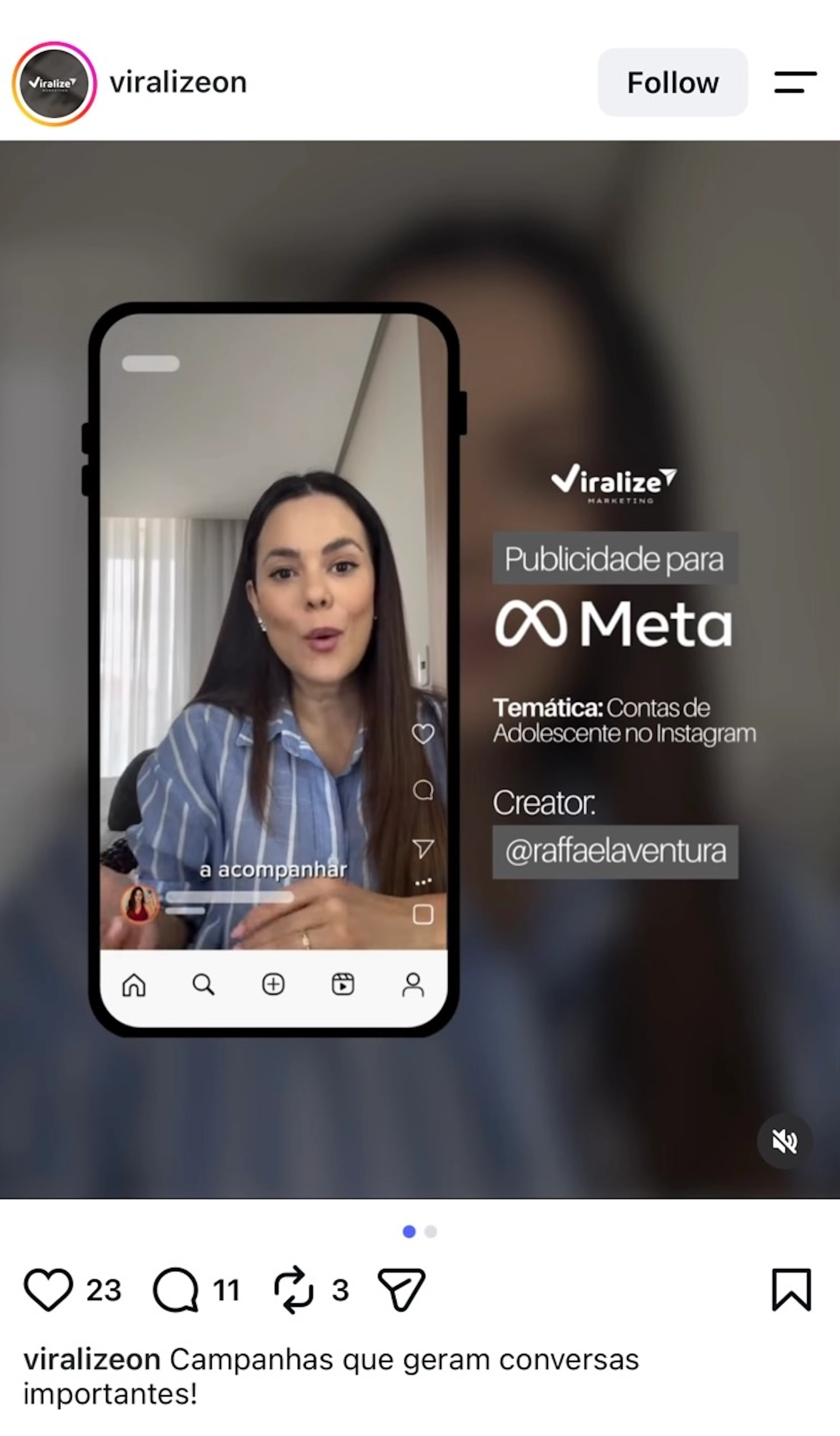
As in other countries, Meta appears to work with a creator marketing firm to recruit influencers for its campaign. A Brazilian firm called Viralize Marketing e Assessoria highlighted a paid post by fashion influencer Raffaela Ventura Feck promoting the Teen Accounts.
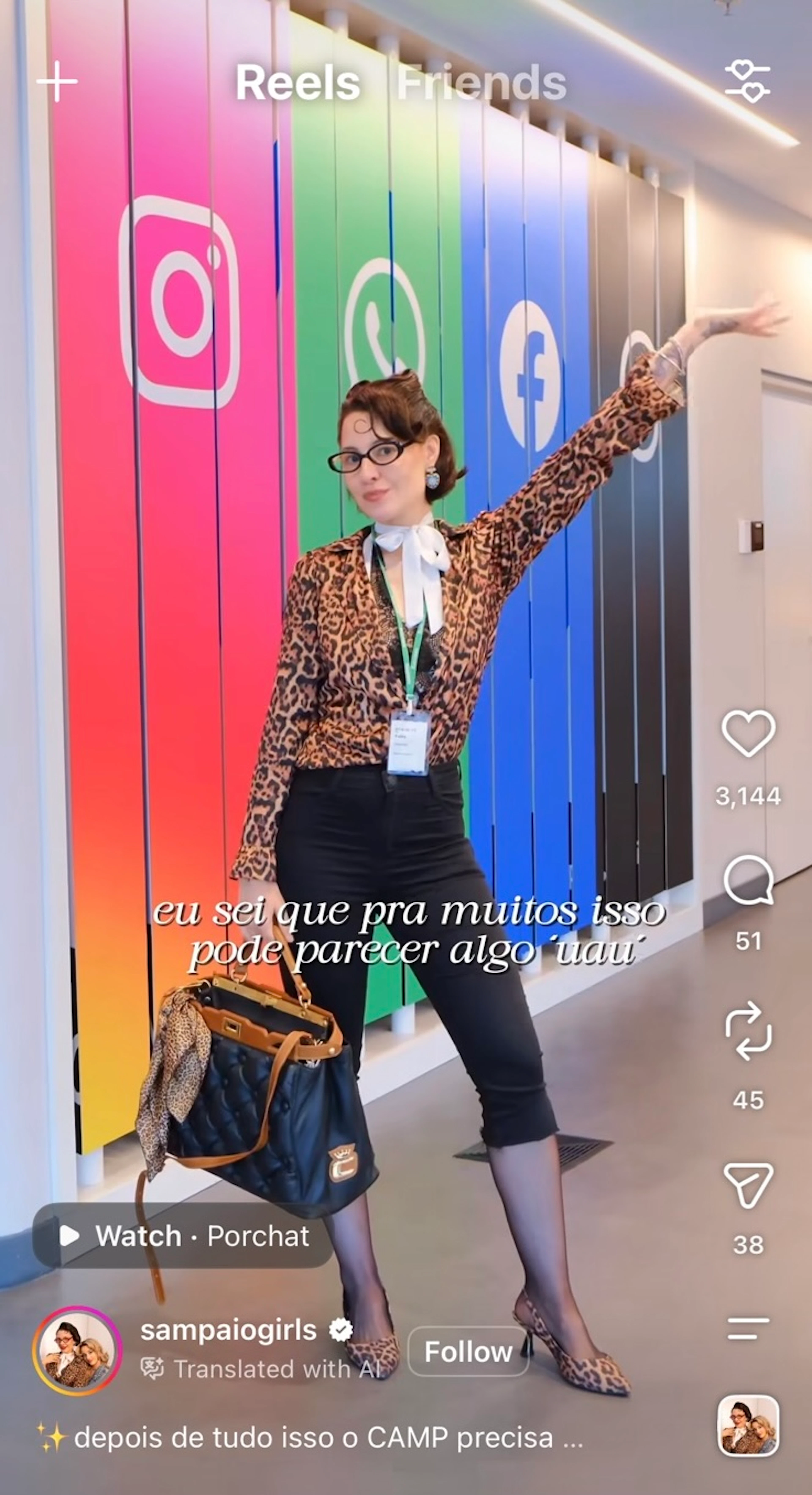
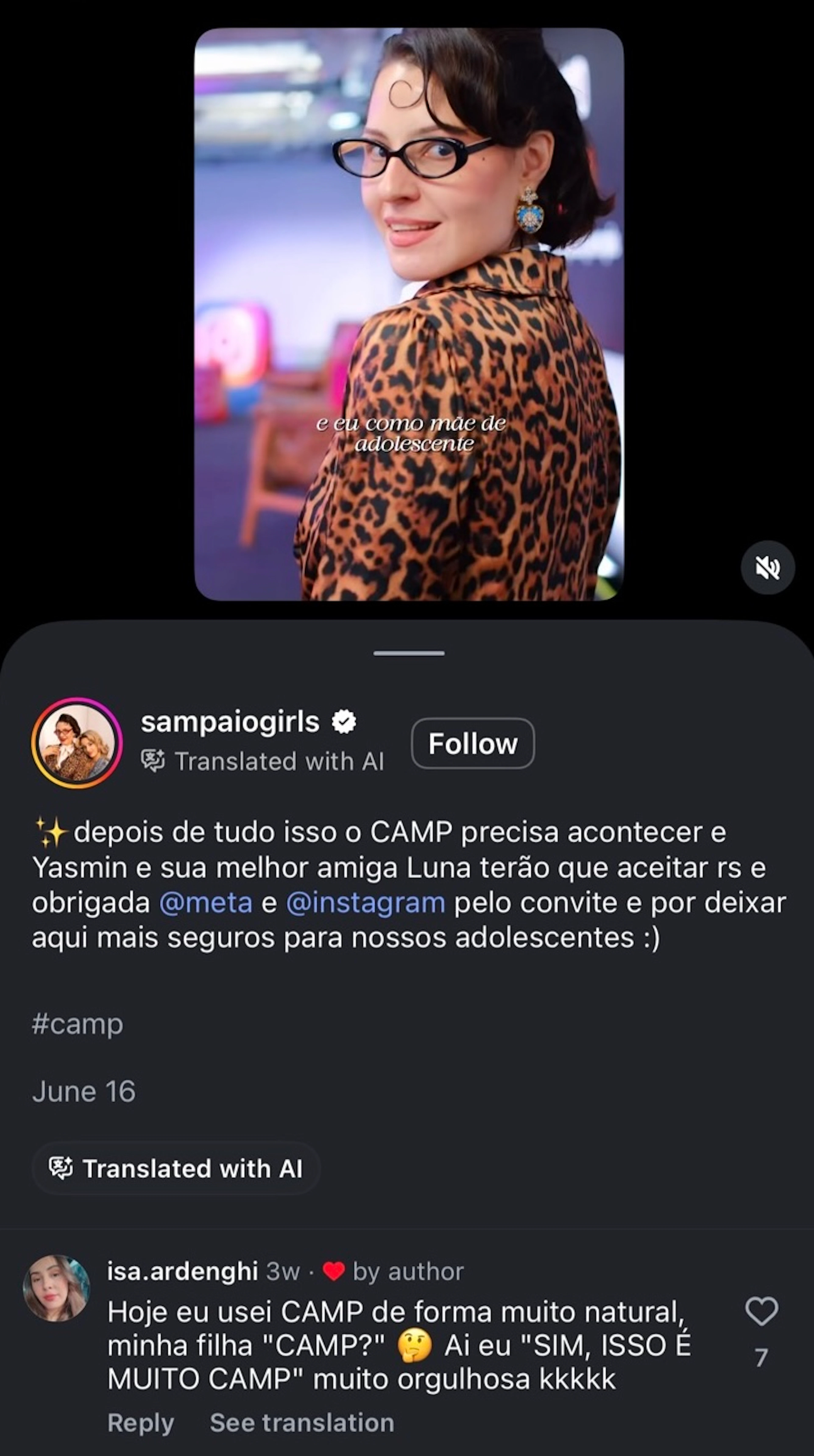
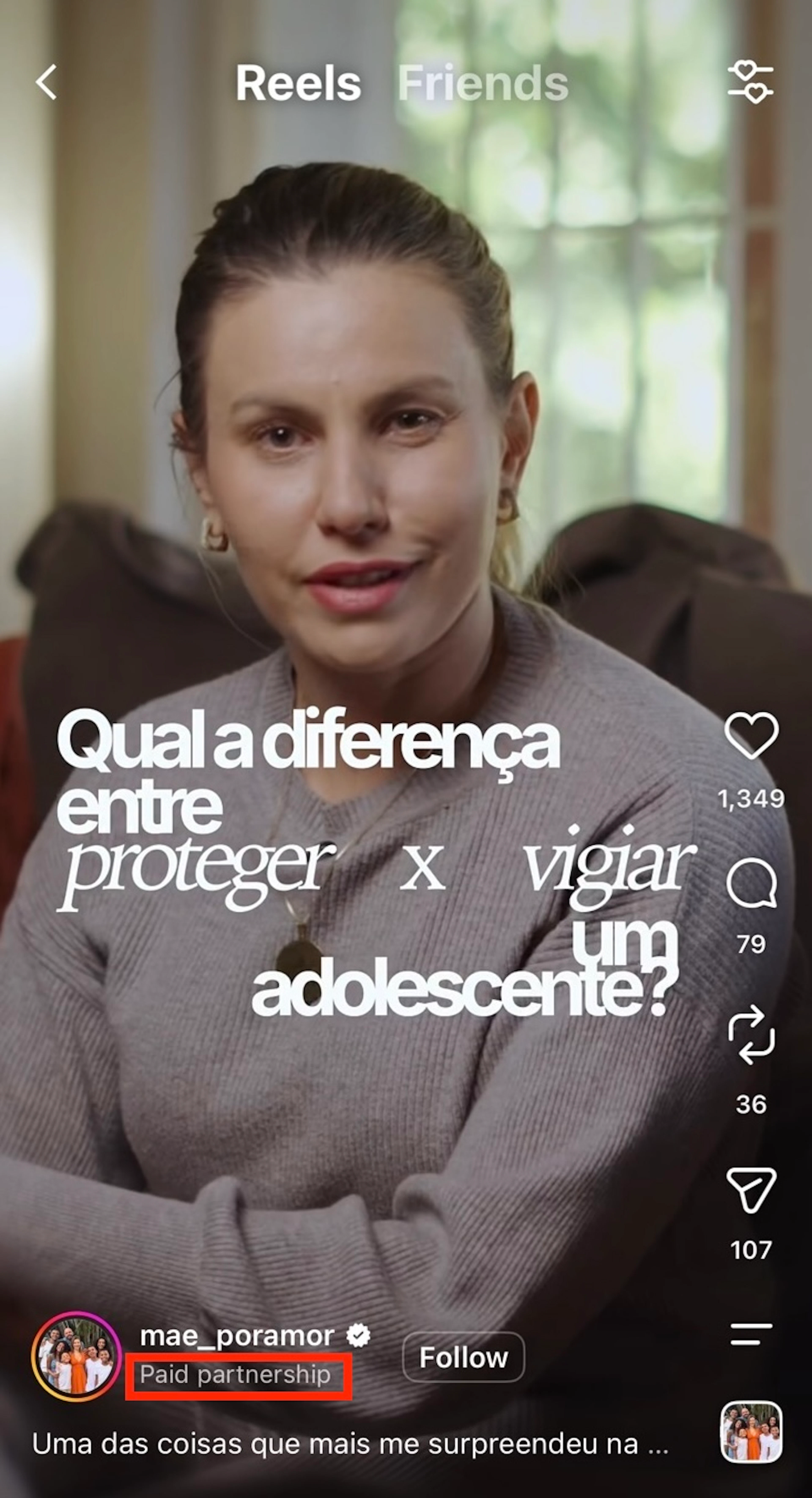
Brazilian influencer Talitah Sampaio, who has a popular Instagram account with her daughter Yasmin, posed at a Safety Camp event.
Brazilian influencer Talitah Sampaio, who has a popular Instagram account with her daughter Yasmin, posed at a Safety Camp event.
In the Middle East, Meta mounted an extensive influence campaign in the United Arab Emirates.
The UAE enacted a child digital safety law in January 2026, requiring digital platforms to provide age verification, strict privacy controls, and content filtering for minors. Around that same time, a government council discussed regulating children's use of social media, deeming it a top priority.
Within months, Meta formed a partnership with Creators HQ, a UAE government-backed hub for digital creators, to “support parents in building a healthy and safe relationship between their children and social media," according to the official Emirates News Agency.
In May, a group of UAE-based influencers extolled the Teen Accounts in an Instagram post. The group, who appeared in a studio branded with Creators HQ and Instagram, included psychologist Elena Maria Andrioti, food influencer Yasmine Idriss Tannir, wellness influencer Sumaia Alkhub, and Mira Khleif, the founder of MKandM, a maker of kids’ educational toys. The post tagged Moon Baz Aouad, Meta's partnership director for the Middle East, Africa, and Turkey.
Days later, Creators HQ posted an Instagram video promoting the Teen Accounts, featuring Egyptian model Logina Salah, the above-mentioned Alkhub, and actress Basma Nabil. Salah, who competed in the Miss Universe pageant, has 1.8 million followers on Instagram. Creators HQ did not respond to questions.
TTP also identified a Teen Accounts endorsement from a UAE child influencer and actor who goes by the name Yosi Time. The boy, who appears to be nine years old and has 493,000 Instagram followers, talked up the Teen Account features even though he is too young to use them.
Despite Meta's efforts, the UAE Cabinet issued a resolution in June setting the minimum age for social media use at 15. Social media platforms have a year to come into compliance.
Meta has a strong interest in shaping how UAE child safety laws are enforced, given that Egypt and other Middle East countries are also looking at how to regulate children’s use of social media.
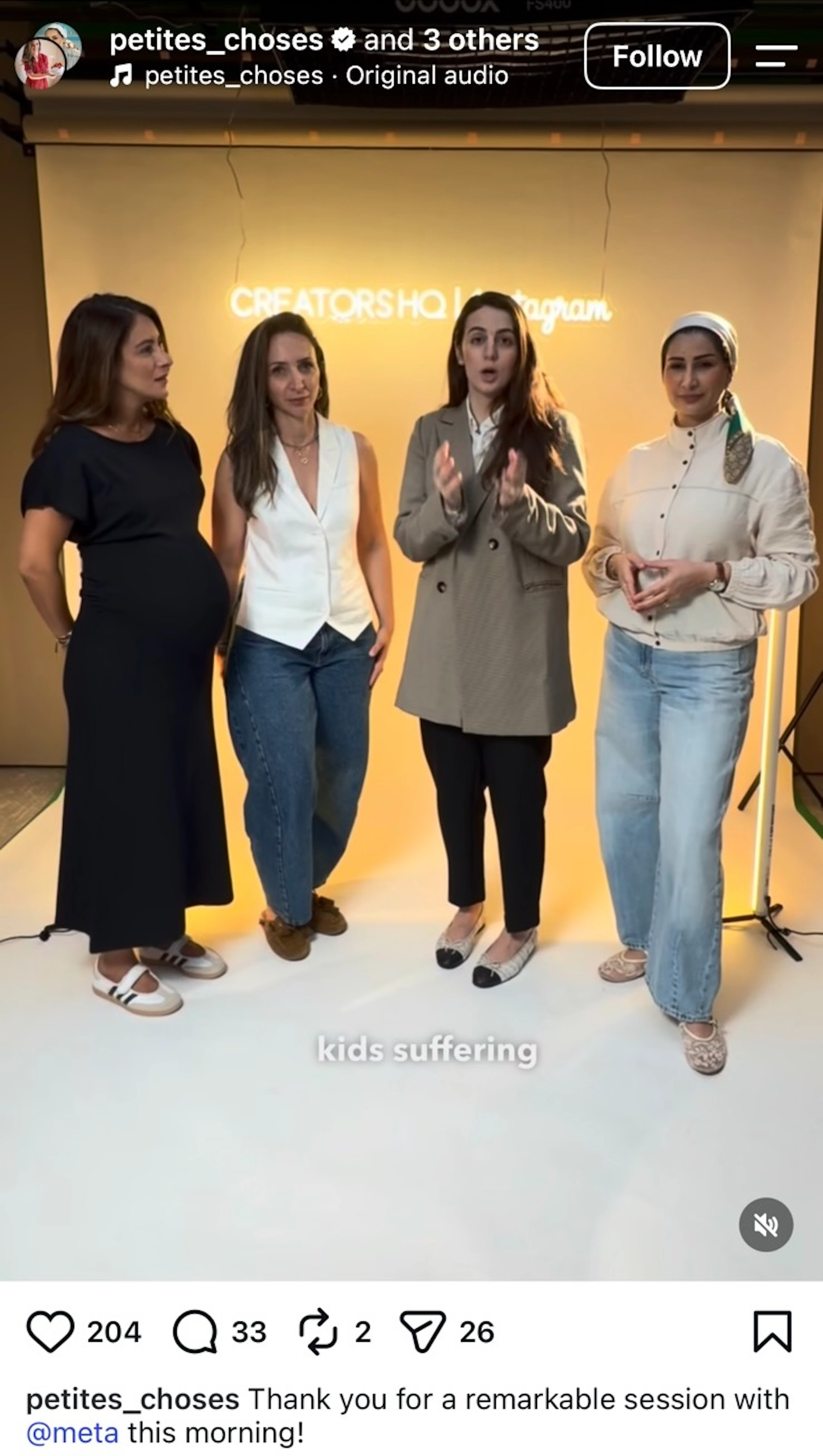
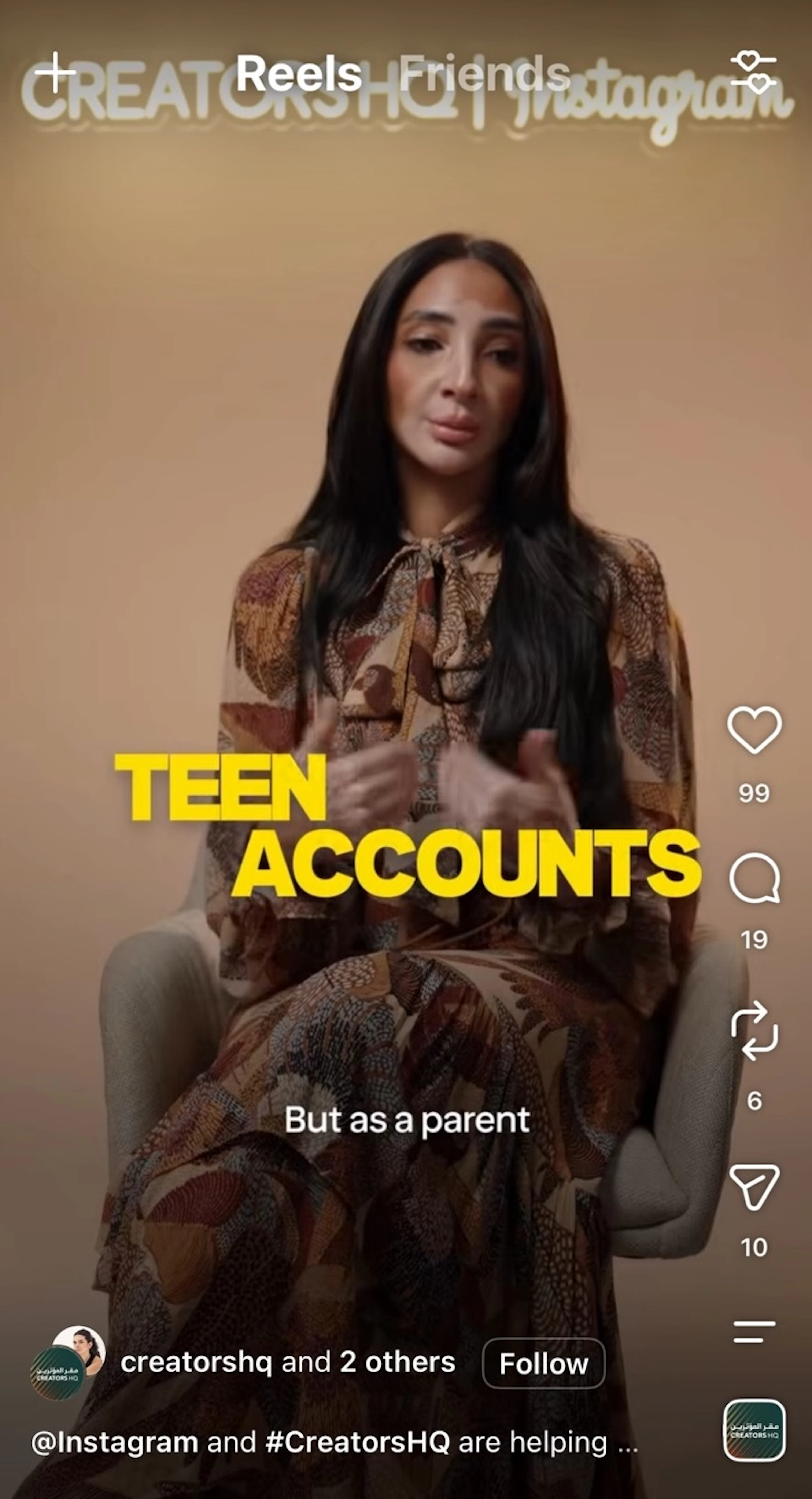
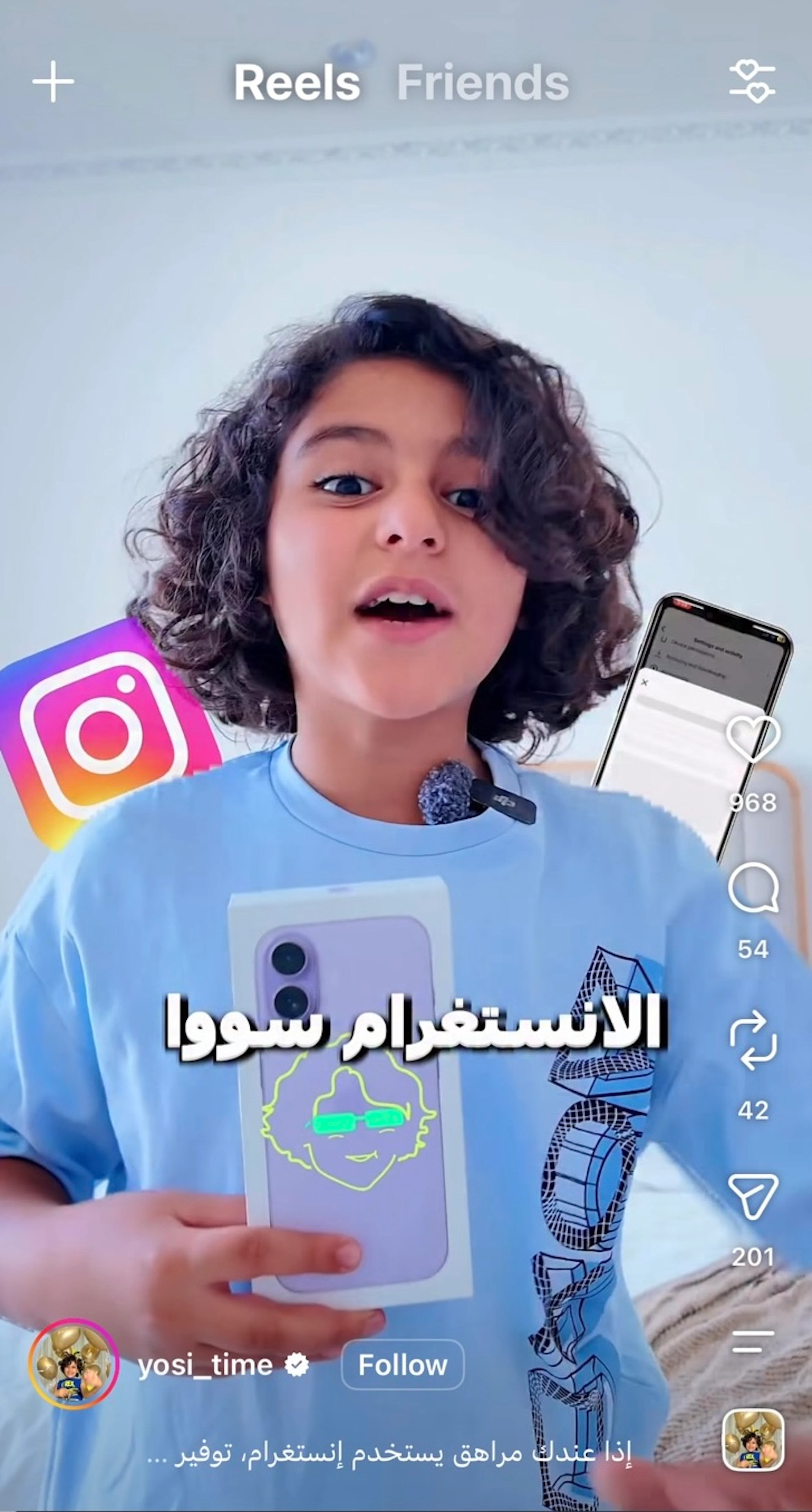
A group of UAE-based influencers, including a psychologist, talked up the Teen Accounts in an Instagram post.
A group of UAE-based influencers, including a psychologist, talked up the Teen Accounts in an Instagram post.
UK and Canada
In June 2026, the UK's then-prime minister, Keir Starmer, announced plans for a social media ban for kids under the age of 16. His government said the measure would be brought to Parliament before the end of the year and come into force in spring 2027. “This is a line in the sand. Tech giants had their chance and failed, but we’re stepping in to protect children, back parents and set a new normal for future generations,” he said. Andy Burnham, who replaced Starmer as prime minister, has also committed to the social media ban.
The idea of a social media ban had been brewing in British politics for months before the official government announcement. During the debate, Meta warned the UK Parliament in March that “bans are ineffective and risk pushing teens toward less safe, unregulated services or logged-out experiences that bypass the protections we have built.” TTP found that the company also used its influencer strategy to drive home that point.
For example, Louise Boyce, a UK fashion model-turned-momfluencer known by her mantra “Mama’s still got it!,” posted an endorsement of the Teen Accounts in April, saying it leads to “less checking, less worrying” about her kids. Boyce, who has 1.1 million followers on Instagram, indicated the post was sponsored and used the hashtag #InstagramPartner.
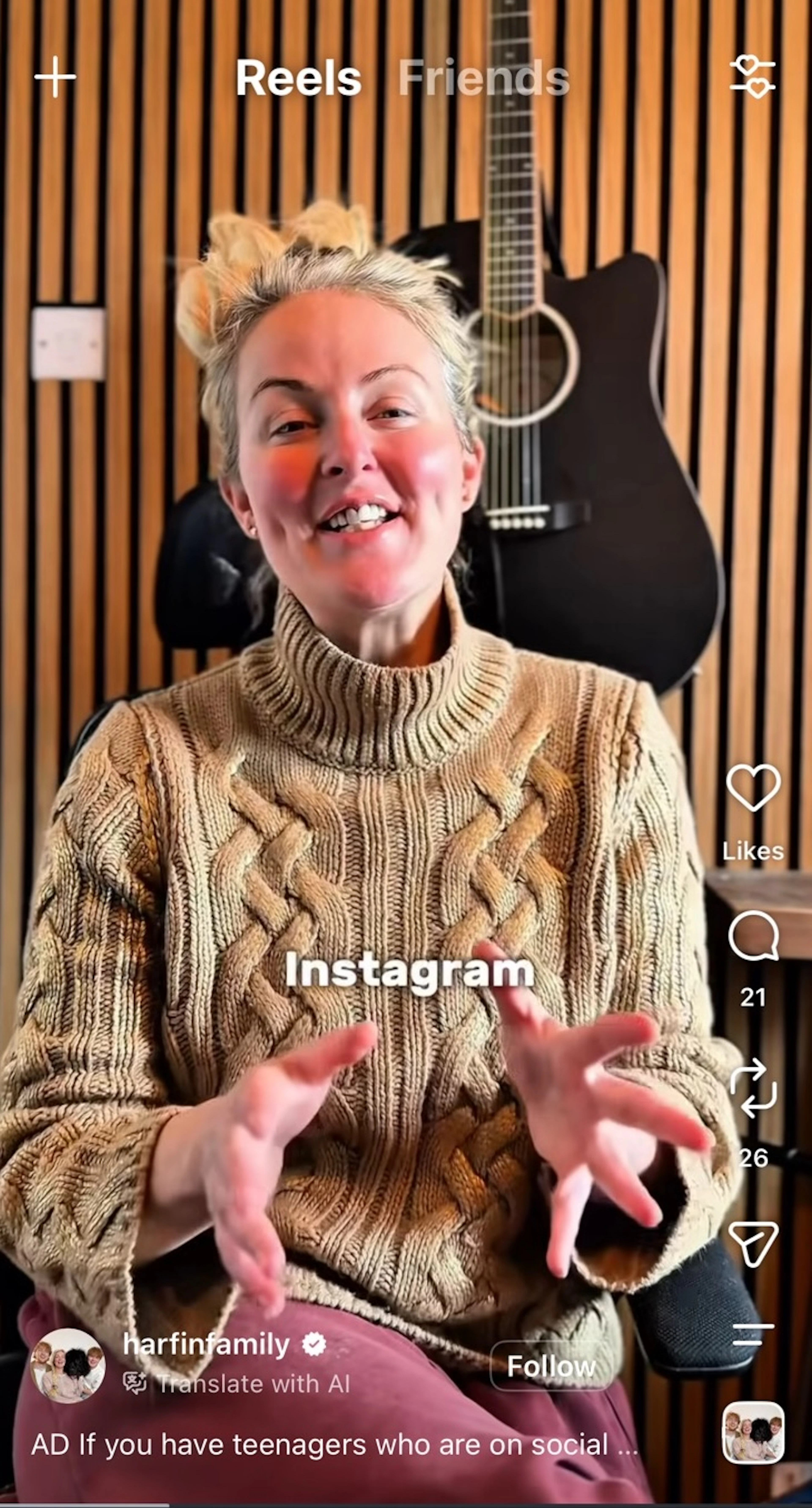
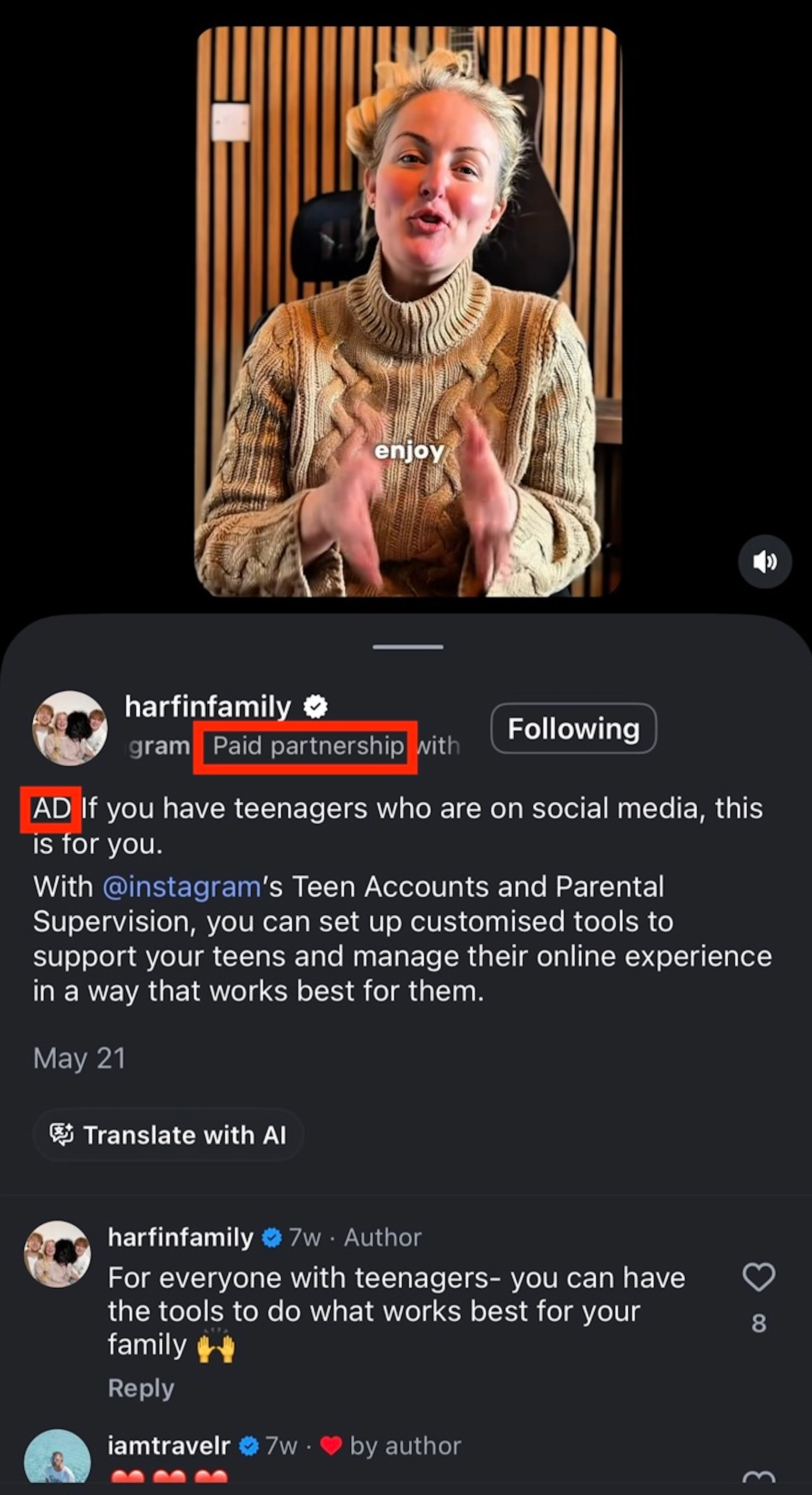
In May, the Harfin family—a Scottish single mom and her two teen sons known for their comedic stunts—promoted the Teen Accounts in a sponsored Instagram post. They have 687,000 followers on Instagram. The following month, Emma Conway, a Birmingham body confidence and fashion influencer who uses the Instagram handle @brummymummyof2, told her followers to “grab a cuppa” and learn about the Teen Accounts. Her post showed it was an “ad” and was tagged with #InstagramPartner.
These were part of a wave of paid posts from Instagram influencers, including dads, pushing Teen Accounts in the UK.
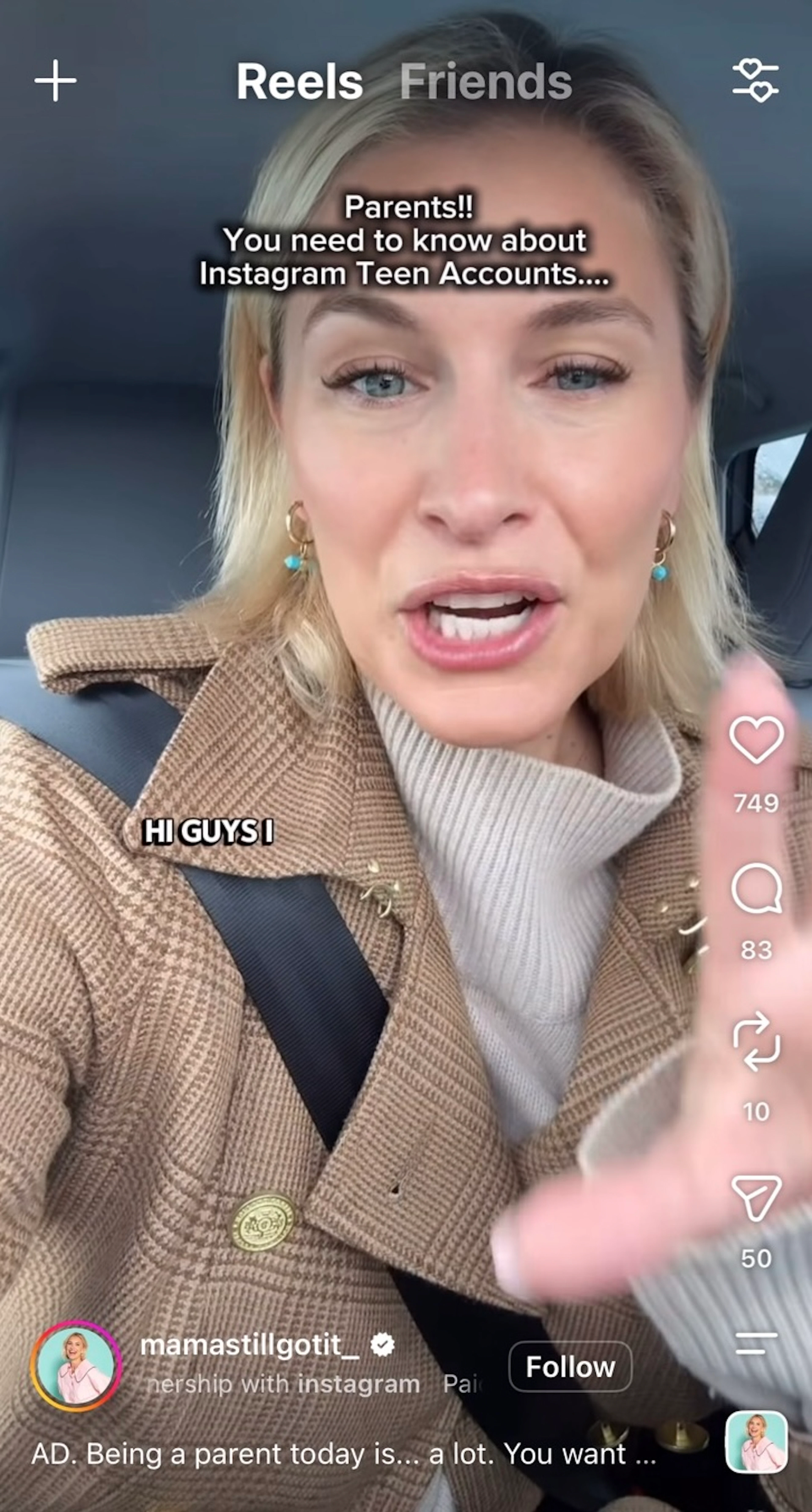
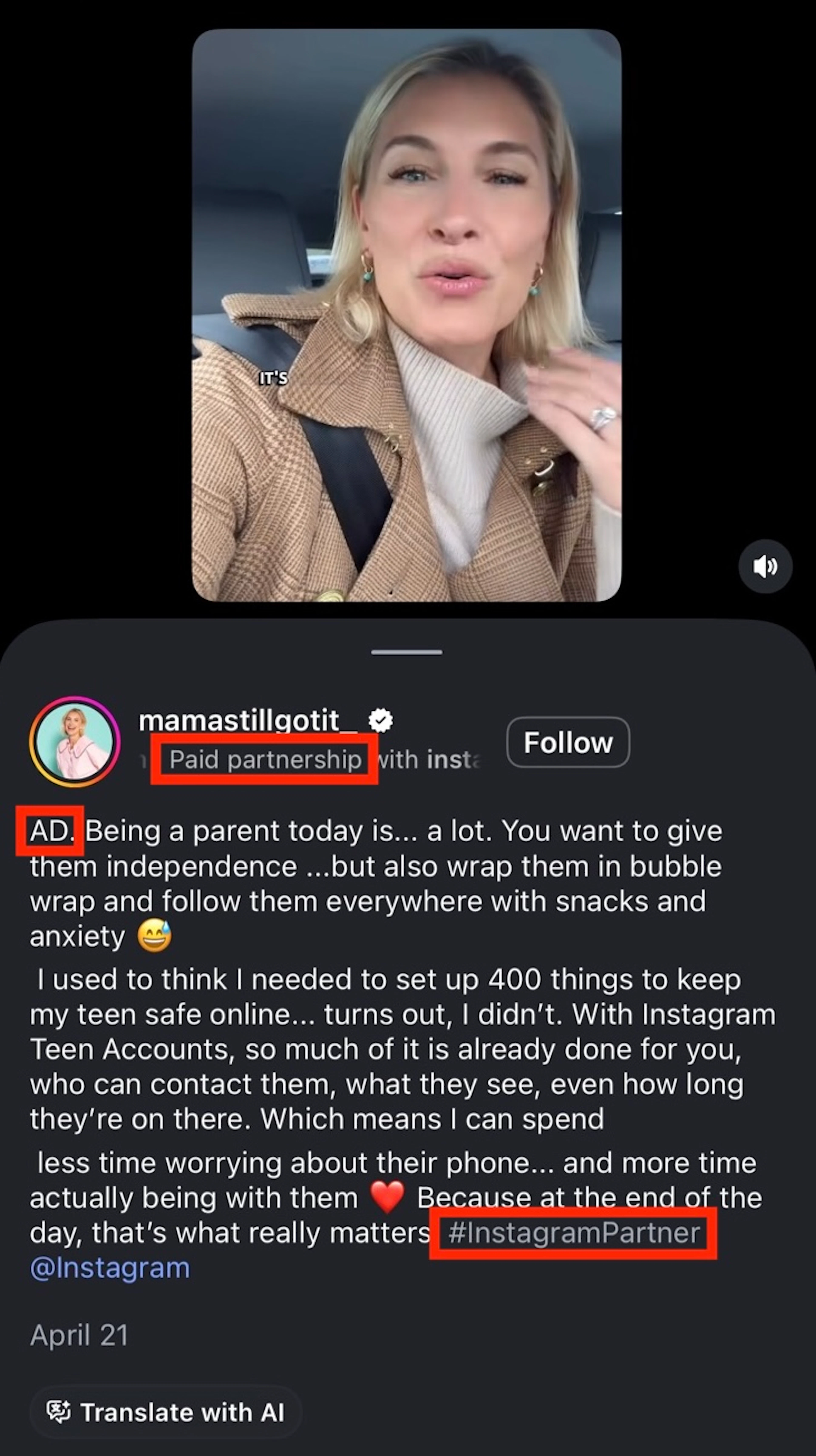
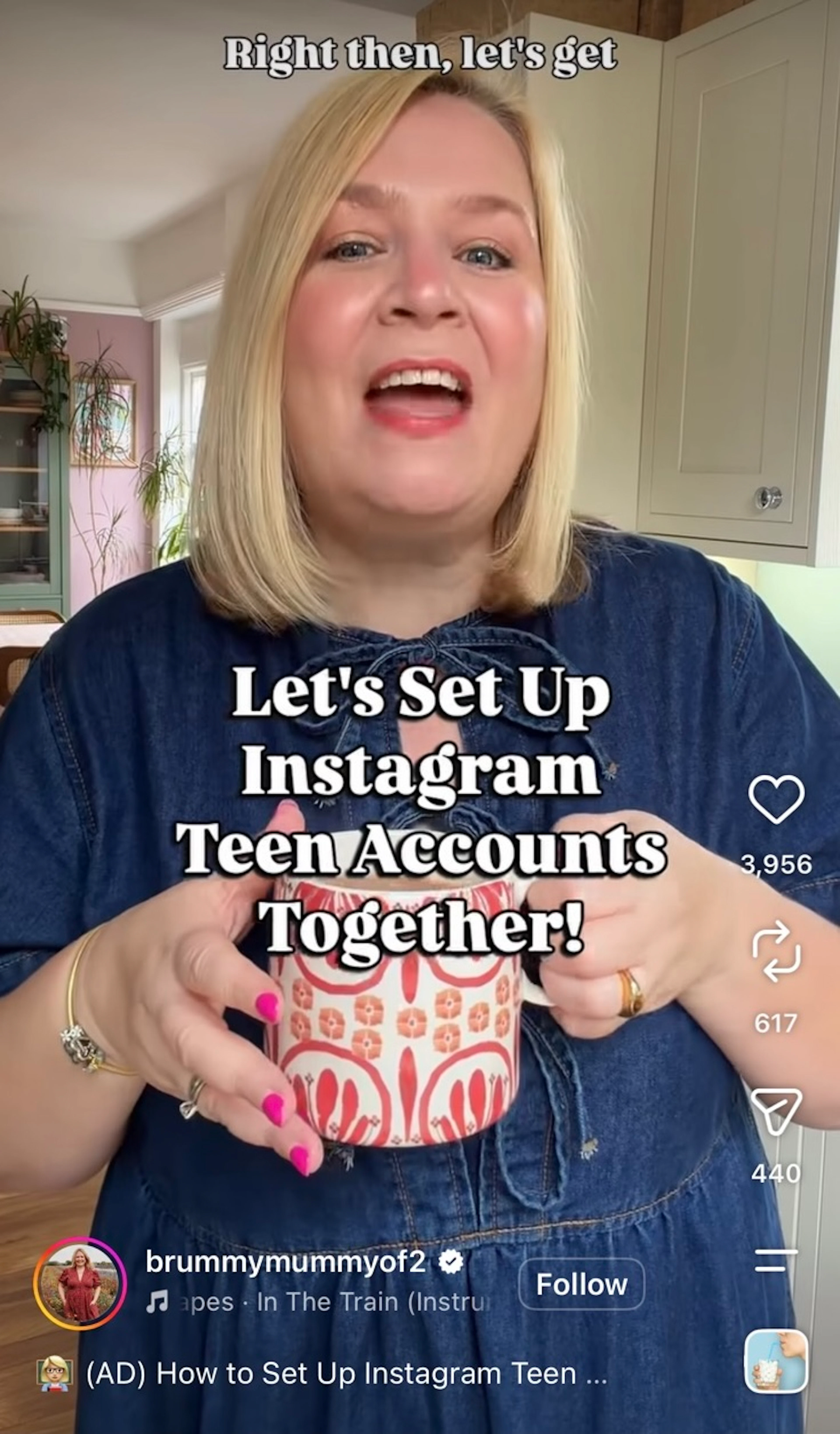
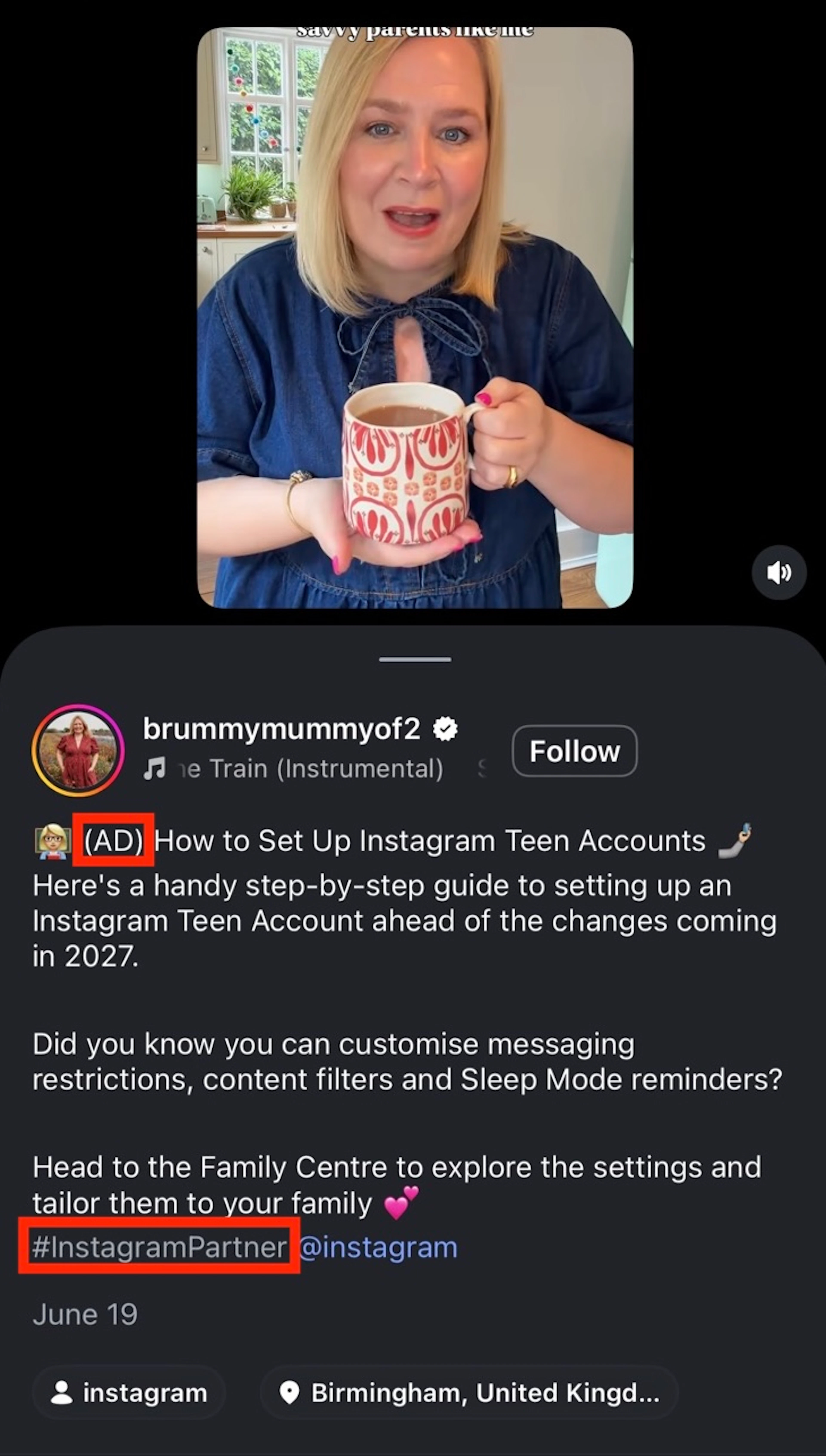
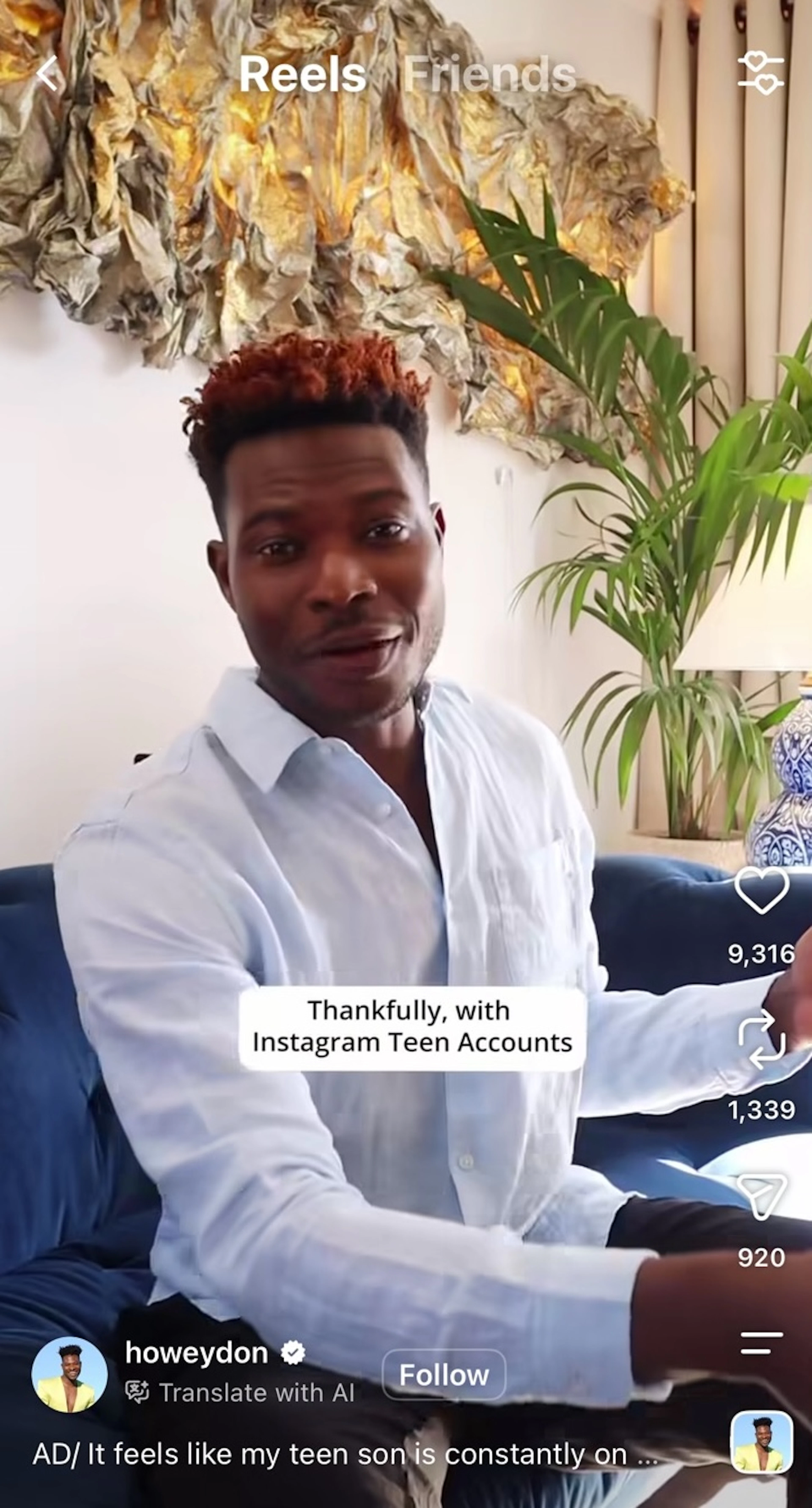
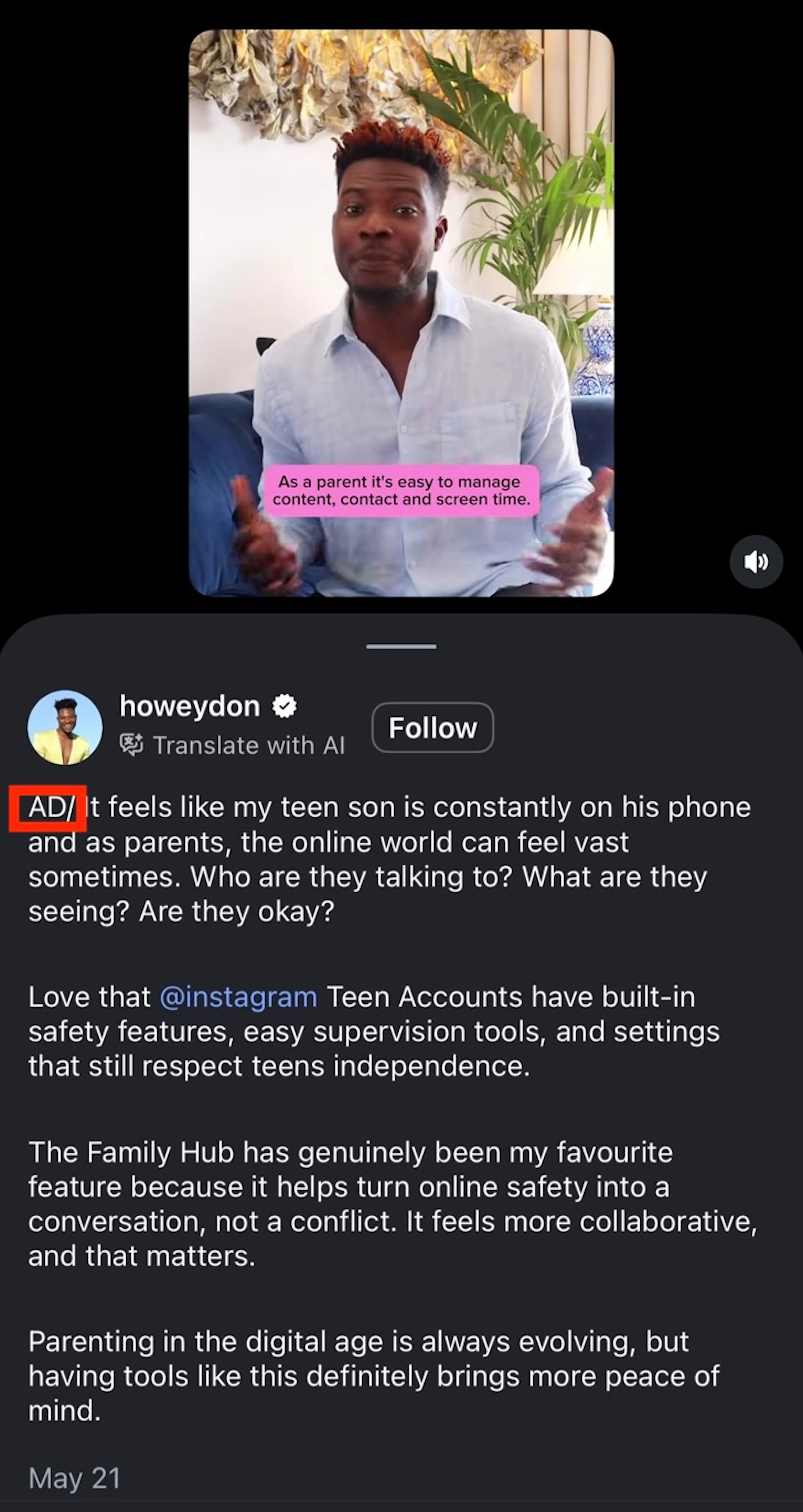
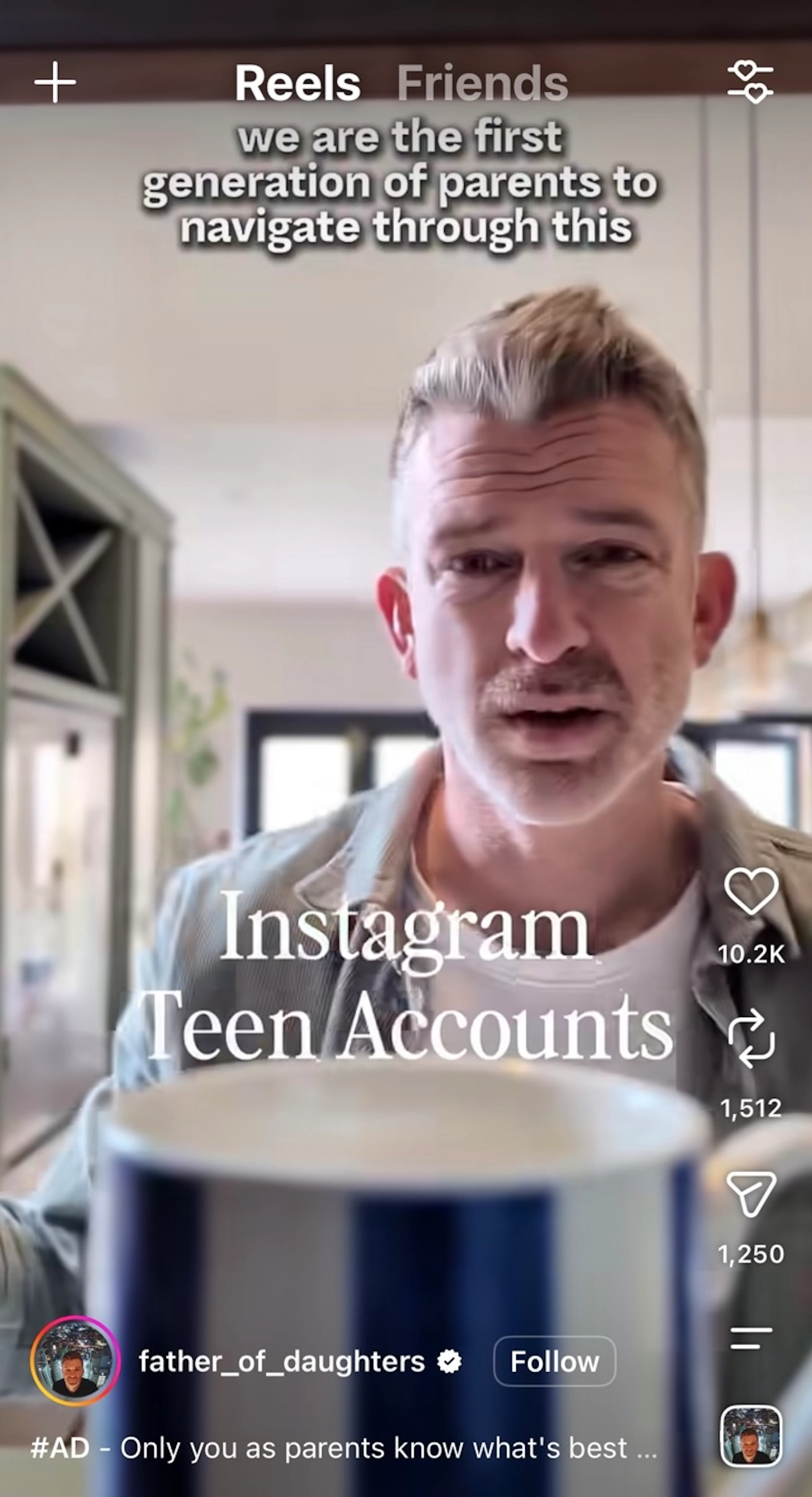
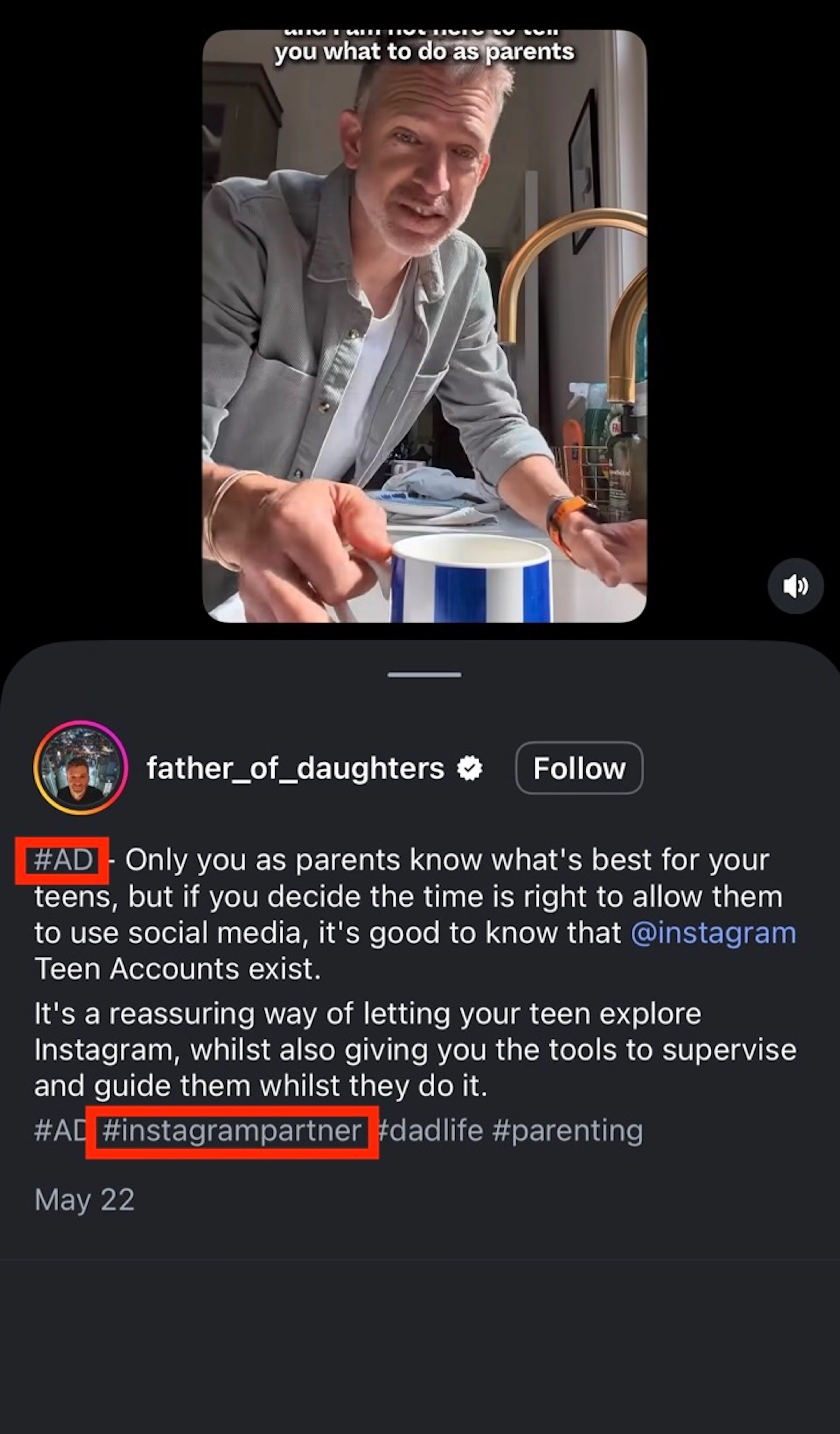
Louise Boyce, a UK fashion model-turned-momfluencer known by her mantra “Mama’s still got it!,” posted an endorsement of the Teen Accounts in April, saying it leads to “less checking, less worrying” about her kids.
Louise Boyce, a UK fashion model-turned-momfluencer known by her mantra “Mama’s still got it!,” posted an endorsement of the Teen Accounts in April, saying it leads to “less checking, less worrying” about her kids.
Canada began making noises about a potential social media ban for children in January 2026. As with other countries, Meta rolled out an army of paid local influencers to move the debate in a friendlier direction.
For example, Linda Yu Qian, a momfluencer in Vancouver with 813,000 Instagram followers, posted in May that “honestly, it helps to know that online safety is built into Instagram Teen Accounts.” The post indicated it was part of a paid partnership with Instagram.
TTP identified multiple other paid posts from Canadian momfluencers pushing the Teen Accounts, including "Sarah" (@thiskindalife, 66,100 followers), "Liza" (@lisawitha_z, 43,400 followers), and Rajbinder Grewal (24,100 followers).
In June, Canada introduced legislation to prohibit social media use for kids under 16, though platforms that meet still-to-be-determined safeguards will be exempted. Meta appeared to suggest that its Teen Accounts will meet the bar for the exemption, saying it's "encouraged that the government appears to recognize that online services that provide teens with sufficient safeguards, like we’ve done with Teen Accounts ... provide real value to young people."
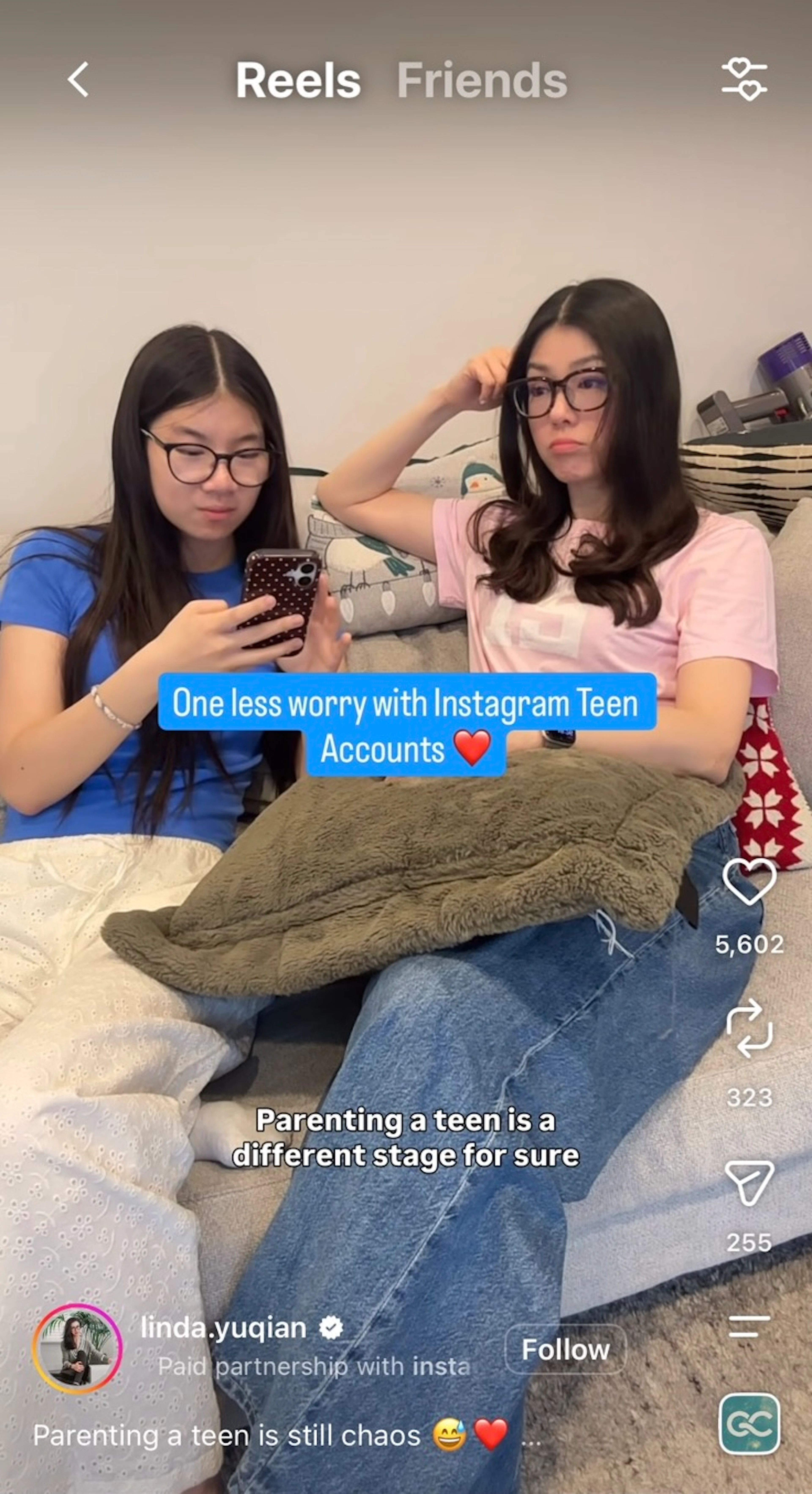
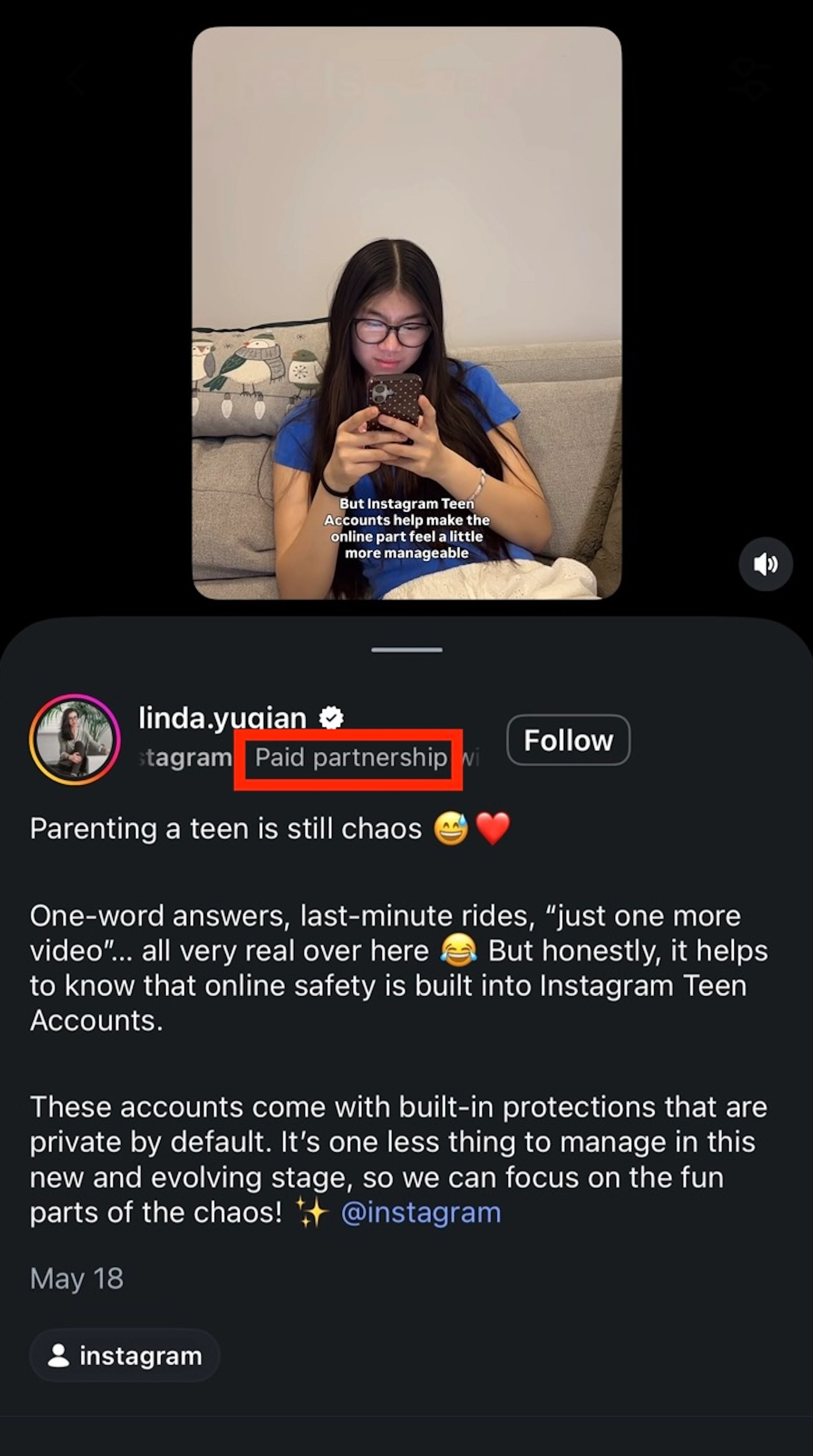
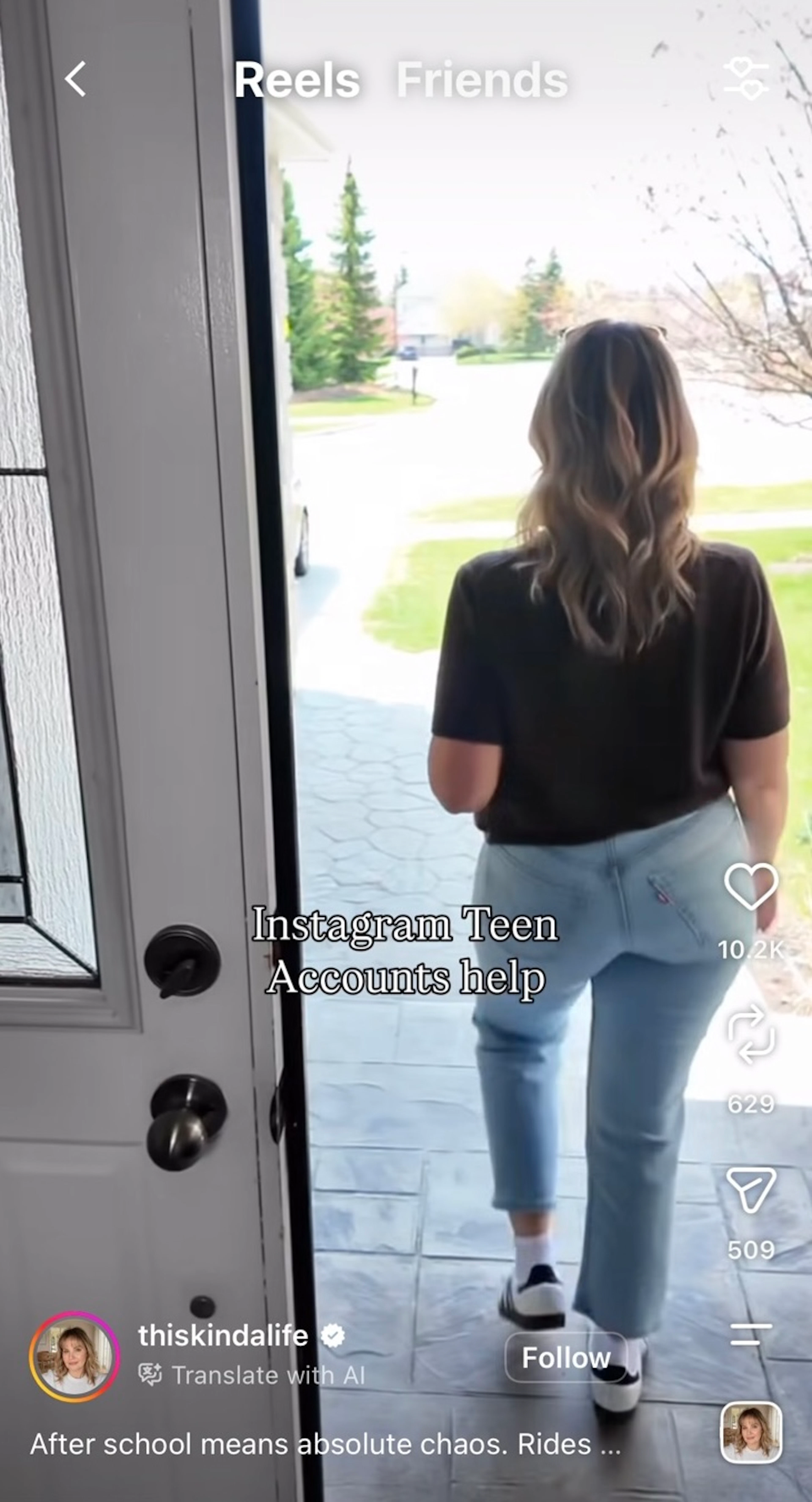
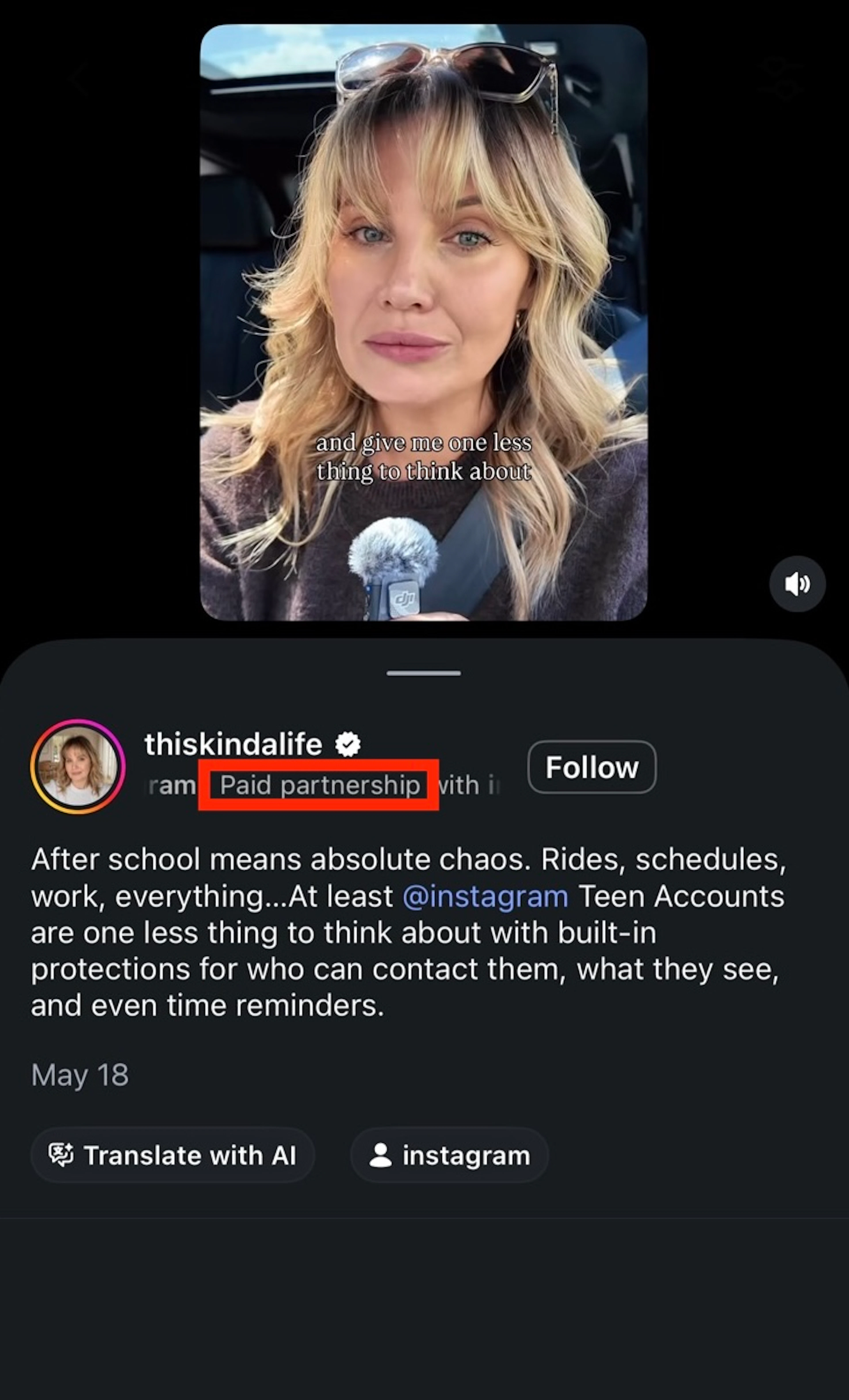
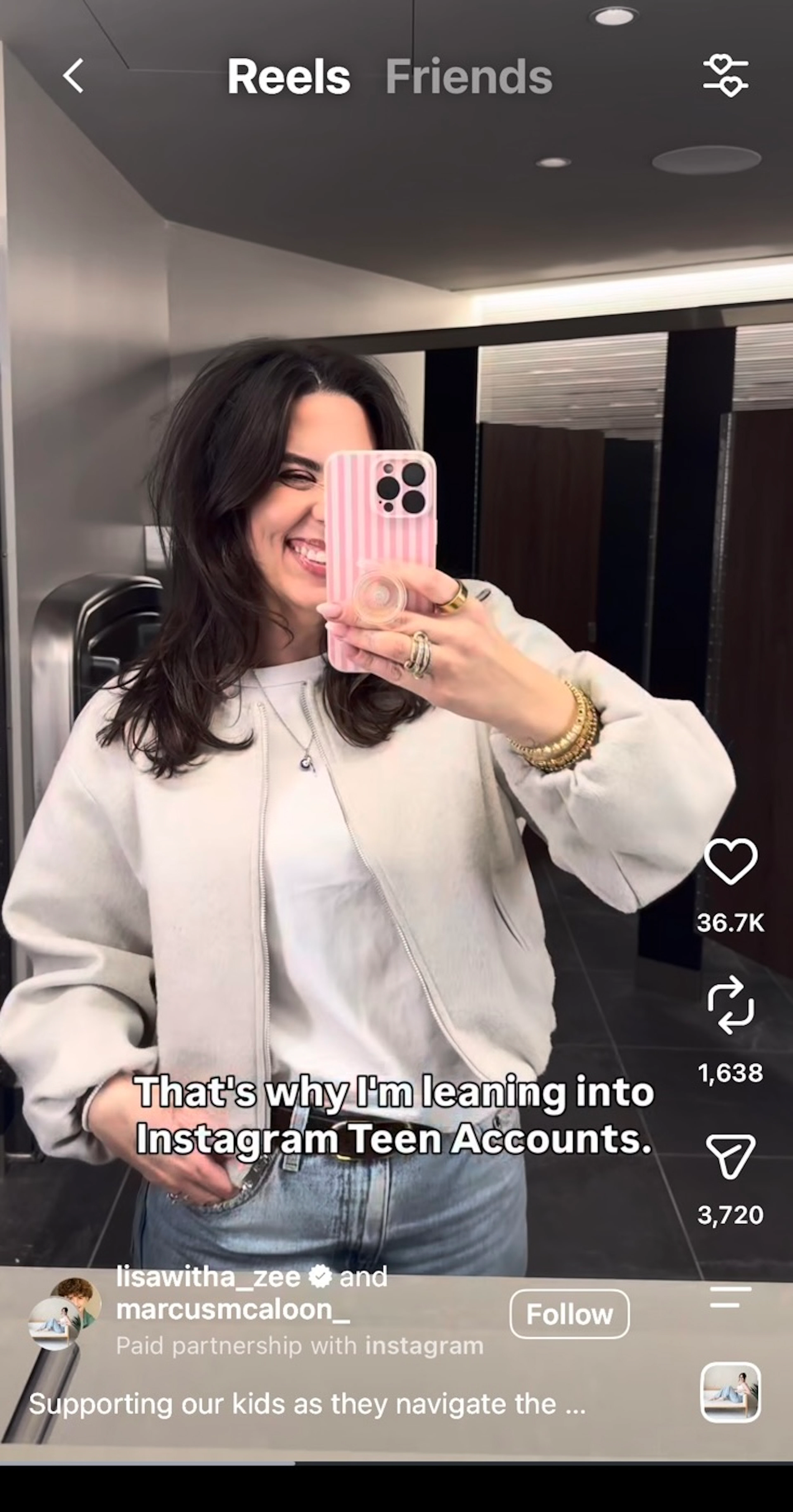
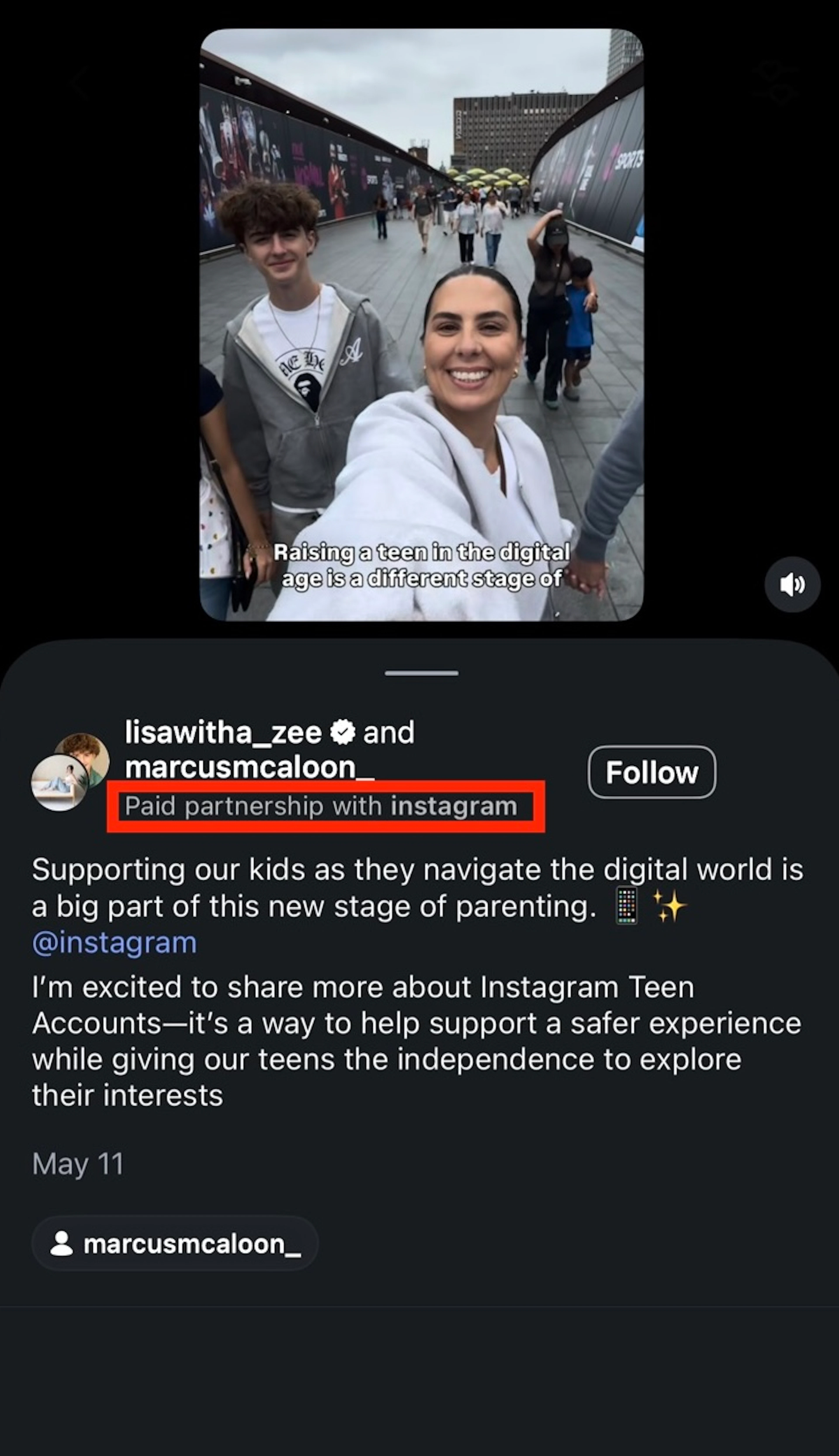
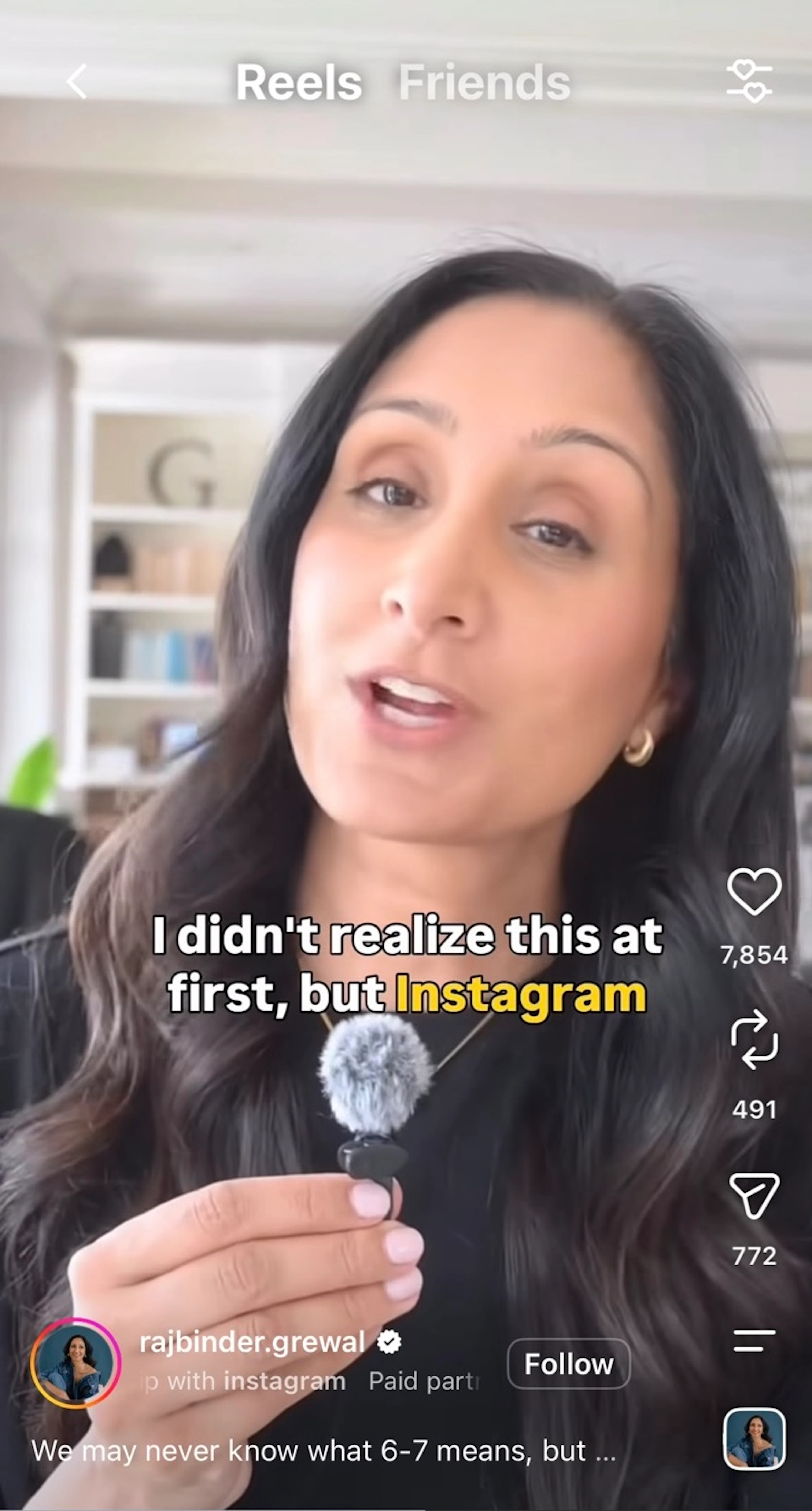
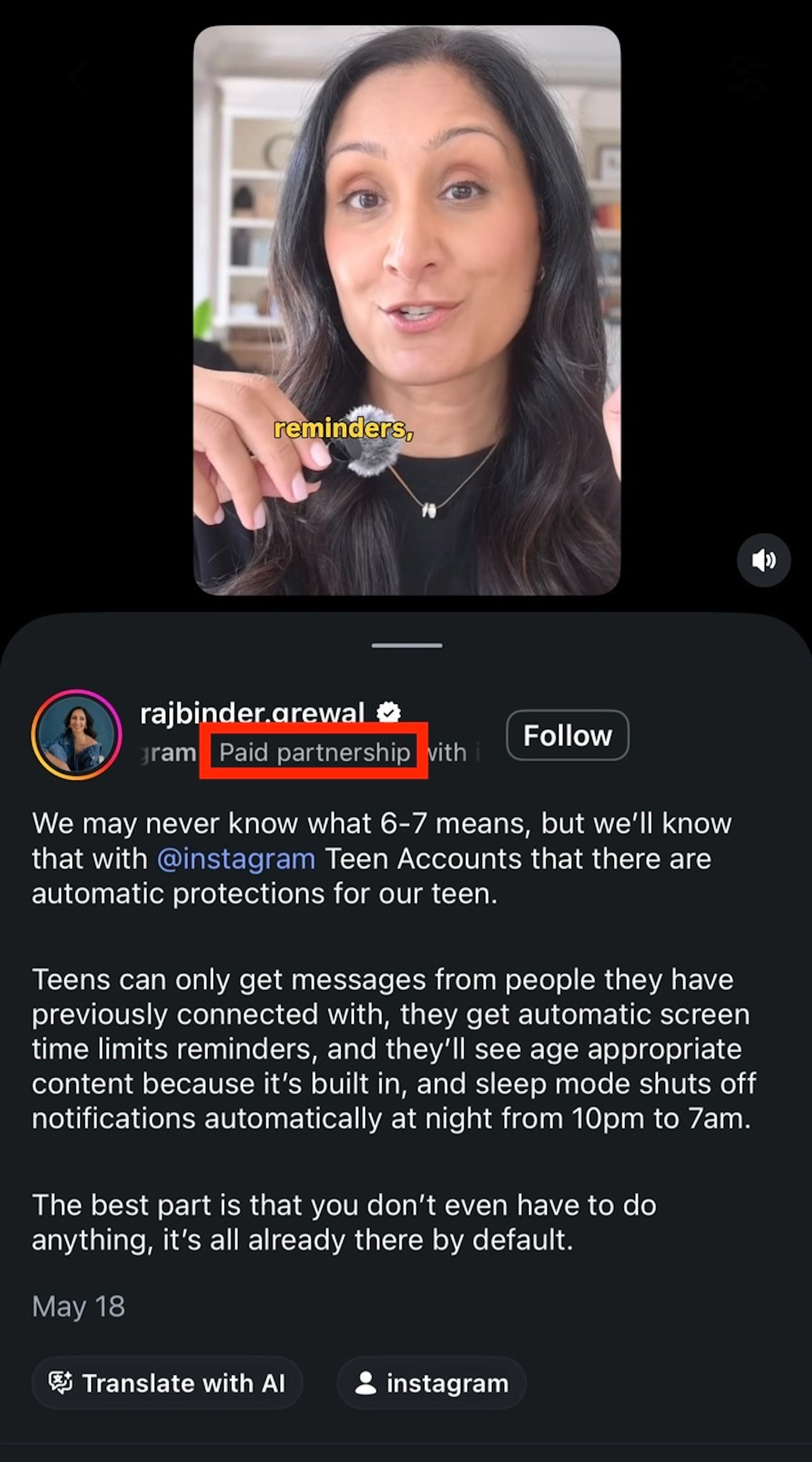
Linda Yu Qian, a momfluencer in Vancouver with 813,000 Instagram followers, posted in May that “honestly, it helps to know that online safety is built into Instagram Teen Accounts.”
Linda Yu Qian, a momfluencer in Vancouver with 813,000 Instagram followers, posted in May that “honestly, it helps to know that online safety is built into Instagram Teen Accounts.”
Europe
In late January 2026, France’s National Assembly passed a bill that would ban social media use for teens under the age of 15. French President Emmanuel Macron backed the measure and requested that it be fast-tracked.
During this legislative process, Meta deployed French momfluencers to promote the safety features of its Teen Accounts. The implicit message of these posts: Meta already has child protection measures in place, obviating the need for regulation.
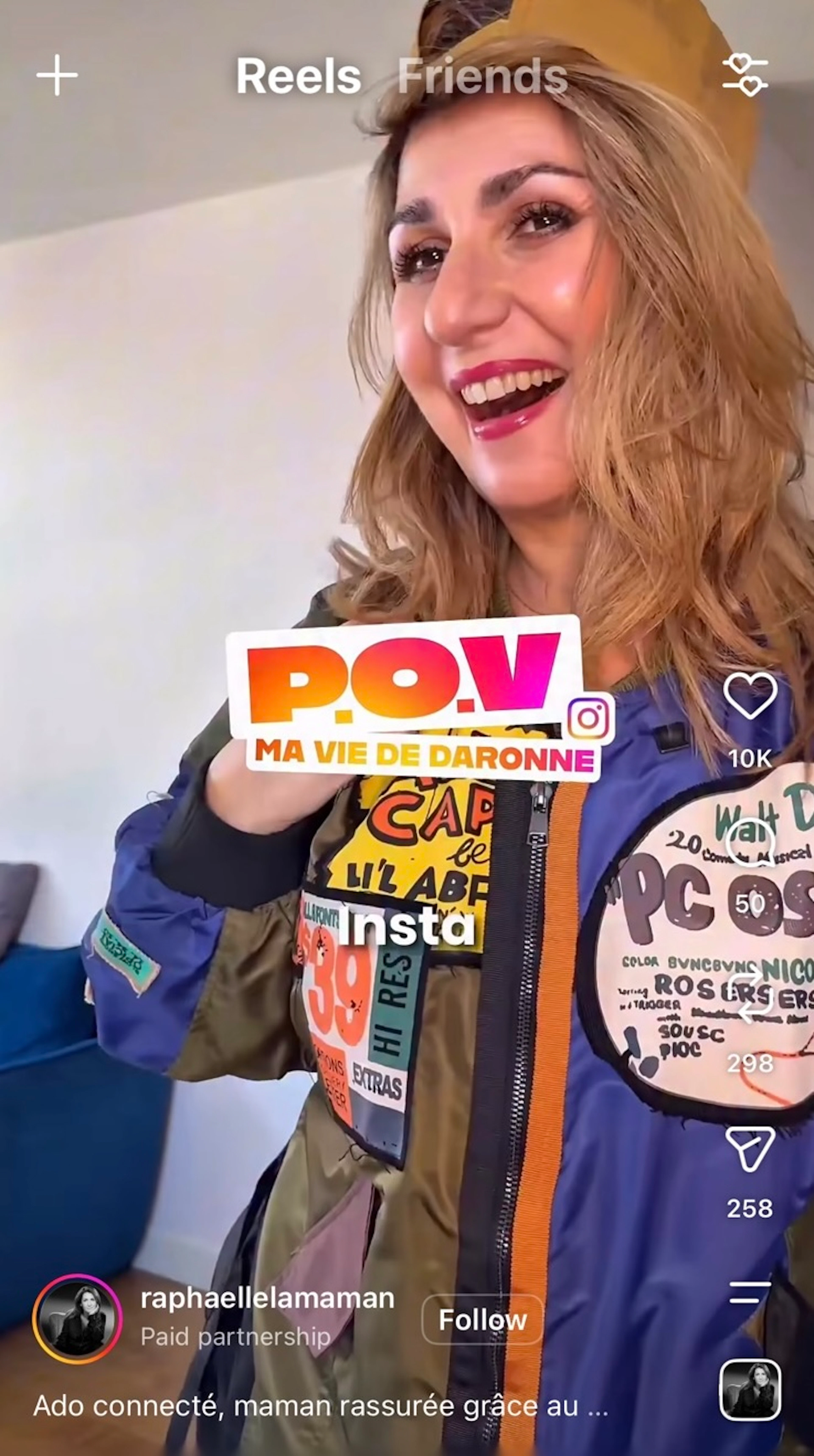
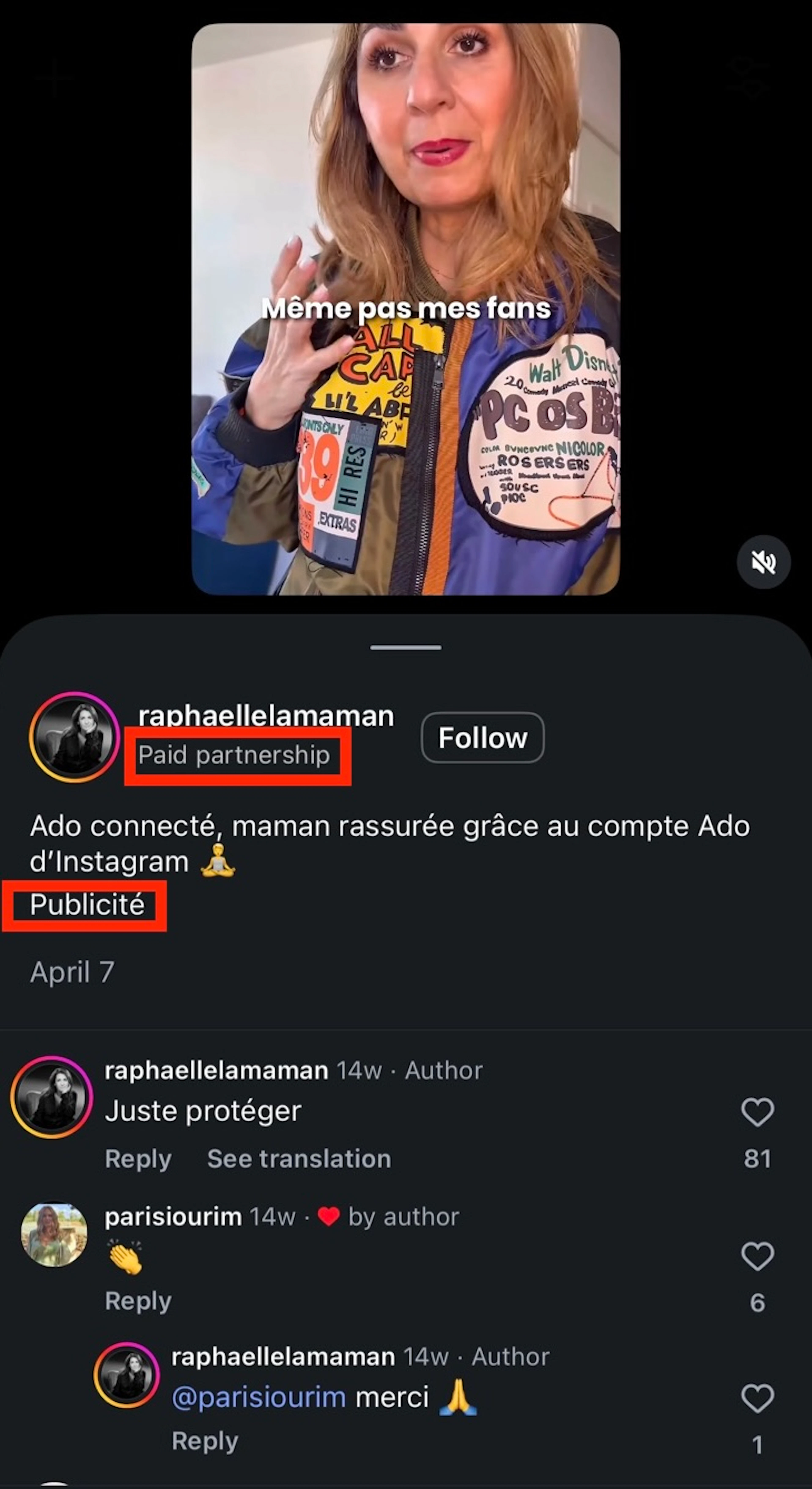
In March, the influencer “Melina,” a mother of four who posts comedic bits to her 349,000 followers on Instagram, donned a pink shower cap and Post-it fingernails to talk up the Teen Accounts. A note at the bottom of her post disclosed it was a “collaboration commerciale.” Another French momfluencer who goes by “Raphaelle Lamaman,” with 400,000 Instagram followers, posted a Reel that reads, “Connected teen, reassured mom—thanks to Instagram Teen Accounts.” It has a “paid partnership” disclosure.
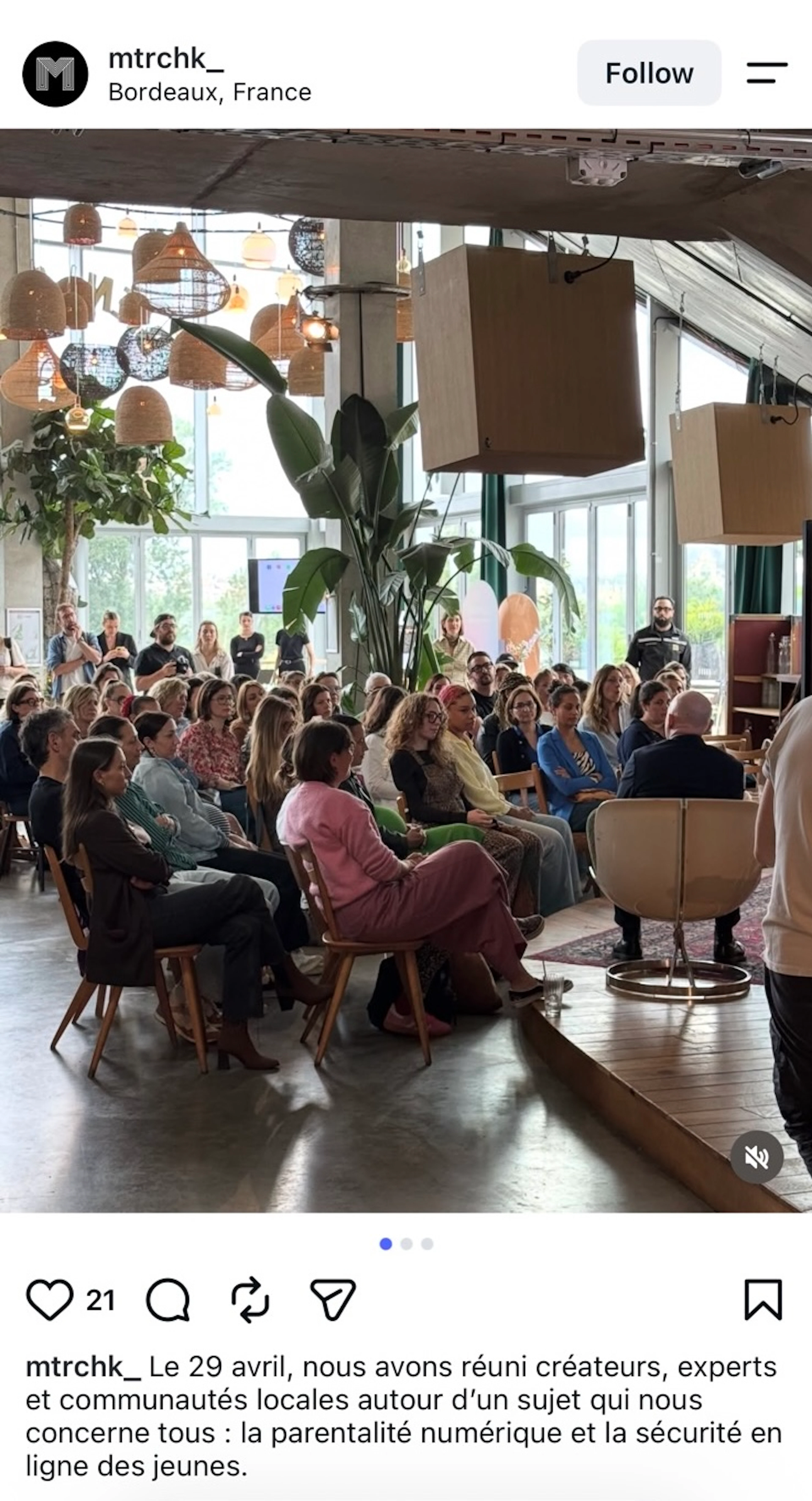
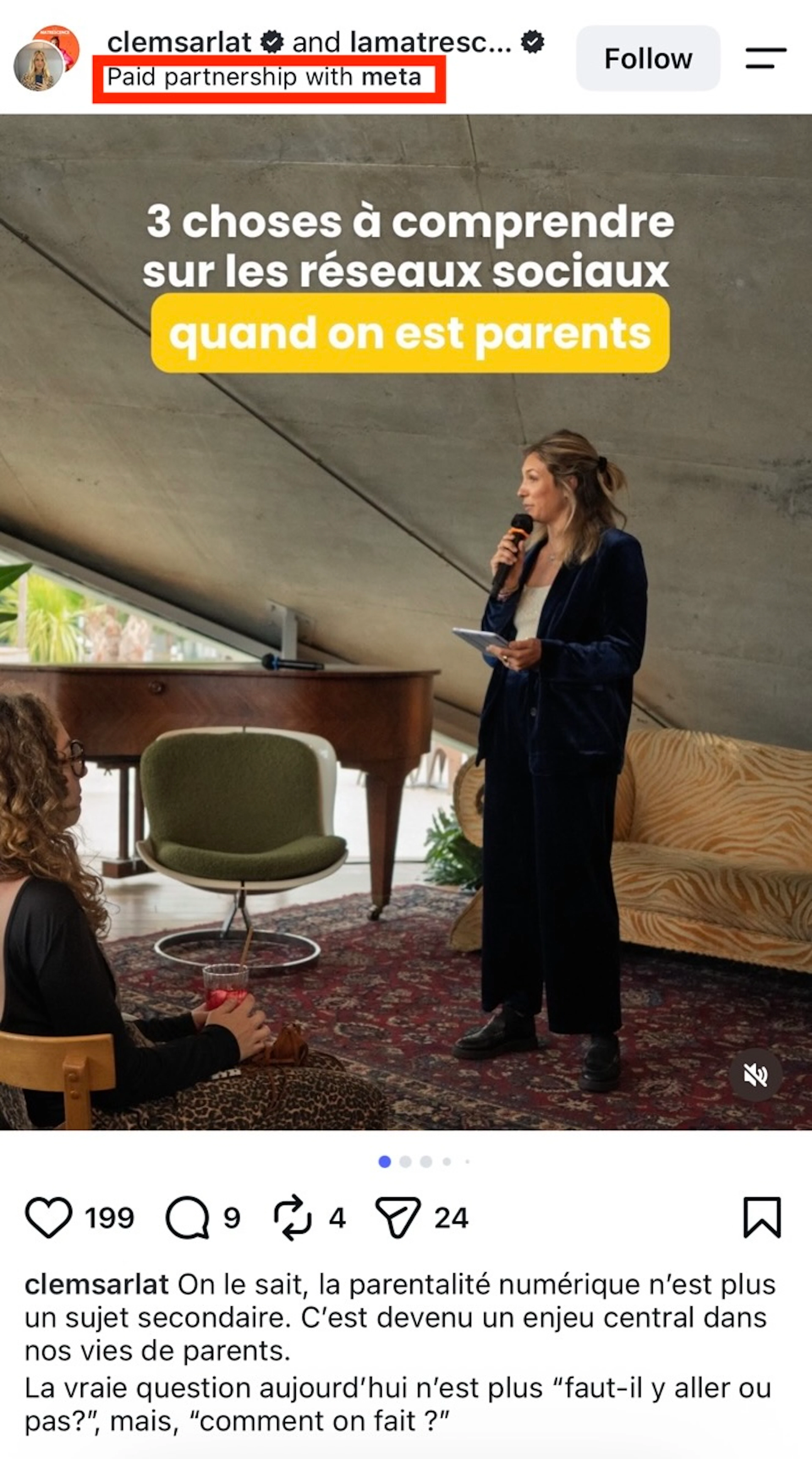
Meta later held a Screen Smart event in Bordeaux with the regional French newspaper Sud Ouest. It featured Clémentine Sarlat, host of the parenting podcast “La Matrescence,” Alison Cavaillé, founder of nursing-wear brand Tajinebanane, and Samuel Comblez, a child psychologist and deputy chief executive of the e-Enfance Association, a nonprofit focused on child harassment online. (Meta is one of the group’s patrons.) Members of a French parent organization, the Association Autonome de Parents d'Elèves du Langonnais, attended the event.
Sarlat later posted positively about the Teen Accounts, saying, “I want my girls to be equipped before they come into this virtual world.” A disclosure on the post showed she has a paid partnership with Instagram.
A spokeswoman for e-Enfance said the group's management was not currently available to comment or answer questions, but she said neither Comblez nor the group was compensated for taking part in the Meta Screen Smart event.
After input from the European Commission, French lawmakers negotiated an amended version of the 15-and-under social media ban, which passed both chambers of Parliament in July 2026. But France's top court, the Constitutional Council, recently blocked the ban, saying it infringes on freedom of expression. Macron has ordered his prime minister to rework the legislation.
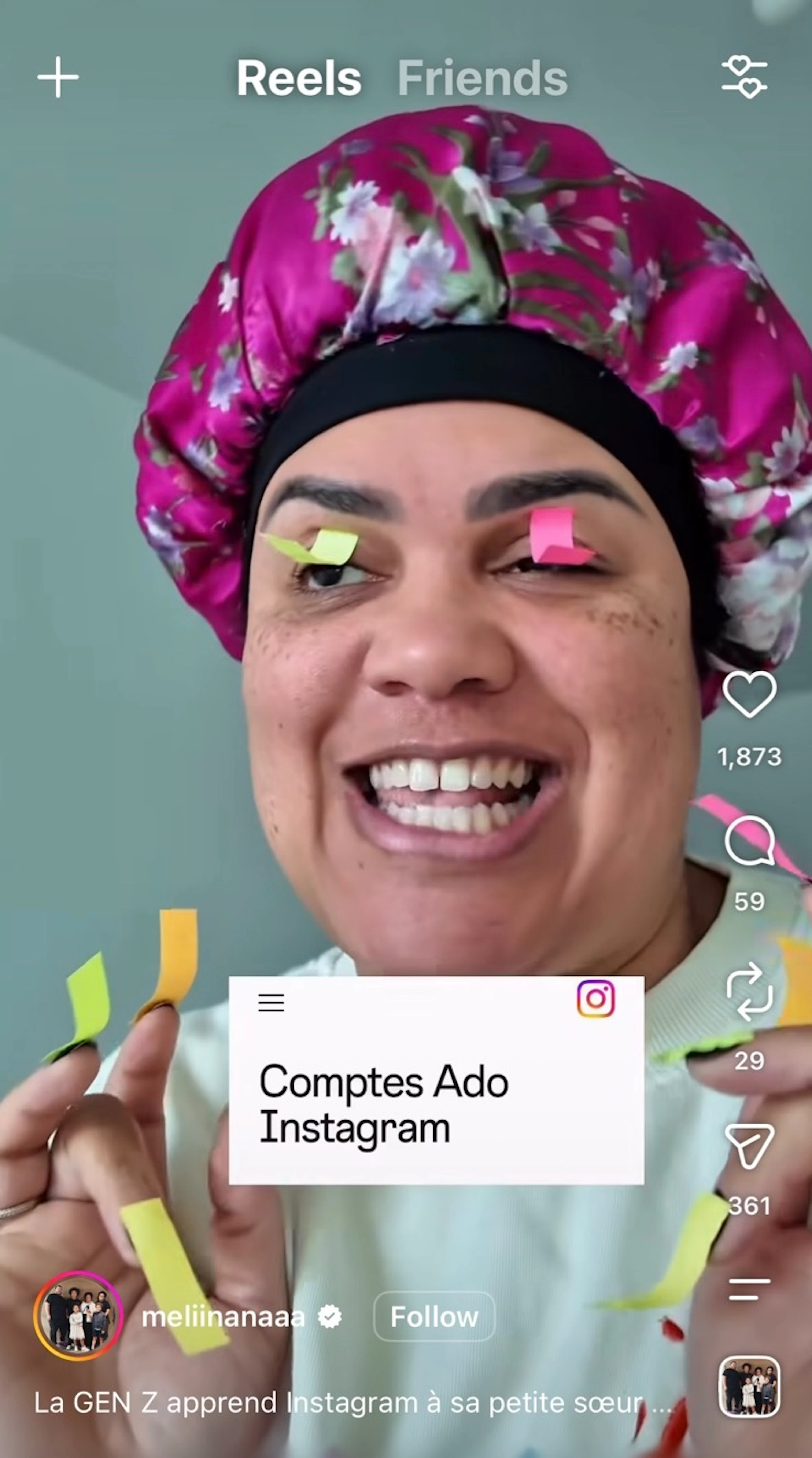
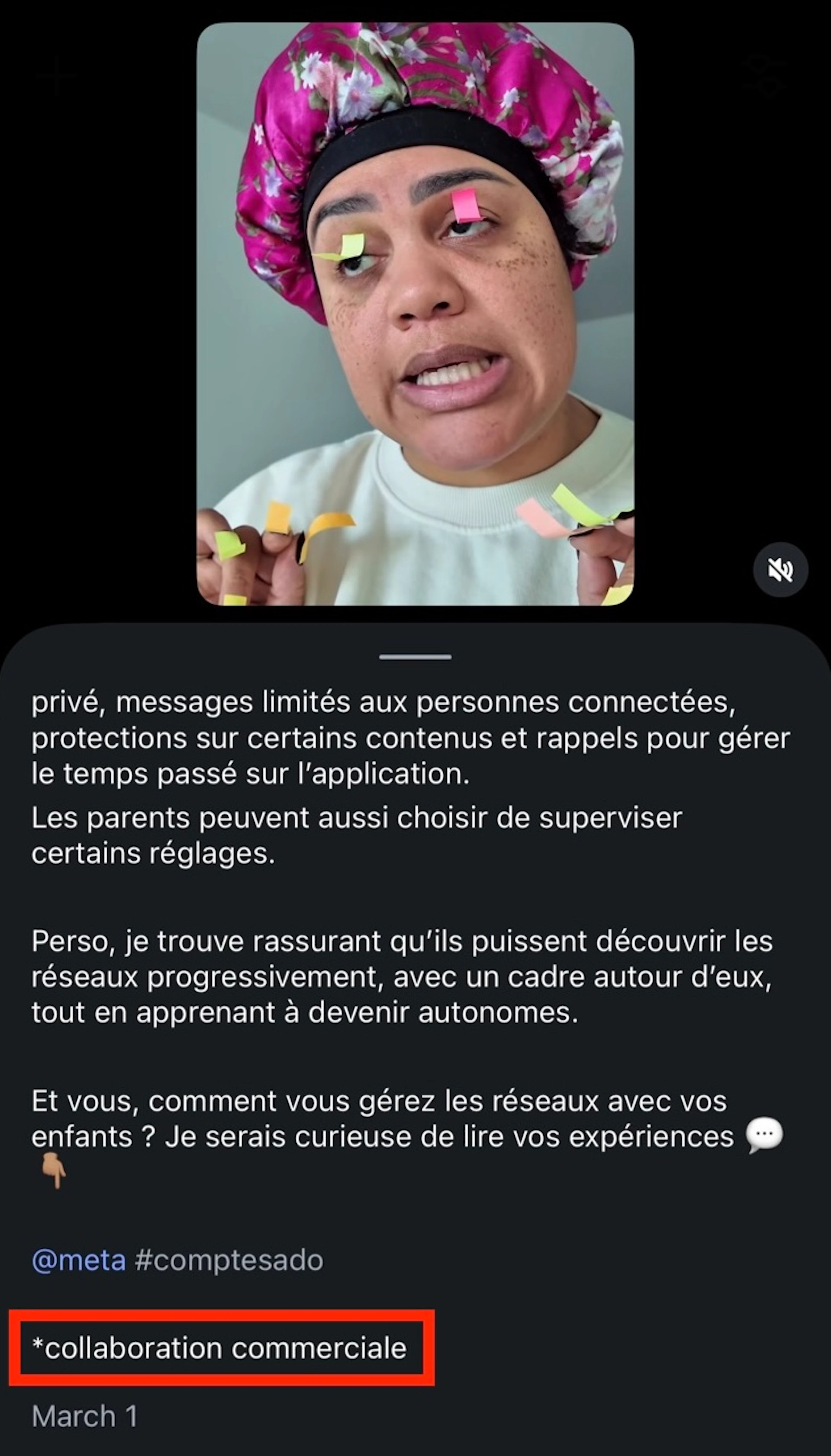
French momfluencer “Melina” did a comedy routine promoting the Teen Accounts.
French momfluencer “Melina” did a comedy routine promoting the Teen Accounts.
In February 2026, Spanish Prime Minister Pedro Sánchez announced that his government would seek to ban teens under the age of 16 from social media use. That kicked off a wave of Meta-sponsored Spanish influencer posts.
For example, Icíar “Ichi” Aragón, who is part of a famous entertainment family in Spain and has more than 117,000 followers on Instagram, posted two Reels in April promoting Teen Accounts settings. “Honestly, I find it really useful in my day-to-day life,” she said. Both posts used the hashtag #InstagramPartner and tagged the official Instagram account as a collaborator. The posts received 18 million and 14 million views, respectively—a much bigger audience than her other Reels, suggesting they may have received a boost from Instagram.
Another Spanish influencer, Paloma Blanc, a mother of nine who posts about family life and home décor to her 217,000 Instagram followers, posted two Reels in May touting the Teen Accounts. One was tagged #InstagramPartner, and the other disclosed a paid partnership with Instagram. TTP identified other paid Teen Account promotions from parent influencers Riqui Muñoz (211,000 Instagram followers) and Miriam Blanco (69,800 followers). Blanco appeared to delete this post after being contacted by TTP for comment.
Spain's proposed social media ban for teens is still making its way through Spain's Parliament. The bill allows social media platforms to provide access to kids aged 13 to 16 with parental consent. In July, the Socialist party of Prime Minister Sánchez and its junior coalition partner sought to further restrict that access, putting forward amendments that would require platforms to receive government certification that they've met design, privacy, and safety standards before serving the 13-16 age bracket.
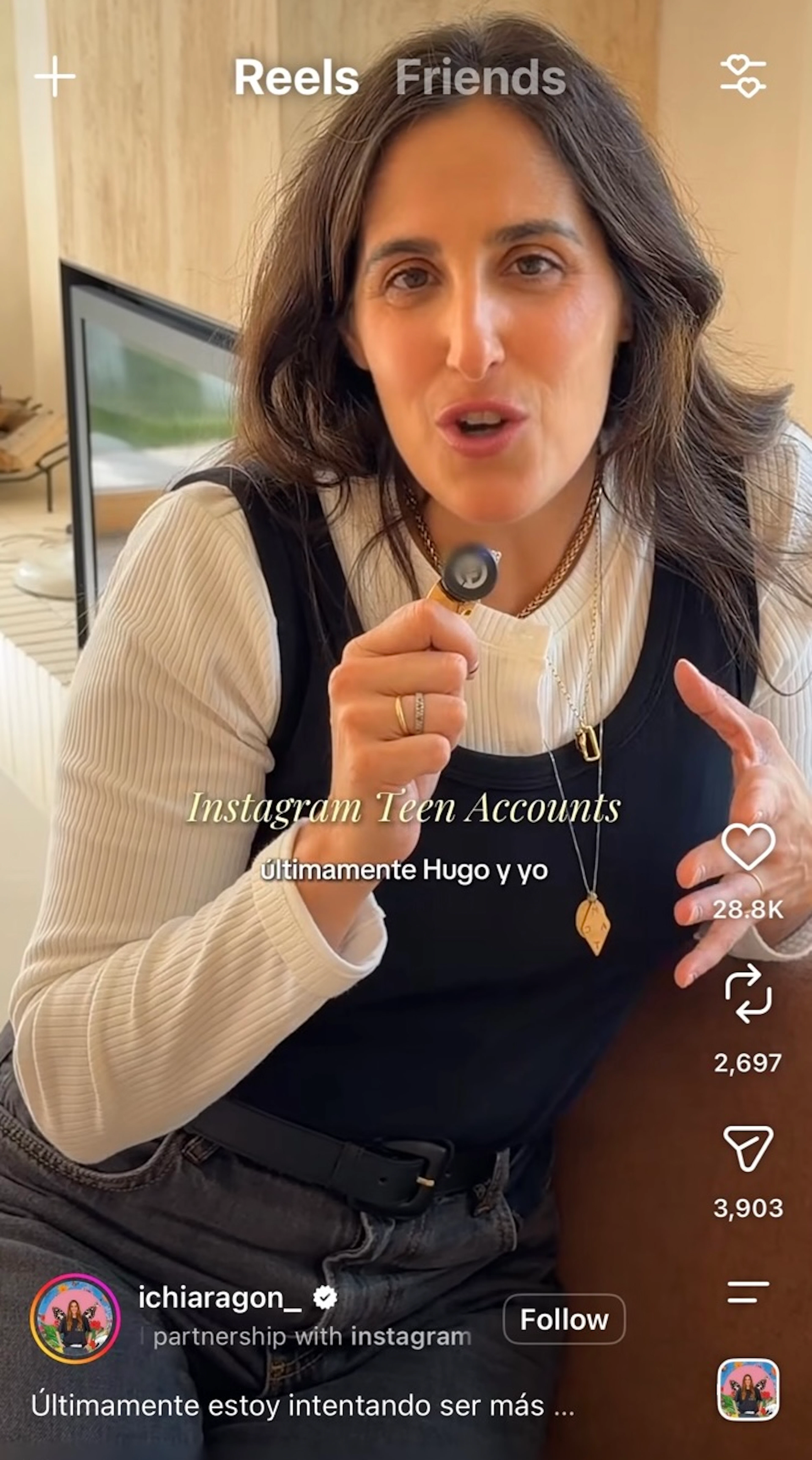
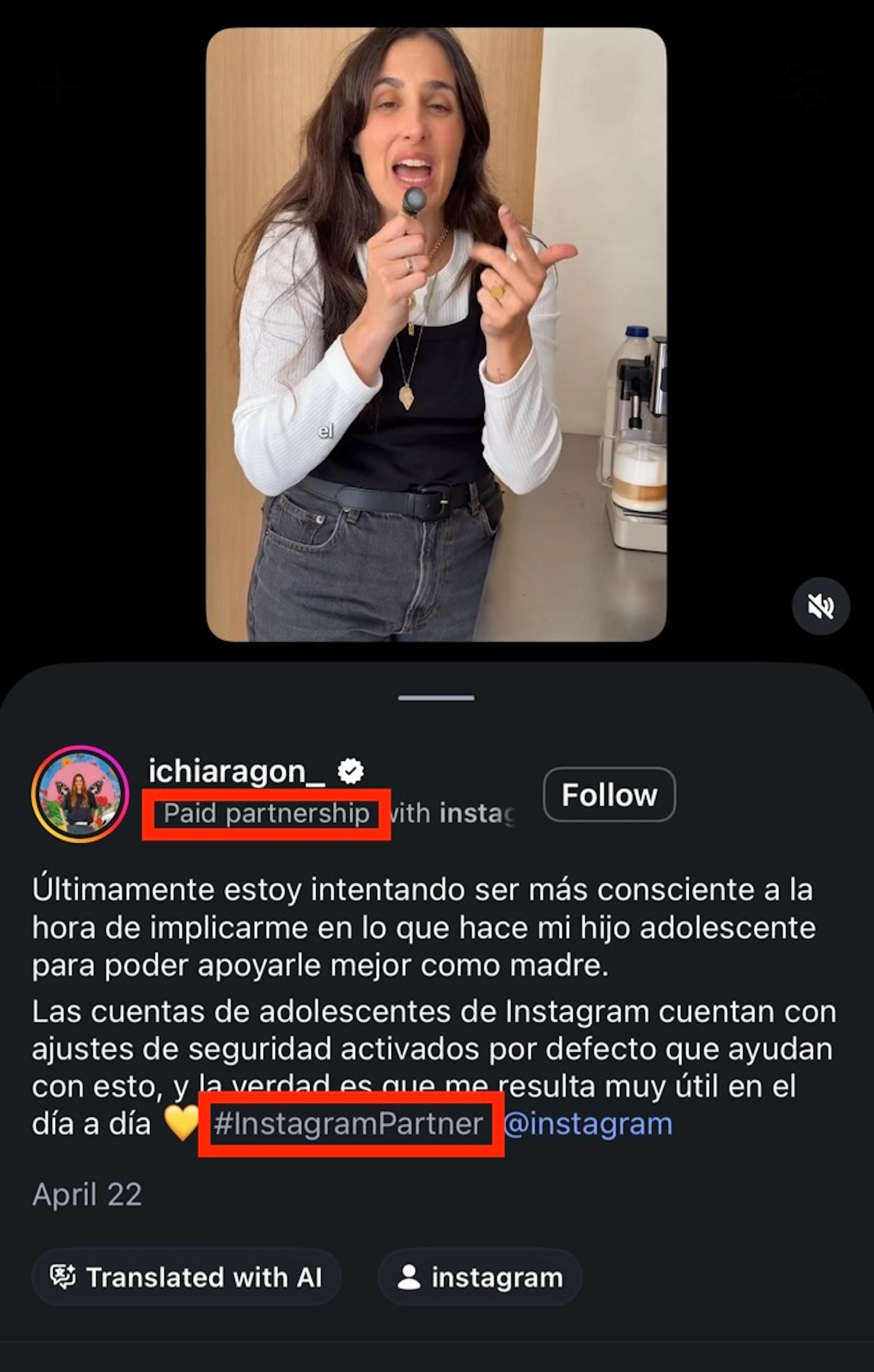
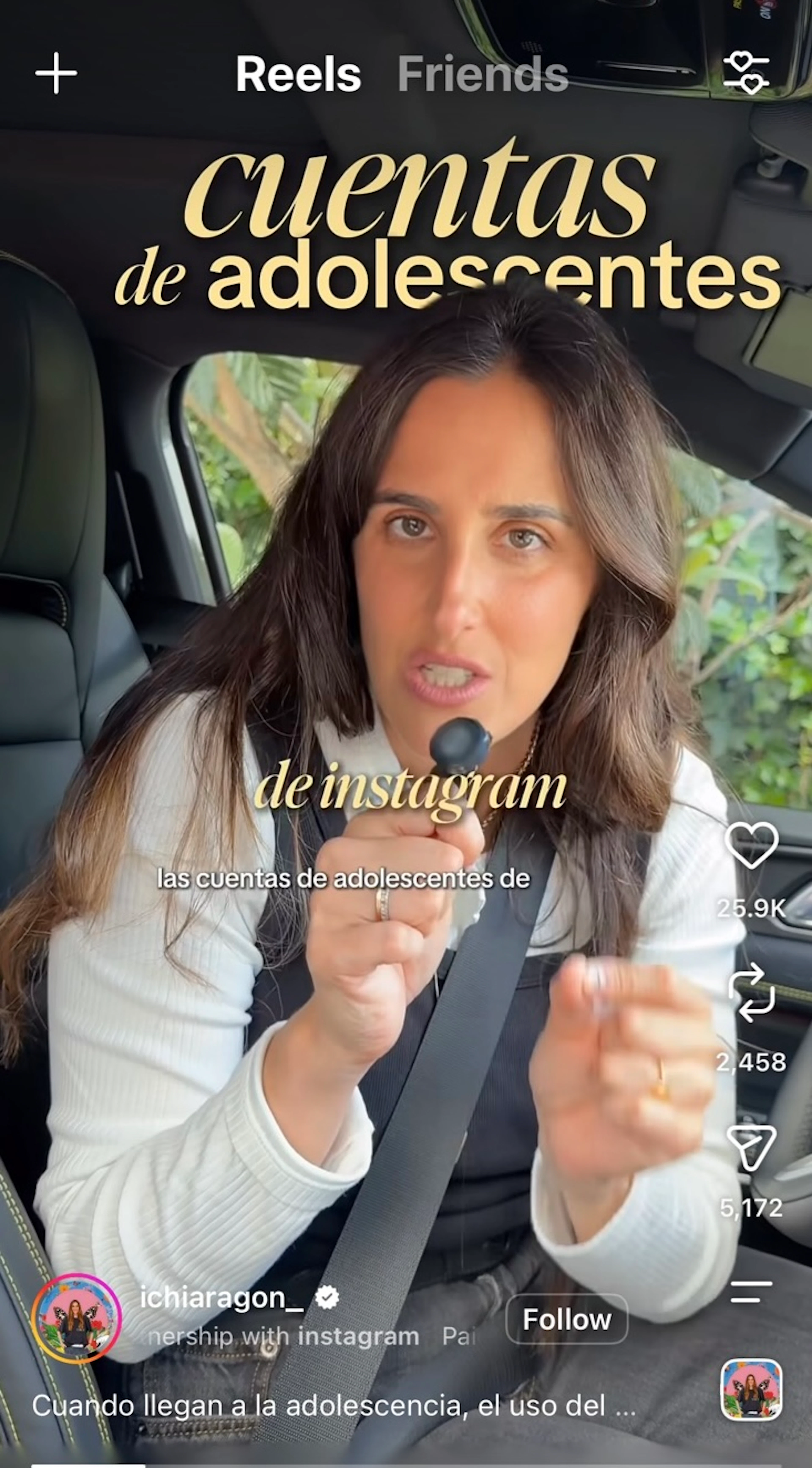
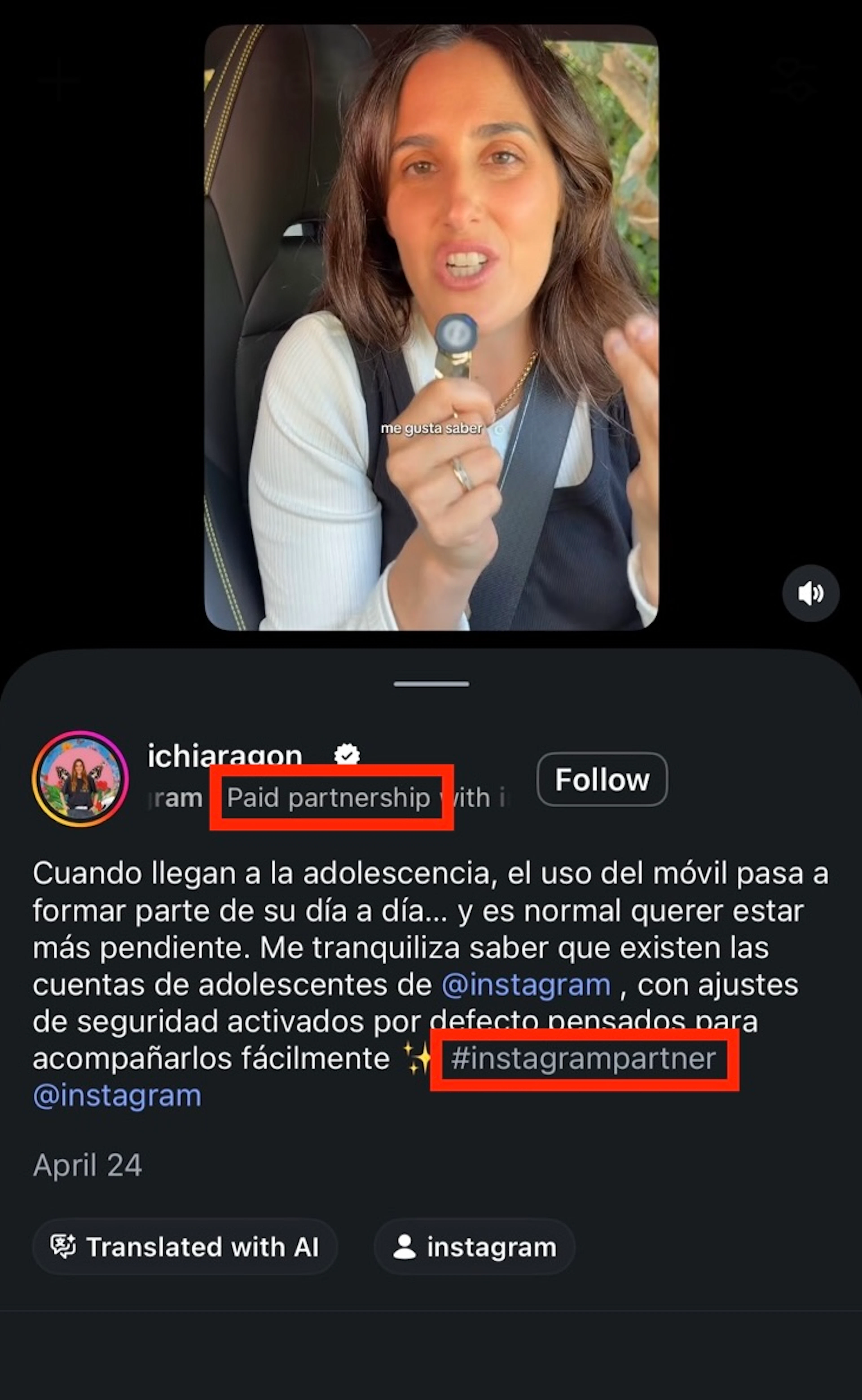
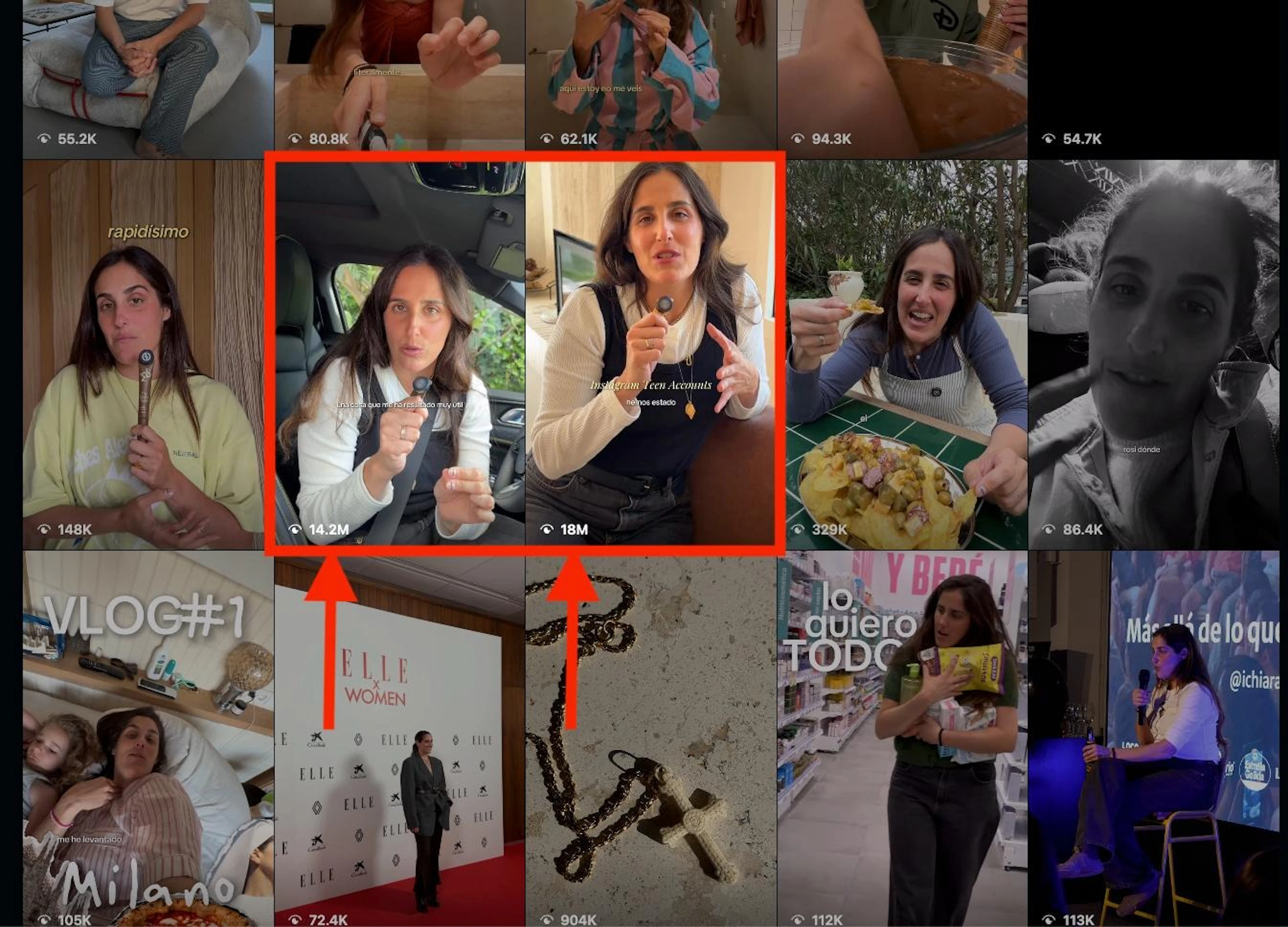
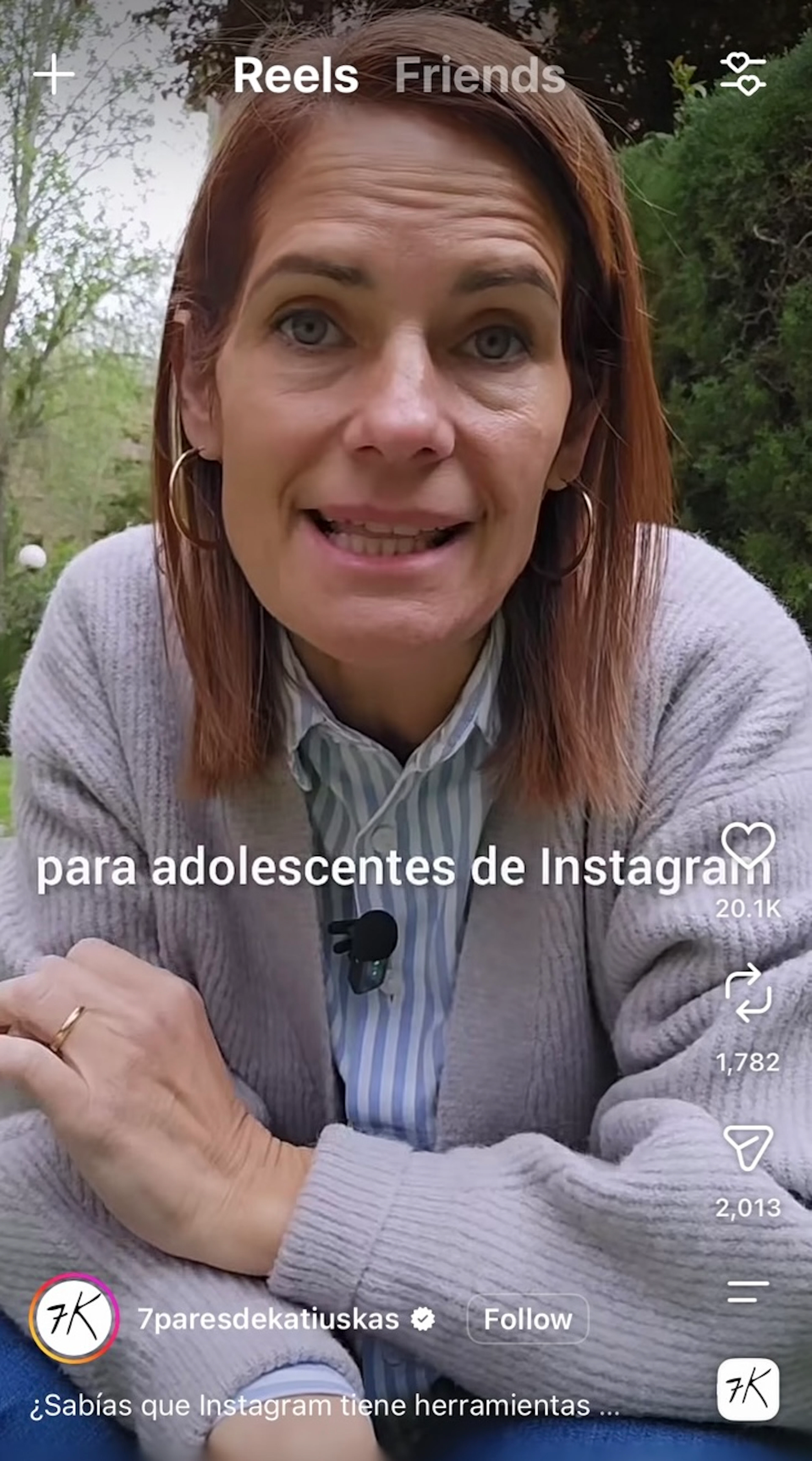
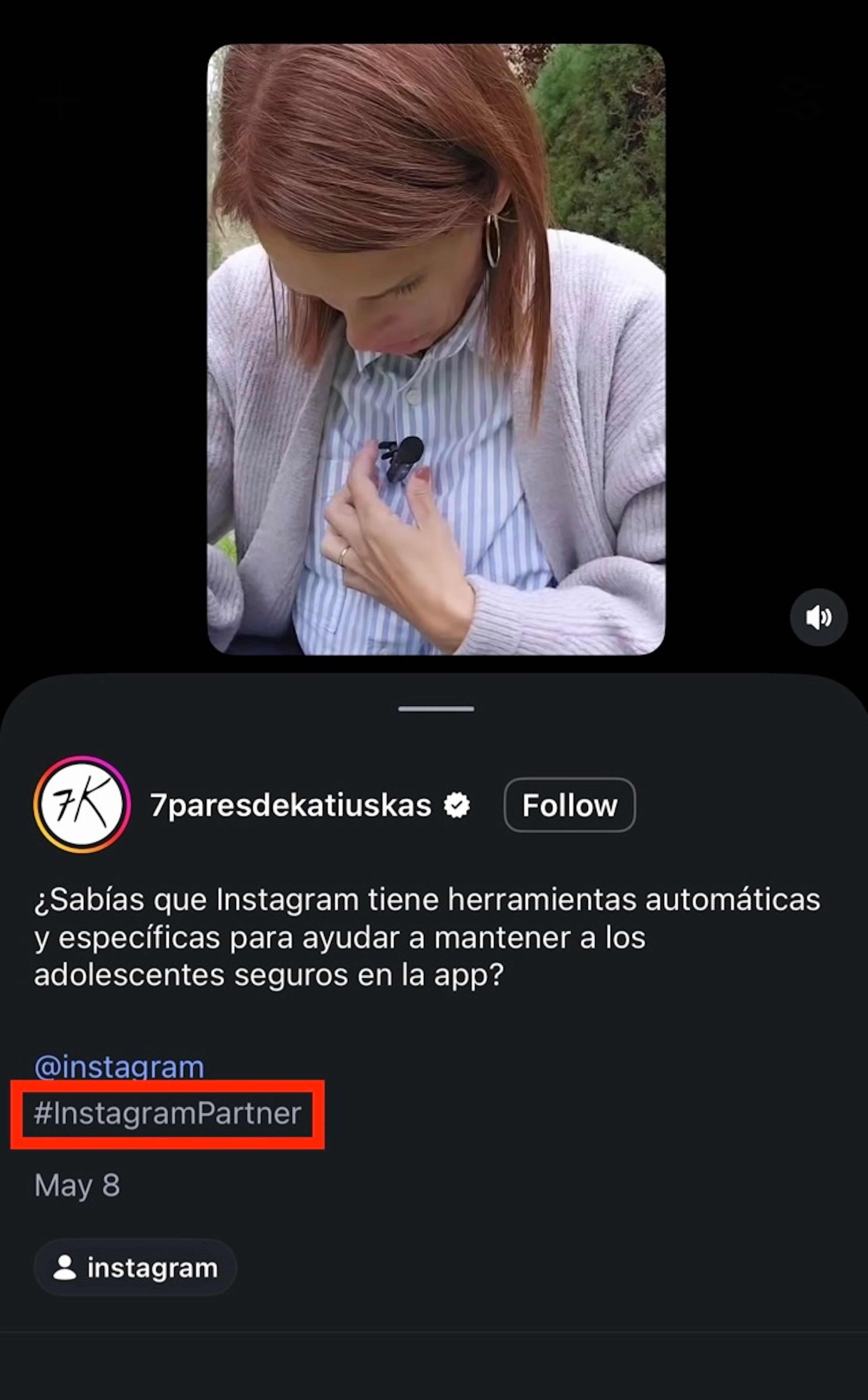
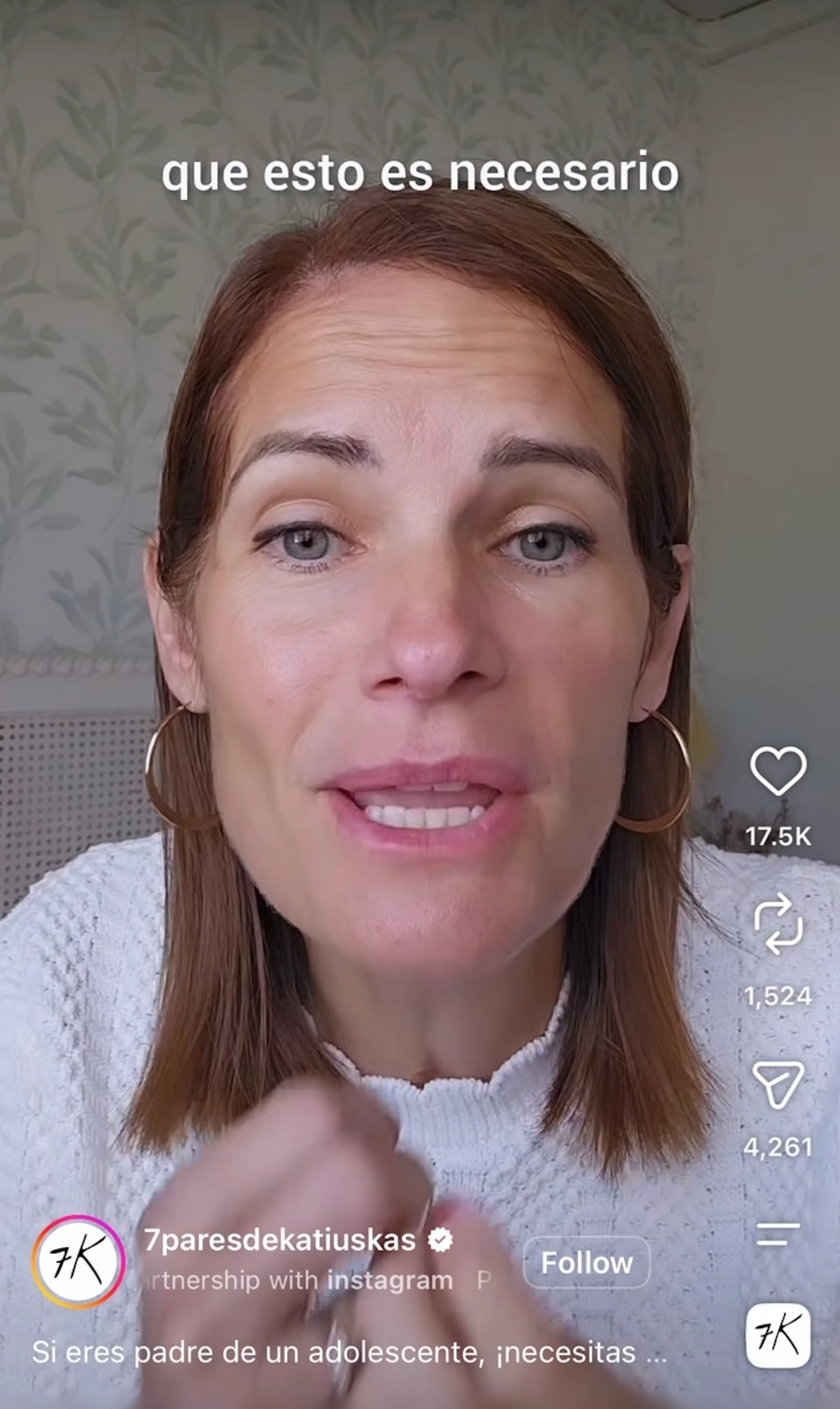
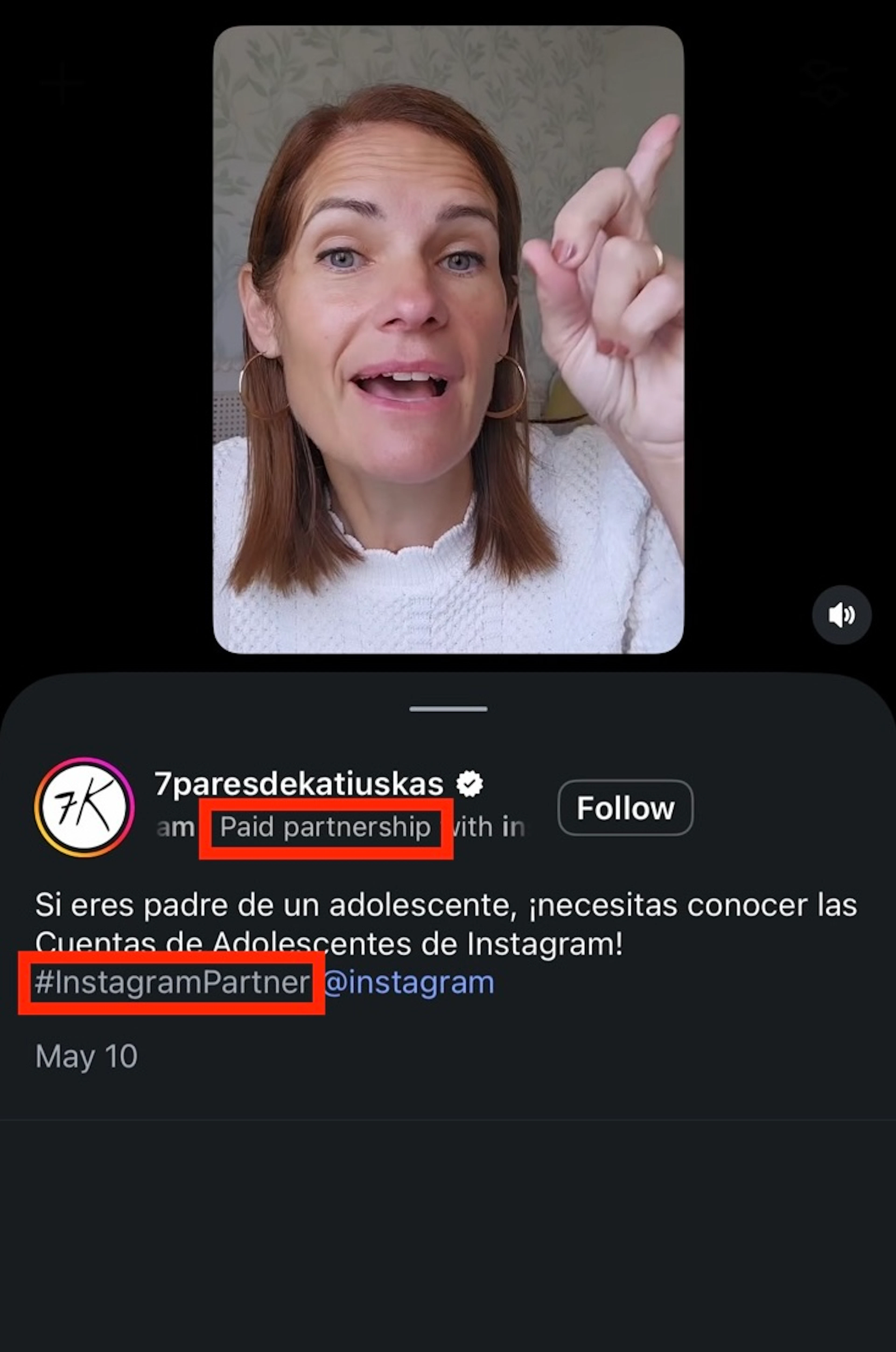
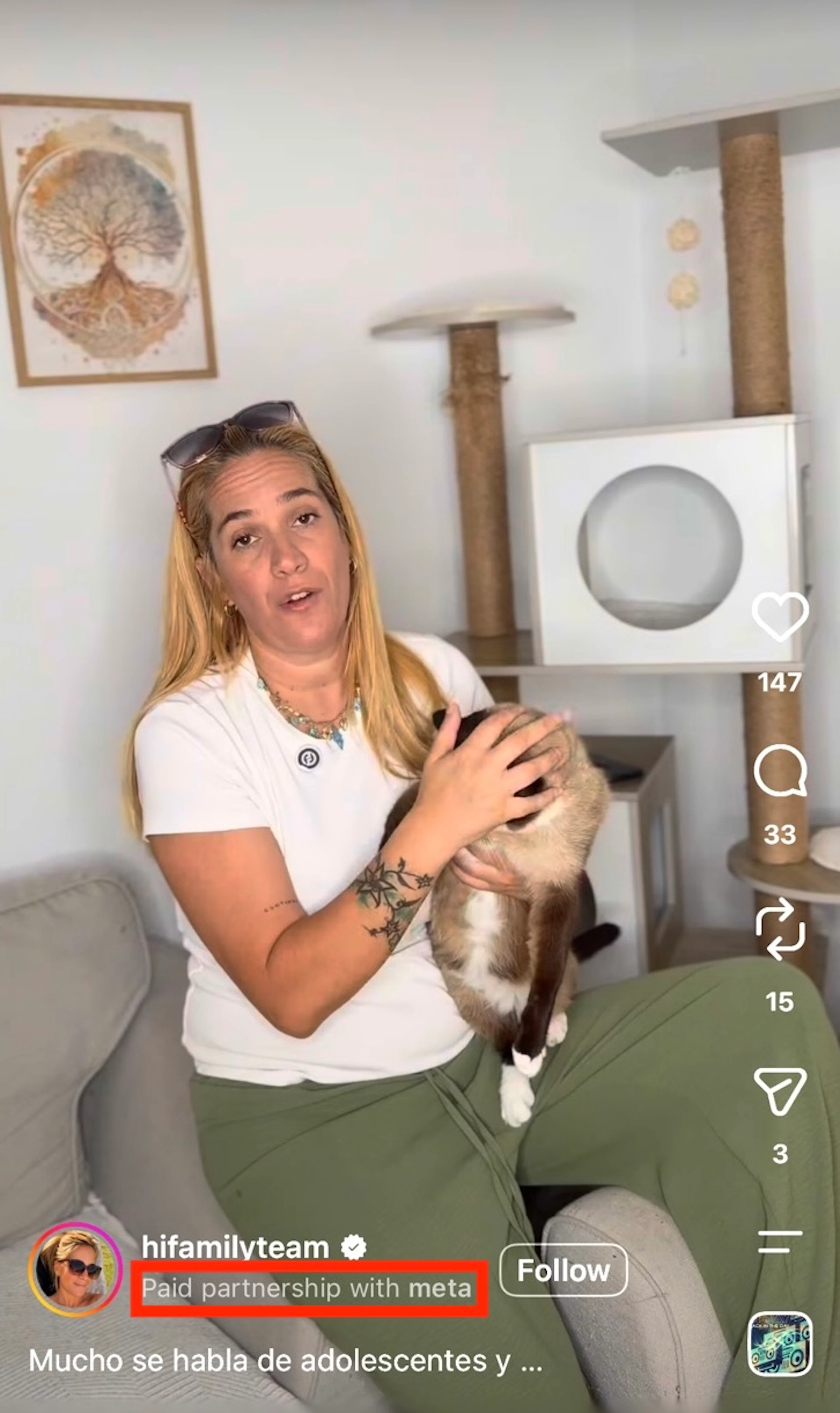
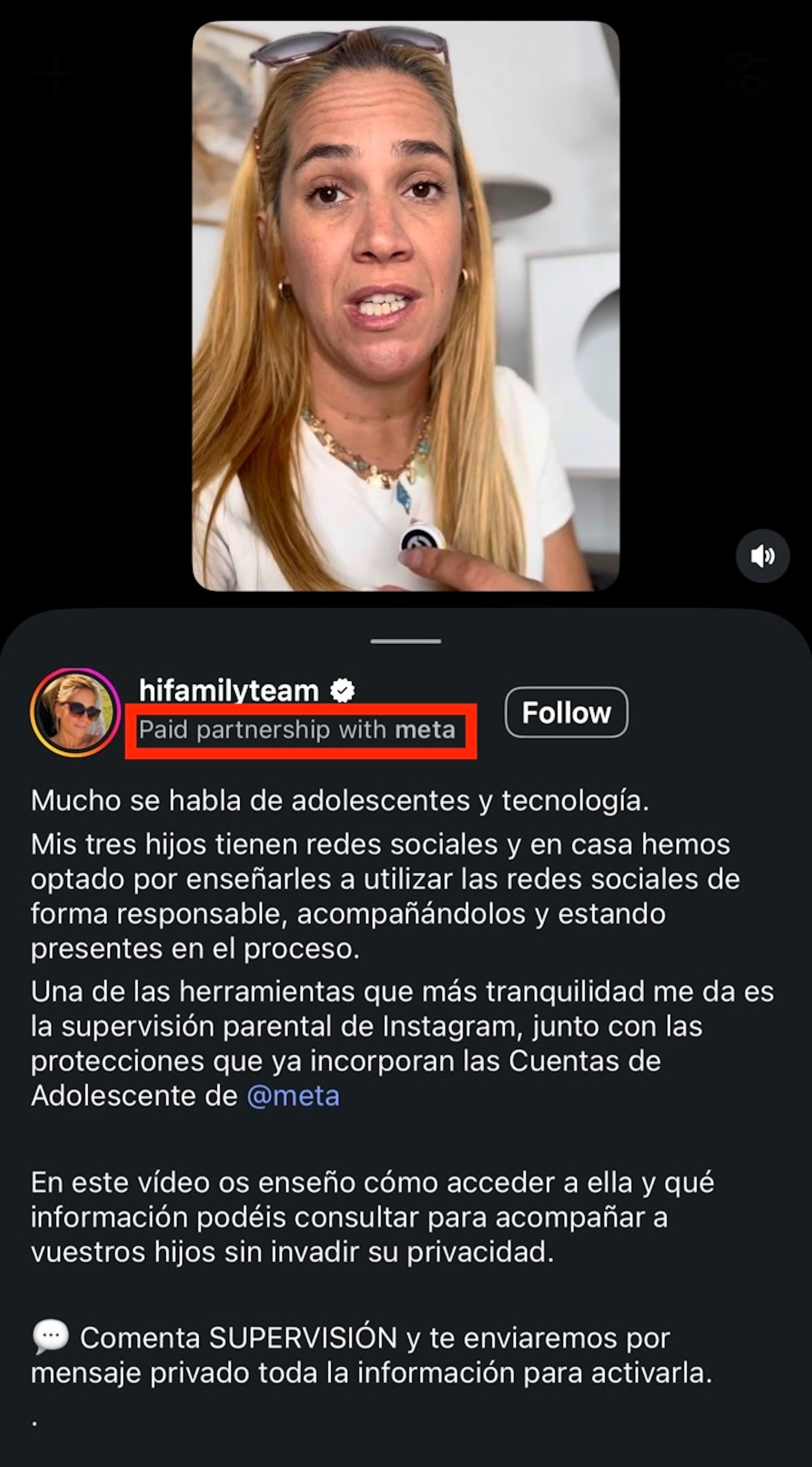
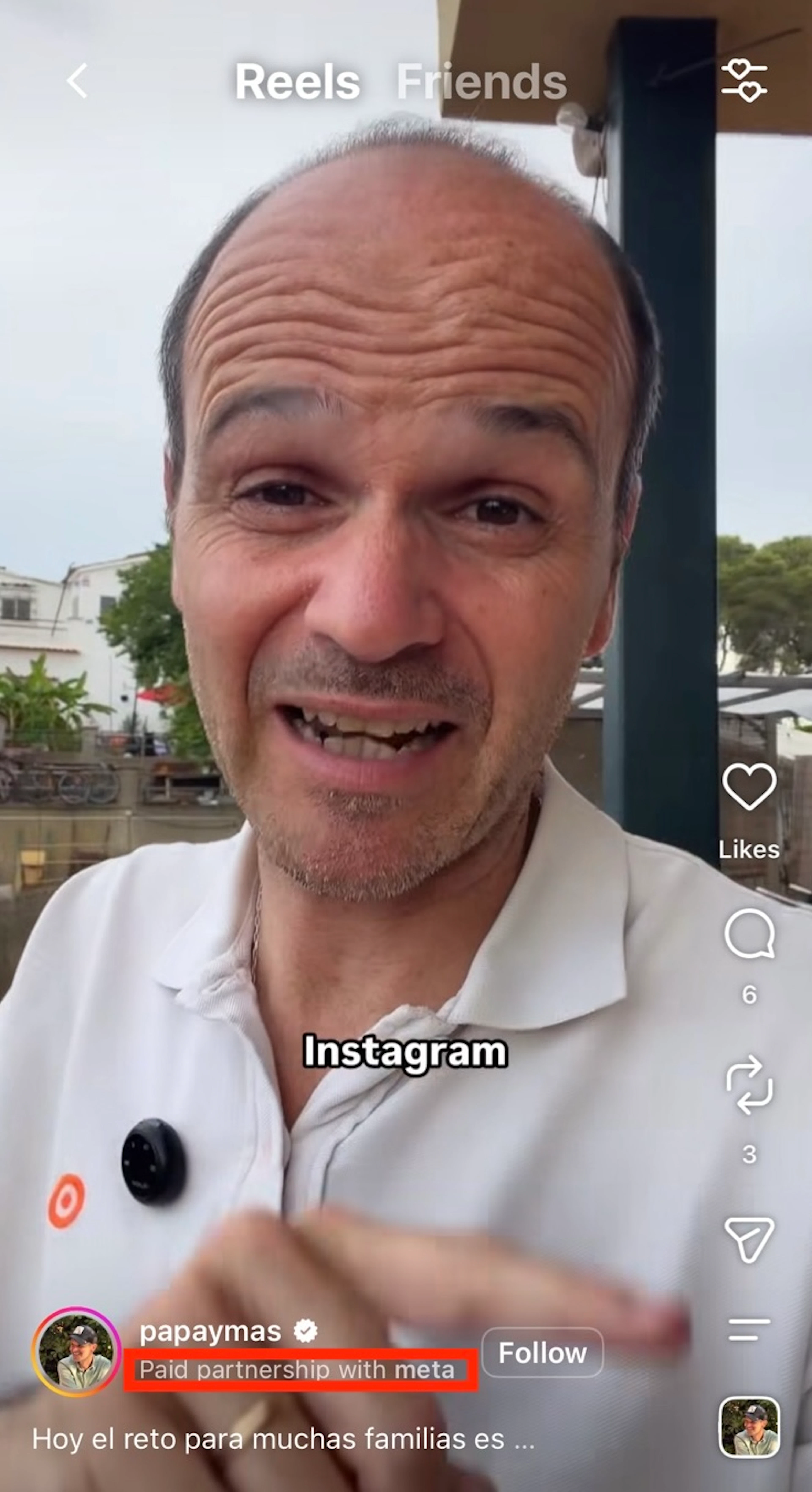
Influencer Icíar “Ichi” Aragón, who is part of a family of Spanish entertainers, posted two Reels in April touting the Teen Accounts.
Influencer Icíar “Ichi” Aragón, who is part of a family of Spanish entertainers, posted two Reels in April touting the Teen Accounts.
At the European Union level, Meta has focused on creating a network of paid child safety groups to advance its priorities, much like it has in the U.S. with the National PTA and other organizations.
In June 2023, Meta announced it was launching a “youth advisory network” with the Brussels-based nonprofit ThinkYoung. The co-branded initiative, which appears to be wholly sponsored by Meta, aims to counsel European regulators on digital safety legislation.
TTP identified one member of the youth advisory network who was recycled from previous Meta campaigns. Loulou João, a digital artist whose videos and digital billboard ads have been featured in Meta marketing, took part in a Screen Smart Brussels event in November 2023. “I think it’s a great idea to come together, discuss the tools that are available and see how they can impact our lives online," she said in a press release about the event.
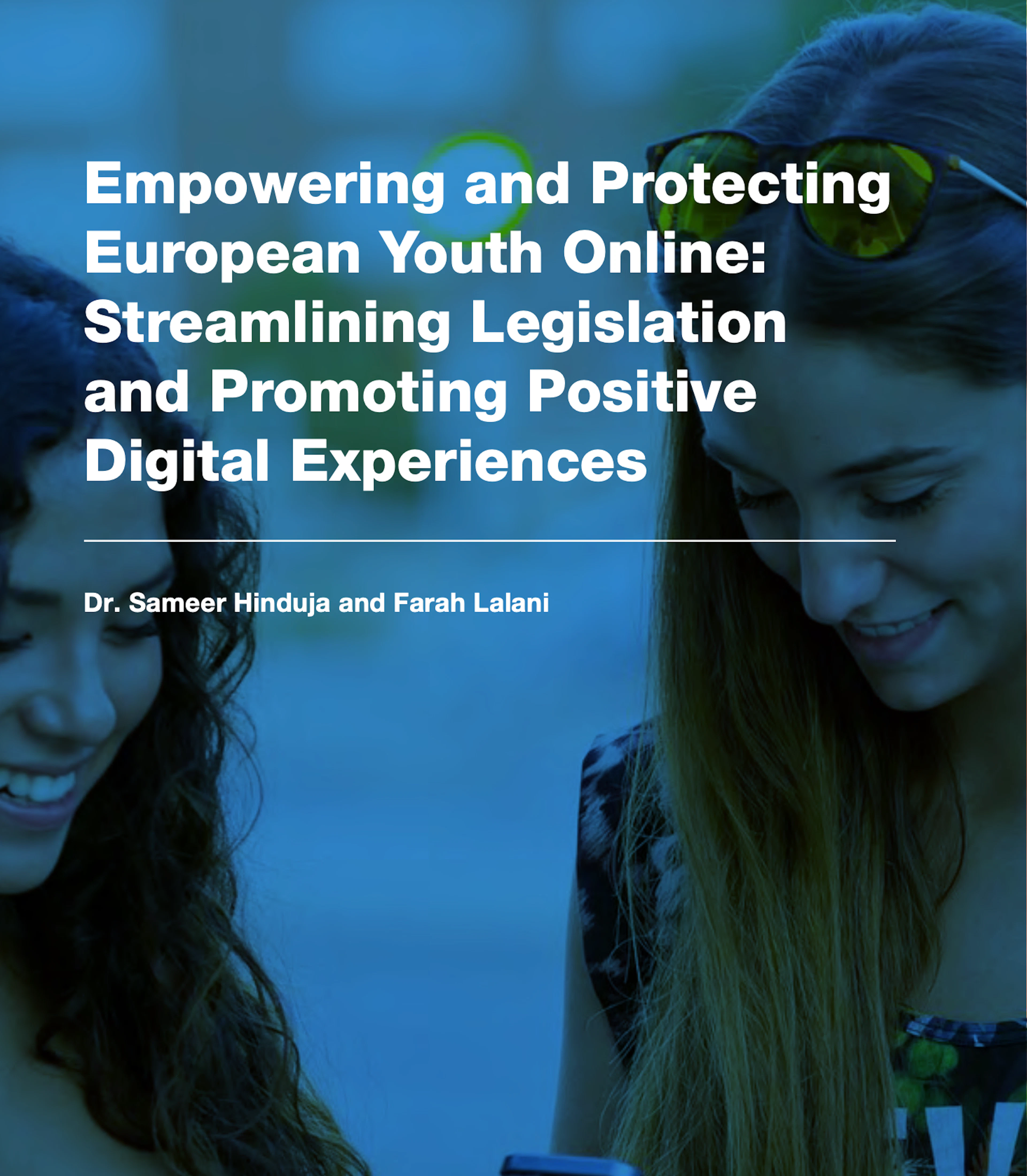
In February 2025, ThinkYoung partnered with Sameer Hinduja, co-director of the Meta-funded Cyberbullying Research Center, on a digital safety report that endorsed many of Meta’s policy priorities. It uncritically catalogued Meta’s actions, highlighting its efforts to protect children through parental supervision tools and content filters. It also argued that restrictive approaches to social media are ineffective and “not informed by research.” Instead, the report suggested that European regulators should establish a standardized app store age verification rule.
Meta has taken a similar stance in the U.S., lobbying extensively in favor of the App Store Accountability Act, which would require the Apple and Google app stores—not Instagram and other individual apps—to ensure users meet the age requirement for apps.
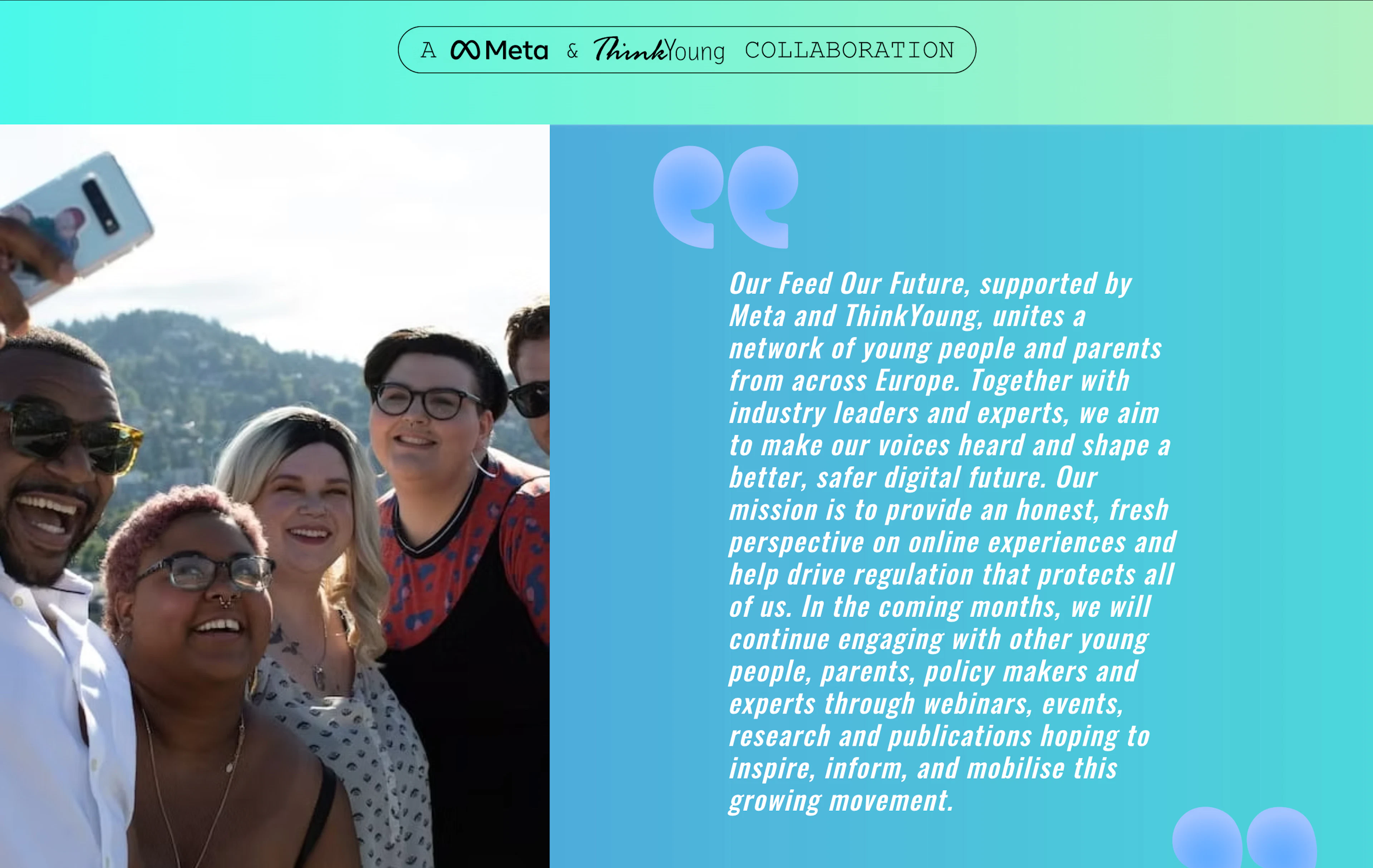
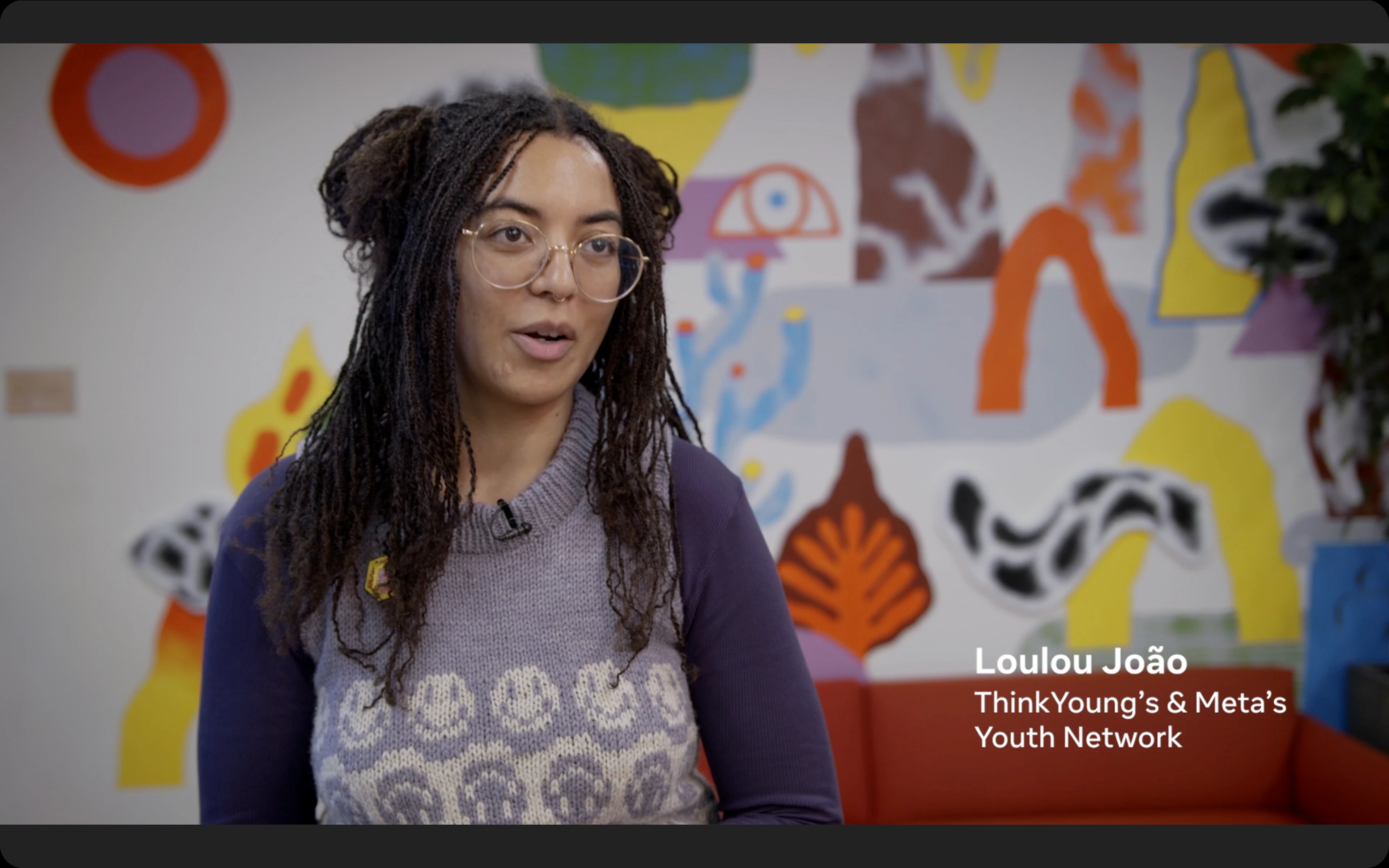
Meta launched a “youth advisory network” with Brussels-based nonprofit ThinkYoung in June 2023. The initiative, which appears to be wholly sponsored by Meta, aims to counsel European regulators on digital safety legislation.
Meta launched a “youth advisory network” with Brussels-based nonprofit ThinkYoung in June 2023. The initiative, which appears to be wholly sponsored by Meta, aims to counsel European regulators on digital safety legislation.
ThinkYoung also launched a parents network as part of the same Meta-sponsored initiative. It includes members of several European parent and child advocacy groups, including the European Parents Association, Italy’s Fondazione Carolina, Spain’s Fad Juventud Foundation, the Association of Parents of French Private Schools, and Ireland’s National Parents Council.
In May 2025, Beatriz Martin Padura, the general manager of Fad Juventud and a member of the Parents Network, told a discussion panel organized by ThinkYoung, “We don’t believe in ban as the solution.”
“Families need clear and accessible information about risk and about how to face their children’s online life,” she said. “They also require practical guidance … and tools like parent supervision features.” Charles Howard, ThinkYoung’s head of research, made similar points on the panel.
Meta declined to say if it is the sole sponsor of ThinkYoung's youth advisory and parents networks, saying the question should be directed to ThinkYoung.
"We work with a range of organizations across Europe to advance teen safety. We don’t disclose specific terms of individual partnerships," Meta said
The company said ThinkYoung selects participants in its advisory networks "based on their own criteria and expertise."
ThinkYoung did not respond to questions. João, the ThinkYoung youth advisory network member identified by TTP, also did not respond.
TTP sent questions to Martin Padura via Fad Juventud but did not hear back.
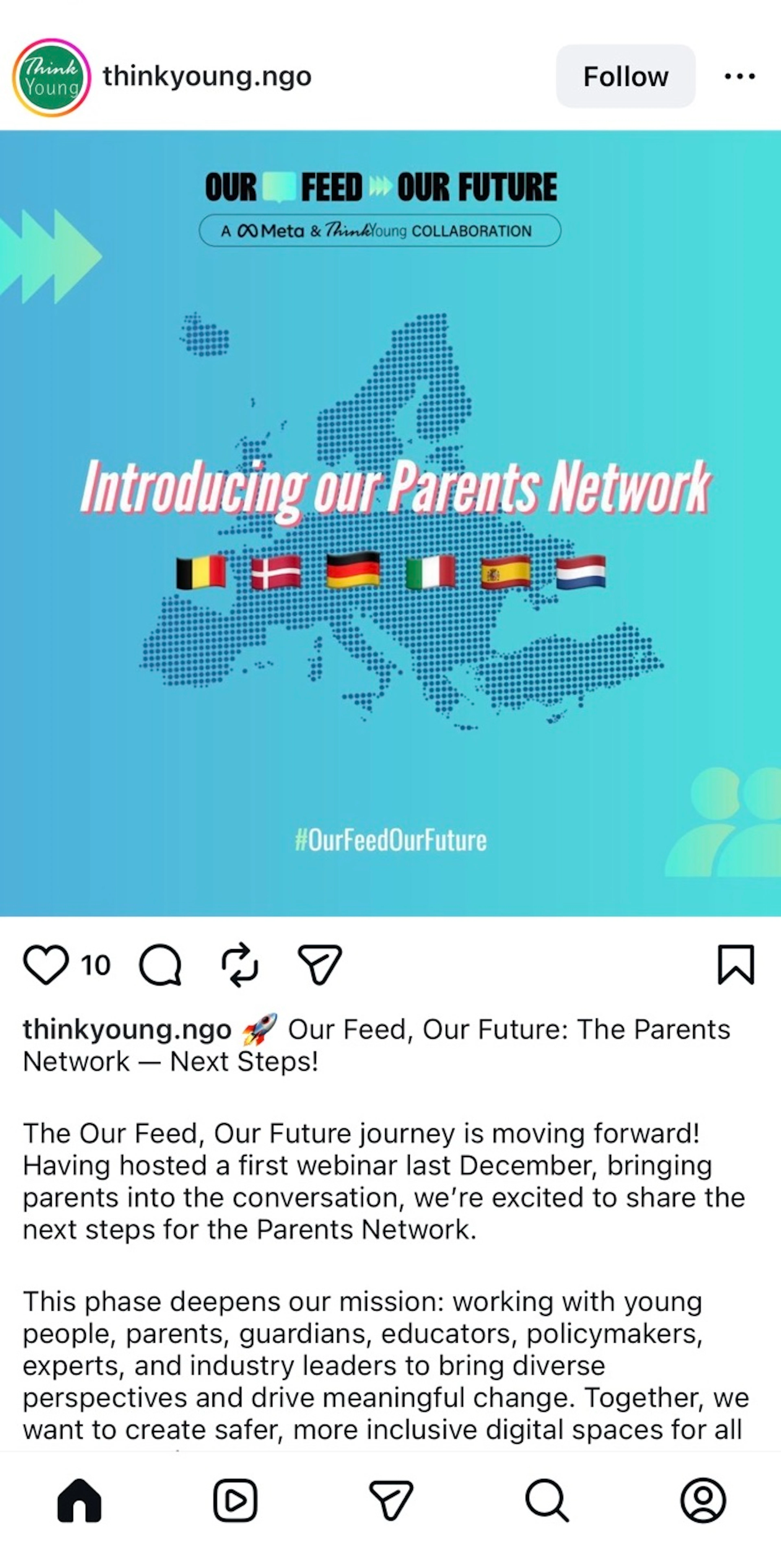
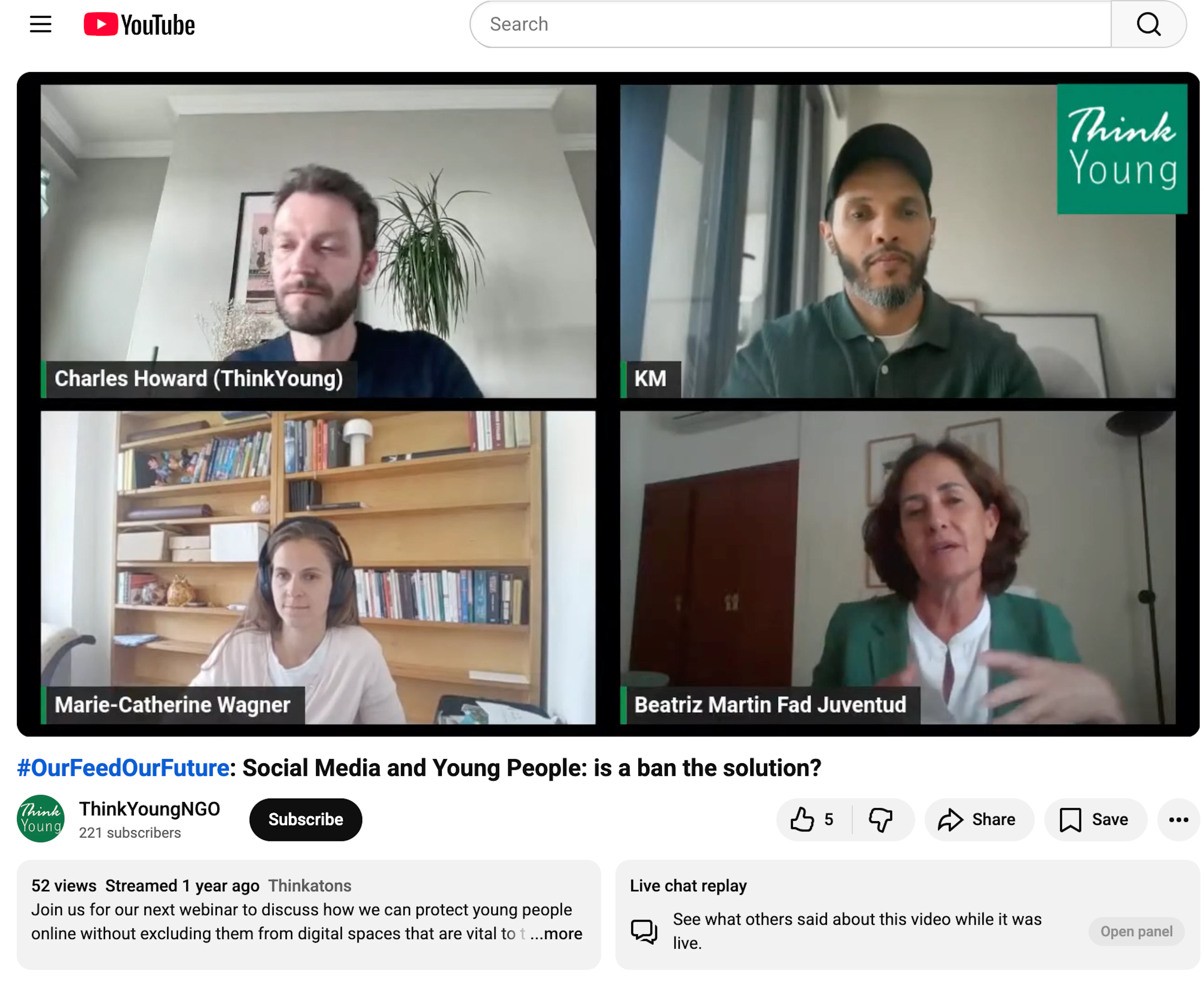
ThinkYoung also launched a parents network as part of the same Meta-sponsored initiative.
ThinkYoung also launched a parents network as part of the same Meta-sponsored initiative.
Meta has interlocking ties with several of the Parents Network members. For example, Meta’s general director for Spain and Portugal, Irene Cano, sits on the Fad Juventud board of trustees. In December 2025, the foundation held its annual trustees meeting at Meta’s office in Madrid, an occasion notable enough that Queen Letizia of Spain attended. Cano remarked at the meeting that “for Meta, the security and digital well-being of adolescents is a priority.”
Meta is listed as a funder of Fad Juventud's research arm, the Reina Sofía Center. The company also supported a Fondazione Carolina digital safety project called “Delicate Connections” and sponsored a helpline for the National Parents Council.
"Working with credible child safety organizations is responsible, standard practice. It’s how we ensure our features are informed by and aligned with expert guidance," Meta said.
The company added, "Meta has never directed a partner to advocate a particular point of view; doing so would be irresponsible and negligent."
The parent network groups did not respond to a request for comment and questions. Cano did not respond to questions sent via Meta.
The Cyberbullying Research Center has a long history with Meta. In 2015, the center’s co-directors received a $188,776 grant from the Facebook-funded Digital Trust Foundation for data collection on cyberbullying and teen dating violence. The Digital Trust Foundation is a court-mandated nonprofit created from Facebook’s 2009 settlement of a class action lawsuit over its “Beacon” program. Beacon had broadcast Facebook users’ activity, including purchases on third-party websites, to their friends without consent.
Hinduja, the co-director of the Cyberbullying Research Center, did not respond to questions.
Conclusion
Around the world, Meta is using paid Instagram influencers and parent groups to amplify its arguments in countries that are considering or enacting social media bans for children. The message is consistent: Bans are ineffective, and Meta’s “Teen Accounts” and their parent supervision tools are enough to protect young people online.
TTP and others have found that the Teen Accounts actually fail at their core mission of shielding minors from harmful content. But Meta has nonetheless made them central to its effort to blunt regulation.
The findings of this report are not exhaustive. In fact, TTP found evidence that Meta is deploying its influence tactics in additional countries from Ireland to Turkey. Governments should be aware that Meta is creating an impression of parent support for its safety features as it tries to hold back the international wave of social media bans that threaten to cut off its access to young people.